资本市场

Search documents
刘世锦重磅建议:中产要倍增到8-9亿人!关键靠这两大“硬招”
新浪财经· 2026-01-15 09:32
Core Viewpoint - The article emphasizes the need for China to transition from an investment and export-driven growth model to one focused on innovation and consumption during the 14th Five-Year Plan period, highlighting structural changes in the economy [6][45]. Consumption Structure - China is not yet a consumption powerhouse, with consumption accounting for 20 percentage points less of GDP compared to the global average [8][11]. - To become a consumption-driven economy, China must correct this structural deviation and enhance both domestic and international consumption [11]. - The focus on consumption is shifting from investment-driven growth to consumer-driven growth, particularly in sectors like education, healthcare, and cultural services [11]. Industrial Structure - The manufacturing sector's share of GDP may decline, but this does not indicate a lack of transformation; rather, it reflects a shift towards high-tech, knowledge-intensive service industries [12]. - The development of related productive services is crucial for supporting innovation and enhancing human capital [12][14]. - The government must foster a fair competitive environment to address the complexities of industrial transformation and reduce excess capacity in heavy industries [14]. Foreign Trade - Despite a challenging international environment, China's exports have remained strong, indicating improved technological and industrial competitiveness [17]. - A significant trade deficit suggests a reduction in domestic consumption, which is unsustainable in the long term [17][20]. - The strategy should shift towards balancing imports and exports, with an emphasis on using the RMB for international transactions [20]. Financial Structure - As industries evolve, the importance of capital markets is increasing, with a projected annual increase of at least 30 trillion yuan in social net assets if GDP grows at 4%-5% [23]. - The capital market should support the growth of large, innovative enterprises and increase the proportion of institutional investors to address the challenges of an aging society [24]. Urban-Rural Structure - Urbanization will slow as the population approaches 70%, leading to more internal migration within urban areas rather than from rural to urban [26][30]. - Addressing disparities in public services between urban and rural populations is essential for achieving balanced urban-rural development [31][32]. Income Distribution - To avoid the middle-income trap, China should aim to reduce the Gini coefficient to around 0.4, doubling the middle-income population from 400 million to 800-900 million [33][36]. - Policies should focus on increasing labor compensation's share of GDP and improving social security for low- and middle-income groups [36][38]. Macroeconomic Policy - While macroeconomic policies can provide short-term stability, they cannot replace the need for structural reforms to drive long-term growth [39][41]. - The reliance on macroeconomic policies may increase as the economy transitions to a lower growth phase, necessitating a clear understanding of the limits of such policies [41][45].


4100点还没赚钱?吴晓求:你可能不具备独立投资能力!2026年股市大趋势向好!
新浪财经· 2026-01-15 09:32
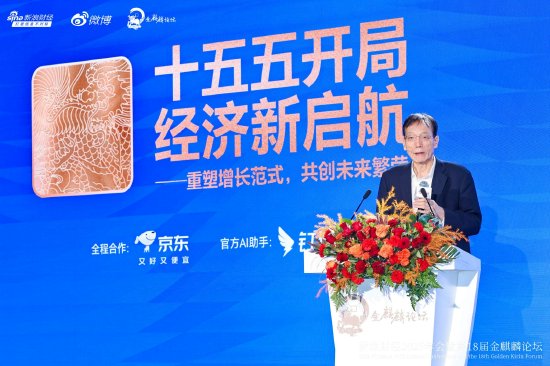
" 新浪财经 2025 年会暨第 18 届金麒麟论坛"于2026年1月15日在北京举办,本次会议的 主题是"十五五开局,经济新启航——重塑增长范式,共创未来繁荣"。 中国人民大学原副 校长、国家金融研究院院长、国家一级教授吴晓求出席并演讲。 以下为演讲实录: 我讲讲资本市场。关于经济、医疗、财政等等,前面几位专家都讲得非常清楚、非常好。 资本市场在2026年向好的趋势应该不会有变化。虽然昨天中午三个交易所的融资杠杆从80%提 到100%,给市场一个信号:我们得悠着点,慢慢来,中国市场成长时间还长,不能着急。这里 需要理解,为什么从2024年9月24号以来中国资本市场有很好发展,有几个原因: 我们在这样条件下,要转变观念,看到市场成长前景。实际上市场不仅仅是国民经济晴雨表, 更重要还是经济和产业转型的重要推动者,要看到它有双重作用。传统晴雨表只是一个反映, 实际上资本市场发展可以推动中国经济结构转型和产业升级迭代,要看到后面作用,不要简单 步入泡沫论阶段。中国资本市场成长有它成长逻辑,既有改革逻辑,也有产业结构转型逻辑。 所以,在这种条件下,它未来成长可期。中间当然有波动,市场都在波动中前行,难以想象市 场有一 ...
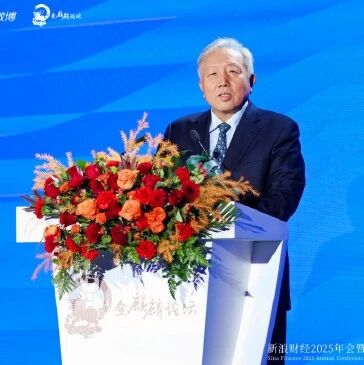
吴晓求:当前最重要的任务是用法律约束“埋雷”现象
Xin Lang Cai Jing· 2026-01-15 04:18
Core Viewpoint - The forum emphasizes the need for reform and development in China's capital market, particularly addressing issues like major shareholder reductions and the importance of legal frameworks to prevent market risks [1][5]. Group 1: Major Shareholder Reduction - The discussion highlights the need to critically assess whether major shareholder reductions are a problem, suggesting that market stagnation cannot be solely attributed to this issue [3][7]. - Reforms initiated during the split share structure reform and further regulations in 2024 have clarified the conditions under which major shareholders can reduce their holdings, transitioning from "necessary conditions" to "sufficient conditions" [3][7]. - Despite significant reductions by major shareholders, the market continues to grow, indicating that other factors are at play [3][7]. Group 2: Market Reform and Growth - The speaker stresses that the most critical aspect of the Chinese market is reform, particularly enhancing the asset side to boost growth and attract continuous capital inflow [3][7]. - There are many misconceptions in the market, and addressing these through reform is essential for sustainable growth [3][7]. Group 3: Challenges for Small Investors - In the AI era, small investors in China face structural challenges, with some reports indicating that investors have not made profits even at market levels around 4100 points, suggesting a lack of independent investment capability [3][7]. - The availability of diverse investment tools, such as ETFs, is highlighted as a beneficial option for investors, often outperforming individual investors [3][7]. Group 4: Market Safety and Legal Framework - The phenomenon of "hidden risks" in the capital market is noted, where many listed companies may have motives to conceal risks, and intermediaries may assist in this behavior [4][8]. - The current priority is to implement legal measures to deter the motives and actions that lead to these hidden risks, marking a significant area for institutional reform [4][8].
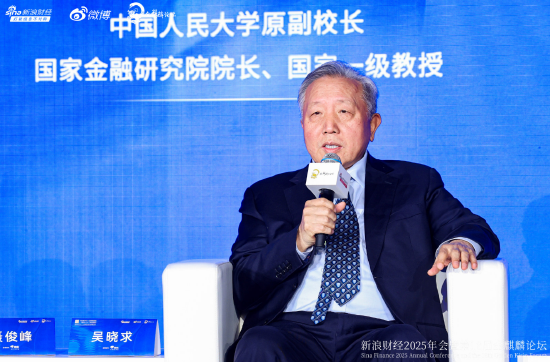
有人在4100点时仍未赚钱?吴晓求:可能不具备独立投资能力,建议买ETF
Xin Lang Cai Jing· 2026-01-15 04:12
Core Viewpoint - The forum emphasizes the need for reform and development in China's economy, particularly in the context of the upcoming 2026 year, focusing on reshaping growth paradigms and creating future prosperity [1][5] Group 1: Reform and Development - Wu Xiaoqiu highlights the importance of addressing the issue of major shareholder reductions, suggesting that it should not be simplistically linked to market stagnation [3][7] - He notes that the split share structure reform has already addressed related issues, and in 2024, specific regulations were established regarding major shareholder reductions, increasing the criteria from "necessary conditions" to "sufficient conditions" [3][7] - Despite a significant amount of major shareholder reductions during this period, the market continues to grow, indicating resilience [3][7] Group 2: Investment Strategies - Wu Xiaoqiu points out that many retail investors in China face structural challenges, particularly in the context of the AI era, with some investors reportedly not making profits even at the 4100-point level [3][7] - He advocates for the use of diverse investment tools, particularly ETFs, which tend to outperform many individual investors [3][7] - The notion of "making everyone profitable" is viewed as a slogan rather than a practical reality, with a focus on rational investment strategies [3][7] Group 3: Market Safety and Regulation - Wu Xiaoqiu raises concerns about the prevalence of "hidden risks" in China's capital market, where many listed companies may have motives and behaviors that contribute to these risks, with intermediaries also playing a role [4][8] - He emphasizes the need for legal measures to deter the motives behind these hidden risks and to hold accountable those who assist in perpetuating them, marking this as a critical area for institutional reform [4][8]
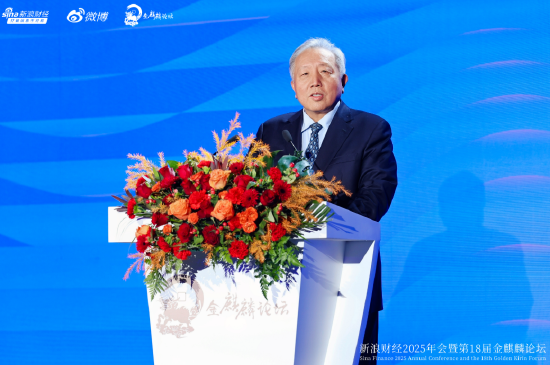
吴晓求:不能简单认为市场停滞与大股东减持有关
Xin Lang Cai Jing· 2026-01-15 04:12
Core Viewpoint - The forum emphasizes the need for reform and development in China's economy, particularly in the context of the upcoming 2026 challenges and opportunities [1][5]. Group 1: Reform and Development - Wu Xiaoqiu highlights the importance of addressing the issue of major shareholder reductions, suggesting that it should not be simplistically linked to market stagnation [3][7]. - The reforms initiated during the split share structure reform and the specific regulations established in 2024 regarding major shareholder reductions are aimed at enhancing market growth [3][7]. - The focus should be on reforming the asset side to boost growth potential and attract continuous capital inflow [3][7]. Group 2: Investment Strategies - In the AI era, structural challenges are faced by small investors in China, with some still not making profits at the 4100-point mark, indicating a lack of independent investment capability [3][7]. - The creation of diverse assets and tools, particularly ETFs, is presented as a favorable option for investors, often outperforming individual investors [3][7]. - The notion of "making everyone profitable" is viewed as a slogan rather than a practical reality, with a more realistic approach being the investment in ETFs to increase the number of profitable investors [3][7]. Group 3: Market Safety and Regulation - The phenomenon of "hidden risks" in China's capital market is serious, with many listed companies having motives and behaviors that contribute to this issue, often aided by intermediary institutions [4][8]. - Ensuring market safety requires legal measures to deter the motives and actions that lead to "hidden risks," marking a critical area for institutional reform [4][8].
吴晓求最新演讲:中国资本市场未来成长可期
Xin Lang Cai Jing· 2026-01-15 03:28
专题:新浪财经2025年会暨第18届金麒麟论坛 "新浪财经2025年会暨第18届金麒麟论坛"于2026年1月15日在北京举办,主题是"十五五开局,经济新启 航——重塑增长范式,共创未来繁荣"。中国人民大学原副校长、国家金融研究院院长、国家一级教授 吴晓求出席并演讲。 以下为演讲实录: 感谢邀请! 我讲讲资本市场。关于经济、医疗、财政等等,前面几位专家都讲得非常清楚、非常好。 资本市场在2026年向好的趋势应该不会有变化。虽然昨天中午三个交易所的融资杠杆从80%提到 100%,给市场一个信号:我们得悠着点,慢慢来,中国市场成长时间还长,不能着急。这里需要理 解,为什么从2024年9月24号以来中国资本市场有很好发展,有几个原因: 我们在这样条件下,要转变观念,看到市场成长前景。实际上市场不仅仅是国民经济晴雨表,更重要还 是经济和产业转型的重要推动者,要看到它有双重作用。传统晴雨表只是一个反映,实际上资本市场发 展可以推动中国经济结构转型和产业升级迭代,要看到后面作用,不要简单步入泡沫论阶段。中国资本 市场成长有它成长逻辑,既有改革逻辑,也有产业结构转型逻辑。所以,在这种条件下,它未来成长可 期。中间当然有波动, ...
值得收藏!刘世锦在2025新浪金麒麟论坛演讲的PPT
Xin Lang Cai Jing· 2026-01-15 03:22
Core Viewpoint - The conference emphasizes the need to reshape the growth paradigm in China, transitioning from investment and export-driven growth to innovation and consumption-driven growth during the 14th Five-Year Plan period [5][54]. Consumption Structure - China is not yet a consumption powerhouse, with consumption accounting for about 20 percentage points less of GDP compared to the global average [9][55]. - Addressing this structural gap is essential for China to become a consumption-driven economy, which includes increasing both domestic and international consumption [11][58]. - The focus on consumption is shifting from investment as the primary driver of economic growth to consumption as the key factor [11][58]. Industrial Structure - The manufacturing sector's share of GDP may decline, but this does not indicate a lack of transformation; rather, it highlights the need for high-tech, knowledge-intensive service industries to support manufacturing upgrades [12][59]. - The complexity of industrial structure transformation is increasing, necessitating a fair competitive environment for businesses [15][61]. Foreign Trade - Despite a challenging international environment, China's exports have remained strong, reflecting improvements in technology and industrial competitiveness [16][63]. - A significant trade deficit indicates reduced domestic consumption, which is unsustainable in the long term; thus, a balanced import-export strategy is needed [16][65]. Financial Structure - The evolution of the financial system is accelerating, with a shift from traditional banking to capital markets, which will play a more significant role in supporting economic growth [22][70]. - The capital market should foster large, innovative enterprises and increase the participation of institutional investors to support social security systems [26][72]. Urban-Rural Structure - Urbanization is slowing as the population approaches 70%, leading to more internal migration within urban areas rather than from rural to urban [27][75]. - Addressing disparities in public services between urban and rural populations is crucial for achieving balanced development [31][79]. Income Distribution - To avoid the middle-income trap, China should aim to reduce the Gini coefficient to around 0.4, promoting a stable middle-income group that constitutes over half of the population [33][84]. - Policies should focus on increasing labor income's share of GDP and improving social security for low- and middle-income groups [37][86]. Macroeconomic Policy - While macroeconomic policies are currently focused on short-term stabilization, they cannot provide the foundational growth momentum needed for the economy [40][87]. - Structural reforms are essential to address deep-rooted issues, and reliance on macroeconomic policies should be carefully managed to avoid dependency [42][89].

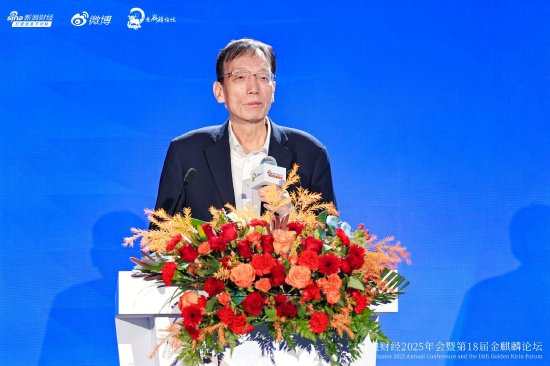
全文|刘世锦谈经济增长:以投资出口为主转向以创新和消费为主
Xin Lang Cai Jing· 2026-01-15 03:17
Core Viewpoint - The conference emphasizes the need to reshape the growth paradigm in China, transitioning from an investment and export-driven economy to one focused on innovation and consumption during the 14th Five-Year Plan period [5][54]. Consumption Structure - China is not yet a consumption powerhouse, with consumption accounting for approximately 20 percentage points less of GDP compared to the global average [9][55]. - To become a consumption-driven economy, China must address this structural gap and enhance both domestic and international consumption [11][58]. - The focus on consumption is shifting from investment-driven growth to consumption-driven growth, particularly in sectors like education, healthcare, and cultural services, which also contribute to human capital investment [11][58]. Industrial Structure - The manufacturing sector's share of GDP may decline, but this does not indicate a lack of transformation; rather, it highlights a shift towards high-tech, knowledge-intensive service industries [12][59]. - The transition will require a focus on developing related productive service industries to support manufacturing upgrades [12][59]. - The complexity of industrial structure transformation necessitates a fair competitive environment, as traditional government policies may become less effective [15][61]. Foreign Trade - Despite a challenging international environment, China's exports have remained strong, reflecting improvements in technological and industrial competitiveness [16][63]. - A significant trade deficit indicates reduced domestic consumption, which is unsustainable in the long term; thus, a balanced import-export strategy is essential [16][65]. - The shift towards using the Renminbi for international trade settlements is crucial for enhancing its global liquidity and status [21][68]. Financial Structure - The evolution of the financial system is accelerating, with a growing importance of capital markets as the economy transitions [22][70]. - The capital market should support the development of innovative enterprises and increase the participation of institutional investors to bolster social security systems [26][72]. Urban-Rural Structure - Urbanization is slowing as the population approaches 70%, leading to more internal migration within urban areas rather than rural to urban shifts [27][75]. - Addressing disparities in public services between urban and rural populations is critical for achieving balanced development [31][78]. - Reforms in land management and local governance are necessary to facilitate the free flow of resources and optimize urban-rural integration [32][79]. Income Distribution - Learning from successful economies, China aims to reduce its Gini coefficient to around 0.4 to avoid the middle-income trap and double the middle-income population from 400 million to 800-900 million [33][84]. - Policies should focus on increasing labor compensation's share of GDP and improving social security for low- and middle-income groups [37][84]. - A shift from indirect to direct taxation is proposed to enhance government revenue from high-income earners while ensuring property rights protection [39][86]. Macroeconomic Policy - While macroeconomic policies are currently focused on short-term stabilization, they cannot provide the foundational growth momentum needed for the economy [40][87]. - Structural reforms are essential to address deep-rooted issues, and reliance on macroeconomic policies should be carefully managed to avoid dependency [42][89]. - The transition to a new growth framework requires overcoming path dependencies and encouraging innovation and reform at various levels [44][94].
刘世锦:如果我国GDP能保持4%-5%增速,预计每年将形成不低于30万亿社会净资产
Xin Lang Cai Jing· 2026-01-15 02:44
专题:新浪财经2025年会暨第18届金麒麟论坛 "新浪财经2025年会暨第18届金麒麟论坛"于2026年1月15日在北京举办,本次会议的主题是"十五五开 局,经济新启航——重塑增长范式,共创未来繁荣"。第十三届全国政协经济委员会副主任,国务院发 展研究中心原副主任刘世锦出席并演讲。 刘世锦谈到,从金融结构来讲,随着产业转型升级,知识技术含量和复杂程度的增加,金融体系由传统 的银行体系到现在资本市场的演进的节奏加快,资本市场的重要性相应上升。 按照法国经济学家皮凯蒂的研究,国民收入与社会净资产的比例大概1:5-6。他指出,"十五五"和今后 更长时间,如果我国GDP能够保持4%-5%的增长速度,每年将会形成不低于30万亿的社会净资产。 此外,由于房地产和银行储蓄吸引力下降,居民财产的增量、存量将更多地进入资本市场,源头活水的 增加将会推动资本市场进入一个与以往相助不同的发展阶段。 因此,刘世锦建议到,在资产端,资本市场要培育具有全球创新竞争力的大型头部科技企业和大批的创 新型、中小型企业;在投资端,资本市场要显著增加养老金等机构投资者的比重,较大幅度地支撑老龄 化社会的社会保障体系的支出;同时,通过提升资源利用效 ...
连平:当前中国金融结构发生的重要变化
和讯· 2026-01-13 09:13
Core Viewpoint - The article discusses significant changes in China's financial structure, emphasizing the shift from indirect financing to direct financing, driven by policy initiatives and evolving economic needs [2][4]. Group 1: Financing Trends - The proportion of indirect financing in social financing has decreased, with direct financing's share increasing, marking a historical shift where indirect financing's share fell below 50% for the first time [3]. - As of November 2025, indirect financing accounted for 45.7% while direct financing reached 47.4%, indicating a notable trend where direct financing is outpacing indirect financing [3]. - The growth rate of credit has significantly declined, with the credit balance growth dropping from 12.8% in 2020 to 6.4% in 2025, reflecting a substantial decrease in credit demand [3][4]. Group 2: Direct Financing Growth - Direct financing has shown robust growth, supported by a more market-oriented allocation of funds and the development of multi-tiered capital markets, including platforms like the Sci-Tech Innovation Board and the Growth Enterprise Market [4][5]. - The demand for direct financing is increasingly driven by high-tech industries and emerging sectors, which require various forms of direct financing such as equity investments and corporate bond issuances [4][8]. Group 3: Future Outlook - The article predicts that active fiscal policies will continue, with a focus on maintaining moderate fiscal expansion to support market stability amid global uncertainties [6]. - Traditional sectors like real estate and infrastructure are expected to stabilize and improve gradually, but their financing needs will not return to previous levels, with credit growth projected to remain below 7% [6][9]. - The capital market is anticipated to develop positively, with a growing demand for stocks driven by high-tech industry listings and unprecedented policy support for investor protection [7][8]. Group 4: Structural Changes and Implications - The ongoing shift towards direct financing is expected to optimize China's financial structure, with direct financing potentially exceeding indirect financing in the near future [8][10]. - This transition is projected to lower financing costs, reduce corporate debt burdens, and enhance the efficiency of capital allocation, ultimately supporting high-quality economic development [9][10].