
养老服务

Search documents
常州推动形成可持续的互助养老生态年轻“小老人”成社区“大宝藏”
Xin Hua Ri Bao· 2025-10-14 23:24
Core Viewpoint - The articles highlight the active role of elderly individuals in community service and governance in Changzhou, showcasing their contributions to social value and community well-being [1][2][4]. Group 1: Community Engagement - The "Ten Full Ten Beautiful" birthday party for elderly residents illustrates the vibrant community spirit, with volunteers, many of whom are also elderly, playing a crucial role in organizing events [1]. - In Changzhou, elderly individuals are increasingly transitioning from being recipients of care to becoming providers of services, fostering a sustainable community mutual aid ecosystem [2][4]. - The "Silver Hair Mentors" initiative showcases elderly residents leading various community activities, such as cooking, organizing cultural events, and engaging with younger generations [3]. Group 2: Elderly Empowerment - The establishment of the "Dream Employment Studio" by a retired community worker has successfully created job opportunities for 317 disabled individuals over 12 years, demonstrating the impact of elderly-led initiatives [2]. - The Changzhou Elderly Calligraphy Research Association, led by elderly members, has been active in promoting art and supporting fellow seniors, contributing to their well-being and community engagement [2]. - The city of Changzhou is implementing policies to integrate healthy aging concepts into social development, aiming to create an elderly-friendly society that values the contributions of older adults [4]. Group 3: Policy and Infrastructure - Changzhou's population aged 60 and above accounts for 29.7%, indicating a significant aging demographic that necessitates supportive policies and community structures [4]. - The city is actively promoting the "Home-based Elderly Care Service Regulations" to ensure that elderly individuals receive adequate support and can contribute meaningfully to their communities [4]. - The establishment of elderly-friendly communities and the enhancement of basic elderly care services are part of Changzhou's strategy to improve the quality of life for seniors [4].
泰康之家:让“享老”成为一场有尊严的生活艺术
Qi Lu Wan Bao· 2025-10-14 03:45
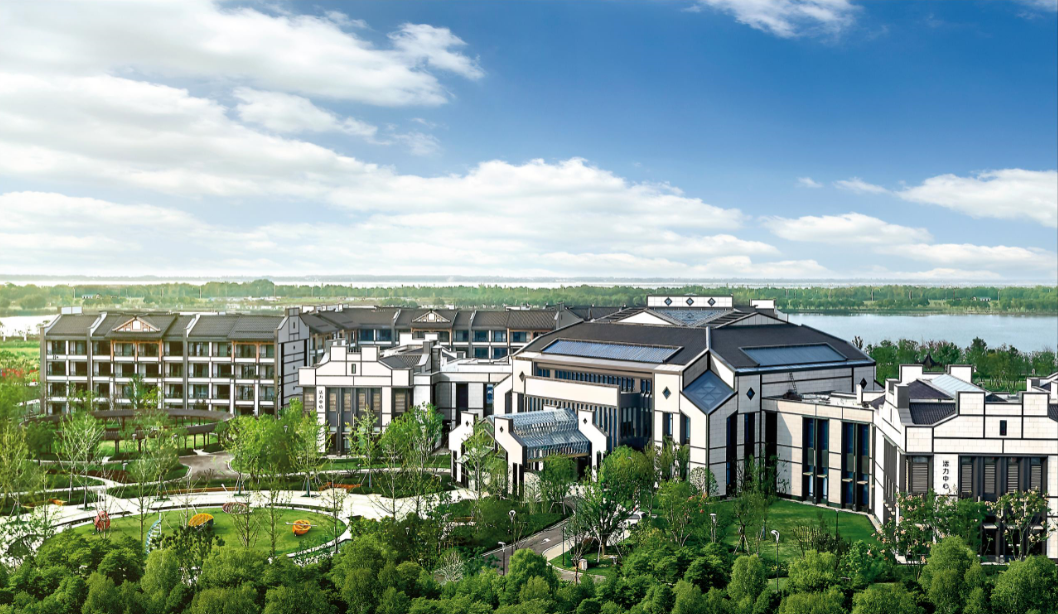
Core Insights - The article highlights the concept of "vibrant elderly care" promoted by Taikang Home, emphasizing not only the provision of housing but also the engagement in learning and enjoyment for the elderly [1][16] Group 1: Community and Resident Engagement - Taikang Home's Wu Garden has seen a continuous increase in resident numbers since its opening in 2019, currently housing over 1,200 residents [1] - Residents express satisfaction with the community, describing it as a place where they can enjoy life together, akin to returning to school in their later years [1] Group 2: Medical and Health Integration - Taikang Home has established a "medical-nursing integration" model, providing continuous services from health assessment to chronic disease management and palliative care [4] - The Wu Garden community features a rehabilitation hospital and a professional care team, ensuring comprehensive health management for each resident [3][4] Group 3: Technological Innovations - The community utilizes Taikang's self-developed "smart care system," which includes various safety and health monitoring devices, enhancing the living experience for the elderly [9] - Over 8,500 "smart sound boxes" have been distributed nationwide, facilitating health management through AI-driven solutions [9] Group 4: Cultural and Recreational Activities - Wu Garden offers a variety of courses and activities, including singing, painting, and health workshops, with a total of 536 large-scale events held over five years [10] - The community has established a volunteer system with over 100 residents, allowing them to share their knowledge and experience through public service [10] Group 5: National Network and Ecosystem - Since the opening of its first community in 2015, Taikang Home has expanded to 46 projects across 37 cities, serving over 18,000 residents [14] - The company collaborates with nearly 50 universities to train professional caregivers, fostering a comprehensive ecosystem that integrates elderly care, medical services, and technology [14][15]

陕西优化和扩大养老服务供给,着力办好群众养老实事——在“家门口”建起温馨“港湾”
Shan Xi Ri Bao· 2025-10-14 00:07
Group 1 - By the end of 2024, Shaanxi Province will have 8.87 million people aged 60 and above, accounting for 22.4% of the population, indicating a transition into a moderately aging society [1] - The majority of elderly individuals prefer home and community-based care, prompting Shaanxi to focus on addressing urgent issues such as "difficulty in meal provision" and "difficulty in medical access" [1] - Shaanxi is accelerating the construction of a coordinated elderly care service system that integrates home care, community services, and medical care [1] Group 2 - The community elderly care service station in Xi'an has become a vibrant hub for seniors, offering activities such as singing, exercise, and affordable meals, enhancing their quality of life [2] - The service station includes a spacious dining area and various functional zones, such as rehabilitation and psychological counseling, demonstrating a comprehensive approach to elderly care [2][3] - The station has implemented a "Ten Assistance" service model, providing a wide range of support from daily care to mental well-being [3] Group 3 - In rural areas, the establishment of mutual aid happiness homes has addressed the basic needs of elderly residents, particularly in meal provision [4][5] - The East Xing Village mutual aid happiness home offers nutritious meals at a low cost, fostering social interaction among seniors [5] - Shaanxi has built 9,419 rural mutual aid happiness homes, covering 82% of administrative villages, promoting community-based meal assistance models [6] Group 4 - The "Five Bed Linkage" service model in Xi'an's Beilin District provides a seamless connection between home care and medical services for elderly residents [7][8] - This model allows for coordinated care, enabling elderly individuals to receive treatment at home while having access to community health services [8] - Shaanxi has established a mechanism for integrating medical and elderly care services, enhancing the overall health and well-being of seniors [8] Group 5 - The ongoing improvements in elderly care facilities, services, and policy support are contributing to a more fulfilling and secure life for the elderly population in Shaanxi [9]
大家提前做好准备:不出意外,10月以后,国内可能迎来3个变化!
Sou Hu Cai Jing· 2025-10-13 23:27
Core Insights - The article discusses three significant upcoming changes in consumer behavior and market dynamics in China, driven by government policies aimed at enhancing living standards and encouraging spending [1] Group 1: Consumer Market Dynamics - The government is implementing substantial subsidy policies to encourage consumer spending, with up to 20% financial support for replacing old household appliances and cash subsidies of up to 20,000 yuan for car purchases [3][6] - Sales of household appliances and audio-visual equipment surged nearly 40% year-on-year in October, indicating a strong consumer preference for energy-efficient products [3][6] - Subsidies now extend to previously overlooked categories like educational electronics, with up to 20% discounts available, making it easier for families with school-aged children to purchase necessary items [6] Group 2: Real Estate Market Recovery - The real estate market is showing signs of recovery after a prolonged downturn, with a 3.9% year-on-year increase in the cumulative transaction volume of new and second-hand homes in October [7][9] - The focus has shifted from quantity to quality in real estate, with improvements in the design and structure of properties, as well as ongoing renovations of older residential buildings [9] - New housing standards are being enhanced, emphasizing sound insulation and energy efficiency, which is expected to provide more quality housing options for homebuyers [9] Group 3: Employment and Social Welfare - The number of college graduates in 2025 is projected to reach 12.22 million, prompting government initiatives to create more job opportunities, particularly for small and medium-sized enterprises [11] - Training programs for emerging professions, such as AI trainers and carbon emission managers, are now subsidized, helping individuals acquire new skills and enhancing their employability [11] - Social welfare measures are being refined, with increases in pension standards and improvements in elderly care services, contributing to a more secure living environment for retirees [12]

10万港人北上养老进行时
21世纪经济报道· 2025-10-13 15:33
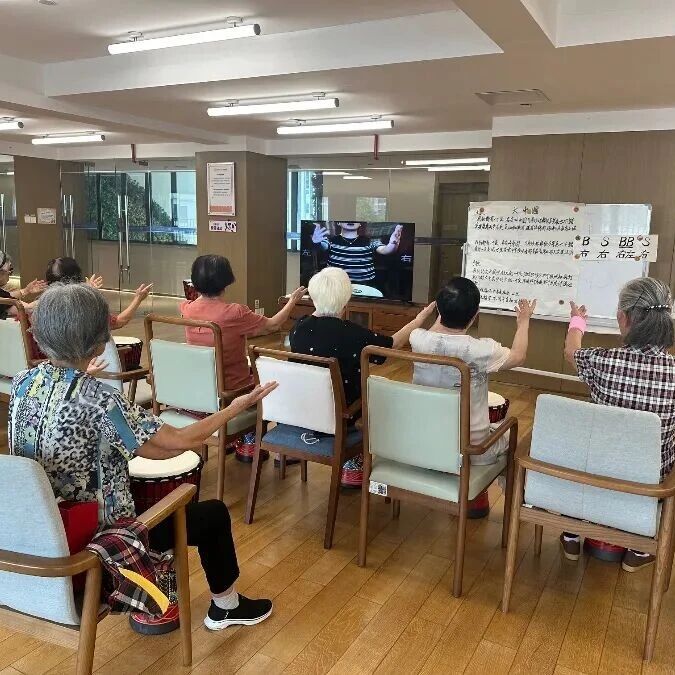
Core Viewpoint - The trend of Hong Kong residents moving to mainland China for retirement is experiencing significant growth, driven by the expansion of the "Guangdong Residential Care Service Plan" and the increasing demand for cross-border elderly care services [1][2]. Group 1: Current Trends - As of 2024, nearly 100,000 Hong Kong seniors aged 65 and above have settled in Guangdong, marking a growth of over 40% in the past decade [1][4]. - The Hong Kong government has introduced new policies to facilitate this trend, including financial support for seniors participating in the "Yue She Trial Program" [2]. Group 2: Reasons for Choosing Cross-Border Retirement - Many Hong Kong seniors are opting for cross-border retirement due to the long waiting times for local care facilities, which can exceed six months to a year, compared to a one-month approval period in Guangdong [4][8]. - The cost of living in mainland retirement homes is significantly lower, with couples in Shenzhen spending approximately 20,000 HKD per month, compared to 50,000 HKD in Hong Kong [8]. Group 3: Challenges Faced - Despite the growing trend, there are challenges such as differences in medical systems and service standards between Hong Kong and mainland China, which can affect the experience of elderly residents [2][10]. - Cross-border medical issues remain a significant pain point, as Hong Kong seniors lack access to mainland health insurance and face complications in emergency medical situations [10][13]. Group 4: Cultural and Service Adaptations - Cultural differences, including dietary preferences and language barriers, also impact the satisfaction of Hong Kong seniors in mainland facilities [14]. - The demand for services that cater to Hong Kong seniors' specific needs, such as Cantonese-speaking staff and familiar food options, is crucial for the success of cross-border retirement homes [14]. Group 5: Future Outlook - The aging population in Hong Kong is projected to increase, with estimates suggesting that by 2050, one in three residents will be elderly, further driving the demand for cross-border retirement options [14]. - The coverage of retirement services in the Greater Bay Area is expected to expand, accommodating the growing number of Hong Kong seniors seeking retirement in mainland cities [14].
10万港人北上养老进行时
2 1 Shi Ji Jing Ji Bao Dao· 2025-10-13 13:23
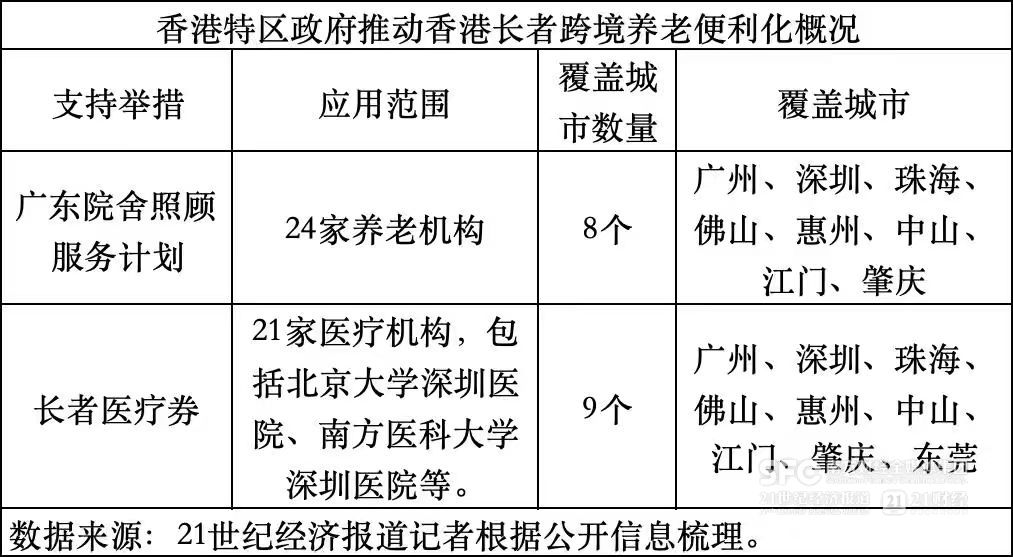
Core Insights - The trend of Hong Kong residents moving to the Greater Bay Area for retirement is increasing, driven by the expansion of the "Guangdong Residential Care Service Scheme" [2][3] - The Hong Kong government is actively promoting cross-border elderly care, with new policies and financial support to facilitate this transition [3][6] - Despite the growing interest, challenges remain in cross-border healthcare and service adaptation, impacting the overall experience for Hong Kong seniors [10][13] Group 1: Market Dynamics - The number of Hong Kong seniors residing in Guangdong is projected to reach nearly 100,000 by 2024, marking a growth of over 40% in the past decade [3][4] - The average waiting time for elderly care facilities in Hong Kong exceeds two years, while similar facilities in Guangdong have a much shorter approval process of about one month [5][6] - The cost of living in Guangdong for elderly care is significantly lower, with couples spending approximately 14,000 yuan per month compared to 50,000 yuan in Hong Kong [8] Group 2: Government Initiatives - The Hong Kong government has introduced a subsidy program for 1,000 seniors to participate in the "Guangdong Residential Care Service Scheme," providing each with 5,000 yuan [3][6] - The number of participating elderly care institutions in the scheme is set to increase from 15 to 24, expanding coverage to eight cities in the Greater Bay Area [6][12] - The government is also working to enhance the availability of medical services for seniors using medical vouchers, with 21 designated medical institutions across the Greater Bay Area [11][12] Group 3: Challenges and Adaptation - Cross-border healthcare issues, including the lack of medical insurance for Hong Kong seniors in mainland China, complicate their access to necessary medical services [10][13] - Cultural differences, such as dietary preferences and language barriers, pose additional challenges for Hong Kong seniors adapting to life in Guangdong [13][14] - The disparity in healthcare standards between Hong Kong and mainland China affects the willingness of some seniors to seek care in the mainland [13]
香港养老需求外溢,湾区机构忙抢滩
2 1 Shi Ji Jing Ji Bao Dao· 2025-10-13 11:13
Core Insights - The article highlights the increasing demand for elderly care services in Hong Kong due to a rapidly aging population, with projections indicating that by 2050, one in three residents will be elderly [1][3] - The "Guangdong Elderly Care Service Plan" has been established to provide support for Hong Kong seniors, allowing them to access care facilities in the Greater Bay Area, which has seen a significant increase in the number of Hong Kong seniors relocating to Guangdong [4][5] Group 1: Market Opportunity - The aging population in Hong Kong presents a substantial market opportunity for elderly care institutions in the Greater Bay Area, with nearly 100,000 Hong Kong seniors expected to settle in Guangdong by 2024, marking a 40% increase over the past decade [1][4] - Institutions participating in the "Guangdong Elderly Care Service Plan" have already begun to capture a portion of this market, with 24 facilities approved to provide services across eight cities in mainland China [4][5] Group 2: Competitive Landscape - The competition among elderly care institutions is intensifying, particularly as local institutions in Shenzhen face high vacancy rates of approximately 42%, prompting them to target Hong Kong seniors as a lucrative customer base [7] - Hong Kong seniors are characterized by a higher willingness to pay for quality services, with many accepting monthly fees below 10,000 HKD, which is above the average rates of 6,000 to 8,000 HKD charged by local institutions [7][9] Group 3: Operational Challenges - While the influx of Hong Kong seniors is beneficial, it also presents operational challenges for institutions, including the need to comply with Hong Kong's regulatory standards and the associated costs of maintaining dual service systems for both Hong Kong and mainland clients [8][9] - Institutions under the "Guangdong Elderly Care Service Plan" receive government subsidies ranging from 5,000 to 12,000 HKD per month for each Hong Kong senior, but they must pay a referral fee of 20% to 30% to designated agencies, impacting their pricing competitiveness [8][9] Group 4: Service Differentiation - To attract Hong Kong seniors, institutions are focusing on personalized services and cultural activities that resonate with this demographic, such as traditional cultural events and tailored support for individual needs [11] - Non-participating institutions in the "Guangdong Elderly Care Service Plan" are adopting flexible strategies to differentiate themselves, emphasizing unique service offerings to appeal to Hong Kong seniors [9][11]
每日市场观察-20251013
Caida Securities· 2025-10-13 05:48
Market Performance - On October 13, the market experienced a significant decline with a trading volume of 2.53 trillion, down approximately 140 billion from the previous trading day[1] - The semiconductor and new energy sectors showed weakness, while non-tech sectors like building materials and coal performed better[1] - The Shanghai Composite Index fell by 0.94%, closing below 3900 points, with the Shenzhen Component down 2.70% and the ChiNext Index down 4.55% on October 10[3] Sector Analysis - The adjustment in the tech sector is expected to create a capital spillover effect, leading to potential gains in non-tech sectors such as non-bank financials and chemicals[1] - Major outflows were noted in the semiconductor, battery, and software development sectors, while inflows were seen in grid equipment, infrastructure, and securities[4] Economic Indicators - The Ministry of Civil Affairs announced a first batch of elderly care service subsidies amounting to 1.16 billion yuan, aimed at supporting elderly individuals with moderate to severe disabilities[5] - The World Trade Organization revised its global trade growth forecast for 2025 from -0.2% to 2.4%, but lowered the 2026 forecast from 2.5% to 0.5% due to anticipated tariff impacts[7] Investment Trends - Public funds have shown increased enthusiasm for participating in private placements, with total subscriptions exceeding 30 billion yuan this year, surpassing last year's total[13] - Private equity firms remain optimistic about market continuity but advise caution regarding valuation pressures on certain tech stocks[14]
用科技与温情托起幸福晚年——南京打造老年友好生活样板
Xin Hua Ri Bao· 2025-10-12 23:23
Core Insights - The article highlights the proactive and technology-driven approach of Nanjing's Gulou District in addressing the needs of the elderly population, particularly through community-based services and smart technology [2][4]. Group 1: Community Services - The Gulou District has established a comprehensive elderly care service system, including a smart water meter alert platform that monitors the water usage of over 4,900 households with elderly residents [2][4]. - Community workers respond quickly to alerts from the smart system, as demonstrated by a case where a senior citizen was saved after a fall due to the system's notification [2][3]. - Regular visits and phone calls are made to the 840 independent and empty-nest elderly residents in the community to ensure their well-being and happiness [4]. Group 2: Technology Integration - The smart water meter platform acts as a "watchful eye," providing 24/7 monitoring and alerts for potential emergencies among the elderly [2]. - The integration of technology in elderly care includes the installation of smart smoke detectors, water meters, and emergency call devices for over 82,000 vulnerable elderly individuals [4]. - The district's approach combines technology with personal care, ensuring that elderly residents receive timely assistance and support [4]. Group 3: Service Quality and Community Engagement - The community has introduced professional elderly care institutions to enhance service quality, offering activities such as smartphone training and anti-fraud lectures to bridge the digital divide for seniors [3]. - The elderly population in the district is characterized by high education and income levels, leading to increased expectations for quality of life and services [3]. - The Nanjing Civil Affairs Bureau is expanding the "Happy Elderly" care system, with 126 street-level elderly service complexes and 1,347 community service stations established [4].
瞄准科技赋能 普陀区银发经济计划提出建设创新中心与试点养老机器人
Jing Ji Guan Cha Wang· 2025-10-12 00:30
Core Insights - The article discusses the launch of the "Three-Year Action Plan for High-Quality Development of the Silver Economy (2025-2027)" in Shanghai's Putuo District, focusing on the coordinated development of elderly care services and industries [1] - The plan sets a goal to establish "three zones and two centers," which include an elderly-friendly zone, an innovation development zone, and a consumption demonstration zone, along with an industrial distribution center and a talent cultivation center [1] Summary by Categories - **Elderly Care Development** - The action plan emphasizes the integration of elderly care services with industrial development [1] - It aims to create a supportive environment for the aging population through targeted initiatives [1] - **Technological Innovation** - The plan highlights the importance of technology, particularly in the development of an innovation zone [1] - It proposes the establishment of an intelligent robot testing and pilot verification center in the elderly care sector to accelerate the application and promotion of elderly care robots in typical scenarios [1] - **Pilot Programs** - The initiative seeks to implement pilot programs for the use of nursing and rehabilitation robot products in smart nursing homes [1]
