
港人北上养老

Search documents
深度|近10万港人北上养老 跨境医疗难题待解
Xin Lang Cai Jing· 2026-02-13 00:29
Group 1 - The trend of elderly residents from Hong Kong moving to mainland cities for retirement is increasing due to a significant shortage of elderly care resources in Hong Kong, with nearly 100,000 seniors aged 65 and above choosing to settle in Guangdong Province, marking a 40.5% increase over the past decade [1][3][4] - The integration of the Guangdong-Hong Kong-Macao Greater Bay Area is facilitating the sharing of elderly care resources, providing more convenience for Hong Kong residents seeking retirement options in the mainland [2][14] - Many elderly individuals from Hong Kong prefer to stay in their familiar environments, but the lack of available and affordable care facilities in Hong Kong is pushing them to consider options in Shenzhen and other mainland cities [18][19] Group 2 - The "Guangdong Residential Care Service Plan" was initiated in 2014 to provide funding options for Hong Kong seniors wishing to retire in the mainland, with the number of participating care institutions increasing to 26 across nine mainland cities [21][22] - The Hong Kong government fully subsidizes the costs for eligible seniors in designated care facilities, while also providing monthly allowances to those aged 65 and above, enabling them to choose better living conditions in the Greater Bay Area [8][21] - The collaboration between Hong Kong and mainland cities in cross-border elderly care is evolving from policy exploration to practical integration, with a focus on addressing the challenges of medical service standards and payment systems [23][24] Group 3 - Despite the advantages of living conditions in mainland cities, Hong Kong seniors express concerns regarding the differences in medical standards and the need for cross-border medical services, as many require ongoing treatment and medication [11][25] - Recent developments, such as the ability for Hong Kong seniors to apply for local health insurance after residing in mainland care facilities for six months, are helping to alleviate some of these medical service concerns [26] - The real challenge in cross-border elderly care lies in the integration of systems and standards, which requires ongoing efforts to bridge gaps in medical services, payment methods, and care quality between Hong Kong and the mainland [25][26]


10万港人,到广东养老
首席商业评论· 2026-01-15 04:42
Core Viewpoint - The article discusses the growing trend of Hong Kong retirees moving to the Guangdong-Hong Kong-Macao Greater Bay Area for a more affordable and fulfilling retirement lifestyle, highlighting the financial benefits and improved quality of life compared to living in Hong Kong [7][8][9]. Group 1: Retirement Trends - Many Hong Kong retirees are relocating to the Greater Bay Area, with nearly 100,000 seniors aged 65 and above settling in Guangdong by mid-2024, marking a 40.5% increase over the past decade [8]. - The "Hong Kong vehicle northward" policy has made it fashionable for retirees to buy property, purchase electric vehicles, and travel within Guangdong [8][9]. - The choice of cross-border retirement is categorized into three types: returning to roots, revisiting familiar places, and settling in new environments, with the latter group increasing significantly [9]. Group 2: Cost of Living Comparison - Retirees report significant savings in living expenses after moving to the Greater Bay Area, with one retiree estimating that his retirement funds could last 60 years instead of 20 in Hong Kong due to lower costs [7]. - For example, a retiree noted that parking fees dropped from HKD 30 to HKD 5 per hour, and monthly electricity bills decreased from HKD 2,000 to HKD 200 after moving to Zhuhai [14]. - The overall monthly living expenses in Zhuhai can be as low as HKD 10,000, allowing retirees to enjoy a more relaxed lifestyle [14]. Group 3: Housing and Real Estate - The high cost of housing in Hong Kong has pushed many retirees to consider properties in the Greater Bay Area, where they can purchase larger homes at a fraction of the price [15][20]. - A retiree shared that they bought a 140 square meter home in Guangdong for HKD 1.7 million (approximately RMB 1.55 million), which is significantly cheaper than similar properties in Hong Kong [7]. - The article highlights that many retirees are opting for properties in cities like Zhongshan, which offer a better quality of life and affordability compared to Hong Kong [20]. Group 4: Elderly Care Facilities - The article discusses the inadequacy of elderly care facilities in Hong Kong, with an average waiting time of over three years for government-subsidized nursing homes, leading many to seek alternatives in Guangdong [24][25]. - The "Guangdong Care Service Plan" allows eligible Hong Kong seniors to receive care in Guangdong while still receiving government subsidies, making it an attractive option [26][27]. - Many high-end nursing homes in Guangdong are seeing increased interest from Hong Kong retirees, as they offer better living conditions and lower costs compared to Hong Kong facilities [30][31].

10万港人,到广东养老
36氪· 2026-01-14 13:13
Core Viewpoint - The trend of Hong Kong retirees moving to the Greater Bay Area for a more affordable and fulfilling retirement lifestyle is gaining momentum, driven by lower living costs and better quality of life compared to Hong Kong [4][5][6]. Group 1: Retirement Lifestyle in the Greater Bay Area - A retired Hong Kong elder estimates that his retirement savings would last 20 years in Hong Kong but can stretch to 60 years in the Greater Bay Area due to lower living costs [6]. - Many retirees are sharing their experiences on platforms like YouTube, with popular videos on this topic receiving up to 600,000 views, indicating a growing interest in this lifestyle change [6]. - Official data shows that nearly 100,000 seniors aged 65 and above have settled in Guangdong Province, with a 40.5% increase over the past decade [6]. Group 2: Housing and Living Costs - Retirees like Li Miaoyan have purchased spacious homes in the Greater Bay Area for significantly lower prices compared to Hong Kong, with her 140 square meter home costing around 1.7 million HKD (approximately 1.55 million RMB) [6]. - Living expenses in the Greater Bay Area are considerably lower, with estimates suggesting that a monthly budget of 10,000 HKD is sufficient for a comfortable lifestyle [13]. - The cost of utilities and dining out is drastically reduced, with parking fees dropping from 30 HKD per hour in Hong Kong to 5 HKD in the Greater Bay Area [13]. Group 3: Government Initiatives and Support - The Hong Kong government has initiated programs to support elderly residents moving to Guangdong, including the "Guangdong Care Home Service Plan," which subsidizes care for eligible seniors [7][25]. - The plan has expanded to include 24 care homes in the Greater Bay Area, providing a viable alternative for Hong Kong seniors facing long waiting times for local care facilities [26][27]. - The government also offers financial support through a monthly allowance for seniors who meet certain criteria, making it easier for them to afford living in the Greater Bay Area [29]. Group 4: Challenges and Considerations - Despite the benefits, concerns about healthcare access and quality remain significant for retirees considering a move to the Greater Bay Area [32][34]. - Many retirees are unfamiliar with the local healthcare system and may need to purchase additional health insurance to cover potential medical expenses [35]. - The limited availability of high-quality care homes in Hong Kong, with long waiting times, further incentivizes the move to the Greater Bay Area [24][25].

10万港人,到广东养老
虎嗅APP· 2026-01-13 13:35
Core Viewpoint - The trend of Hong Kong residents moving to the Greater Bay Area for retirement is gaining momentum, driven by lower living costs and the pursuit of financial freedom, allowing for a more comfortable lifestyle compared to Hong Kong [4][5][6]. Group 1: Retirement Lifestyle in the Greater Bay Area - Many retirees from Hong Kong are sharing their experiences on platforms like YouTube, highlighting the affordability and quality of life in the Greater Bay Area, with one retiree estimating that his retirement funds could last 60 years instead of just 20 in Hong Kong [5][6]. - Official data indicates that by mid-2024, nearly 100,000 residents aged 65 and above have settled in Guangdong, marking a 40.5% increase over the past decade [6]. - The "Hong Kong vehicle northward" policy has made it fashionable for retirees to buy property and travel in Guangdong, contributing to this trend [6]. Group 2: Economic Factors Influencing Relocation - The high cost of living in Hong Kong, including exorbitant housing prices, has pushed many retirees to seek more affordable options in the Greater Bay Area [10][15]. - Retirees like Li Miaoyan have found significant savings in daily expenses after moving, with costs for parking, electricity, and dining drastically reduced compared to Hong Kong [13][10]. - The average monthly expenditure for retirees in the Greater Bay Area can be as low as 10,000 yuan, allowing for a more comfortable lifestyle [13]. Group 3: Housing and Living Conditions - Many retirees are purchasing larger homes in the Greater Bay Area for a fraction of the cost of similar properties in Hong Kong, with some spending around 1.7 million HKD (approximately 1.55 million RMB) for spacious apartments [5][9]. - The shift to the Greater Bay Area is also seen as a way to escape the cramped living conditions in Hong Kong, where many live in public housing or small apartments [15][19]. - The availability of high-quality, affordable retirement homes in Guangdong is attracting more Hong Kong residents, with many expressing dissatisfaction with the limited space and high costs of Hong Kong's nursing homes [24][25]. Group 4: Government Policies and Support - The Hong Kong government has initiated programs to support elderly residents moving to Guangdong, including the "Guangdong Care Home Service Plan," which subsidizes care for eligible seniors [7][26]. - The plan has expanded to include 24 care homes across nine cities in the Greater Bay Area, making it easier for Hong Kong seniors to access affordable care [26]. - The government also provides financial assistance to seniors who relocate, allowing them to maintain a better quality of life in retirement [25][26]. Group 5: Healthcare Considerations - Concerns about healthcare access and quality remain significant for retirees moving to the Greater Bay Area, with many seeking information on medical insurance and local healthcare services [30][33]. - The Hong Kong government offers a medical voucher program for seniors, but it primarily covers outpatient services, leaving many to consider additional private insurance for comprehensive coverage [33][34]. - The perception of healthcare efficiency in mainland China is improving, with some retirees noting shorter wait times and better service compared to Hong Kong [34][35].

10万港人北上养老进行时
21世纪经济报道· 2025-10-13 15:33
Core Viewpoint - The trend of Hong Kong residents moving to mainland China for retirement is experiencing significant growth, driven by the expansion of the "Guangdong Residential Care Service Plan" and the increasing demand for cross-border elderly care services [1][2]. Group 1: Current Trends - As of 2024, nearly 100,000 Hong Kong seniors aged 65 and above have settled in Guangdong, marking a growth of over 40% in the past decade [1][4]. - The Hong Kong government has introduced new policies to facilitate this trend, including financial support for seniors participating in the "Yue She Trial Program" [2]. Group 2: Reasons for Choosing Cross-Border Retirement - Many Hong Kong seniors are opting for cross-border retirement due to the long waiting times for local care facilities, which can exceed six months to a year, compared to a one-month approval period in Guangdong [4][8]. - The cost of living in mainland retirement homes is significantly lower, with couples in Shenzhen spending approximately 20,000 HKD per month, compared to 50,000 HKD in Hong Kong [8]. Group 3: Challenges Faced - Despite the growing trend, there are challenges such as differences in medical systems and service standards between Hong Kong and mainland China, which can affect the experience of elderly residents [2][10]. - Cross-border medical issues remain a significant pain point, as Hong Kong seniors lack access to mainland health insurance and face complications in emergency medical situations [10][13]. Group 4: Cultural and Service Adaptations - Cultural differences, including dietary preferences and language barriers, also impact the satisfaction of Hong Kong seniors in mainland facilities [14]. - The demand for services that cater to Hong Kong seniors' specific needs, such as Cantonese-speaking staff and familiar food options, is crucial for the success of cross-border retirement homes [14]. Group 5: Future Outlook - The aging population in Hong Kong is projected to increase, with estimates suggesting that by 2050, one in three residents will be elderly, further driving the demand for cross-border retirement options [14]. - The coverage of retirement services in the Greater Bay Area is expected to expand, accommodating the growing number of Hong Kong seniors seeking retirement in mainland cities [14].
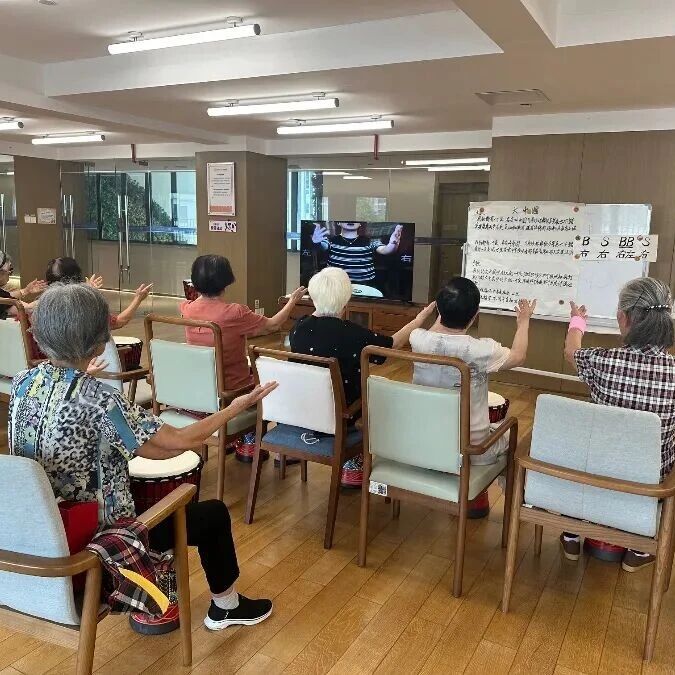
21特写|10万港人北上养老进行时
2 1 Shi Ji Jing Ji Bao Dao· 2025-10-13 13:32
Core Insights - The trend of Hong Kong residents moving to mainland China for retirement is experiencing significant growth, driven by the expansion of the "Guangdong Residential Care Services Scheme" to cover cities in the Greater Bay Area [1][2] - The Hong Kong government is actively promoting the integration of elderly residents into mainland cities, with new policies aimed at facilitating this transition [2] - The increasing number of Hong Kong seniors choosing to retire in mainland China is influenced by factors such as cost-effectiveness and the availability of care services [1][5] Summary by Sections Retirement Trends - Nearly 100,000 Hong Kong seniors aged 65 and above have settled in Guangdong, marking a growth of over 40% in the past decade [1][3] - The average life expectancy in Hong Kong is 85.5 years, with seniors constituting 23.9% of the population by 2024 [3] Government Initiatives - The Hong Kong government has introduced a new policy to subsidize 1,000 seniors receiving social assistance to participate in the "Guangdong Residential Care Services Scheme," providing each with HKD 5,000 [2] - The "Guangdong Residential Care Services Scheme" has expanded its coverage, with 15 participating institutions by March 2025, increasing to 24 institutions by October 2023 [4] Cost and Quality of Care - The cost of living in mainland retirement homes is significantly lower, with couples in Shenzhen spending approximately HKD 14,000 monthly compared to HKD 50,000 in Hong Kong [5] - The choice of retirement home is based on adaptability to individual needs rather than geographical location, emphasizing the importance of care quality and environment [5] Challenges in Cross-Border Retirement - Cross-border healthcare issues pose significant challenges, including the lack of medical insurance for Hong Kong seniors in mainland China and the absence of a streamlined process for urgent medical needs [7][8] - Cultural differences, such as food preferences and language barriers, also affect the retirement experience for Hong Kong seniors in mainland institutions [8] Future Outlook - The aging population in Hong Kong is projected to increase, with estimates suggesting that by 2050, one in three residents will be elderly [9] - The trend of Hong Kong seniors moving to mainland China for retirement is expected to accelerate, with an expanding range of cities in the Greater Bay Area accommodating this demographic shift [9]
10万港人北上养老进行时
2 1 Shi Ji Jing Ji Bao Dao· 2025-10-13 13:23
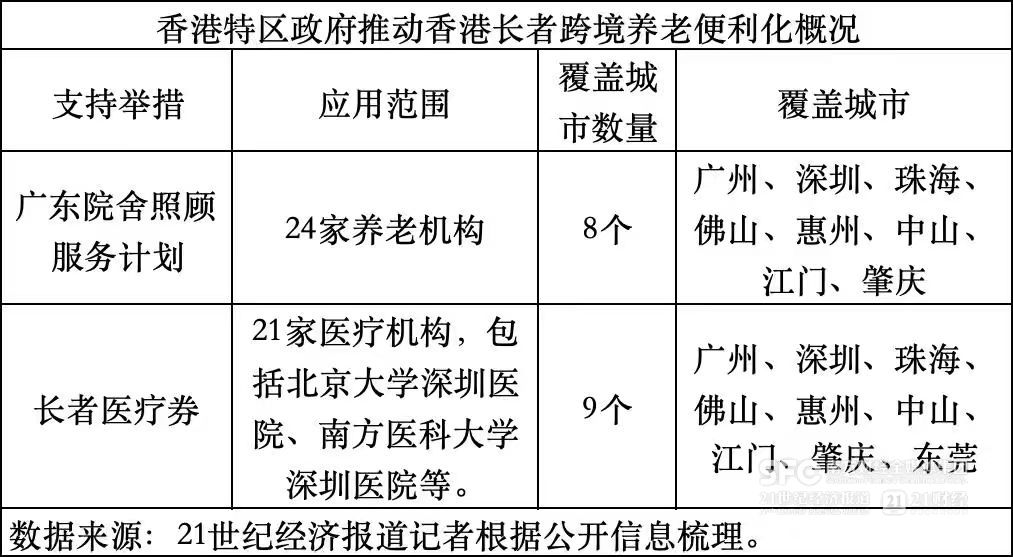
Core Insights - The trend of Hong Kong residents moving to the Greater Bay Area for retirement is increasing, driven by the expansion of the "Guangdong Residential Care Service Scheme" [2][3] - The Hong Kong government is actively promoting cross-border elderly care, with new policies and financial support to facilitate this transition [3][6] - Despite the growing interest, challenges remain in cross-border healthcare and service adaptation, impacting the overall experience for Hong Kong seniors [10][13] Group 1: Market Dynamics - The number of Hong Kong seniors residing in Guangdong is projected to reach nearly 100,000 by 2024, marking a growth of over 40% in the past decade [3][4] - The average waiting time for elderly care facilities in Hong Kong exceeds two years, while similar facilities in Guangdong have a much shorter approval process of about one month [5][6] - The cost of living in Guangdong for elderly care is significantly lower, with couples spending approximately 14,000 yuan per month compared to 50,000 yuan in Hong Kong [8] Group 2: Government Initiatives - The Hong Kong government has introduced a subsidy program for 1,000 seniors to participate in the "Guangdong Residential Care Service Scheme," providing each with 5,000 yuan [3][6] - The number of participating elderly care institutions in the scheme is set to increase from 15 to 24, expanding coverage to eight cities in the Greater Bay Area [6][12] - The government is also working to enhance the availability of medical services for seniors using medical vouchers, with 21 designated medical institutions across the Greater Bay Area [11][12] Group 3: Challenges and Adaptation - Cross-border healthcare issues, including the lack of medical insurance for Hong Kong seniors in mainland China, complicate their access to necessary medical services [10][13] - Cultural differences, such as dietary preferences and language barriers, pose additional challenges for Hong Kong seniors adapting to life in Guangdong [13][14] - The disparity in healthcare standards between Hong Kong and mainland China affects the willingness of some seniors to seek care in the mainland [13]
近10万名香港老人定居广东,港资养老机构加速“北上”布局
Sou Hu Cai Jing· 2025-10-10 10:07
Group 1 - The core viewpoint of the article highlights the increasing trend of elderly Hong Kong residents choosing to settle in Guangdong Province for retirement, with a growth of over 40% compared to the past decade, projected to reach nearly 100,000 individuals aged 65 and above by mid-2024 [1][6] Group 2 - Hong Kong enterprises are exploring diverse development paths by either collaborating with public elderly care institutions in mainland China through the "Guangdong Elderly Care Service Plan" or directly establishing their own elderly care facilities in the mainland [3] - A Hong Kong-funded elderly care apartment in Zhongshan has adopted a non-traditional model, allowing residents free access while integrating medical, commercial, and leisure services within the building [3] Group 3 - The growing demand for elderly care services among Hong Kong residents is the fundamental driving force behind the accelerated expansion of Hong Kong-funded elderly care enterprises in mainland China [6] - A Hong Kong-listed company's subsidiary in Foshan operates nine elderly care institutions and has established a 1+1 cooperation model with Hong Kong institutions [4]
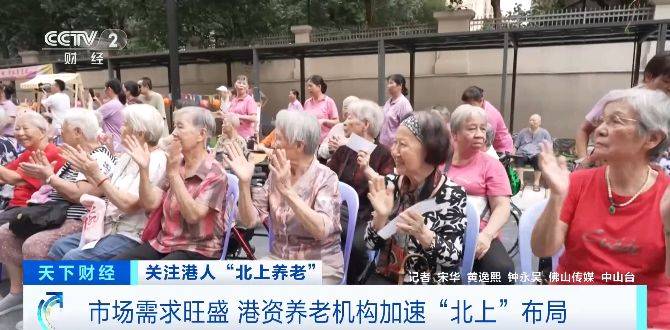
多重优势吸引港人“北上养老” 市场需求旺盛养老机构加速“北上”布局
Yang Shi Wang· 2025-10-10 06:46
Core Insights - The number of Hong Kong seniors aged 65 and above choosing to settle in Guangdong Province has increased by over 40% compared to the past decade, with cities like Guangzhou, Foshan, and Zhongshan becoming popular retirement destinations [1] Group 1: Elderly Care Programs - The "Guangdong Residential Care Service Program" has expanded, with the number of recognized care institutions increasing to 24, significantly reducing waiting times for Hong Kong seniors [10][11] - The program, initiated in 2014, aims to alleviate the pressure on local Hong Kong nursing homes by allowing seniors to access care in mainland China [11] - The program covers accommodation, care services, personal assistance, and basic medical expenses for eligible seniors, funded by the Hong Kong government [7] Group 2: Market Demand and Business Expansion - There is a growing demand for elderly care services among Hong Kong residents, prompting Hong Kong-funded elderly care enterprises to accelerate their expansion into mainland China [12] - Some Hong Kong companies are directly establishing elderly care facilities in mainland China, exploring diversified development paths [14] - A Hong Kong-listed company's subsidiary in Foshan operates nine elderly care institutions and collaborates with Hong Kong organizations [15] Group 3: Living Conditions and Experiences - Seniors like Lin Peijie and Huang Pinai have expressed satisfaction with the rich activities, attentive care, and comprehensive medical conditions available in their chosen facilities [5] - The "Guangdong Residential Care Service Program" has allowed seniors to experience a variety of living arrangements, including self-funded and government-supported options [7][9] - The integration of medical, commercial, and recreational services in some facilities reflects a shift towards more open and flexible living environments for seniors [17]

从“三不”到“真香”,香港银发族正掀起大湾区养老热
Di Yi Cai Jing· 2025-09-12 10:22
Core Insights - Hong Kong's elderly care resources are facing a significant supply-demand gap, leading to an increasing trend of elderly residents moving to mainland China for better care options [1][2][4] - The number of Hong Kong seniors aged 65 and above choosing to settle in Guangdong has surged by 40.5% over the past decade, with nearly 100,000 expected by 2024 [1][2] - The Hong Kong government has initiated various plans to support elderly residents, including cash allowances and care service programs, to facilitate cross-border elderly care [5][6] Group 1: Elderly Care Demand and Supply - The public elderly care facilities in Hong Kong are under severe pressure, with long waiting times and high entry barriers, while private facilities are costly and offer low value for money [2][3] - Statistics indicate that one in seven people in Hong Kong is aged 65 or older, and this demographic is projected to exceed 30% of the population by 2039 [2][3] - Many elderly individuals, like the case of a 78-year-old man, find themselves in a "gap" where they do not qualify for public care but cannot afford private options [3] Group 2: Cross-Border Elderly Care Trends - The trend of Hong Kong seniors moving to mainland China for elderly care is gaining momentum, with many institutions beginning to establish or collaborate with mainland facilities [4][5] - The "Guangdong Plan" and "Fujian Plan" initiated by Hong Kong provide financial support for eligible residents moving to these regions, including monthly allowances [5][6] - By 2024, it is expected that around 2,000 Hong Kong seniors will visit and experience care facilities in mainland China, with approximately 40 expected to move in [4][5] Group 3: Healthcare and Financial Services - Despite the appeal of cross-border elderly care, challenges remain, particularly regarding healthcare access and the interoperability of medical records between Hong Kong and mainland China [7][8] - Financial institutions are increasingly targeting the elderly care market, offering innovative solutions such as "zero-cost entry" models for mainland care communities [9][10] - Companies like China Taiping and Guangfa Bank are developing services that facilitate cross-border medical care and enhance communication between elderly residents and their families [9][10]