脑机接口

Search documents
量产信号触发行业狂欢,脑机接口登顶 A 股新年最强风口
Sou Hu Cai Jing· 2026-01-05 11:11
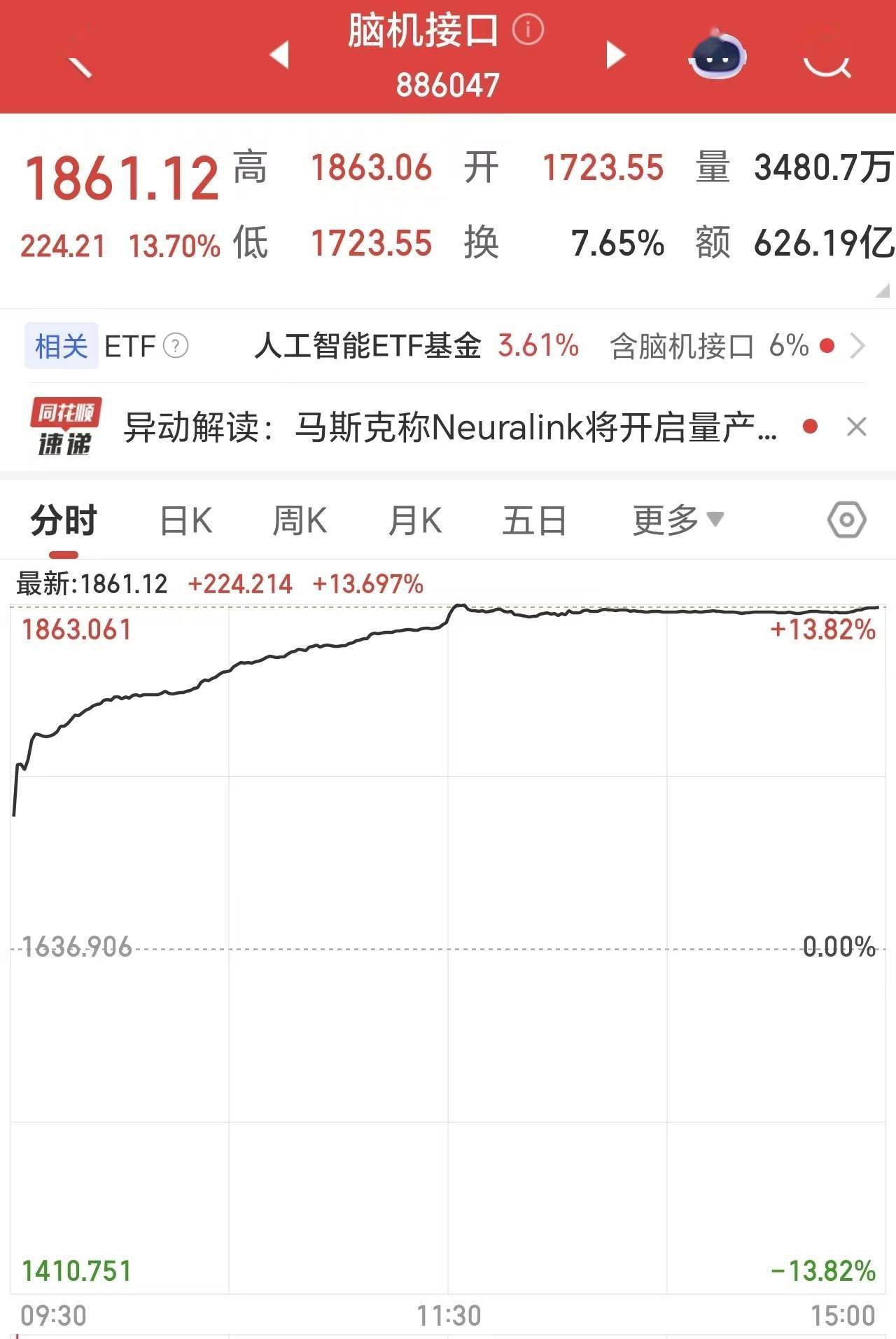
Group 1 - The brain-computer interface (BCI) sector in A-shares experienced a strong opening on January 5, with the concept index rising over 13%, making it the strongest sector of the day. Stocks within the sector saw a surge, with companies like Beiyikang hitting a 30% limit up, and others like Sanbo Brain Science and Xiangyu Medical achieving 20% limit up [1] Group 2 - Elon Musk announced a production timeline for brain-computer interface devices from Neuralink, aiming for large-scale production to start in 2026. The innovative surgical process will significantly reduce operation time from 6 hours to under 20 minutes, with 12 patients already implanted with the device, accumulating over 15,000 hours of use [4] Group 3 - The global competition in the brain-computer interface field is intensifying, with the U.S. leading in invasive and semi-invasive technologies, while China is advancing in non-invasive methods. Companies like MergeLabs and Brain Tiger Technology are at the forefront of these developments [5] Group 4 - The brain-computer interface has been included in China's "14th Five-Year Plan" as a key future industry, with goals set for technological breakthroughs by 2027 and industry strength to rank among the world's top by 2030. Policies are facilitating market entry, with companies like Xiangyu Medical targeting over 1,000 hospitals by next year [6] Group 5 - The long-term prospects for the brain-computer interface industry are viewed positively by institutions, with predictions of the global market reaching $12.4 billion by 2034 and $320 billion by 2045. Recent capital inflows into the sector indicate a strong interest in its commercial potential [6]

马斯克放出“量产时间表”,脑机接口集体涨停,商业化拐点来了?
华尔街见闻· 2026-01-05 11:10
Core Viewpoint - The brain-computer interface (BCI) industry is transitioning from experimental medical devices to consumer products, driven by Elon Musk's announcement of mass production timelines for Neuralink devices by 2026 [1][2]. Market Performance - On the first trading day of 2026, the BCI sector showed strong performance, with multiple stocks, including Beiyikang and Sanbo Neuroscience, hitting the upper limit of their trading ranges, indicating high market expectations for BCI commercialization [1]. Technological Developments - Neuralink's announcement of automated surgical procedures and mass production plans marks a significant milestone, indicating a shift from medical trial tools to widely available products [7][9]. - The technology roadmap for Neuralink includes plans to increase electrode channels from 3,000 in 2026 to over 25,000 by 2028, aiming for comprehensive brain connectivity [9]. Market Potential - The potential market size for BCI devices in the U.S. is projected to reach $80 billion by 2035, primarily targeting treatments for neurological diseases such as ALS and stroke [9]. - The global BCI market is expected to grow to approximately $12.4 billion by 2034, with a compound annual growth rate (CAGR) of 17% from 2025 to 2034 [16]. Competitive Landscape - The BCI field is characterized by intense competition, with the U.S. advancing in semi-invasive technologies while China shows progress in non-invasive methods [11]. - Chinese companies have made significant strides, with Brain Tiger Technology achieving world-leading status in invasive BCI technology [12]. Policy Support - The Chinese government has included BCI in its "14th Five-Year Plan," setting ambitious goals for technological breakthroughs and industry strength by 2030 [21]. - Recent policy measures aim to facilitate the integration of BCI products into healthcare systems, addressing regulatory challenges [21]. Future Outlook - The BCI industry is expected to expand beyond medical applications into AI and robotics, with the potential to create a trillion-dollar market space if human capabilities can be enhanced through these technologies [19][14].
重回4000!超级赛道攻势延续
Ge Long Hui· 2026-01-05 10:56
(原标题:重回4000!超级赛道攻势延续) 2026年第一个交易日,A股马上迎来了开门红。沪指拉升涨超1%,时隔34个交易日,盘中重回4000点;创业板指涨超2%,科技股、金融、周期板 块纷纷上涨。 随着"新质生产力"从政策概念走向产业落地,商业航天已不再是遥不可及的题材炒作,而是正在成长为大国博弈与经济转型的硬核引擎。 2025年见证了国防军工板块的强势复苏,尤其是涵盖卫星互联网的商业航天细分赛道,在年末更是呈现出加速上攻的态势。 元旦回来赛道延续攻势,卫星产业ETF(159218)跟踪的标的指数大涨3.78%,盘中资金抢筹积极,净流入量直接创下单日新高。 这种超额收益的背后,是资金对中国航天从"试验探索"迈向"工业化量产"这一历史性跨越的敏锐捕捉。 01 2026,开门红 板块题材上,脑机接口、保险、半导体、商业航天、创新药、游戏、有色金属板块涨幅居前;海南自贸区、旅游及酒店、银行、跨境支付、猪肉 板块跌幅居前。 具体来看,脑机接口板块早盘掀起涨停潮,倍益康30cm涨停,三博脑科、美好医疗、翔宇医疗等超20股涨停。 据报道,马斯克近日在社交媒体上表示,其脑机接口公司Neuralink将于2026年开始对脑 ...
12连阳,沪指创33年最长连阳纪录!机构资金和各路游资纷纷出手,A股春季躁动行情渐入高潮,高盛高呼高配中国股票
Jin Rong Jie· 2026-01-05 10:47
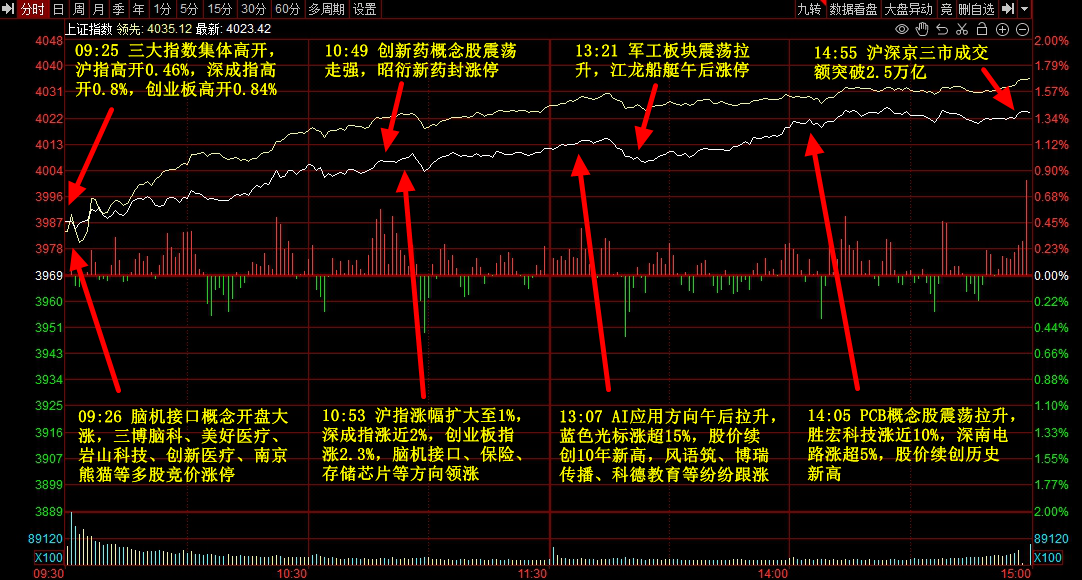
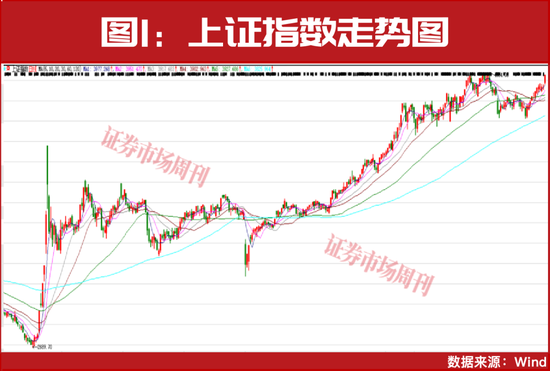
整体看,A股交投气氛十分活跃,机构资金和各路游资纷纷出手,各有斩获。 数据显示,多家机构席位出现在了蓝色光标、盐湖股份、海格通信、西测测试的龙虎榜中,此外A股实 力游资章建平也出现在蓝色光标龙虎榜中,单日买入了6482.08万元,卖出了2.59亿元。 12连阳,沪指创33年最长连阳纪录,A股春季躁动行情渐入高潮! 1月5日,A股迎来2026年首个交易日,三大指数全天高开高走,截至收盘,沪指涨1.38%,报4023.42 点,深成指涨2.24%,报13828.63点,创业板指涨2.85%,报3294.55点,科创50指数涨4.4%,报1403.41 点。与此同时,资金纷纷疯狂涌入A股,今日沪深两市合计成交额25463.47亿元,较上一个交易日放量 5011亿。 值得注意的是,沪指在2025年末已经走出11连阳的强势走势。在今日A股实现开门红之后,沪指从2025 年12月17日至2026年1月5日的12个交易日中,成功实现12连阳,创下A股1993年以来最长连阳纪录。最 近33年间A股最长连阳纪录为11天,分别在2006年以及2017-2018年出现过。A股最长连阳纪录为99天, 但彼时A股才处于起步阶段,市场体 ...


龙虎榜复盘丨脑机接口爆发,半导体板块大涨
Xuan Gu Bao· 2026-01-05 10:46
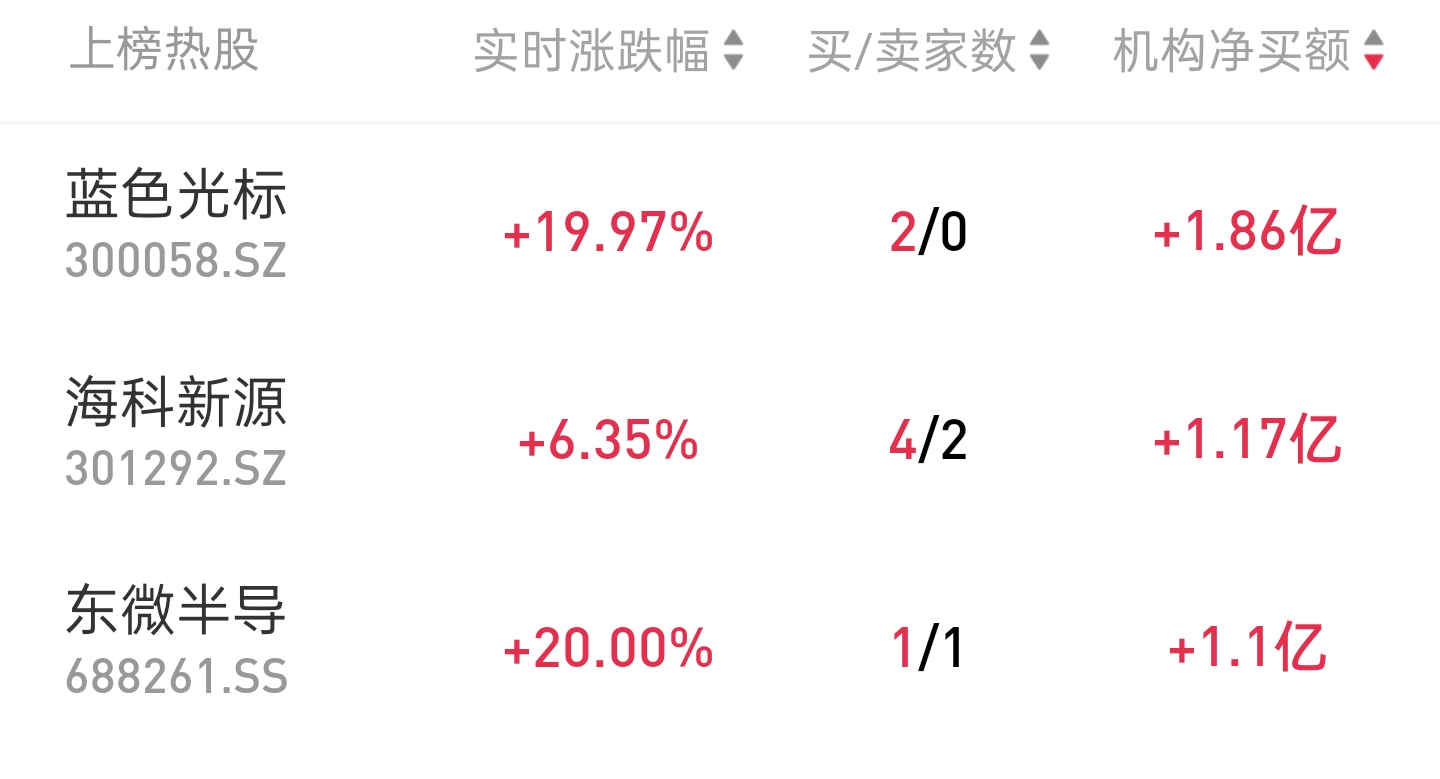
Group 1: Institutional Trading Insights - A total of 34 stocks were listed on the institutional trading leaderboard, with 18 stocks experiencing net buying and 16 stocks facing net selling [1] - The top three stocks with the highest net buying by institutions were: BlueFocus (¥186 million), Haike Xinyuan (¥117 million), and Dongwei Semiconductor (¥112 million) [1] Group 2: Stock Performance and Innovations - BlueFocus saw a price increase of 19.97% with 2 buyers and no sellers, while Haike Xinyuan increased by 6.35% with 4 buyers and 2 sellers [2] - BlueFocus launched an online AI video production platform called "BlueMark Avatar," aimed at reducing the difficulty of audio and video production for overseas advertisers [2] - The brain-computer interface (BCI) sector is gaining traction, with significant advancements in policy, technology, and financing, as highlighted by Fangzheng Securities [3] - The BCI industry is expected to see nearly 30 financing rounds in 2025, totaling over ¥5 billion, with several companies advancing towards IPOs [3] Group 3: Semiconductor Sector Developments - Hengshuo Co., Ltd. specializes in storage chips and MCU chips, including NOR Flash chips and is developing AI chips based on NOR flash technology [4] - Purun Co., Ltd. is planning to acquire control of Noah Changtian, which focuses on providing mid-to-high-end 2D NAND and derivative storage products [5] - The semiconductor market is experiencing significant gains, with major companies like SanDisk and Micron seeing stock price increases of nearly 16% and over 10%, respectively [5] - The Hong Kong stock market is also performing well, with companies like Birun Technology and Huahong Semiconductor seeing substantial stock price increases [6] - Overseas investment banks anticipate potential increases in capital expenditures for semiconductor companies in 2026, with TSMC and ASML expected to exceed performance expectations [7]

脑再生科技盘前飙涨近44%,南京熊猫电子股份暴涨39%,A股超30股集体涨停!马斯克一句话,市场爆了
21世纪经济报道· 2026-01-05 10:45
Core Viewpoint - The announcement by Elon Musk regarding the mass production of brain-machine interface (BMI) devices has significantly boosted market interest and stock prices in the related sector, indicating strong commercial expectations for the industry [4][6]. Industry Development - The brain-machine interface industry is poised for unprecedented growth, with 2025 being viewed as a pivotal year for its development in China, driven by policy support, increased capital investment, and technological breakthroughs [6][16]. - The Chinese government has included brain-machine interfaces in its "14th Five-Year Plan," recognizing it as a future industry with significant potential for transformation and upgrade in related sectors [6][15]. Market Dynamics - Following Musk's announcement, the A-share brain-machine interface index surged by 12%, with over 30 related stocks hitting the daily limit, and Nanjing Panda Electronics in Hong Kong rising over 39% [1][4]. - The global market for brain-machine interfaces in serious medical applications is projected to reach between $15 billion and $85 billion, while the consumer medical sector could see potential market sizes between $25 billion and $60 billion [16]. Technological Advancements - Neuralink has made significant progress, with 12 individuals having implanted devices as of September 2025, collectively using them for over 15,000 hours [4]. - The company aims to expand the range of devices controllable through its technology, including robotic arms for patients with conditions like ALS [4][6]. Competitive Landscape - The competition in the brain-machine interface field is intensifying, with both the U.S. and China advancing in various technological routes, including invasive and non-invasive methods [8][14]. - New companies, such as Gestalt Technology in China, are emerging with innovative approaches, such as ultrasound technology for brain-machine interfaces, indicating a diversification of technological pathways [8][14]. Regulatory and Ethical Considerations - The industry faces challenges related to the maturity and stability of technology, particularly for invasive devices, which require extensive clinical validation for long-term compatibility and signal stability [13][14]. - Regulatory and ethical approvals are critical, as the technology involves the human central nervous system, necessitating stringent safety and privacy standards [14]. Talent Development - China is taking steps to cultivate talent in the brain-machine interface field, with universities like Tianjin University launching specialized programs to train professionals in this interdisciplinary area [15].

A股站稳4000点开年:马斯克引爆脑机接口、板块暴涨13.67%!
Xin Lang Cai Jing· 2026-01-05 10:45
Market Overview - A-shares opened positively with the Shanghai Composite Index closing at 4023.42 points, up 1.38%, while the Shenzhen Index rose 2.24% and the ChiNext Index increased by 2.85% [1][7] - A total of 4185 stocks rose, with 107 hitting the daily limit, while 1168 stocks fell, including 9 that hit the lower limit [1][7] - The total trading volume reached 2.57 trillion yuan, an increase of 501.5 billion yuan or 25% from the previous trading day, indicating a significant surge in trading activity [1][8] Sector Performance - The brain-computer interface sector was notably active, surging by 13.70%, followed by the hyperbaric chamber sector with a 7.01% increase and the insurance sector rising by 6.72% [3][10] - The brain-computer interface sector saw 28 stocks hit the daily limit, with the stock BeiYikang (920119) on the Beijing Stock Exchange rising by 29.98% [3][10] Key Companies and Innovations - Elon Musk's Neuralink is set to begin large-scale production of brain-computer interface devices in 2026, which has significantly influenced market sentiment [3][10] - Neuralink's latest valuation stands at 9 billion USD, having raised 650 million USD in its E-round funding, with investors including Founder Fund, Google Ventures, and ARK Invest [5][12] - The commercial space sector remains active, with a 1.81% increase, continuing to set new highs [5][12] Notable Stocks - Zhejiang Shibao, a leading stock in the L3 sector, saw a peak limit increase but closed with a 5.73% rise [14][15] - BlueFocus, influenced by Meta's acquisition of Agent company Manus, achieved a two-day limit increase with a total rise of over 54% in three days, reaching a market capitalization of 49.617 billion yuan [15]

股价创四年半来的新高,70多机构又来调研河南这家上市公司
Xin Lang Cai Jing· 2026-01-05 10:44
Core Viewpoint - The brain-computer interface (BCI) sector has experienced a significant surge, with 29 out of 51 component stocks hitting the daily limit up, and a remarkable 40 stocks showing gains of over 10% on the first trading day of the year [2][15]. Company Performance - Xiangyu Medical (stock code: 688626.SH) achieved a 20% limit up on January 5, closing at 72.6 yuan per share, marking a four-and-a-half-year high [2][4]. - Since December 12, 2022, Xiangyu Medical's stock has increased by 53% over 15 trading days [8][21]. - The stock has shown a cumulative increase of 149.06% since the beginning of the previous year [3][17]. - The total market capitalization of Xiangyu Medical reached 11.6 billion yuan, reflecting a nearly 160% increase compared to 4.5 billion yuan at the beginning of 2025 [9][23]. Institutional Interest - The company has attracted significant institutional attention, receiving visits from 71 institutions in a short span from December 22 to December 29, 2022 [9][24]. - Xiangyu Medical has been the most popular among 48 listed companies in the BCI sector, with 553 institutions participating in its research activities [10][25]. Industry Trends - The BCI sector is shifting from a focus on technological competition to the ability to commercialize products effectively [11][26]. - Xiangyu Medical is concentrating on non-invasive BCI technology for rehabilitation medical applications, while also considering invasive and semi-invasive approaches [11][26]. - The company has established strategic partnerships with over 150 large hospitals and aims to cover 500 top-tier hospitals by the upcoming Spring Festival, expanding to over 1,000 hospitals next year [12][27]. Market Performance - The BCI sector index has risen by 75.33% over the past year, significantly outperforming the Shanghai and Shenzhen 300 index, which increased by 19.89% [13][28]. - Among the 51 listed companies in the BCI sector, 45 have seen stock price increases, with 2 companies experiencing gains between 300% and 200%, and 10 companies between 200% and 100% [13][28].


超级行情蓄势待发!A股2026年将迎“全面牛”行情!
Xin Lang Cai Jing· 2026-01-05 10:33
Market Overview - The A-share market welcomed a strong start in 2026, with major indices rising and the Shanghai Composite Index surpassing 4000 points on the first trading day [1][14] - Various sectors, including brain-computer interfaces, insurance, cloud gaming, AI chips, AI medicine, and CRO concepts, saw significant gains, with over 4000 companies experiencing stock price increases [1][14] Foreign Investment Sentiment - Global investors are increasingly optimistic about the long-term value of Chinese assets, with several foreign institutions expressing positive views on China's asset performance for 2026 [3][16] - Morgan Stanley upgraded the rating of the Chinese market to "overweight," citing reasonable valuations and light international investor positions [3][16] A-share Market Predictions - Analysts predict that the A-share market will continue its "slow bull" trend in 2026, with potential for a "full bull" market in the second half of the year [4][17] - The net asset return on equity (ROE) for non-financial companies has stabilized, with advanced manufacturing profits rising to 38% and overseas revenue for outbound companies increasing to 20% [5][18] Brain-Computer Interface Sector - The brain-computer interface sector is experiencing strong growth, with a projected compound annual growth rate (CAGR) of 17% from 2025 to 2034, potentially reaching a market size of approximately $12.4 billion by 2034 [11][24] - Key drivers for this growth include technological breakthroughs, policy support, and the integration of robotics, with significant investments flowing into emerging industries [11][24] Company Performance in Brain-Computer Interfaces - As of the third quarter of 2025, Century Huatong reported the highest net profit of 4.36 billion yuan, while Yanshan Technology achieved a remarkable 331.09% year-on-year growth in net profit [12][25][26] - Despite the promising growth outlook, the number of profitable companies in the brain-computer interface sector remains limited [12][25]
A股五张图:老马,A股“真神”
Xuan Gu Bao· 2026-01-05 10:33
1、行情 2026年的第一个交易日,A股迎来指数集体大涨的"开门红"。 题材方面,脑机接口全天大爆发,三博脑科(20CM)、美好医疗(20CM)、岩山科技、创新医疗、南京熊猫等集体一字板,盈趣科技、翔宇 医疗(20CM)、荣泰健康、国际医学、爱朋医疗(20CM)、麦澜德(20CM)、诚益通(20CM)、伟思医疗(20CM)、迈普医学 (20CM)、博拓生物(20CM)、航天长峰、东方中科、狄耐克(20CM)、高德红外、冠昊生物(20CM)、新华医疗等先后涨停; 存储板块同样高开高走,云汉芯城(20CM)、兆易创新、恒烁股份(20CM)、普冉股份(20CM)等纷纷涨停,江波龙、香农芯创、中微公 司、开普云等涨超10%; AI应用再度走强,南兴股份3连板,利欧股份、蓝色光标(20CM)二连板,当虹科技(20CM)、引力传媒涨停,福昕软件、汉得信息、易点 天下、福石控股等集体大涨; 此外,航天板块全天小幅震荡,医疗、量子科技、算力等均有局部强势表现,海南板块大跌。 截至收盘,沪指、深成指、创业板指分别收涨1.38%、2.24%、2.85%,市场超4100股上涨,1100余股下跌,两市明显放量至2.5万亿。 2、脑机 ...