
种植业

Search documents
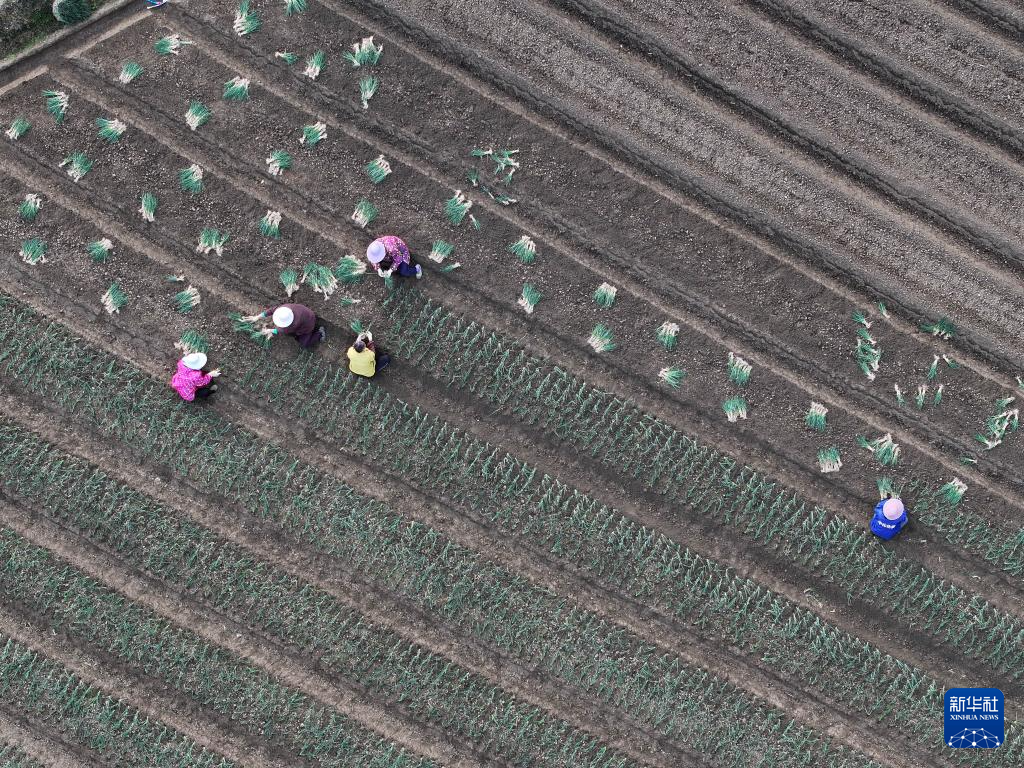
可爱的乡村——葱满葱园又“葱”忙
Ren Min Wang· 2025-11-12 16:03
Core Insights - The article highlights the peak season for harvesting and selling scallions in the core demonstration base of over 10,000 acres in Longxing Village, San Dou Town, Liuzhou City, Guangxi [2][3][5] Industry Development - San Dou Town has accelerated the pace of agricultural development through a model combining "demonstration areas + professional cooperatives + farmers" to promote the industrialization, scale, and standardization of scallion production [2][3][5] - The town has established an integrated industrial system encompassing production, processing, sales, and services, enhancing the agglomeration effect of the industry and continuously promoting rural industrial revitalization [2][3][5] Production Statistics - The total planting area for scallions in San Dou Town has reached 43,000 acres (including double cropping), with an annual output of approximately 100,000 tons [2][3][5]

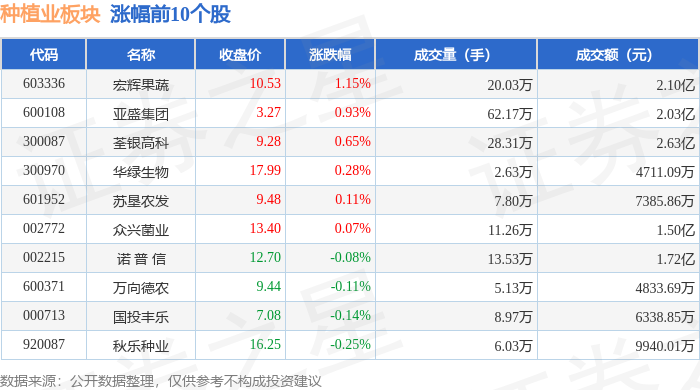
种植业板块11月12日跌0.39%,神农种业领跌,主力资金净流出1.6亿元
Zheng Xing Xing Ye Ri Bao· 2025-11-12 08:44
Market Overview - The planting industry sector declined by 0.39% on November 12, with Shennong Seed Industry leading the drop [1] - The Shanghai Composite Index closed at 4000.14, down 0.07%, while the Shenzhen Component Index closed at 13240.62, down 0.36% [1] Stock Performance - Notable gainers included Honglian Huan Shu with a closing price of 10.53, up 1.15%, and Yasheng Group at 3.27, up 0.93% [1] - Shennong Seed Industry closed at 5.19, down 1.52%, with a trading volume of 903,400 shares and a transaction value of 473 million [2] - The overall trading volume and transaction values for various stocks in the planting sector were significant, with several stocks experiencing minor fluctuations in their closing prices [1][2] Capital Flow - The planting industry sector saw a net outflow of 160 million from main funds, while retail investors contributed a net inflow of 141 million [2] - The detailed capital flow indicated that major funds were predominantly withdrawing from stocks like Xin Nong Kai Fa and Guo Tou Feng Le, while retail investors were more active in stocks like San Shi Yu Zhi [3]


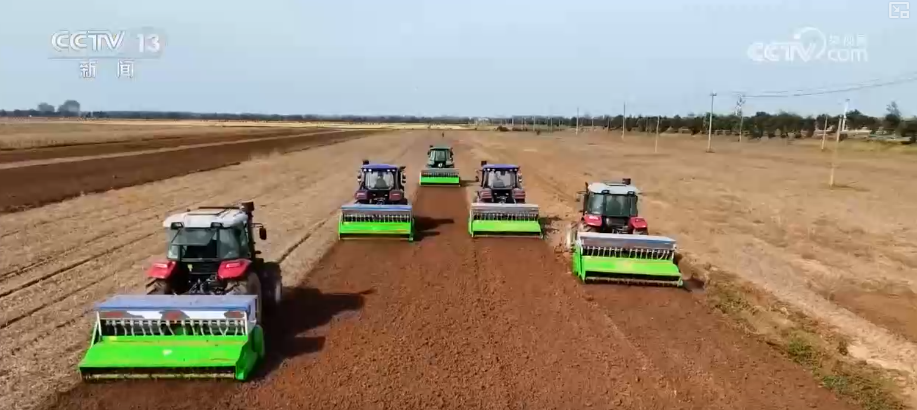
各地精准施策全力以赴高质量播种 “新技术+新设备”让秋冬种更“智慧”
Yang Shi Wang· 2025-11-12 04:05
Core Insights - The article discusses the impact of continuous rainfall on the winter wheat sowing period in major grain-producing areas, highlighting efforts to ensure timely planting and high-quality sowing practices across various regions [1][3]. Group 1: Winter Wheat Sowing - The autumn and winter sowing area accounts for nearly one-fourth of the annual grain sowing area, with recent reports indicating that nearly 70% of winter wheat has been sown nationwide [3]. - In Shandong, over 60 million acres of winter wheat sowing tasks have been allocated to specific plots, promoting cold-resistant early-maturing varieties and late-sowing techniques to mitigate the impact of delayed sowing [5]. - In Anhui, efforts are focused on precise land preparation and accelerating soil drying to prevent poor sowing conditions, with over 1,700 agricultural technicians deployed to assist large-scale grain producers [7]. Group 2: Innovative Techniques - In Sichuan, experts have introduced a new no-till sowing technology for wheat following rice, modifying existing sowing machines to facilitate planting in wet soil conditions [8]. - The Ministry of Agriculture and Rural Affairs has organized technical guidance teams to key provinces to ensure the implementation of critical measures for autumn and winter sowing, aiming to improve sowing quality [17]. Group 3: Winter Oilseed Rape Sowing - In Jiangxi, over 240 million yuan has been allocated to support the expansion of winter oilseed rape cultivation, with expected sowing areas stabilizing at over 9 million acres [10]. - The winter oilseed rape sowing progress in the Yangtze River basin has exceeded 90% [11]. - In Hunan, the expected sowing area for winter oilseed rape is over 20 million acres, with plans to promote 10 main varieties and implement mechanized sowing techniques by 2025 [13].
不掉队 赶上来丨这名脱贫户的账本为何越记越详细
Ren Min Ri Bao· 2025-11-12 02:15
Core Insights - The article highlights the transformation of a poverty-stricken household in Inner Mongolia, showcasing how diversified income sources and government support have led to stable poverty alleviation and increased earnings for the family [2][4]. Group 1: Economic Transformation - Bai Yinbao's family, previously earning less than 4,000 yuan per person annually in 2014, has now achieved a stable income exceeding 10,000 yuan per person due to various subsidies and income sources [2]. - The family has diversified its income through livestock farming, with a current count of 170 sheep and 32 cattle, and has benefited from a subsidy of 11,000 yuan from the birth of calves [3]. Group 2: Government Initiatives - The local government implemented a relocation program in 2017, providing new housing and infrastructure, which has significantly improved living conditions for the villagers [2]. - The "Borrowing Chickens" project allows villagers to receive free chicken chicks, with a return policy that supports sustainable farming practices and provides additional income [3]. Group 3: Environmental and Agricultural Improvements - The establishment of a 1,500-acre sand-fixing seabuckthorn forest has improved land conditions, leading to increased agricultural productivity and an annual collective income boost of 200,000 yuan from seabuckthorn fruit [4]. - Bai Yinbao's involvement in ecological protection roles, such as being a forest ranger, has also contributed to his income, demonstrating the integration of environmental stewardship with economic benefits [4].
优化种植结构提升科技含量
Jing Ji Ri Bao· 2025-11-12 01:35
Core Insights - The overall stability of grain production in China is attributed to the continuous optimization of planting structure and significant agricultural technological innovations, which are crucial for ensuring food security [1] Group 1: Agricultural Innovations - The promotion of intercropping technology in North China is expected to yield 500 to 600 kg of corn per mu while additionally increasing soybean yield by 100 to 130 kg, enhancing both staple food security and oil supply [1] - In the northwest dry farming areas, drought-resistant wheat varieties and drip irrigation technology have been implemented, achieving a water savings of 30 to 50 cubic meters per mu and stabilizing wheat yields at 400 to 500 kg per mu [1] Group 2: Challenges in Grain Production - Current challenges include structural labor shortages in rural areas, low enthusiasm among some farmers for modern agriculture, bottlenecks in key technological innovations, and difficulties in the implementation of technology [1] - Extreme weather events such as droughts, heavy rains, and pests pose new uncertainties for agricultural production [1] Group 3: Policy Support and Financial Investment - The government has enhanced policy responsiveness and financial support, exemplified by the allocation of 484 million yuan for disaster relief during the critical autumn harvest period [2] - Future subsidy mechanisms may be explored to link financial support to planting area and actual yield, promoting a diversified investment model involving government, enterprises, and society [2] Group 4: Agricultural Technology Development - Emphasis on breeding innovation using modern technologies like gene editing and AI to accelerate the development of new crop varieties [3] - The establishment of a diversified agricultural technology promotion system, including technology commissioners and agricultural promotion stations, aims to facilitate the widespread application of agricultural technologies [3] Group 5: New Agricultural Entities - The cultivation of new agricultural entities such as collective economic organizations and family farms is encouraged to promote moderate-scale operations, enhancing both yield and profitability [3] - There is a need to connect small farmers with modern agricultural practices to stimulate production enthusiasm and create a cohesive operational framework [3] Group 6: Future Directions - The transformation in planting structure and agricultural technology represents a significant shift from traditional agricultural practices, necessitating the integration of cutting-edge technologies for sustainable and efficient agricultural practices [4] - A more robust agricultural disaster prevention and mitigation system is essential to enhance resilience and risk management in agricultural production, ensuring long-term food security [4]
丰收节见证中布农业合作新成果
Ren Min Ri Bao Hai Wai Ban· 2025-11-12 00:46
Core Insights - The first "China-Burkina Faso Friendship Harvest Festival" was held in Burkina Faso, highlighting agricultural cooperation and the introduction of new rice varieties [1] - The collaboration between China and Burkina Faso has significantly improved local rice production, with output increasing from 325,000 tons in 2017 to 504,000 tons in 2023 [2] Group 1: Agricultural Cooperation - The agricultural cooperation between China and Burkina Faso is a crucial part of Burkina Faso's food security strategy, with new hybrid rice varieties showing strong adaptability and high yields [1] - Chinese agricultural experts have been instrumental in promoting high-yield hybrid rice technology and poverty alleviation strategies in Burkina Faso [2] Group 2: Impact on Local Farmers - Local farmers expressed satisfaction with the new rice varieties, reporting higher yields compared to previous years, which is vital for achieving food self-sufficiency [1] - Training programs for local agricultural technicians and farmers have been implemented, with over 1,041 individuals trained since the start of the third phase of the agricultural aid project [2] Group 3: Future Prospects - The third phase of the agricultural aid project, starting in March 2025, aims to further promote hybrid rice technology and establish demonstration villages to enhance food security and rural poverty reduction [2] - The successful trials of hybrid rice have demonstrated the potential for increased agricultural productivity and innovation through China-Burkina Faso cooperation [2]
庄明浩:优化种植结构提升科技含量
Jing Ji Ri Bao· 2025-11-12 00:00
Core Insights - The overall stability of grain production in China is attributed to the continuous optimization of planting structure and significant agricultural technological innovations, which are crucial for ensuring food security [1] Group 1: Planting Structure Optimization and Technological Innovation - The promotion of intercropping technology in North China is expected to yield corn at 500 to 600 kg per mu while additionally increasing soybean yield by 100 to 130 kg, enhancing both staple food security and oil supply [1] - In the northwest dry farming areas, drought-resistant wheat varieties and drip irrigation technology have been implemented, achieving a water savings of 30 to 50 cubic meters per mu and stabilizing wheat yields at 400 to 500 kg per mu [1] Group 2: Challenges in Grain Production - Current challenges include structural labor shortages in rural areas, low enthusiasm among some farmers for modern agriculture, bottlenecks in key technological innovations, and difficulties in technology promotion [1] - Extreme weather events such as droughts, heavy rains, and pests pose new uncertainties for agricultural production [1] Group 3: Policy Support and Financial Investment - The government has enhanced policy responsiveness and financial support, exemplified by the allocation of 484 million yuan for disaster relief during the critical autumn harvest period [2] - Future subsidy mechanisms may explore differentiated approaches linked to planting area and actual yield to improve fund utilization efficiency [2] Group 4: Agricultural Technology Development and Promotion - There is a call for increased investment in breeding innovation using modern technologies like gene editing and AI to accelerate the development of new crop varieties [3] - The establishment of diverse agricultural technology promotion systems, such as technology special commissioners and agricultural technology promotion stations, is crucial for large-scale application of new technologies [3] Group 5: New Agricultural Operating Entities - The cultivation of new agricultural operating entities, such as collective economic organizations and family farms, is essential for promoting moderate-scale operations and enhancing production efficiency [3] - Creating a close interest connection mechanism between small farmers and modern agriculture can stimulate production enthusiasm and strengthen food security [3] Group 6: Future Directions - The transformation towards optimized planting structures and technological innovation represents a profound change in agricultural practices, moving from single crop management to systematic optimization [4] - There is a need to integrate cutting-edge technologies like AI with agriculture to develop new models that are green, low-carbon, high-yield, and efficient [4]
截至11月10日,全国冬小麦播种近七成
Xin Hua Wang· 2025-11-11 23:41
Core Insights - As of November 10, nearly 70% of the national winter wheat has been sown in China [1] - The winter oilseed rape sowing has exceeded 90% nationwide [2] Provincial Breakdown - In Henan, 55% of winter wheat has been sown - In Shandong, 75% of winter wheat has been sown - In Anhui, over 70% of winter wheat has been sown - In Shaanxi, over 70% of winter wheat has been sown - In Jiangsu, 45% of winter wheat has been sown - In Shanxi, nearly 80% of winter wheat has been sown [2]
山东莱西:“五良融合”稳产增效
Jing Ji Ri Bao· 2025-11-11 22:14
Group 1: Agricultural Development in Laixi City - Laixi City has implemented a comprehensive approach to enhance grain yield by focusing on improving soil quality, crop varieties, and farming techniques, resulting in a significant increase in grain production [1][2] - The city has established high-standard farmland covering 1.112 million acres, with 45,000 acres newly built this year, aiming to create stable and high-yield "ton grain fields" [2] - The introduction of high-quality corn varieties has led to an increase in corn yield by over 40 kilograms per acre, with a coverage rate of 98% for improved seed varieties [2] Group 2: Technological Advancements in Agriculture - The use of modern machinery has been promoted, with over 800 large tractors and 1,400 corn harvesters, achieving a mechanization rate of 91.62% in crop farming [4] - Laixi City has introduced a "grain bank" model, allowing farmers to store grain and access agricultural resources and credit support, enhancing their financial flexibility [3] - The integration of digital technology in agricultural management has improved efficiency and provided farmers with precise information and support [5]
优化种植结构 提升科技含量
Jing Ji Ri Bao· 2025-11-11 22:04
Core Insights - The overall stability of grain production in China amidst extreme weather events is attributed to the dual drivers of optimized planting structure and innovative agricultural technology [1] - The promotion of intercropping techniques in North China and drought-resistant wheat varieties in Northwest regions has significantly improved crop yields and resource efficiency [1] - Despite achievements, challenges such as labor shortages, low farmer engagement, and frequent natural disasters remain pressing issues for agricultural production [1] Policy Support - Strengthening the policy support system and increasing financial backing is essential, with timely responses to agricultural challenges, such as the issuance of disaster relief funds during adverse weather conditions [2] - Innovative subsidy mechanisms linked to planting area and actual yield can enhance the effectiveness of financial support [2] Agricultural Technology Development - Emphasis on agricultural technology research, integration, and application is crucial, including the use of modern techniques like gene editing and AI for breeding innovations [3] - The establishment of diverse agricultural technology promotion systems is necessary to facilitate the widespread application of new technologies [3] New Agricultural Entities - The cultivation of new agricultural operating entities, such as collective economic organizations and family farms, is vital for enhancing grain production efficiency [3] - Creating mechanisms that connect small farmers with modern agricultural practices can stimulate production enthusiasm and ensure food security [3] Future Outlook - The transformation towards optimized planting structures and agricultural innovation represents a significant shift in agricultural practices, necessitating the integration of advanced technologies for sustainable production [4] - A comprehensive agricultural disaster prevention and mitigation system is needed to enhance resilience and sustainability in agricultural production [4]