
光学光电子

Search documents
欧菲光担保总额度75.18亿元 占净资产205%
Zhong Guo Jing Ji Wang· 2025-09-29 07:11
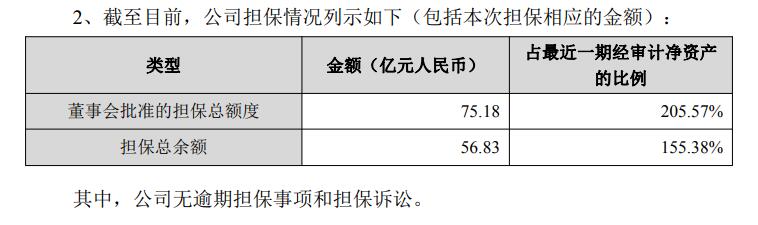
Core Points - The company O-film Technology (002456.SZ) has announced that its total external guarantees have exceeded 100% of its most recent audited net assets, with guarantees exceeding 50% of the company's latest audited net assets [1] - To meet the operational needs of Jingzhuo Technology, the company has signed a maximum guarantee contract with CITIC Bank for a total guarantee amount of RMB 14.44 million, representing 48.12% of its equity in Jingzhuo Technology [1] - The company has also signed a counter-guarantee mortgage contract with its wholly-owned subsidiaries to mitigate guarantee risks, with the mortgaged assets valued at RMB 14.52 million [2] Summary by Sections External Guarantees - The total amount of external guarantees provided by the company and its subsidiaries has reached RMB 278.37 million, which is 6.82% of the latest audited net assets [2] - The total approved guarantee amount by the board of directors is RMB 7.24 billion, with a total balance of RMB 5.43 billion, accounting for 148.56% of the latest audited net assets [2] Guarantee Details - The board has approved a total guarantee amount of RMB 7.518 billion, which is 205.57% of the latest audited net assets [3][4] - The total balance of guarantees stands at RMB 5.683 billion, representing 155.38% of the latest audited net assets [3][4]


沃格光电涨2.22%,成交额1.58亿元,主力资金净流出1310.59万元
Xin Lang Cai Jing· 2025-09-29 05:54
Company Overview - Woge Optoelectronics, established on December 14, 2009, and listed on April 17, 2018, is located in Xinyu High-tech Industrial Development Zone, Jiangxi Province. The company specializes in FPD optoelectronic glass processing [1] - The main business revenue composition includes: 51.83% from optoelectronic display devices, 29.63% from optoelectronic glass processing, and 18.44% from other sources [1] Stock Performance - As of September 29, Woge Optoelectronics' stock price increased by 2.22% to 33.60 CNY per share, with a trading volume of 158 million CNY and a turnover rate of 2.15%. The total market capitalization is 7.546 billion CNY [1] - Year-to-date, the stock price has risen by 33.07%, but it has decreased by 1.73% over the last five trading days and by 10.95% over the last 20 days [1] Financial Performance - For the first half of 2025, Woge Optoelectronics reported a revenue of 1.19 billion CNY, representing a year-on-year growth of 14.20%. However, the net profit attributable to shareholders was -54.15 million CNY, a decrease of 78.03% compared to the previous year [2] - The company has distributed a total of 118 million CNY in dividends since its A-share listing, with 21.36 million CNY distributed over the past three years [3] Shareholder Information - As of June 30, 2025, the number of shareholders increased by 1.97% to 19,600, while the average circulating shares per person decreased by 1.91% to 10,411 shares [2] - Among the top ten circulating shareholders, Changcheng Jiujia Innovation Growth Mixed A holds 5.5 million shares, an increase of 500,000 shares from the previous period [3]

十月策略及十大金股:为牛市换挡
SINOLINK SECURITIES· 2025-09-28 13:06
Group 1: Strategy Overview - The report emphasizes a transition towards a bull market, driven by recovering demand for physical assets amidst supply constraints, particularly in the copper market [3][9][12] - Recent disruptions in copper supply, notably from the Grasberg mine, are expected to create price elasticity for future manufacturing demand recovery [9][12] - The report highlights a shift from a focus on financial assets to physical assets, indicating a potential new cycle for resource commodities [4][12] Group 2: Key Companies and Industries - **Engineering Machinery: Hengli Hydraulic (601100.SH)** is positioned for growth due to increased overseas demand and domestic infrastructure projects, with a favorable outlook for its core business [14] - **Non-Banking Financial: Sichuan Shuangma (000935.SZ)** is transitioning to an innovative drug CDMO model, with significant growth potential from its investment projects and pharmaceutical capacity expansion [15][16] - **Food and Beverage: Angel Yeast (600298.SH)** is expected to benefit from overseas expansion and improved domestic demand, with a favorable cost environment [17] - **Transportation: Juneyao Airlines (603885.SH)** is set to gain from industry supply-demand improvements and reduced interest expenses, with positive short-term catalysts from seasonal demand [18] - **Retail: Gu Ming (1364.HK)** is leveraging a unique store expansion strategy in the competitive milk tea market, with significant growth potential in coffee products [19] - **Media and Internet: Tencent Holdings (0700.HK)** is integrating AI across its ecosystem, enhancing its competitive edge and driving growth through high-margin businesses [20][21] - **Electronics: Lante Optics (688127.SH)** is experiencing strong demand in various sectors, with supply constraints on production equipment [22] - **Computing: Hikvision (002415.SZ)** is seeing a recovery in operating quality and profitability, with a focus on AI-driven products [23] - **Pharmaceuticals: Innovent Biologics (9969.HK)** is a leader in hematology and autoimmune therapies, with significant growth potential from its core products [24] - **Defense and Military: Guobo Electronics (688375.SH)** is positioned to benefit from growth in military and satellite internet sectors, with a strong market outlook [25]



国星光电:向特定对象发行A股股票申请获深交所受理
Xin Lang Cai Jing· 2025-09-28 08:36
Core Viewpoint - The company has received notification from the Shenzhen Stock Exchange regarding the acceptance of its application for a specific stock issuance aimed at designated investors [1] Group 1 - The company announced that it received a notice from the Shenzhen Stock Exchange on September 26, 2025, regarding the acceptance of its application for issuing stocks to specific investors [1] - The Shenzhen Stock Exchange has verified that the application documents submitted by the company are complete and has decided to accept the application [1]

精准成立,却跑输大盘!两大因素无缘“翻倍基”
证券时报· 2025-09-28 07:26
Core Viewpoint - Since September 24 of last year, the A-share market has experienced significant growth, with funds established around that time achieving notable returns [1][4]. Group 1: Fund Performance - Funds established at low points have not produced "doubling funds" this year, with average returns lagging behind the Shanghai and Shenzhen stock indices [2][8]. - Nearly 50 actively managed equity funds were "precisely established" during this period, with all included funds showing positive performance and an average return rate of 35.94% [5][6]. Group 2: Market Dynamics - The investment logic in the A-share market has shifted, with sectors like innovative pharmaceuticals and artificial intelligence leading the charge, resulting in several funds performing exceptionally well [4]. - The issuance of new equity funds was significantly impacted by market conditions, with only 50 billion units issued in July and August 2024, compared to 355 billion and 472 billion units in the same months this year [4]. Group 3: Fund Strategy and Holdings - Many funds that were established during low market conditions adopted a cautious investment strategy, focusing on high-dividend and value stocks, which limited their ability to capitalize on the subsequent market rally [8][9]. - For instance, the Allianz China Select fund initially invested in high-dividend stocks but later shifted to high-growth stocks to capture better returns [8]. Group 4: Dividend Resilience - Despite the recent market adjustments, high-dividend stocks have shown resilience, with expectations for increased dividend payouts as companies move past capital expenditure peaks [11][12]. - The long-term outlook for dividend assets remains positive, with a focus on stable cash flow companies that can provide consistent returns to investors [12].

本周IPO审4过4,再融资审2过2。两家科创板企业已光速提交注册!
Sou Hu Cai Jing· 2025-09-27 15:51
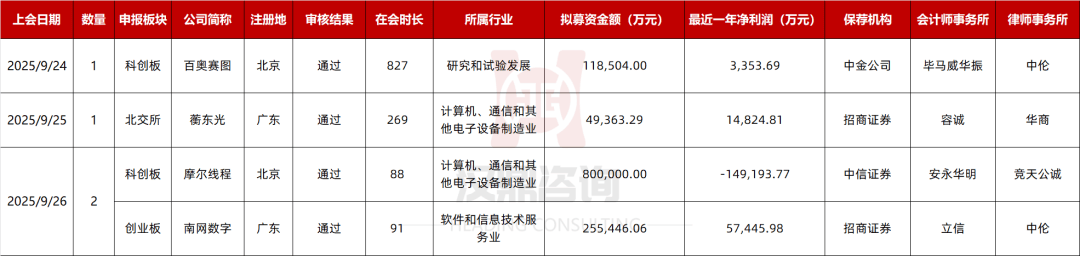
Group 1 - This week, four companies successfully passed the IPO review, aiming to raise a total of 12.233 billion yuan [1] - Among the approved IPOs, the company "Mole Thread" achieved the fastest review time of 88 days since the beginning of 2024 [2] - The company "Bai'ao Saitu" also submitted its registration on the same day it passed the review [2] Group 2 - Two companies were approved for refinancing this week, with a total fundraising target of 824 million yuan [1] - "Pulan Software" and "Maolai Optics" are the two companies that received approval for refinancing [1][2] Group 3 - "Bai'ao Saitu" focuses on preclinical CRO and biotechnology services, utilizing its self-developed gene editing technology [3] - The company plans to invest 45.358 million yuan in early drug development services, which constitutes 38.28% of its total fundraising [5] - The company reported a net profit of 33.54 million yuan for the last year, marking a significant turnaround from previous losses [4] Group 4 - "Hengdongguang" specializes in the research, manufacturing, and sales of passive optical devices in the optical communication field [7] - The company aims to raise 493.6329 million yuan through its IPO, with a focus on expanding its product offerings [8] - The company reported a net profit of 142.79 million yuan for the first half of 2025, reflecting a strong growth trajectory [9] Group 5 - "Mole Thread" is engaged in the research, design, and sales of GPUs and related products, having launched four generations of GPU architecture [14] - The company plans to raise 800 million yuan, with a significant portion allocated to AI chip development [18] - The company reported a net loss of 27.094 million yuan for the first half of 2025, indicating ongoing challenges despite its innovative product offerings [17] Group 6 - "Nanwang Digital" provides comprehensive digital construction solutions for the power energy sector, focusing on digital transformation [21] - The company aims to raise between 300 million and 476 million yuan through its IPO [22] - The company reported a net profit of 15.47 million yuan for the first half of 2025, showing a positive trend in profitability [23]
宇瞳光学:本公司及子公司的实际担保余额为160372.01万元
Zheng Quan Ri Bao Zhi Sheng· 2025-09-26 13:12
Core Insights - Yutong Optical announced that as of the date of the announcement, the actual guarantee balance of the company and its subsidiaries is 1,603.72 million yuan, which accounts for 66.62% of the company's audited net assets for 2024 [1] Summary by Categories - **Company Guarantees** - The actual guarantee balance of Yutong Optical and its subsidiaries is 1,603.72 million yuan [1] - This guarantee balance represents 66.62% of the company's audited net assets for the year 2024 [1] - There are no other external guarantees or overdue external guarantees reported by the company and its subsidiaries [1]
茂莱光学:可转债发行申请获通过
Xin Lang Cai Jing· 2025-09-26 09:54
Core Viewpoint - The Shanghai Stock Exchange's Listing Review Committee approved the application for the issuance of convertible bonds by the company, pending final approval from the China Securities Regulatory Commission [1] Group 1 - The review meeting was held on September 26, 2025, and was the 39th meeting of the year [1] - The company's application for issuing convertible bonds to unspecified objects meets the issuance conditions, listing conditions, and information disclosure requirements [1] - The implementation of the bond issuance is contingent upon receiving a registration approval from the China Securities Regulatory Commission [1]
光学光电子板块9月26日跌2.41%,东田微领跌,主力资金净流出24.98亿元
Zheng Xing Xing Ye Ri Bao· 2025-09-26 08:41
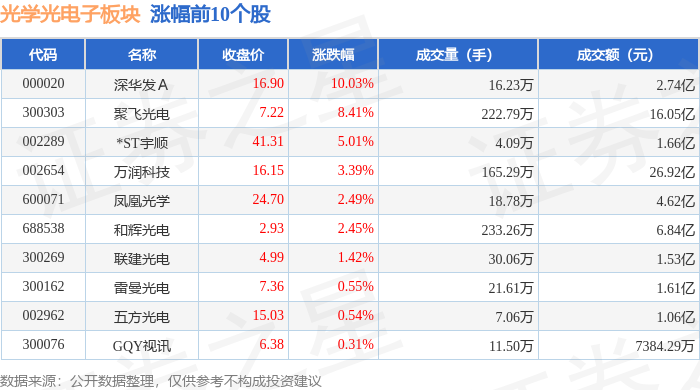
证券之星消息,9月26日光学光电子板块较上一交易日下跌2.41%,东田微领跌。当日上证指数报收于 3828.11,下跌0.65%。深证成指报收于13209.0,下跌1.76%。光学光电子板块个股涨跌见下表: | 代码 | 名称 | 主力净流入(元) | 主力净占比 游资净流入 (元) | | 游资净占比 散户净流入 (元) | | 散户净占比 | | --- | --- | --- | --- | --- | --- | --- | --- | | 300303 聚飞光电 | | 2.15 Z | 13.41% | -6869.30万 | -4.28% | -1.46 Z | -9.13% | | 600552 凯盛科技 | | 1.05 Z | 21.75% | -2707.51万 | -5.60% | -7814.80万 | -16.15% | | 002654 万润科技 | | 7387.38万 | 2.74% | -5873.16万 | -2.18% | -1514.22万 | -0.56% | | 000020 深华发A | | 4842.77万 | 17.66% | -2357.72万 | -8. ...

蓝特光学股价跌5.18%,长安基金旗下1只基金重仓,持有2.7万股浮亏损失4.72万元
Xin Lang Cai Jing· 2025-09-26 02:22
Group 1 - The core point of the news is that Lante Optics experienced a decline of 5.18% in its stock price, reaching 32.05 CNY per share, with a trading volume of 114 million CNY and a turnover rate of 0.86%, resulting in a total market capitalization of 12.922 billion CNY [1] - Lante Optics, established on September 4, 2003, and listed on September 21, 2020, is located in Jiaxing City, Zhejiang Province. The company specializes in the research, production, and sales of optical components [1] - The main revenue composition of Lante Optics includes optical prisms (59.54%), glass aspheric lenses (26.41%), glass wafers (8.20%), and other products (5.85%) [1] Group 2 - From the perspective of fund holdings, Lante Optics is a significant investment for Chang'an Fund, with its Chang'an Industry Growth Mixed A fund holding 27,000 shares, accounting for 3.27% of the fund's net value, making it the eighth-largest holding [2] - The Chang'an Industry Growth Mixed A fund, established on September 29, 2022, has a latest scale of 18.2919 million CNY and has achieved a year-to-date return of 48.29%, ranking 1321 out of 8171 in its category [2] - The fund manager, Zhang Yunkai, has been in position for 1 year and 135 days, with the fund's total asset scale at 306 million CNY. The best return during his tenure is 79.91%, while the worst is 33.21% [2]