
环保

Search documents
摩尔线程即将上会 直接或间接参股公司曝光
Zheng Quan Shi Bao Wang· 2025-09-21 12:17
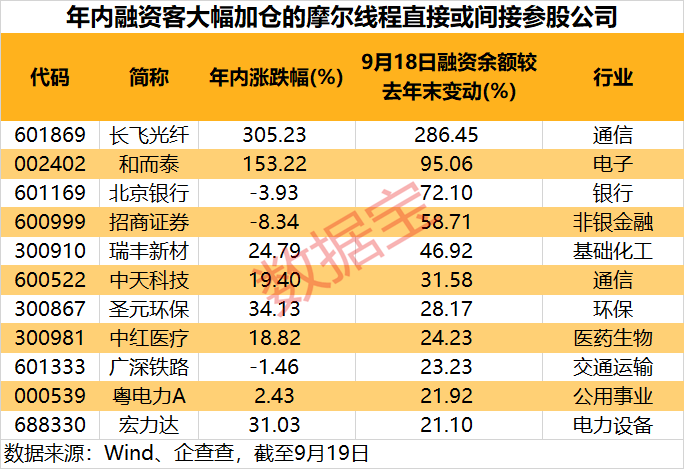
Core Viewpoint - The Shanghai Stock Exchange will review the initial public offering (IPO) of Moore Threads on September 26, aiming to raise 8 billion yuan [1] Group 1: Company Overview - Moore Threads plans to list on the Sci-Tech Innovation Board and seeks to raise 8 billion yuan through its IPO [1] - The company has direct and indirect stakes in various sectors, including electronics, computers, and communications [1] - Directly invested companies include Heertai (002402) and Yingqu Technology (002925), while indirectly invested companies include Honglida, Chuling Information (300250), and Changfei Fiber (601869) [1] Group 2: Market Performance - As of September 19, the average annual increase for the directly or indirectly invested companies is nearly 35%, with Changfei Fiber and Heertai exceeding 100% [1] - Financing data shows that as of September 18, these companies have seen an overall increase of nearly 30% in financing from investors this year [1] - Six companies, including Changfei Fiber, Heertai, and Ruifeng New Materials (300910), have received over 30% increase in financing from investors [1] Group 3: Investment Backers - In addition to A-share companies, notable investors in Moore Threads include Tencent, Lenovo, Sequoia Capital, and Houshu Capital [1]



绿色动力环保(01330)将于11月18日派发中期股息每股0.1元
智通财经网· 2025-09-21 10:44
Core Viewpoint - Green Power Environmental (01330) announced a mid-term dividend of HKD 0.1 per share, to be distributed on November 18, 2025, for the six months ending June 30, 2025 [1] Company Summary - The company will distribute a mid-term dividend of HKD 0.1 per share [1]

ESG新指南“三箭齐发”之后
经济观察报· 2025-09-20 07:50
Core Viewpoint - ESG information disclosure is not a burden but an opportunity to enhance management standards, directly impacting production costs, operational efficiency, and future competitiveness [1][8]. Group 1: ESG Guidelines and Implementation - The Chinese capital market's ESG ecosystem is evolving from "passive compliance" to "active governance," with the release of the second batch of guidelines on September 5, 2025, which includes disclosures on "pollutant emissions," "energy use," and "water resource utilization" [2][3]. - The guidelines mark a further refinement of China's ESG disclosure system, prompting companies, investors, rating agencies, and regulators to engage in a balancing act [3][21]. - Companies are beginning to recognize that these guidelines are not merely compliance requirements but opportunities for long-term sustainable development and improved company quality [6][25]. Group 2: Challenges in Data Collection and Management - Companies face significant challenges in data collection, as relevant data is often scattered across different systems with inconsistent statistical standards [10][12]. - A unified data governance system is essential for effective ESG reporting, and companies are investing in professional institutions to build ESG data management platforms [11][18]. - Different industries face varying data challenges; for instance, a manufacturing company must install new monitoring equipment to meet pollution emission data requirements, while a bank needs to develop new methodologies for carbon emission calculations [12][13]. Group 3: Talent Acquisition and Market Dynamics - The implementation of the guidelines has led to a surge in demand for ESG-related professionals, with recruitment needs increasing by over 300% in the past six months [16][18]. - Companies are increasingly opting to cultivate talent internally, providing systematic ESG training to employees who understand the company's operations [17][18]. - The rise in ESG consulting services has been notable, with a 200% increase in related business volume since 2025, indicating a growing market for ESG advisory services [18]. Group 4: Ongoing Confusion and Adaptation - Companies continue to grapple with the balance between standardized requirements and local adaptations, particularly regarding discrepancies between domestic and international standards [21][22]. - The ambiguity surrounding the boundaries of disclosure, especially concerning indirect carbon emissions, poses additional challenges for companies [22][23]. - Despite these challenges, companies recognize that systematic ESG management can help identify risks, uncover new business opportunities, and enhance long-term competitiveness [24][25]. Group 5: Future Outlook - As the mandatory disclosure deadline approaches in 2026, companies are accelerating their efforts to integrate ESG into their core strategies and daily operations [25][26]. - The transition from confusion and anxiety to proactive adaptation reflects an improvement in corporate governance standards within Chinese listed companies [25].

ESG新指南“三箭齐发”之后
Jing Ji Guan Cha Wang· 2025-09-20 05:27
Core Viewpoint - The ESG ecosystem in China's capital market is undergoing a transformation from "passive compliance" to "active governance," with companies, investors, rating agencies, and regulators seeking a balance in response to new guidelines [2][28]. Group 1: New Guidelines and Their Impact - The China Securities Regulatory Commission (CSRC) issued the second batch of "Guidelines for the Preparation of Sustainable Development Reports by Listed Companies," adding disclosure requirements on "pollutant emissions," "energy utilization," and "water resource utilization" [2]. - The release of these guidelines marks a further refinement of China's ESG disclosure system, following the first batch issued in January 2025 [2][28]. Group 2: Corporate Responses and Challenges - Companies are experiencing a range of responses to the new guidelines, with some executives recognizing the importance of sustainable development disclosures while others feel pressured by the detailed technical requirements [5][6]. - A financial director from a startup company expressed initial confusion upon receiving the guidelines, highlighting the lack of data collection systems and discrepancies in energy management statistics [7][10]. - The establishment of ESG working groups within companies is becoming common, with members from various departments collaborating to address the challenges posed by the new guidelines [8][13]. Group 3: Data Collection and Management - Companies face significant challenges in data collection, as relevant data is often scattered across different systems with inconsistent statistical standards [10][12]. - A large state-owned bank noted that while they had a data foundation, the new guidelines require a more sophisticated approach to carbon emissions calculations, necessitating substantial investment in new systems [14]. - Manufacturing companies are also facing direct challenges, needing to invest in new monitoring equipment and production line modifications to meet the guidelines [15][16]. Group 4: Talent Acquisition and Market Dynamics - The implementation of the guidelines has led to a surge in demand for ESG-related professionals, with recruitment needs increasing by over 300% in the past six months [18]. - Companies are increasingly opting to cultivate talent internally, providing systematic ESG training to employees [18][19]. Group 5: Ongoing Confusion and Future Directions - Companies continue to grapple with the balance between standardized requirements and local adaptations, particularly regarding the differences between domestic and international disclosure standards [22][26]. - Despite ongoing challenges, the trend towards ESG disclosure is seen as inevitable, with companies recognizing the potential for improved risk management and new business opportunities through systematic ESG management [27][28].
生态环境质量持续改善,优良天数比例达87.2% 美丽中国建设迈出重大步伐
Ren Min Ri Bao· 2025-09-20 00:26
Group 1 - The core viewpoint of the article emphasizes the significant progress made in ecological environment protection and high-quality development during the "14th Five-Year Plan" period, highlighting a shift from pollution prevention to comprehensive construction of a beautiful China [1][2][4] Group 2 - The pollution prevention campaign has achieved new results, with PM2.5 concentration in cities expected to drop to 29.3 micrograms per cubic meter by 2024, a 16.3% decrease from 2020, and the proportion of good air quality days reaching 87.2%, up 2.4 percentage points from 2020 [2] - The blue sky protection campaign has seen PM2.5 concentrations in key regions like Beijing-Tianjin-Hebei and the Yangtze River Delta decrease by 18% and 10% respectively compared to 2020 [2] - The water quality improvement initiative has led to over 90% of surface water quality monitoring points achieving good water quality for the first time [2] Group 3 - Green and low-carbon development has made new strides, with 1.12 billion kilowatts of coal power units and 950 million tons of crude steel capacity undergoing ultra-low emission transformations [3] - The establishment of the world's largest carbon trading market covers over 60% of national carbon emissions, enhancing the internal motivation and innovative vitality for green development [3] Group 4 - A robust policy framework has been developed to promote high-level protection and foster new productive forces, with a significant decrease in environmental impact assessments for high-emission projects and an increase in assessments for renewable energy projects [4][5] - The ecological environment management system has been established, categorizing over 40,000 control units into three types: priority protection, key control, and general control [4] Group 5 - The green finance sector has been advanced, with over 100 projects receiving financial support amounting to 216.4 billion yuan, facilitating the transition to a low-carbon economy [6] - The national carbon market has seen a cumulative trading volume of 714 million tons and a total transaction value of 48.961 billion yuan as of September 18 [7]
我国生态环境质量持续改善
Yang Shi Wang· 2025-09-19 13:58
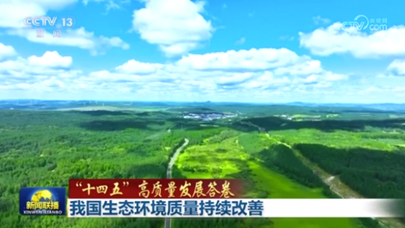
Core Points - The "14th Five-Year Plan" period has seen continuous improvement in China's ecological environment quality [2] - The transition from focusing on pollution prevention to promoting the construction of a beautiful China has been emphasized [2] Environmental Quality Improvements - By 2024, the PM2.5 concentration in cities at or above the prefecture level is expected to decrease to 29.3 micrograms per cubic meter, a 16.3% reduction from 2020 levels [2] - The proportion of days with good air quality is projected to reach 87.2%, an increase of 2.4 percentage points compared to 2020 [2] - The proportion of surface water with good quality is expected to exceed 90% for the first time, with major rivers like the Yangtze and Yellow Rivers maintaining Class II water quality for several consecutive years [2] Public Satisfaction and Emission Control - Public satisfaction with the ecological environment has remained above 90% for four consecutive years [2] - A total of 198 million tons of coking capacity and 110 million tons of cement clinker capacity have undergone ultra-low emission transformations [2] - The area of ecological protection red lines has exceeded 30%, and a carbon trading market covering the largest greenhouse gas emissions globally has been established, effectively managing over 60% of national carbon dioxide emissions [2]
调研速递|兴蓉环境接受富国基金等1家机构调研,聚焦在建项目与经营策略要点
Xin Lang Cai Jing· 2025-09-19 12:36
Group 1: Project Progress - The company has made significant progress on its ongoing projects, with the Chengdu Water Supply Plant No. 7 (Phase III) entering trial operation, and several other projects expected to be operational within 1-2 years [1] - Projects such as the Chengdu Sixth Reclaimed Water Plant Phase II, Eighth Reclaimed Water Plant Phase II, Fifth Reclaimed Water Plant Phase II, Chengdu Wanxing Environmental Power Plant Phase III, and the Chengdu Central Urban Kitchen Waste Treatment Project Phase III are advancing steadily [1] Group 2: Accounts Receivable and Market Value Management - As the company expands its market and business scale, accounts receivable management has become a focal point, with the company actively managing its receivables while pursuing business growth [2] - The company emphasizes market value management, focusing on enhancing intrinsic value and improving operational efficiency through strategic layout and excellent performance [2] Group 3: Cost Reduction and Efficiency Improvement - The company implements cost reduction and efficiency improvement through refined management practices, including the standardization and upgrading of plant-level operations across multiple subsidiaries [3] - A smart cloud control center is being developed to integrate cloud computing and storage technologies, enhancing unified management and efficient scheduling [3] - The company is advancing its "Digital Strong Enterprise" initiative, establishing five centers to unlock data value and enhance operational development [3] Group 4: Capital Expenditure and Dividend Planning - The company has experienced significant capital expenditures due to various water supply and solid waste projects, but these expenditures are expected to decrease as projects become operational in the next 1-2 years [4] - The company prioritizes shareholder returns, anticipating more stable earnings for shareholders as ongoing projects are completed [4]

伟明环保:关于延长公司2021年员工持股计划存续期的公告
Zheng Quan Ri Bao· 2025-09-19 11:46
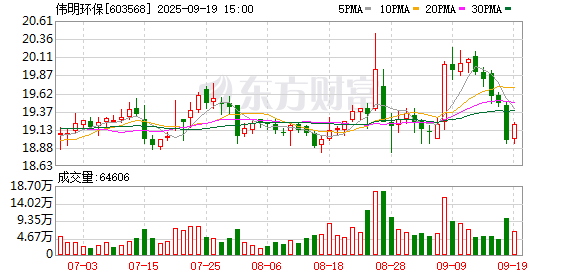
Group 1 - The core point of the article is that Weiming Environmental announced the extension of its 2021 employee stock ownership plan for an additional 24 months, now set to expire on December 5, 2027 [2] - The decision was made during the 19th meeting of the 7th Board of Directors held on September 19, 2025 [2] - This extension reflects the company's commitment to employee engagement and retention through equity participation [2] Group 2 - The announcement was made public on the evening of September 19 [2] - The original expiration date of the employee stock ownership plan was set for December 5, 2025, which has now been extended [2] - The move is expected to enhance employee motivation and align their interests with the company's long-term performance [2]

兴蓉环境(000598) - 2025年9月19日投资者关系活动记录表
2025-09-19 11:34
Group 1: Project Progress - The Chengdu Water Supply Plant Phase III has entered trial operation with a remaining capacity of 400,000 tons/day [2] - Several projects, including the Chengdu Sixth Reclaimed Water Plant Phase II and the Chengdu Central Urban Kitchen Waste Treatment Project Phase III, are progressing and expected to be operational within 1-2 years [2] Group 2: Accounts Receivable - The company's accounts receivable have increased due to expanded business scale and market development efforts [2][3] - The company actively collects receivables in line with local payment policies [3] Group 3: Market Value Management - The company emphasizes market value management to enhance intrinsic value and improve operational efficiency [4] - Continuous strategic layout and market feedback are integral to the company's value growth [4] Group 4: Cost Reduction and Efficiency Improvement - The company implements refined management and innovation to reduce costs and improve efficiency [5] - Establishment of a smart cloud control center and five operational centers enhances management quality and efficiency [5] Group 5: Future Capital Expenditure and Dividends - Significant capital expenditure is expected due to multiple ongoing projects, with a gradual decrease anticipated as projects become operational [6] - The company aims to increase dividend levels as free cash flow improves following project completions [6]
生态环境部最新发声!
Zheng Quan Shi Bao· 2025-09-19 09:03
Group 1: Solid Waste Management - The Ministry of Ecology and Environment (MEE) will focus on combating illegal dismantling of waste power batteries and other new types of solid waste [2] - Since the "14th Five-Year Plan" began, China has achieved significant results in solid waste pollution prevention, with hazardous waste disposal capacity reaching 223 million tons per year [2] Group 2: Beautiful China Initiative - The construction of a Beautiful China is described as a "reputation project" that requires practical results rather than mere slogans, emphasizing the need for genuine improvements in ecological quality [3] - MEE will address regional and watershed ecological issues, enhance environmental quality standards, and promote green development through carbon peak and carbon neutrality initiatives [3] Group 3: Technological Advancements in Monitoring - MEE is accelerating the application of artificial intelligence and new technologies in ecological monitoring, aiming to improve data accuracy and problem identification [4] - The establishment of a comprehensive ecological monitoring network is underway, with over 33,000 monitoring stations covering various environmental factors [9] Group 4: Carbon Emission Trading - China has built the world's largest carbon emission trading market, covering over 60% of national carbon emissions, with a cumulative transaction volume of 714 million tons and a total transaction value of 48.961 billion yuan as of September 18 [5] - The market has seen significant improvements in data accuracy and has become a key measure in achieving carbon neutrality goals [5] Group 5: Environmental Impact Assessments - The number of environmental impact assessments (EIAs) for high-emission and high-pollution projects has decreased, while those for wind power and electric vehicle projects have increased significantly [7] - MEE has approved 14,600 EIA documents for high-tech electronic manufacturing projects, involving a total investment of 6.28 trillion yuan [7] Group 6: Vehicle Emission Control - During the "14th Five-Year Plan" period, nearly 20 million high-emission vehicles have been eliminated as part of the Blue Sky Defense initiative [8]