自动驾驶

Search documents
谷歌年初在人工智能竞赛中落后,却在2025年末登顶行业榜首
Xin Lang Cai Jing· 2025-12-23 16:24
Core Viewpoint - Google has experienced a significant turnaround in its position within the artificial intelligence sector, emerging as a leader by the end of 2025, contrasting its earlier struggles at the beginning of the year [1][8]. Group 1: Market Position and Competition - Despite a 36% stock price increase in 2024, Google was initially perceived as lagging behind OpenAI in the AI race, ranking second or third [1]. - By the end of 2025, Google has outperformed competitors, prompting OpenAI's CEO to initiate a 'red alert' to develop products that can compete with Google's Gemini 3 AI model [1][8]. - Google's user engagement metrics are improving, with active user numbers closing the gap with OpenAI [2][9]. Group 2: Financial Performance and Growth - Google's cloud platform revenue grew by 34% year-over-year in Q3, reaching $15.1 billion, driven by AI-related business [3][10]. - The number of new customers for Google Cloud also saw a 34% year-over-year increase [4][11]. - Google signed more contracts worth over $1 billion in Q3 than in the previous two years combined, with over 70% of existing cloud customers utilizing AI services [4][11]. Group 3: Product Development and User Adoption - The Gemini 3 model has been well-received, outperforming GPT-5.1 and becoming the top-rated AI model in various assessments [4][12]. - User penetration for Gemini increased from 24% in July to 26% in October, while ChatGPT's penetration slightly decreased from 36% to 35% during the same period [5][12]. - Google's AI search mode also saw a slight increase in user penetration from 18% to 19% [5][12]. Group 4: Strategic Partnerships and Innovations - Google is expanding its AI chip usage through partnerships, including a plan to deploy up to 1 million AI processors for Anthropic's software [2][9]. - The company is in talks to supply its self-developed chips to Meta for running various AI products [2][10]. - Google's Waymo has expanded its autonomous driving services to new cities and launched highway driving services in select locations [6][13]. Group 5: Legal and Regulatory Landscape - Google faced legal challenges regarding antitrust issues but received favorable rulings that allow it to maintain its search engine's default status on Apple devices, continuing to pay over $20 billion annually for this arrangement [6][13]. - The company has also introduced new hardware products, including a prototype smart glasses and a new VR headset, showcasing its commitment to innovation [6][13]. Group 6: Future Outlook - The achievements and technological advancements made by Google are expected to be key highlights for the company in 2026 [7][14].

A股晚间热点 | 贵金属牛市继续!伦铜突破12000美元
智通财经网· 2025-12-23 15:22
Group 1: Copper Market - Copper prices have reached a historic high, breaking the $12,000 per ton mark, driven by significant mine shutdowns and trade disruptions related to U.S. tariffs [1] - Citigroup warns that in a bullish scenario, copper prices could potentially reach $15,000, attracting more aggressive investments [1] Group 2: Autonomous Driving - China has officially entered the mass production phase of autonomous driving, with Beijing issuing the first L3-level vehicle special license plates [2] - The commercialization of intelligent driving technology is expected to accelerate by 2026, laying the groundwork for future advancements [2] Group 3: A-Share Market - A-shares have recorded a historic annual trading volume exceeding 400 trillion yuan, with an average turnover rate of approximately 1.74% [3] - Nineteen stocks have surpassed a trading volume of 1 trillion yuan, with notable performances from companies in the technology and communication sectors [3] Group 4: Investment Funds - Three major sub-funds of the National Venture Capital Guidance Fund have been established, with total contributions exceeding 120 billion yuan [4] - These funds aim to attract significant local and social capital, focusing on long-term investments in hard technology [4] Group 5: Banking Sector - In Shenzhen, the minimum interest rate for mortgage-backed business loans has risen to 2.35% annually, up from a previous low of 2.2% [5] Group 6: Drone Industry - The U.S. has placed DJI drones on a "regulated list," prompting strong opposition from Chinese officials who argue against discriminatory practices [6][7] Group 7: Food Safety Regulations - New regulations for food live-streaming sales are set to be announced, aiming to enhance food safety responsibilities among various stakeholders in the live-streaming e-commerce sector [8] Group 8: Automotive Market - Tesla's sales in Europe have declined by nearly 12%, while BYD has seen a significant increase in market share, with sales up 221.8% [9] Group 9: Medical Devices - A new round of centralized procurement for high-value medical consumables is set to begin, with expectations of improved performance for related stocks in the medical device sector [10] - Notable stocks in this sector include Zhendemedical and Nanwei Medical, which have seen significant net purchases from leveraged funds [10][11] Group 10: Positive and Negative Announcements - China Power Construction has secured a project contract worth approximately 6.626 billion yuan [15] - Negative announcements include penalties for shareholders of Haohai Biological Technology totaling over 14.62 million yuan [15]


美股三大指数基本平开,中概股多数下跌
第一财经· 2025-12-23 14:55
Market Overview - On December 23, US stock indices opened flat, with the Dow Jones slightly down, while the S&P 500 and Nasdaq showed minor gains [1]. - The Dow Jones Industrial Average was at 48,320.30, down by 42.38 points or 0.09% [2]. - The Nasdaq index stood at 23,444.34, up by 15.51 points or 0.07% [2]. - The S&P 500 index was at 6,880.88, increasing by 2.39 points or 0.03% [2]. - Chinese concept stocks mostly declined, with the Nasdaq Golden Dragon China Index down by 0.4%, and companies like Miniso, Xpeng Motors, and Pony.ai dropping over 2% [2]. Company News - Novo Nordisk's stock surged over 9% following the approval of its first oral GLP-1 weight loss drug by the US FDA [3].

北京发放首批L3级自动驾驶号牌,局部示范有望放开
Xuan Gu Bao· 2025-12-23 14:39
据上市公司公告、互动平台及券商研报表示, 北汽蓝谷:公司的极狐纯电动轿车获得工信部L3级有条件自动驾驶车型产品准入许可。 12月23日,北京市首批L3级高速公路自动驾驶车辆专用号牌由北京市公安局交通管理局正式发放给三 辆智能网联汽车,这也是国内首批发放的L3级高速公路自动驾驶车辆专用号牌。这标志着我国自动驾 驶车辆已由测试示范进展到正式量产,率先开启L3级自动驾驶时代,成为汽车智能化进程中的里程碑 事件。 四维图新:公司中标北京市高级别自动驾驶示范区3.0范围高精度地图服务能力研发项目一期。 上证报援引研究机构观点称,随着特斯拉Robotaxi的持续放量验证,以及中国L3车型的制度化落地,高 阶自动驾驶的产业拐点正在加速到来,并将深刻影响整车估值体系与竞争格局。随着试点经验积累和法 规逐步完善,L3功能有望从局部示范走向更广泛放开,2026年或成为中国L3级智驾量产落地的关键节 点。 *免责声明:文章内容仅供参考,不构成投资建议 *风险提示:股市有风险,入市需谨慎 ...


阿里无人车的「阵痛史」:团队赛马、战略摇摆与整合困局
雷峰网· 2025-12-23 14:30
Core Viewpoint - The article discusses the evolution and challenges faced by Alibaba's autonomous vehicle initiatives, particularly focusing on the logistics sector, highlighting missed opportunities and internal conflicts that led to the decline of its autonomous vehicle projects [3][4][5]. Group 1: Industry Developments - The autonomous logistics vehicle sector has seen significant capital influx and operational advancements in 2023, with companies like New Stone Technology and NineSight completing substantial funding rounds, indicating a rebound after years of stagnation [3]. - NineSight is reportedly in talks to acquire Alibaba's logistics vehicle division, which could enhance its competitive position in the logistics market [3][4]. - The article notes that the autonomous vehicle sector in China is approaching a pivotal moment with several companies preparing for IPOs, marking a transition from a nascent stage to a more mature market [3]. Group 2: Alibaba's Internal Dynamics - Alibaba's autonomous vehicle efforts began with the establishment of the Cainiao ET Logistics Laboratory, which aimed to develop autonomous logistics vehicles but faced strategic misalignments and leadership changes that hindered progress [7][9]. - The dual approach within Alibaba, with the Cainiao ET Laboratory focusing on logistics and the Damo Academy's autonomous driving lab targeting passenger vehicles, led to resource duplication and inefficiencies [15][29]. - The merger of the Cainiao ET Laboratory into the Damo Academy's autonomous driving lab in 2020 was a significant turning point, consolidating efforts but also leading to internal conflicts and a loss of focus on logistics applications [30][36]. Group 3: Key Personnel and Leadership Changes - Key figures such as Zhang Chunhui and Chen Junbo played pivotal roles in the development of Alibaba's autonomous vehicle projects, with their departures marking critical moments in the decline of these initiatives [12][50]. - The leadership transition within the Damo Academy, particularly the appointment of Wang Gang and subsequent changes in strategic direction, contributed to the fragmentation of the autonomous vehicle team [25][41]. - The article highlights the contrasting management styles of Chen Junbo and Guo Zhenyu, which created friction within the team and ultimately affected project outcomes [47][49]. Group 4: Project Outcomes and Future Directions - The autonomous logistics vehicle "Xiaomanlv" achieved significant operational milestones, including reaching 1 million delivery orders, but faced challenges in scaling due to budget constraints and strategic misalignment [36][52]. - The ambitious plans for the "Dabanlv" project, aimed at developing autonomous heavy-duty trucks, were ultimately abandoned following key personnel exits, signaling a broader decline in Alibaba's autonomous vehicle ambitions [50][54]. - The article concludes with the integration of the Xiaomanlv project back into Cainiao, indicating a shift in focus towards logistics and a potential re-evaluation of Alibaba's strategy in the autonomous vehicle space [53][54].


晚报 | 12月24日主题前瞻
Xuan Gu Bao· 2025-12-23 14:25
Autonomous Driving - Beijing has officially issued the first batch of L3-level highway autonomous vehicle special license plates, marking a significant milestone in the mass production of autonomous vehicles in China [1] - Research institutions believe that the ongoing validation of Tesla's Robotaxi and the institutionalization of China's L3 models will accelerate the arrival of high-level autonomous driving, profoundly impacting vehicle valuation systems and competitive landscapes [1] Charging Infrastructure - The Ministry of Transport plans to build over 10,000 charging guns in national highway service areas by 2026, with at least 25% being high-power charging guns [1] - The current market environment is conducive to the scaling and commercialization of vehicle-network interaction profit models, presenting significant market opportunities for related charging equipment companies [2] Solar Thermal Energy - The National Development and Reform Commission and the National Energy Administration aim for China's solar thermal power generation capacity to reach around 15 million kilowatts by 2030, with costs comparable to coal power [2] - Companies with rich project experience in the solar thermal industry are expected to be competitive as the industry begins to scale [2] Quantum Computing - China's quantum technology industry is transitioning from academic research to commercialization, with significant advancements in quantum error correction [3] - This progress is seen as a key milestone for the practical application of quantum computers, potentially leading to the development of million-bit quantum computers [3] Tourism - The Ministry of Transport anticipates growth in yacht and cruise consumption in the coming years, with a rapid increase in newly registered yachts [4] - The government has implemented measures to enhance cruise transportation and tourism services, indicating a strong focus on the cruise economy as a new growth point [4] Clean Energy - Alphabet announced its acquisition of Intersect for $4.75 billion to enhance renewable energy infrastructure in the U.S. [5] - This move reflects a strategic shift among tech giants towards energy and power infrastructure, crucial for supporting the growing demands of AI data centers [5] Chlorosulfonic Acid - The price of chlorosulfonic acid has surged to 3,500 yuan per ton, with a daily increase of 222 yuan, reflecting a tight supply-demand situation [6] - The demand for high-purity battery-grade chlorosulfonic acid is expected to rise due to its applications in solid-state batteries and other emerging fields [6] Macro and Industry News - The sixth batch of national high-value consumables procurement has been initiated, introducing multiple mechanisms to prevent malicious low pricing [7] - Shenzhen has issued new measures to attract and utilize foreign investment [7] - Nobikang's stock surged 364% on its first day of trading, marking the largest first-day gain for a Hong Kong IPO in nearly a decade [7]

数字政通:公司未来自动驾驶战略聚焦“数据驱动+轻资产运营”的方向
Zheng Quan Ri Bao Wang· 2025-12-23 14:14
Core Viewpoint - The company, Digital政通, is focusing its future autonomous driving strategy on a "data-driven + light asset operation" approach, aiming to enhance intelligent applications in urban operations [1] Group 1: Strategic Focus - The company will continue to develop its self-research autonomous driving algorithm system, concentrating on low-speed, high-frequency scenarios such as urban distribution, inspection, and data collection [1] - The company is advancing its "Hundred Cities, Thousand Units" plan to expand its operational footprint [1] - The company aims to build a flexible supply system by collaborating with industry partners to create a model that combines self-developed algorithms, external hardware, and joint delivery [1] Group 2: Product Development and Deployment - The company is launching a product matrix that includes inspection, data collection, and cleaning products [1] - Demonstration operations have already been established in cities like Beijing, Tianjin, and Hefei, with plans to scale up while reducing costs and enhancing data operation capabilities and intelligent service levels [1]

华源晨会精粹20251223-20251223
Hua Yuan Zheng Quan· 2025-12-23 12:24
Group 1: Consumer Sector Insights - The central economic work conference prioritizes expanding domestic demand, with "reward economy" expected to drive consumption growth, reshaping consumer behavior and enhancing supply-side requirements [2][6] - The "reward economy" is projected to boost the emotional economy market in China, with a forecasted market size of 23,077.67 billion yuan in 2024, potentially exceeding 45,000 billion yuan by 2029 [6] - The report identifies key consumer companies listed on the Beijing Stock Exchange, including those in cultural IP, pet food, cosmetics, and food and beverage sectors, which are expected to thrive under favorable policies [6][7] Group 2: Intelligent Driving Industry - The Ministry of Industry and Information Technology has conditionally approved two L3 autonomous driving models, marking a transition from technology validation to mass production in China's autonomous vehicle industry [11] - The autonomous driving market in China reached a scale of 330.1 billion yuan in 2023, with a projected growth to nearly 450 billion yuan by 2025 [11] - Eleven companies in the intelligent driving supply chain are identified, including Audiwei and Kaiter, which are positioned to benefit from this market expansion [11][12] Group 3: Construction Materials and Fireworks - The upcoming Spring Festival has led to renewed interest in investment opportunities related to fireworks, as policies shift from prohibition to restrictions, enhancing market attention [16] - The report highlights the potential for investment in companies like Guotai Group, which may benefit from these regulatory changes [16] - The IPO market is heating up, with companies like Yuxin Semiconductor receiving approval, indicating a positive trend for the construction materials sector [17] Group 4: Logistics and Transportation - The express delivery industry saw a 5% year-on-year increase in package volume in November, with significant performance variations among major players [21] - The report notes that the average price per package for major express companies has improved, indicating a recovery in profitability within the logistics sector [21][32] - The report emphasizes the resilience of the e-commerce logistics sector, with companies like YTO Express and Shentong Express expected to benefit from ongoing demand and operational improvements [32] Group 5: Shipping and Port Operations - The report discusses the impact of U.S. sanctions on oil tankers, suggesting that compliant oil transport markets may benefit from these geopolitical developments [27] - The Shanghai export container freight index has shown an increase, indicating a positive trend in shipping rates [28] - The report highlights the potential for recovery in the shipping market, driven by OPEC+ production increases and a favorable economic environment [33]
国泰海通|机械:Robotaxi实现无安全员运行,商业航天进展加速
国泰海通证券研究· 2025-12-23 11:27
Group 1: Core Insights - The mechanical equipment index experienced a decline of -1.09% during the period from December 15 to December 19, 2025 [1] - In November 2025, the embodied intelligence sector achieved 35 financing deals, with nearly half exceeding 100 million [1] - Tesla's Robotaxi has begun testing without a safety driver, indicating significant advancements in embodied intelligence technology [1] Group 2: Industry Developments - The U.S. government, under Trump's administration, has outlined a vision for space policy aimed at ensuring American leadership in space exploration and commercial activities [2] - The Long March 12 rocket successfully launched from Hainan, marking a significant milestone in China's commercial space endeavors [2] - In October 2025, China's engineering machinery export trade reached $4.844 billion, showing a year-on-year increase of 0.07%, with exports at $4.668 billion, up 1.29% [3] - November 2025 saw continued high growth in the export volumes of major engineering machinery products, including excavators and loaders, with excavator exports rising by 18.8% year-on-year [3]

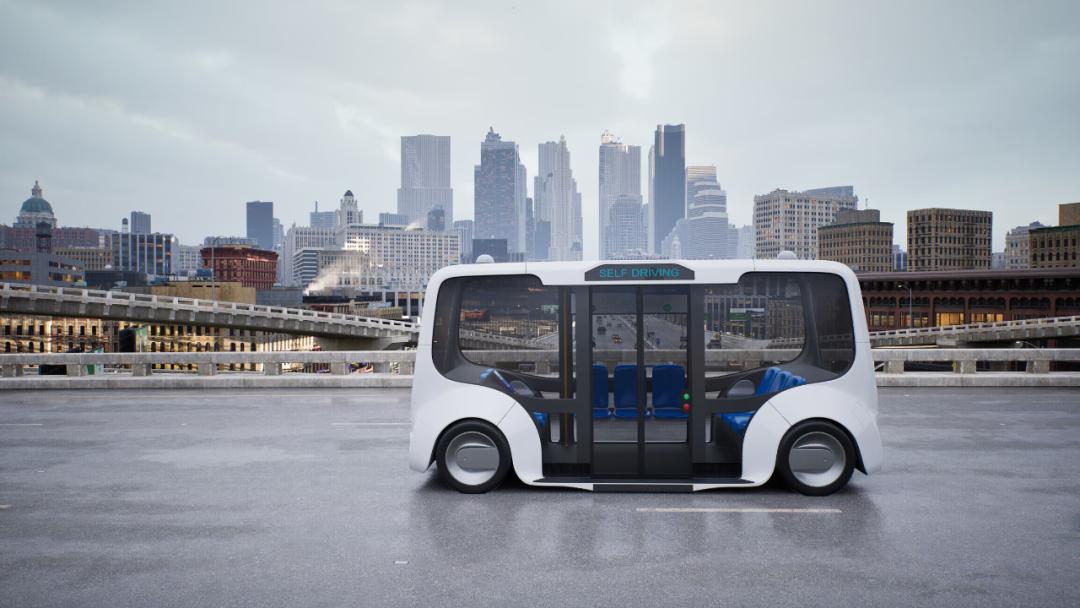
L4级自动驾驶赛道分化,Robobus将成为“第一战场”?
3 6 Ke· 2025-12-23 11:17
Core Insights - The autonomous driving industry is transitioning from a phase of singular breakthroughs to a critical point of track differentiation, with companies reassessing their strategic focus based on the varying technical adaptability and commercialization potential across different scenarios [1][3] Track Differentiation - The differentiation in the L4 autonomous driving track reflects a renewed understanding of technology implementation, moving away from the misconception that overcoming core technology guarantees universal commercialization [3] - The complexity, safety, and commercial value of specific scenarios are crucial for the successful deployment of L4 technology, with Robotaxi facing significant challenges compared to more controlled environments like Robotruck and Robobus [3][4] Financing Trends - Since 2025, financing in the autonomous driving sector has increasingly concentrated on Robobus, Robotruck, and Robovan, with notable investments such as over $600 million in New Stone Technology, setting a record in China's autonomous driving financing [4] Robovan Insights - Robovan focuses on last-mile logistics with a core emphasis on low-cost scalability, with leading companies nearing the threshold of 10,000 units delivered, and prices dropping significantly to as low as 16,800 yuan [4][5] Robotruck Insights - Robotruck aims to revolutionize efficiency in long-distance logistics, addressing cost reduction needs in traditional logistics plagued by low-price competition and safety issues, gaining attention from logistics companies [5] Robobus Insights - Robobus benefits from public transport attributes, addressing high-frequency demand in urban micro-circulation and providing a clear commercial path, supported by strong policy backing [5][8] - The operational flexibility of Robobus allows it to adapt to various semi-open and closed scenarios, significantly lowering the implementation difficulty of L4 technology [9] Commercialization Pathways - Robobus has two primary commercialization models: To G, collaborating with governments for public transport integration, and To B, providing customized services for specific venues [9][10] - The scalability of Robobus operations can further reduce costs through increased order volumes, creating a positive feedback loop of cost reduction and expanded service [10] Global Expansion - Chinese companies are positioned to lead in the Robobus sector globally, leveraging complete industrial chain advantages and rich operational experience, as evidenced by successful projects in Singapore [11][12] Competitive Landscape - The competition in the Robobus sector extends beyond technology to include business models, ecosystem integration, and global capabilities, necessitating a comprehensive approach for success [12][13] - Companies must adapt to local regulations and establish deep collaborations with local partners to navigate the complexities of international markets [13][14] Challenges Ahead - Robobus faces technical challenges in specific scenarios, such as adverse weather conditions affecting sensor accuracy and the need for effective vehicle-road collaboration [14] - Initial investment costs for L4 Robobus remain high, necessitating strong financial capabilities for companies to achieve scalability [14] - A robust operational maintenance system is essential for Robobus, which includes not only vehicle maintenance but also monitoring and upgrading autonomous driving systems [14][15]