
新材料

Search documents
投资人判断项目的三个重要维度
创业家· 2026-01-07 10:25
每日金句 投资人判断项目时关注三个重点维度: 壁垒,需求,谈判能力。 壁垒,做这 件事是否有足够 深的护城河,比别人做有哪些优势; 需求,对现有产品来说 是不是更好的替 代品,或是会被别人替代; 对上下游谈判能力: 在整个环节 里面所占的环节比例,如果太小则不具备足够的话语权。 吴世春 | 梅花创投创始合伙人 黑马加速导师 这里认真推荐你: 报名 「吴世春·西安出行活动」 1月22日-24日 , 吴世春将亲自带队 100家企业家 , 去陕西西安线下游学 , 走进科技制造 产业,打开万亿赛道蓝海。 你 在 创业路上遇到的问题和想法 , 都可以找吴老师聊聊 。 如果你是 优质的项目,吴老师也会果断投 你 。 希望所有支持吴老师的人 , 一如既往的相信他、支持他,大家 一起 加油! 活动详情如下 ↓↓↓ 吴世春导师亲自带队 | 2026.01.22-24 走进科技制造产业 升级数字文旅体验 探索产业生态协同 打开万亿赛道蓝海 I 机器人、航空航天、高端装备、新材料、新能源、 科技演费、Al+产生的创出者看过来! 你将收获 ] 场 产业重做的深度链接之旅 与独角虎企业、梅花投资人深度交流,占据产业链关键 卡位. 共建 ...


怀柔:全力建设国际一流的战略科技融合发展示范区
Xin Lang Cai Jing· 2026-01-07 09:57
Core Viewpoint - Over the past five years, Huairou District has made significant progress in high-quality development, ecological civilization, and improving the quality of life for its residents, establishing itself as an important hub for the capital's functions [2][20]. Group 1: Scientific Innovation and Development - Huairou Science City is rapidly emerging as a world-class hub for original innovation, with the high-energy synchrotron radiation source expected to be operational by 2026 [6][9]. - The Science City has entered a new operational phase, with all 29 scientific facilities from the 13th Five-Year Plan now operational, and 17 of them open for global sharing [6][9]. - A total of 439 significant scientific achievements have been produced, including 72 key core technologies, showcasing the region's innovation capabilities [6][9]. Group 2: Talent Attraction and Infrastructure - Huairou Science City has attracted 33 Nobel laureates and 39 highly cited scientists, with a total of 26,000 researchers, enhancing its international influence [7]. - Policies such as "Yanshi Qingchuang Wuyou Ten Articles" have been implemented to address talent concerns, alongside the completion of various cultural and commercial facilities [7][12]. Group 3: Industrial Development and Economic Growth - Recent agreements have led to the signing of 13 major projects in strategic fields, with expected investments exceeding 5 billion yuan and projected output surpassing 40 billion yuan [11]. - The region is witnessing a surge in high-end scientific instruments and sensors, with over 350 key enterprises established, and significant advancements in new energy and materials sectors [11][12]. Group 4: Ecological and Environmental Achievements - PM2.5 annual average concentration has dropped to 24.2 micrograms per cubic meter, with an excellent days ratio of 87.1%, marking historical bests [16]. - Huairou has successfully created a national ecological civilization demonstration zone and a national forest city, with a forest coverage rate of 77.57%, the highest in the city [16][18]. Group 5: Social Welfare and Quality of Life - The district has introduced quality educational resources, adding over 6,000 new school places, and has implemented a comprehensive management system for healthcare facilities [20][21]. - The satisfaction rate for public service requests has increased significantly, reflecting the district's commitment to improving residents' quality of life [21][22]. Group 6: Future Development Goals - Huairou aims to further enhance its status as a comprehensive national scientific center, focusing on strategic facility aggregation, innovation ecology, and international cooperation [22][23]. - The district plans to promote deep integration of scientific and industrial innovation, aiming to build a modern industrial system characterized by innovation and advanced manufacturing [22][23].

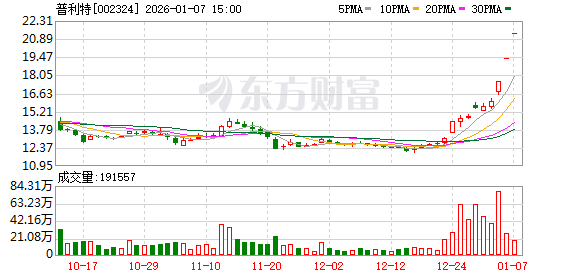
3连板普利特:已与海外客户关于LCP薄膜在脑机接口领域应用进行共同开发以及验证工作
Mei Ri Jing Ji Xin Wen· 2026-01-07 09:45
每经AI快讯,1月7日,普利特(002324.SZ)发布投资者关系活动记录表公告称,公司的LCP薄膜产品凭借 其极低吸水率、优异的高频传输性能、同时生物相容性较好,适合作为脑机接口的柔性电极材料使用。 随着脑机接口产业技术的不断成熟和商业化进程的加速,公司看好LCP薄膜产品在浸入式和非浸入式脑 机接口领域的未来应用市场。LCP薄膜技术壁垒极高,全球仅有三家企业具备大规模化量产能力,普利 特是国内唯一实现该技术突破的企业。目前,公司已与海外客户关于公司LCP薄膜在脑机接口领域的应 用进行了共同开发以及验证工作,目前正在进行临床试验工作,进展顺利。国内相关行业客户公司目前 也正在积极的对接中。 (文章来源:每日经济新闻) ...

“铁锤砸铁钉”:蚌埠,一座老工业城市的实干突围
3 6 Ke· 2026-01-07 09:35
Core Insights - The article highlights the transformation of Bengbu, an old industrial city in Anhui, China, emphasizing its efforts to revitalize its economy through new industries and investment attraction [4][29] - The city aims to leverage its historical industrial achievements to foster a new spirit of innovation and development, focusing on practical actions rather than complacency [15][30] Group 1: Historical Context and Economic Challenges - Bengbu was once a leader in various industries, including the production of the first bicycle and watch in Anhui, but faced significant economic decline post-reform [6][14] - The city's GDP ranking fell from second in the province in the 1980s to 11th by the late 1990s, with industrial output dropping from 9.8% of the province's total in 1985 to 5.3% in 2000 [6][14] Group 2: Recent Economic Recovery and Strategies - In 2022, Bengbu's government implemented strategies focusing on key industries and quality investment, leading to a rebound in economic growth [8][14] - The city has identified "investment attraction, upward striving, and supporting local enterprises" as its three main channels for driving development [8][29] Group 3: Investment and Project Development - From 2024, Bengbu's city management has secured 1.827 billion yuan in upper-level funding, leading to a total investment of 3 billion yuan [8][10] - In 2025, the city introduced a new funding model that resulted in 1 billion yuan in top-tier support for key projects [10][14] Group 4: Industrial Growth and Innovation - By 2025, high-tech industries are expected to account for 100% of the city's industrial added value, marking a significant shift in the economic landscape [11][12] - The emergence of new investment projects, such as those in smart sensing and commercial aerospace, is expected to drive future growth [23][26] Group 5: Governance and Community Engagement - The local government emphasizes a hands-on approach, encouraging leaders to actively engage in investment and problem-solving [15][16] - Community initiatives, such as the "You Point I Check" program, have improved public trust and contributed to food safety, with a 99.08% compliance rate in inspections [18][19] Group 6: Future Outlook - Bengbu's GDP growth reached 5.3% in 2023, with an increase to 5.5% in the first three quarters of 2024, indicating a return to the province's economic forefront [28][29] - The city's commitment to practical, results-oriented governance is seen as a model for other small and medium-sized cities in China [30]

光威复材1月7日现1笔大宗交易 总成交金额269.85万元 溢价率为-5.02%
Xin Lang Cai Jing· 2026-01-07 09:26
炒股就看金麒麟分析师研报,权威,专业,及时,全面,助您挖掘潜力主题机会! 1月7日,光威复材收跌1.51%,收盘价为37.88元,发生1笔大宗交易,合计成交量7.5万股,成交金额 269.85万元。 进一步统计,近3个月内该股累计发生13笔大宗交易,合计成交金额为5028.51万元。该股近5个交易日 累计下跌5.42%,主力资金合计净流出4.32亿元。 责任编辑:小浪快报 第1笔成交价格为35.98元,成交7.50万股,成交金额269.85万元,溢价率为-5.02%,买方营业部为华泰 证券股份有限公司南京大光路证券营业部,卖方营业部为中银国际证券股份有限公司丹东三经街证券营 业部。 ...

光启技术子公司签署2.64亿元超材料产品批产合同
Zhi Tong Cai Jing· 2026-01-07 09:25
Core Viewpoint - The company has signed significant contracts for the production of metamaterials, indicating strong demand and potential revenue growth in this sector [1] Group 1: Contract Details - The company’s wholly-owned subsidiary, Shenzhen Guoke Advanced Technology Co., Ltd. (referred to as "Guoke Advanced"), has entered into a mass production contract for metamaterials worth a total of 215 million yuan with one client [1] - Additionally, Guoke Advanced has signed contracts totaling 49.5849 million yuan with three other clients for the production of metamaterials [1] - In total, Guoke Advanced has recently secured contracts amounting to 264 million yuan with four clients for metamaterial products [1]
光启技术(002625.SZ)子公司签署2.64亿元超材料产品批产合同
智通财经网· 2026-01-07 09:24
Core Viewpoint - The company, Guangqi Technology, has recently signed contracts for the mass production of metamaterials, totaling 264 million yuan with four clients [1] Group 1: Contract Details - Guangqi Technology's wholly-owned subsidiary, Shenzhen Guangqi Advanced Technology Co., Ltd., signed a contract worth 215 million yuan for metamaterials with one client [1] - Additionally, three other contracts were signed with a total value of 49.5849 million yuan for metamaterials [1] - The cumulative contracts for metamaterials with four clients amount to 264 million yuan [1]
光启技术:子公司签订合计2.64亿元超材料产品批产合同
Zheng Quan Shi Bao Wang· 2026-01-07 09:17
Core Viewpoint - The company, Guangqi Technology, has recently signed significant contracts for the mass production of metamaterials, indicating strong demand and growth potential in this sector [1] Group 1: Contract Details - Guangqi Technology's wholly-owned subsidiary, Guangqi Advanced, has signed a mass production contract for metamaterials worth a total of 215 million yuan with one client [1] - Additionally, Guangqi Advanced has entered into contracts totaling 49.5849 million yuan with three other clients for the same product category [1] - In total, Guangqi Advanced has secured contracts amounting to 264 million yuan for metamaterials with four clients, with expected delivery by December 31, 2026 [1]
最高补助1亿元,北京市发改委14条措施提升中试服务能级
仪器信息网· 2026-01-07 09:02
Core Viewpoint - Beijing has introduced 14 policies aimed at enhancing the capacity of pilot testing services, with a goal to establish 10 national-level and 50 municipal-level pilot testing platforms by 2030, promoting the integration of technology and industry, and fostering new productive forces [1][4]. Background of Policy Issuance - Pilot testing is a transitional testing phase for new products moving towards production, crucial for the industrialization of technological achievements. Pilot testing platforms provide specialized services and systematic solutions to support the engineering breakthroughs and industrial applications of technological results [4]. Main Considerations of Measures - Beijing has made significant progress in integrating technological and industrial innovation, forming a "leading talent + new R&D institution" model. However, existing pilot testing platforms do not fully meet the demand for technological achievement transformation, leading to resource fragmentation. The new measures aim to address these issues through a combination of effective market and proactive government actions [6]. Specific Measures - The measures outline 14 policies focusing on four areas: layout of pilot testing platforms, continuous enhancement of service capabilities, optimization of the service ecosystem, and strengthening of support measures. The goal is to establish a pilot testing system that meets the requirements of the capital's modern industrial system by 2030 [7]. Key Initiatives - The measures emphasize the establishment of independent legal entities for pilot testing platforms, particularly in key industries such as artificial intelligence, healthcare, and green low-carbon technologies. New projects will receive financial support based on a percentage of total investment, with a maximum cap [8][9]. Enhancing Service Capabilities - The measures propose initiatives to improve the sustainability of pilot testing platforms, including open sharing of internal testing capabilities and enhancing full-chain service capabilities. This aims to expand the functions of pilot testing platforms to cover the entire industrial chain [10]. Optimizing the Service Ecosystem - The measures focus on strengthening the necessary support for pilot testing platforms, including space, information, finance, talent, and standards. They aim to build a collaborative pilot testing transformation base in the Beijing-Tianjin-Hebei region and enhance the matching of supply and demand through upgraded industrial mapping [11]. Implementation Organization - The measures call for coordinated efforts between city and district levels to ensure effective policy implementation. This includes leveraging the advantages of city-district collaboration and promoting the establishment of pilot testing service platforms in industrial clusters and parks [12].

李在明今天结束访华行程:让中韩关系重回正轨
Xin Lang Cai Jing· 2026-01-07 08:59
Group 1 - The core message of the news is the emphasis on restoring and enhancing the cooperative relationship between China and South Korea, particularly in the context of economic and technological collaboration [1][2]. - The visit of South Korean President Lee Jae-myung to China marks a significant step towards repairing bilateral relations, with a focus on supply chain cooperation and digital economy to alleviate economic pressures [2][4]. - The two countries have signed 15 cooperation documents in various fields, including technology innovation and economic cooperation, indicating a deepening of mutual interests [2]. Group 2 - China has become South Korea's largest trading partner, with projected trade volume for 2024 estimated at $328.08 billion, reflecting a year-on-year increase of 5.6% [2]. - The trade relationship has evolved from a division of labor to a competitive phase, with trade volume from January to August 2025 showing a slight decline of 0.1% year-on-year, totaling $212.26 billion [2]. - Cultural exchanges are also being prioritized, with plans for visa exemptions for tourists between the two countries, indicating a broader strategy for enhancing bilateral ties [3].