
铁路运输

Search documents
(新春走基层)包西铁路“00后”桥隧工:为大山做“CT” 保线路安全畅通
Zhong Guo Xin Wen Wang· 2026-02-27 13:16
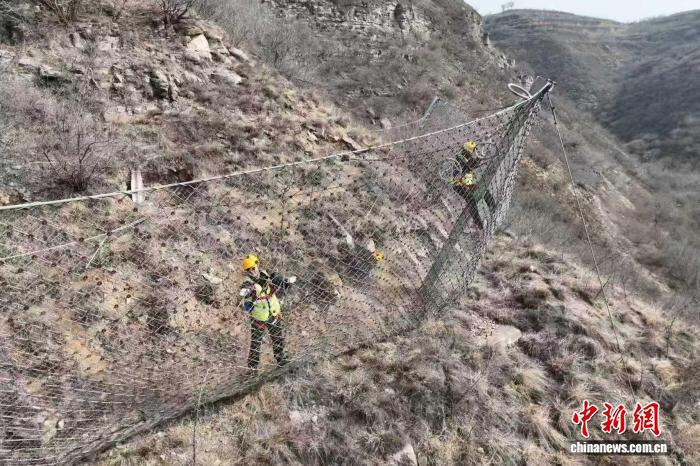
Core Viewpoint - The article highlights the critical role of young bridge and tunnel workers, particularly those born after 2000, in ensuring the safety and smooth operation of the Bao-Xi Railway during the Spring Festival travel rush, emphasizing their dedication and the innovative methods they employ for inspections [1][3]. Group 1: Workforce and Responsibilities - The average age of the bridge and tunnel workers is 26, and they are tasked with inspecting 96 mountain bodies and 53 bridges within 40 days, covering over 200 kilometers on foot [3]. - Workers like Yuan Pengxin and He Zhichao perform rigorous checks on rock walls and bridge supports, using tools like hammers to assess the integrity of the structures [3][4]. Group 2: Innovative Inspection Techniques - The use of drones for grid scanning of cliffs allows for the creation of VR models that accurately depict any cracks or issues, akin to a "CT" scan of the mountain [4]. - The data collected from these inspections enables workers to compare new markings with previous models, facilitating the identification of any changes in structural integrity [4]. Group 3: Commitment to Safety - The workers express a strong sense of responsibility, understanding that their efforts are crucial for the safe passage of trains carrying goods and passengers during the busy travel season [4][5]. - Despite the challenges and sacrifices, such as working away from home during the holidays, the workers maintain a positive attitude and camaraderie, reinforcing their commitment to their roles [4].

长三角铁路27日预计发送旅客257万人次 计划增开列车219列
Yang Zi Wan Bao Wang· 2026-02-27 12:01
Core Viewpoint - The Shanghai Railway Group reports sustained high passenger flow during the post-holiday Spring Festival travel period in the Yangtze River Delta region, with significant increases in train services to accommodate demand [1] Group 1: Passenger Flow and Train Services - On February 26, 2023, the number of passengers sent was 2.584 million, with an expected 2.57 million on the following day [1] - The Shanghai Railway Group plans to increase train capacity by adding 219 passenger trains and expanding 219 high-speed trains on February 27, 2023 [1] - The additional trains include 146 long-distance trains primarily serving routes from Northeast, Yunnan-Guizhou, Sichuan-Chongqing, Northwest, Hunan, Hubei, and Henan to major cities in the Yangtze River Delta [1] - There will also be 73 local trains serving short-distance routes from Hefei, Fuyang, Bengbu, and Xuzhou to Shanghai, Hangzhou, and Ningbo [1] Group 2: Service Enhancements - The Shanghai Railway Group is optimizing service measures to meet passenger travel needs, including nighttime rest services at Hangzhou East Station [2] - Upgrades at Hangzhou West Station include smart registration for rest seats and enhanced facilities, increasing capacity to accommodate up to 200 passengers [2] - Daily passenger flow monitoring is conducted at Hangzhou South Station to manage peak times and ensure orderly travel [2] - Additional safety measures are implemented at Huainan West Station, including personnel for crowd management and regular checks of facilities [2] - Suzhou Station coordinates with local transport services to facilitate smooth travel for key passengers [2] Group 3: Travel Recommendations - The railway department advises passengers to leave early to account for urban transport and security checks, and to stay informed about weather conditions [3] - Passengers are reminded to confirm travel details, including train number, date, and seat assignments, to ensure orderly boarding [3]
从“流动中国”到“文化中国”:看铁路春运里的文化传承与创新
Xin Hua She· 2026-02-27 11:47
Group 1 - The 2026 Spring Festival transportation is not just about the movement of people but also serves as a vibrant carrier for cultural transmission, civilization dissemination, and rural revitalization [1][4] - The Xi'an North Railway Bureau integrates the cultural heritage of the region into the Spring Festival process, creating immersive cultural experiences for travelers [1][3] - The "Happy Slow Train" in Guizhou connects over 100 ethnic villages, allowing local farmers to sell their products directly on the train, enhancing community engagement and economic activity [3] Group 2 - The New Yu North Station features a national-level intangible cultural heritage embroidery experience area, where travelers learn traditional skills from master artisans [2] - The "Qilu No. 1" tourism train connects over 200 scenic spots in Shandong, promoting a comprehensive tourism economy along the railway [3] - Cultural activities at train stations, such as live demonstrations of traditional crafts, transform these spaces into immersive cultural hubs for travelers [2][3]
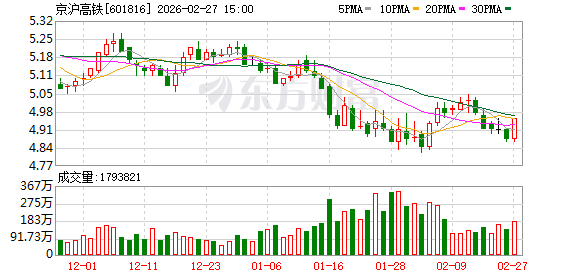
京沪高铁:2025—2027年现金分红不低于归母净利润的55%
Mei Ri Jing Ji Xin Wen· 2026-02-27 08:33
Core Viewpoint - The company has announced a shareholder dividend return plan for the next three years (2025-2027), aiming to establish a scientific, sustainable, and stable dividend return mechanism to actively reward investors [2] Group 1: Dividend Policy - The company plans to distribute no less than 55% of the annual consolidated net profit attributable to shareholders in the absence of significant investment plans or cash expenditures [2] - The primary method of profit distribution will be cash dividends, with a preference for cash distribution whenever possible [2] - The company will consider mid-term profit distribution if conditions are met [2]

好评中国|AI创意长图:“流动中国”春潮涌,文旅活力绘宏图
Huan Qiu Wang· 2026-02-27 07:37
Group 1 - The core theme of the article highlights the vibrant revival of cultural tourism in China during the 2026 Year of the Horse Spring Festival, showcasing a blend of traditional culture and modern travel experiences [2][10] - The transformation from "check-in tourism" to "immersive experiences" is accelerating, with significant increases in hotel bookings in places like Huangshan and Jingdezhen, where visitors engage in hands-on activities like printing traditional New Year paintings [5][10] - The integration of folk customs, cultural relics, and tourism has led to the popularity of themed products such as the Red Rabbit Horse and the Dilu Horse, appealing to younger audiences and becoming a key driver of holiday consumption [7][10] Group 2 - The surge in cultural tourism reflects the strong resilience and intrinsic momentum of the Chinese economy, with substantial year-on-year growth in hotel night stays and ticket bookings during the Spring Festival [10][19] - The concept of "reverse Spring Festival travel" has emerged, with families opting for parents traveling to cities instead of just children returning home, supported by a robust transportation network [13][16] - The railway sector has enhanced travel efficiency through measures like expanded "silent carriages" and "facial recognition boarding," facilitating cross-border cultural exchanges and injecting strong momentum into the holiday economy [16][19]

京津冀协同发展十二周年:“轨道上的京津冀”里程翻倍,“多城记”稳步推进区域高质量发展
Hua Xia Shi Bao· 2026-02-27 06:28
Core Insights - The article discusses the significant progress and development of the Beijing-Tianjin-Hebei (Jing-Jin-Ji) region, emphasizing the expansion of transportation networks and economic growth over the past 12 years. Transportation Development - The high-speed rail network in the Jing-Jin-Ji region has expanded from 1,284 kilometers at the end of 2013 to 2,675 kilometers by the end of 2025, achieving over 100% growth and covering all cities above the prefecture level [1] - The introduction of the first circular high-speed train in the region on January 26, 2026, enhances connectivity between key cities such as Beijing, Xiong'an, and Tianjin [2] - The opening of the Tongzhou Station and the full operation of the Beijing-Tangshan intercity railway have reduced travel time to just 55 minutes [2] - A comprehensive railway network has been established, featuring multiple axes and connections to major cities, creating a "0.5-1 hour traffic circle" and a basic two-hour travel circle among major cities [2] Economic Growth - The economic output of the Jing-Jin-Ji region has increased from 5.95 trillion yuan in 2014 to nearly 12 trillion yuan by 2025, crossing six trillion yuan milestones consecutively [1] - The region's collaborative development is marked by the integration of transportation, industry, culture, and public services, as outlined in the "Modern Capital Metropolitan Area Spatial Coordination Plan (2023-2035)" [3] Resource Optimization - The number of scheduled passenger trains has increased by 77% since 2014, with high-speed trains seeing a 167% increase, facilitating travel across 32 provincial-level administrative regions [4] - The collaboration among the three regions has improved water resource management, enhancing the ecological environment and promoting tourism through special trains [4] Logistics and Trade - The establishment of new international freight routes, including the opening of the first Central Asia train to Uzbekistan and a new route to Belarus, has expanded the reach of "Jing-Jin-Ji manufacturing" to Europe and Central Asia [5] - The region has developed multiple international freight train bases, with 22 scheduled trains per week connecting to various countries, enhancing trade and logistics capabilities [5]
冯忠华走访调研广铁集团
Guang Zhou Ri Bao· 2026-02-27 02:00
Group 1 - The article emphasizes the importance of deepening cooperation between Guangzhou and China Railway Guangzhou Group to enhance the efficiency and convenience of the railway network, aligning with the goals of the "14th Five-Year Plan" [1][2] - Guangzhou is focused on high-quality development and aims to strengthen its modern industrial system while enhancing its role as a major economic city, with railways being a critical component of this strategy [3] - The collaboration aims to accelerate investment in key projects, improve logistics systems, and upgrade railway infrastructure to solidify Guangzhou's status as an international transportation hub [3][4] Group 2 - The Guangzhou Railway Group is committed to ensuring a safe and convenient travel experience during the Spring Festival, enhancing service quality and capacity to meet passenger demands [4] - The company plans to expand its logistics capabilities, including international and domestic freight services, to reduce social logistics costs and support the city's economic growth [4] - There is a focus on improving the Guangzhou railway hub's capacity and quality to enhance connectivity and support the city's development as a world-class transportation center [4]
产业聚焦|铁路客货运喜获量质齐升
Jing Ji Ri Bao· 2026-02-27 01:42
Group 1: Passenger Transport - The national railway sent a total of 121 million passengers during the Spring Festival holiday, averaging 13.41 million passengers per day, an increase of 11.5% compared to last year [1] - On February 23, a record 18.73 million passengers were sent in a single day, marking the highest daily passenger volume in Spring Festival history [1] - During the holiday, the railway operated an average of 12,380 passenger trains daily, with a peak of 2,314 additional trains on the busiest days [2][3] Group 2: Service Enhancements - The railway introduced new service measures to improve passenger experience, including optimized ticket sales strategies and enhanced waiting areas at major stations [3] - Beijing South Station underwent renovations to improve traffic flow and increase taxi waiting capacity, enhancing overall efficiency [3] - The railway implemented a dynamic ticket allocation system, allowing for better management of long-distance and short-distance travel needs [3] Group 3: Freight Transport - The railway transported 85.38 million tons of goods during the Spring Festival, a slight increase of 0.5% compared to last year [1] - The Taiyuan Railway Bureau monitored coal transport closely, achieving an average of 20,046 coal cars loaded daily during the holiday, an increase of 2,335 cars compared to last year [5] - The railway ensured the smooth transportation of essential goods, including food and fertilizers, by optimizing logistics and maintaining operational efficiency [6] Group 4: Cultural Integration and Tourism - The railway collaborated with local cultural and tourism departments to enhance travel experiences, offering themed trains and cultural activities at stations [7] - Special trains were introduced to connect tourists with local attractions, promoting tourism and boosting consumer spending [7][8] - The Harbin Railway Bureau launched themed trains for ice and snow tourism, providing unique travel experiences and promoting regional tourism [8]
投诉一年多都没用,这些机场火车站的网约车候车区烟民喷云吐雾
Xin Lang Cai Jing· 2026-02-27 00:49
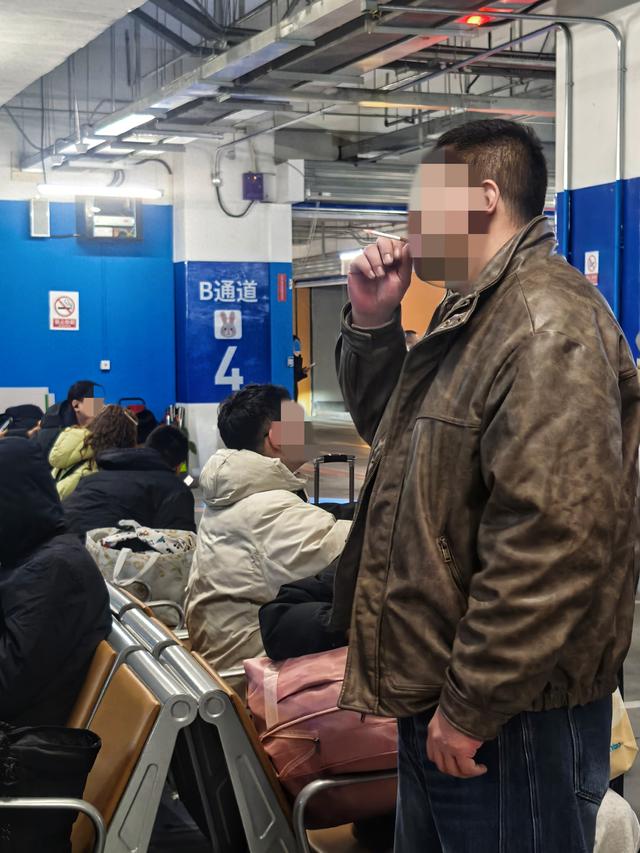
Core Viewpoint - The article highlights the ongoing issue of smoking in non-smoking areas, particularly in transportation hubs like Beijing's Chaoyang Station and Capital Airport, despite clear signage prohibiting smoking [1][3][4]. Group 1: Smoking Violations in Transportation Hubs - Multiple reports indicate that individuals are smoking in designated non-smoking areas, such as the ride-hailing waiting zones at Beijing Chaoyang Station, where six people were observed smoking within a short period [3]. - Observations at the Capital Airport's ride-hailing pick-up area reveal a similar trend, with individuals ignoring no-smoking signs and smoking openly, contributing to a pervasive smoke-filled environment [4][6]. - The presence of numerous cigarette butts and complaints from travelers about the smoke indicates a significant disregard for smoking regulations in these crowded areas [4][6]. Group 2: Lack of Enforcement - Staff at these transportation hubs appear overwhelmed, focusing on vehicle guidance rather than enforcing smoking bans, leading to a lack of intervention against violators [3][4]. - Despite the presence of warning signs about smoking prohibitions and potential fines, enforcement remains lax, allowing smoking behavior to persist [4][6]. - Previous complaints from the public about smoking in these areas have not led to effective changes, suggesting a systemic issue with enforcement and compliance [6].
“智”护能源大动脉——国家能源集团新朔铁路数智化运煤记
Ke Ji Ri Bao· 2026-02-27 00:47
Core Viewpoint - The news highlights the advancements in technology and automation within the coal transportation sector, particularly focusing on the New Shuo Railway's efforts to enhance operational efficiency and safety through smart systems and robotics. Group 1: Technological Advancements - The introduction of an auxiliary driving system allows for automatic speed adjustments based on track conditions, reducing the physical strain on drivers and enhancing focus on safety [1]. - Wireless multiple-unit control technology enables two locomotives to work in tandem, significantly increasing the transport capacity of heavy freight trains [2]. - The implementation of robotic systems in maintenance operations has reduced the time required for inspections from several hours to just 105 minutes, while also increasing fault detection rates by 30% [2]. Group 2: Future Developments - The New Shuo Railway is committed to furthering its digital and intelligent transformation, moving from isolated technological improvements to a more integrated system approach [3]. - The company plans to expand the breadth and depth of technological applications to ensure the reliability of energy supply through advanced smart solutions [3].