
锂矿

Search documents
港股异动 | 锂矿股今日回落 赣锋锂业(01772)跌超2% 矿权注销影响相对有限
智通财经网· 2025-12-18 07:29
Group 1 - Lithium mining stocks experienced a decline, with Ganfeng Lithium down 2.02% at HKD 50.85 and Tianqi Lithium down 0.77% at HKD 48.96 [1] - The lithium carbonate futures for the 2605 contract saw a rise followed by a retreat [1] - Yichun City Natural Resources Bureau announced plans to revoke mining permits for 27 mining licenses, including the Wuqiao ceramic stone mine, based on relevant regulations [1] Group 2 - According to a report by Cinda Futures, most of the mining licenses involved have already expired before 2024, and the related mines have ceased operations, indicating limited impact on the current supply-demand dynamics of the lithium carbonate market [1] - Huabao Futures noted that market sentiment remains tight due to a balanced supply-demand situation, alongside recent overseas resource and production resumption news, and domestic lithium mining capacity dynamics [1] - The short-term price volatility may increase due to the release of future capacities and the main net short structure [1]

华宝期货碳酸锂晨报-20251218
Hua Bao Qi Huo· 2025-12-18 05:37
1. Report Industry Investment Rating - Not provided in the text 2. Core Views of the Report - The price of finished products is expected to move in a range-bound consolidation [2] - The price of lithium carbonate is expected to experience intensified range-bound fluctuations, with a focus on capital movements and attention to marginal changes in supply and demand [3] 3. Summary by Relevant Catalogs Finished Products - Yungui region's short - process construction steel producers will halt production during the Spring Festival from mid - January, resuming around the 11th to 16th day of the first lunar month, affecting a total output of 741,000 tons. In Anhui, 1 out of 6 short - process steel mills stopped production on January 5, and most others plan to stop around mid - January, with a daily output impact of about 16,200 tons [1] - From December 30, 2024, to January 5, 2025, the contracted area of newly - built commercial housing in 10 key cities was 2.234 million square meters, a 40.3% MoM decrease and a 43.2% YoY increase [2] - The price of finished products continued to decline in a volatile manner, reaching a new low. In the context of weak supply and demand and pessimistic market sentiment, the price center continued to shift downward. Winter storage this year is sluggish, providing weak price support [2] Lithium Carbonate - The previous trading day, affected by domestic lithium mine production dynamics, the main contract of lithium carbonate closed at 108,600 yuan/ton, up 7.97%. Trading volume increased by 93.9% to 1.1586 million lots, with a slight 0.4% increase in positions. The net short position of the main contract continued. The spot price was 97,050 yuan/ton, with a basis of - 11,570 yuan/ton, indicating a significant premium of futures over spot [1] - The overall trading activity does not match the price increase, mainly supported by the rigid demand of a small number of enterprises [1] - On the supply side, raw material prices rose slightly, with a significant YoY increase, strengthening cost support. The weekly operating rate was 51.29%, a 0.27% MoM increase, and output was 21,998 tons, a 0.33% MoM increase. The spodumene process was the main growth driver [2] - On the demand side, the production of cathode materials slightly declined, and inventory continued to be depleted. The processing fee of some lithium iron phosphate products will be uniformly increased in 2026 [2] - In the terminal market, in November, the production of new - energy vehicles and automotive lithium - ion batteries increased by 17% and 32.7% YoY respectively. As of December 7, new - energy vehicle sales increased significantly YoY, and the penetration rate increased MoM [2] - As of December 11, the weekly inventory continued to be depleted, and the overall inventory remained tight, supporting prices [2] - Macroeconomic policies such as the Fed's potential interest rate cut, Qinghai Salt Lake industry plan, and the Central Economic Work Conference have positive impacts on the long - term supply - demand pattern of lithium carbonate [3] - Due to factors like the tight supply - demand balance, overseas resource/复产 news, and domestic lithium mine production dynamics, capital speculation has intensified. Considering future capacity release and the net short position of the main contract, short - term price fluctuations may widen [3]
南美锂矿大国放弃中国,转向美国求合作,不想步委内瑞拉的后尘?
Sou Hu Cai Jing· 2025-12-18 04:42
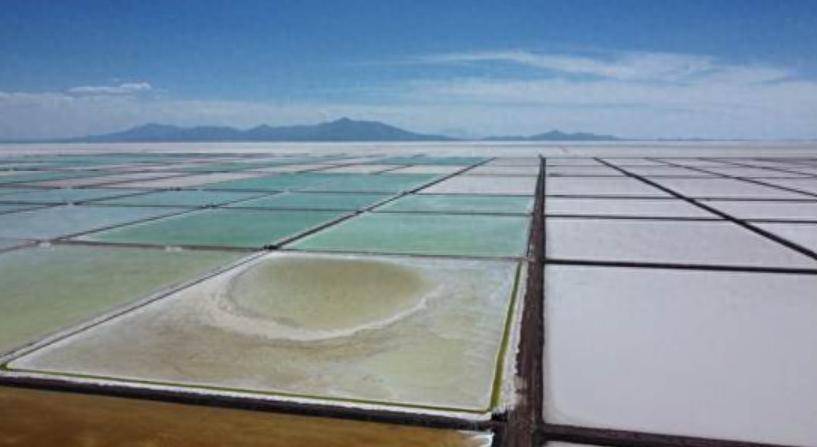
Group 1 - Bolivia is the country with the largest lithium reserves globally, exceeding 23 million tons, yet it produces less than 1% of the world's lithium due to technological and financial constraints [1][3] - The Chinese company CATL has signed a cooperation contract with the Bolivian government for lithium mining in the Uyuni salt flat, with an initial investment of $1 billion and plans to use advanced direct lithium extraction technology [1][3] - Bolivia is planning to establish a long-term partnership with the United States, potentially affecting existing contracts with Chinese companies, as the new Bolivian president, Rodrigo Paz, has a pro-American stance [3][5] Group 2 - Bolivia's economy is under significant pressure, facing severe inflation and a foreign exchange shortage, prompting the need to convert lithium resources into reliable foreign reserves, particularly US dollars [7] - The geopolitical context includes the US's increased focus on the Western Hemisphere and military actions in Venezuela, influencing Bolivia's decision to align more closely with the US for technology and foreign exchange [9]

止跌企稳但谨慎依旧,3800点的支撑!
Ge Long Hui· 2025-12-18 04:01
Market Performance - The Shanghai Composite Index rose by 0.17%, the Shenzhen Component Index increased by 0.83%, and the ChiNext Index gained 1.21% by midday [1] - A total of over 4,370 stocks declined across both markets, with a combined trading volume of 1.02 trillion yuan [1] Sector Movements - High-priced stocks experienced significant declines, with companies like Bona Film Group, Sun Cable, and Zhongyuan Home reaching their daily limit down [3] - The Hainan sector opened lower and fell by 3.62%, with multiple stocks, including Jingliang Holdings and Hainan Ruize, hitting their daily limit down [3] - The electronic chemicals, military industry, and power grid equipment sectors followed suit with declines [3] Strong Performers - Lithium mining concepts showed strength, with Jinyuan Co. achieving two consecutive limit ups in four days, and Shengxin Lithium Energy hitting the limit up [3] - The electrolyte concept rebounded, with Tianji Co. reaching the limit up [3] - The computing hardware concept was active, with Huanxu Electronics hitting the limit up and the three major optical module companies collectively rising [3] - Retail and dairy concepts rebounded from lows, with Zhuangyuan Pasture hitting the limit up and Li Qun Co. achieving two consecutive limit ups [3] Industry News - The nuclear fusion industry is expected to see a surge in bidding activity in December, accelerating the tendering process [3] - The National Healthcare Security Administration announced plans to advance smart healthcare by 2026, encouraging participation from medical institutions, pharmaceutical companies, and research organizations in the development of AI in the healthcare sector [3] - The main contract for lithium carbonate on the futures market surged over 6%, breaking through 106,000 yuan per ton, marking a two-year high [3]
光大期货金融期货日报-20251218
Guang Da Qi Huo· 2025-12-18 03:55
光大期货金融期货日报 光大期货金融期货日报(2025 年 12 月 18 日) 一、研究观点 光大期货金融期货日报 | 品种 | 点评 | 观点 | | --- | --- | --- | | | 市场全天震荡走强,创业板指大涨超 3%。个股涨多跌少,沪深京三市超 3600 | | | | 股飘红,今日成交 1.83 万亿。截止收盘沪指涨 1.19%,深成指涨 2.4%,创业 | | | | 板指涨 3.39%。近期,股指期货市场围绕 10 月以来的中枢下沿持续震荡,大 | | | | 小盘指数分化有限,板块间轮动频繁,市场情绪相对温和。12 月政治局会议 | | | | 与中央经济工作会议相继召开,短期内政策对市场的影响有望增强。从政策 | | | | 表述来看,重要会议提到"实现'十五五'良好开局",预计明年 5%的 GDP | | | | 增长目标不会改变。政策发力方向仍主要集中在"稳内需"和"促进新质生 | | | 股指 | 产力快速发展"。会议提到,"必须坚持投资于物和投资于人紧密结合", | 震荡 | | | 提振居民收入水平和消费能力是宏观通胀预期回升的重要条件。同时强调 | | | | "保持 ...
碳酸锂期货日报-20251218
Jian Xin Qi Huo· 2025-12-18 03:30
1. Report Industry Investment Rating - No relevant information provided 2. Core Viewpoints - The lithium carbonate futures rose, with the intraday gain of the main contract approaching the daily limit. The market continued to trade on the disturbance in Yichun's mining end. After the market on Tuesday, Jiangte Motor announced the proposed cancellation of its Shiziling mining area, which pushed up the lithium price. The 05 - 01 spread narrowed to 1800, and the prices in the industrial chain showed a stable upward trend. With the short - term supply - side disturbance, the market's bullish sentiment was high, breaking through the previous high, and a new round of upward trend in lithium prices was expected [11]. 3. Summary by Directory 3.1. Market Review and Operation Suggestions - The lithium carbonate futures rose, and the intraday gain of the main contract almost hit the daily limit. The market focused on the mining - end disturbance in Yichun. After the market on Tuesday, Jiangte Motor's announcement of the proposed cancellation of the Shiziling mining area led to the high - opening and high - walking of the lithium price during the day. The 05 - 01 spread narrowed to 1800. The spot price of electric carbon increased by 1200 to 97050, the price of spodumene rose by 70 to 1330, the price of lepidolite increased by 85 to 2785, the price of ternary materials increased by 200 - 300, and the price of lithium iron phosphate rose by 280 - 295. The upward trend in the industrial chain was stable, and the lithium price was expected to continue rising [11]. 3.2. Industry News - A joint report by global consulting firm Kearney and the World Economic Forum showed that the global lithium supply can only meet one - third (35%) of the predicted demand in 2035. The report warned that the pace of global electrification, digitalization, and emission reduction is faster than the supply speed of mineral resources. The lithium supply needs to more than double by 2035, and the production of rare - earth elements and copper must increase by over 50%. By 2035, electric vehicles will account for 86% of the total lithium demand, 55% of the cobalt demand, and one - third of the total rare - earth consumption. Even if all announced projects are implemented, existing mines and smelters can only meet 35 - 45% of the predicted demand for lithium and graphite. There is a significant time mismatch in the value chain due to the long development cycle (10 - 20 years) of new mining projects compared to the 1 - 3 - year scale - up time for battery and motor factories. To achieve electrification goals, 60 million kilometers of transmission lines need to be newly built or replaced by 2035, and the grid infrastructure will account for 22% of the global copper demand, 29% of the vanadium demand, and 7% of the lithium demand [12]. - J.P. Morgan's latest report predicted that the average price of lithium carbonate in 2026 will be $17,500 per ton, a 43% increase from the previous forecast, and $22,000 per ton in 2027, a 66% increase. It is estimated that the lithium production of Chilean lithium producer SQM in 2026 will reach 275,000 tons of lithium carbonate equivalent, with 250,000 tons from Chile and 25,000 tons from Australia. The demand for energy - storage system batteries in 2026 is expected to reach 900 gigawatt - hours, a 17% increase from the previous forecast, and energy - storage systems will account for 34% of the total lithium demand in 2026, rising to 42% by 2030 [12]. - The Yichun Natural Resources Bureau recently issued a public notice on the proposed cancellation of 27 mining rights, which attracted wide attention in the domestic lithium - battery industry, and some involved enterprises raised objections. Jiangte Motor's Shiziling mining area in Yifeng County, Jiangxi Province, is one of the 27 mining rights to be cancelled. On the evening of December 16, Jiangte Motor announced that it had submitted an objection application to the Yichun Natural Resources Bureau, proposed relevant solutions, and tried its best to renew the mining license for the Shiziling mining area. The company also stated that the notice is a proposed cancellation notice, and the final decision depends on the Yichun Natural Resources Bureau. The company obtained the mining license for the Shiziling mining area in 2014 and renewed it in 2019, with an annual production scale of 1.2 million tons and a mining area of 0.1114 square kilometers [13].

矿山干扰消息频传,碳酸锂接近涨停
Hua Tai Qi Huo· 2025-12-18 02:35
Report Industry Investment Rating - Not provided Core View of the Report - The recent strong performance of lithium carbonate prices is mainly due to mining - end interference news. The suspension of Ningde Times' Jiaxiaowo mine and the public notice of canceling 27 mining rights by the Natural Resources Bureau of Yichun, Jiangxi have triggered market concerns about lithium resource supply. The abnormal price increase today mainly reflects emotional fluctuations and has a weak connection with industry fundamentals. The continuous decline of social inventory and the unchanged supply - tight situation also support the price increase to some extent. In the short - term, it is likely to maintain a high - level shock, and attention should be paid to the rhythm of capacity release and capital trends, while being vigilant about the intensified fluctuations caused by marginal changes in supply and demand [1][2] Summary by Relevant Catalogs Market Analysis - On December 17, 2025, the main contract 2605 of lithium carbonate opened at 101,500 yuan/ton and closed at 108,620 yuan/ton, with a 7.61% change in the closing price compared to the previous day's settlement price. The trading volume was 1,158,611 lots, and the open interest was 668,589 lots, compared with 666,027 lots in the previous trading day. The current basis is - 11,010 yuan/ton (average price of electric carbon - futures). The number of lithium carbonate warehouse receipts was 15,636 lots, a change of 350 lots from the previous trading day [1] - According to SMM data, the price of battery - grade lithium carbonate is 94,600 - 99,500 yuan/ton, a change of 1,200 yuan/ton from the previous trading day; the price of industrial - grade lithium carbonate is 93,300 - 95,600 yuan/ton, a change of 1,100 yuan/ton from the previous trading day. The price of 6% lithium concentrate is 1,330 US dollars/ton, a change of 70 US dollars/ton from the previous day [1] Strategy - The uncertainty on the supply side is one of the key factors supporting the strong price. There are continuous supply interference news at home and abroad. In general, it is likely to maintain a high - level shock in the short - term. Attention should be paid to the rhythm of capacity release and capital trends, and be vigilant about the intensified fluctuations caused by marginal changes in supply and demand [2] Trading Recommendations - For unilateral trading, it is recommended to mainly wait and see in the short - term. There are no recommendations for inter - period, cross - variety, spot - futures, and options trading. The influencing factors include continued over - performance of the consumer end, over - expected mining end disturbances, and the impact of macro - sentiment and open interest changes [4]
华泰期货:碳酸锂再创新高,需警惕价格急涨带来的风险
Xin Lang Cai Jing· 2025-12-18 02:04
热点栏目 自选股 数据中心 行情中心 资金流向 模拟交易 客户端 来源:华泰期货 作者: 新能源及有色组 昨日碳酸锂盘面大涨,主力合约最高触及109860元/吨,接近涨停,最终收于108620元/吨,涨幅 7.61%,成交量115.86万手,较前日明显放量,持仓量66.86万手,日增2562手。今日涨幅创近期新高, 价格突破2024年5月以来高点。 近期碳酸锂方面供应端干扰频发,先有玻利维亚新任总统推动终止与部分中国锂矿开采合同、转而与美 国达成合作协议的消息传出,今日江西宜春地区继宁德时代枧下窝矿被关停后,当地拟注销27项采矿许 可证。供应端政策收紧引发的短缺预期,成为本周碳酸锂价格大幅上涨的主要因素。此外需求端储能方 面依然保持火热态势,社会库存延续下降趋势,供应紧张局面未改。基本面支撑碳酸锂价格维持高位并 继续上探,预计短期内仍将维持强势。 但需注意2026年碳酸锂供需整体仍然呈现过剩态势,当前价格已处于两年内高位,且储能需求的延续性 以及供应干扰的可持续性存疑。需警惕价格急涨带来的风险,未来可关注供应端释放节奏以及库存拐点 的到来。 风险提示:关注锂矿复产进展以及消费与库存拐点。 投资咨询业务资格: ...

机构:预计短期内碳酸锂价格将保持偏强运行
Zheng Quan Shi Bao Wang· 2025-12-18 01:07
Group 1 - On December 17, lithium carbonate futures on the Guangqi Exchange surged, with the main contract approaching 110,000 yuan/ton [1] - The spot price of domestic battery-grade lithium carbonate (99.5%) rose to 97,100 yuan/ton on December 17, an increase of 1,170 yuan/ton from December 16, and up 62.18% from the year's low [1] - CITIC Securities predicts that overseas lithium mine production will remain flat in Q3 2025, indicating reduced production enthusiasm among overseas mining companies due to low lithium prices earlier in the year [1] Group 2 - Huaxi Securities reports that lithium salt plants are operating at high capacity, with spodumene and salt lake sources being the main supply drivers [2] - Demand in the power battery sector is benefiting from the rapid growth of both commercial and passenger electric vehicles, while the energy storage market continues to show strong supply and demand dynamics [2] - The expectation of inventory reduction supported by demand is likely to stabilize price bottoms, with short-term lithium carbonate prices expected to remain strong [2]
美股异动丨锂矿股集体上涨,机构预测储能扩张将推动全球锂市明年供不应求
Ge Long Hui A P P· 2025-12-17 14:49
Core Viewpoint - Lithium stocks experienced a collective rise, with Sigma Lithium increasing by 13.8%, Lithium Argentina AG by over 8%, and Chilean mining and chemical companies by 7.7%, while U.S. companies like Albemarle and Lithium Americas rose by over 4% [1] Industry Summary - According to industry consultancy Adamas Intelligence, the growth in energy storage demand will be the "largest volatility factor" affecting lithium demand in battery production by 2026 as electric vehicles reach a relatively mature stage [1] - This expansion is expected to lead to a supply-demand imbalance in the global lithium market next year, with energy storage demand for lithium projected to grow by 55%, significantly outpacing the 19% increase in the electric vehicle sector [1]