Internet

Search documents
A股超4500股飘红,AI电商大涨,多股涨停,贵金属再创新高,沪银拉升8%
2 1 Shi Ji Jing Ji Bao Dao· 2026-01-14 02:53
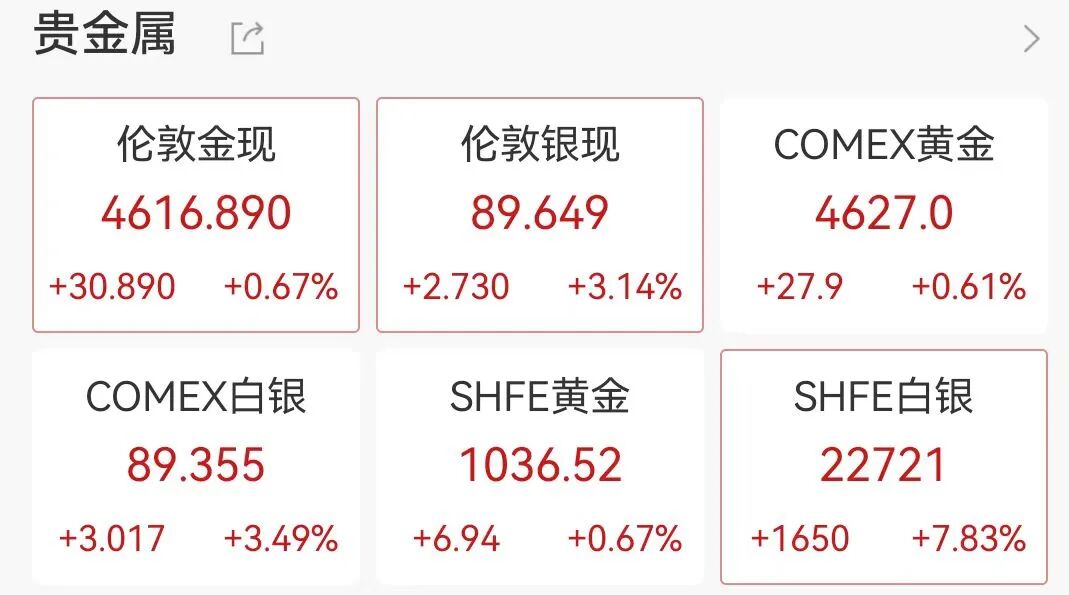
"新易中天"继续狂飙! 1月14日,A股开盘三大指数集体上涨,AI应用股继续强势,开盘27分钟,沪深两市成交额突破1万亿,较上一日此时缩量超3098亿,预计全天成交金额 超3.39万亿,全市场超4500股上涨,富时中国A50指数期货快速拉升涨超1%。 贵金属市场继续走高,现货黄金一度突破4620美元/盎司,现货白银逼近90美元大关,现报89.95美元/盎司,再创新高,涨幅3.14%。沪银单日狂飙8%, 国内铜、铝期货价格齐涨。 AI电商全线大涨、"新易中天"概念狂飙 截至9:53发稿,光云科技、值得买(300785)20CM涨停,浙文互联(600986)、美年健康(002044)、利欧股份(002131)、人民网、新华网 (603888)10CM涨停,天龙集团(300063)涨15%,东方国信(300166)涨超9%,易点天下(301171)涨超13%、中文在线(300364)、岩山科技 (002195)、天娱数科(002354)、福石控股(300071)涨超8%。 | 代码 | 名称 | | 现价 | 涨跌幅 | | --- | --- | --- | --- | --- | | 688362 | 光云科技 ...


Meta开年裁员1500人,降本资金all in AI,700亿美元巨额亏损致其“元宇宙”梦碎?
3 6 Ke· 2026-01-14 00:17
Core Viewpoint - Meta is planning to lay off approximately 1,500 employees, or 10% of its Reality Labs division, as part of a strategic shift towards AI and away from the metaverse, which has been a significant financial burden for the company [1][3][7]. Group 1: Company Restructuring - Meta's Reality Labs division will be restructured into two departments: the metaverse and wearables, with the metaverse department primarily focusing on VR headsets and virtual social platforms [3][12]. - The layoffs are primarily targeting the metaverse department, with funds saved redirected towards AI wearable devices [3][13]. - As of now, Meta employs approximately 78,000 people, with Reality Labs accounting for about 19% of the workforce [2][3]. Group 2: Financial Performance - Reality Labs has been experiencing significant losses, with quarterly losses exceeding $3.7 billion since Q3 2023, and cumulative losses reaching approximately $70 billion over five years [3][7]. - In Q4 2024, Reality Labs is projected to incur a loss of nearly $5 billion, contributing to a total loss of about $13.2 billion in the first three quarters of 2025 [3][4]. - The revenue from Reality Labs has been declining, with Q1 2025 revenue reported at $412 million, a 6.36% decrease from the previous year [10]. Group 3: Shift in Strategic Focus - Meta's CEO Mark Zuckerberg has increasingly shifted focus from the metaverse to AI, indicating a strategic pivot in the company's priorities [6][17]. - The company is investing in AI technologies, including the development of AI glasses and other advanced AI models, as part of its new strategic direction [13][16]. - The introduction of AI glasses, such as the Ray-Ban Meta, has seen significant sales growth, with expectations of reaching 1 million units by the end of 2026 [14][16].

Meta的核能数据中心协议可能需要超过140亿美元投资
Xin Lang Cai Jing· 2026-01-13 20:24
Meta周二尾盘下跌2.2%,据估算,该公司最近签署的核能数据中心协议可能需要超过140亿美元投资。 责任编辑:张俊 SF065 Meta周二尾盘下跌2.2%,据估算,该公司最近签署的核能数据中心协议可能需要超过140亿美元投资。 责任编辑:张俊 SF065 ...

美股异动丨谷歌A涨2.6%续刷新高,与苹果达成重磅合作+获花旗列为首选股
Ge Long Hui· 2026-01-13 15:11
Group 1 - Google A (GOOGL.US) reached a historical high of $340.48, with an intraday increase of 2.6% [1] - Apple and Google have entered a multi-year partnership to enhance AI capabilities for Apple's upcoming products, including Siri, utilizing Google's Gemini model and cloud technology [1] - Citigroup's research report highlights Google's leading position in core AI, emphasizing the strength of the Gemini model and its growing computational infrastructure and hardware advantages [1] Group 2 - Citigroup maintains a "Buy" rating for Google, setting a target price of $350 [1]


Meta开始裁员 将资源从VR和元宇宙转向AI设备
Ge Long Hui A P P· 2026-01-13 14:20
格隆汇1月13日|Meta Platforms宣布对旗下RealityLabs部门裁员逾1000人,此举是公司将资源从虚拟现 实(VR)和元宇宙产品转向人工智能(AI)可穿戴设备及手机功能战略的一部分。据首席技术官 Andrew Bosworth在内部发出的通知,员工将从周二早晨开始收到裁员通知。据外媒此前报道,此次裁 员将影响 Reality Labs 大约 15000 名员工中的约 10%。Meta 发言人表示:"我们上个月就提到过,将部 分投资从元宇宙转向可穿戴设备。这次裁员是该战略的一部分,我们计划将节省下来的资源重新投入, 以支持今年可穿戴业务的增长。" ...
Meta(META.US)战略大转移!启动千人裁员 重心由元宇宙转向AI穿戴设备
智通财经网· 2026-01-13 13:39
Group 1 - Meta Platforms has begun notifying over 1,000 employees in its Reality Labs department about layoffs, representing approximately 10% of the department's workforce of about 15,000 employees [1] - The company is shifting its focus from virtual reality and metaverse products to AI wearable devices and mobile functionalities, as stated by CTO Andrew Bosworth [1] - Reality Labs has incurred losses exceeding $70 billion since early 2021, with most investments not generating significant revenue [1] Group 2 - The metaverse, envisioned as a virtual world for work, entertainment, and exercise, has become a costly venture for Meta, which invested heavily in high-end VR headsets and digital features [2] - Meta's executives previously discussed a budget cut of up to 30% for the metaverse department to reallocate resources towards AI glasses projects [2] - The company will continue to develop the metaverse but will focus on mobile platforms rather than fully immersive VR headsets, with a commitment to enhancing the Horizon software experience for mobile users [2]
为什么都在期待百度拆分上市?
3 6 Ke· 2026-01-13 12:26
Core Viewpoint - Baidu's subsidiary Kunlun Chip has submitted an A1 listing application to the Hong Kong Stock Exchange, signaling a potential shift in strategy towards valuing its core assets through spin-offs [1][2]. Group 1: Spin-off Significance - The spin-off of Kunlun Chip is not just a subsidiary listing but a signal of Baidu's intent to unlock value amid a challenging environment for Chinese internet giants regarding asset separation [2]. - The market has historically undervalued Baidu, perceiving it primarily as a traditional search advertising company, despite its significant investments in AI and technology [3][4]. - Kunlun Chip, as a leading AI chip manufacturer, has been undervalued within Baidu, which limits its growth potential and financing capabilities [5][6]. Group 2: Market Dynamics and Identity - The chip industry operates on a principle of neutrality, which has hindered Kunlun Chip's growth while it remained a part of Baidu [7]. - By becoming an independent entity, Kunlun Chip can attract a broader customer base and tap into a larger total addressable market (TAM) [7]. - The financial burden of funding chip development through Baidu's advertising revenue is no longer sustainable, making the spin-off a strategic move to optimize cash flow [8]. Group 3: Future Speculations on Autonomous Driving - The potential for Baidu to spin off its autonomous driving business, particularly the Apollo project, is being speculated as the next logical step following Kunlun Chip's separation [9][10]. - The autonomous driving sector is at a critical juncture, with the need for significant investment to scale operations, which could negatively impact Baidu's financial performance if retained within the company [10][11]. - A proposed spin-off could involve creating a new company focused solely on autonomous driving, allowing for better valuation and attracting strategic investors [11][12]. Group 4: Strategic Implications - The spin-off of Kunlun Chip may serve as a precursor to further separations within Baidu, allowing each business unit to thrive independently [14][15]. - The historical context of successful spin-offs in the tech industry suggests that separating high-growth potential businesses can lead to enhanced valuations and operational efficiencies [13][14]. - Baidu's actions indicate a shift from maintaining a large conglomerate to enabling individual units with unique growth trajectories to compete effectively in their respective markets [15].

中国股票策略:2026 年展望-再进一步(-China Equity Strategy _2026 outlook - another leap forward__ Wang
2026-01-13 11:56
Summary of Key Points from the Conference Call Industry Overview - **Economic Outlook for China**: The economy is projected to experience lukewarm growth with real GDP growth estimates of 4.5% for 2026, down from 4.9% in 2025, and expected to rise slightly to 4.6% in 2027 [3][3][3] - **Consumption Trends**: Consumption growth is forecasted to slow to 4.4% in 2026 from 4.8% in 2025, indicating a potential decline in consumer spending as subsidy effects diminish [3][3][3] - **Investment Dynamics**: Gross fixed capital formation is expected to increase to 3.4% in 2026, suggesting a recovery in investment activities [3][3][3] Key Economic Indicators - **Current Account Surplus**: Projected to rise from 2.9% of GDP in 2025 to 3.1% in 2026, indicating a strengthening of external financial position [3][3][3] - **Trade Surplus**: Expected to remain stable at 4.7% of GDP in 2025 and 2026, reflecting consistent export performance [3][3][3] - **Inflation and Monetary Policy**: CPI is anticipated to increase slightly to 0.4% in 2026, with the 10-year government bond yield remaining stable at 1.70% [3][3][3] Sector Performance - **Property Market**: Property sales have weakened, contributing to a slowdown in retail sales as the effects of subsidies wear off [4][4][4] - **Innovation and R&D**: China's R&D expenditure is catching up to the US in PPP terms, highlighting the growing importance of innovation in the economy [19][19][19] - **Sector Valuation**: Valuations across various sectors remain undemanding, with MSCI China forward P/E ratios indicating potential for growth [33][33][33] Investment Opportunities - **Institutional Inflows**: Continued inflows from domestic institutional investors, including insurance and mutual funds, are expected to support equity markets [41][41][41] - **Positive Catalysts**: Anticipated positive catalysts in the first half of 2026, including insurance fund allocations, could drive market performance [43][43][43] - **Earnings Growth**: EPS growth is projected at 10% for FY26, which is seen as a critical driver for market performance [51][51][51] Risks and Challenges - **Geopolitical Risks**: Ongoing geopolitical tensions remain a risk factor, although the market appears to be more desensitized compared to previous years [65][65][65] - **Property Market Hard Landing**: A potential hard landing in the property market poses significant risks to the overall economy [95][95][95] - **Capital Exodus**: Concerns over capital flight associated with currency depreciation and slow structural reforms could impact market stability [95][95][95] Conclusion - The outlook for the Chinese economy in 2026 suggests a cautious approach, with potential growth tempered by slowing consumption and ongoing risks in the property sector. However, institutional inflows and a focus on innovation present opportunities for investors.
文库“换脸”,搜索“换命”,百度的AI重构
3 6 Ke· 2026-01-13 05:11
Core Insights - Baidu's document library has undergone a significant rebranding, with its AI-native application "Chengpian" renamed to "Daogu" to target a younger audience and shift focus from serious writing to a community for creative content [1][4][5] - The rebranding was executed quietly without a major announcement, raising questions about the effectiveness of the original application and the strategic direction of Baidu's AI initiatives [4][6] - The transition reflects a broader trend in Baidu's strategy to enhance its AI capabilities in consumer-facing applications, particularly in the context of evolving user expectations for productivity tools [15][18] Baidu's AI Strategy - Baidu's document library has been restructured to operate as an independent business unit, indicating a strategic shift towards generating revenue and enhancing user engagement [4][11] - The original application "Chengpian" was designed to facilitate long-form content creation but struggled to gain traction, leading to its rebranding as "Daogu" to better align with user interests in creative content [5][11] - The company aims to tap into the growing demand for AI-driven productivity tools, particularly among the younger generation, with a focus on the "AIGC" (AI-generated content) market [13][20] Market Position and Competition - Baidu's AI applications, including the document library and cloud storage, are positioned as complementary tools for enhancing productivity, with a focus on user engagement and monetization [18][20] - Despite the rebranding, Baidu faces stiff competition from other AI applications that have gained significant user bases, highlighting the challenges in converting early advantages into sustained market leadership [15][16] - The company is navigating a complex landscape where traditional search functionalities are being redefined by AI capabilities, necessitating a balance between maintaining existing revenue streams and innovating for future growth [30][32] User Engagement and Performance Metrics - Baidu's document library has reported impressive growth in user engagement, with AI monthly active users exceeding 97 million and a significant increase in paid subscriptions [20] - The rebranding to "Daogu" is seen as a strategic move to attract a younger audience, capitalizing on the high willingness to pay among users interested in creative content [11][13] - The transition reflects a broader industry trend where user expectations are shifting from information retrieval to direct content generation, necessitating a reevaluation of traditional search paradigms [25][29]

阿里千问下载量破7亿领跑,中概互联网ETF(159607)一键布局海外互联网龙头投资机遇
Xin Lang Cai Jing· 2026-01-13 03:05
Group 1 - The China Internet 30 Index has seen a nearly 1% increase, with notable gains from companies such as TAL Education (+10.35%), Vipshop (+3.63%), Alibaba-W (+3.46%), Alibaba Health (+3.30%), and Tencent Music (+2.25%) as of January 13, 2026 [1] - Hugging Face reported that Alibaba Cloud's Tongyi Qianwen series models have surpassed 700 million downloads, making it the highest downloaded open-source AI series on the platform, with downloads in December 2025 exceeding the total of models ranked second to eighth [1] - The Chinese government has issued implementation opinions for the "Artificial Intelligence Manufacturing" initiative, aiming for key AI technologies to achieve secure and reliable supply by 2027, with plans to promote 3-5 general large models and develop 100 high-quality industrial datasets [1] Group 2 - The China Concept Internet ETF (159607) closely tracks the China Internet 30 Index, which includes 30 Chinese internet companies listed overseas, providing a convenient tool for investment in these firms [2] - As of December 31, 2025, the top ten weighted stocks in the China Internet 30 Index include Tencent Holdings, Alibaba-W, Pinduoduo, Xiaomi Group-W, Meituan-W, NetEase-S, Trip.com Group-S, Baidu Group-SW, JD Group-SW, and Kuaishou-W, collectively accounting for 87.8% of the index [2]