医药

Search documents
让青年“金点子”成为市场“新引擎”
Zhong Guo Qing Nian Bao· 2025-12-07 22:52
Core Insights - The article highlights the emergence of young entrepreneurs in China focusing on "hard technology" and their efforts to transform innovative ideas into marketable products, aligning with national strategies [1][2]. Group 1: Entrepreneurial Initiatives - A new technology company is working on a "space computing base" aimed at enhancing the reliability and safety of computers in low Earth orbit [2]. - Teams from various universities, including Beijing University and Beijing Forestry University, are developing advanced technologies such as AI-enhanced gene therapy and flexible robotic hands, showcasing a shift towards practical applications of research [2][4]. Group 2: Challenges and Adaptations - Entrepreneurs face the challenge of transitioning from laboratory research to commercial viability, requiring a shift in mindset from academic to business logic [2][3]. - The "embodied intelligence" team initially struggled with market demand but successfully pivoted to focus on a critical component of humanoid robots after recognizing the need for market alignment [4]. Group 3: Integration of AI - AI has become an integral part of the innovation process for these startups, enhancing efficiency in drug development and operational management in space technology [6][7]. - The "Zhi Zi Engine" team is leveraging AI for solutions in smart city governance and electric grid inspections, indicating a trend of AI being embedded in various sectors [6]. Group 4: Interdisciplinary Collaboration - The success of these startups is attributed to interdisciplinary collaboration, with team members possessing diverse backgrounds in finance, technology, and management, fostering a culture of mutual respect and innovation [7]. - The emphasis on cross-disciplinary knowledge is crucial, especially in fields like chip technology, where understanding various scientific principles is necessary for advancement [7].
【太平洋研究院】12月第二周线上会议(总第38期)
远峰电子· 2025-12-07 11:42
Group 1 - The report on He Yuan Bio focuses on in-depth analysis and insights into the agricultural sector, highlighting key trends and potential investment opportunities [1][29]. - The report on COSCO Shipping Specialties discusses the logistics and transportation industry, providing an overview of market dynamics and future outlook [1][29]. - The industry allocation model review and update series aims to provide a comprehensive assessment of various sectors, helping investors make informed decisions [1][29]. Group 2 - The report on Connoa presents detailed findings in the pharmaceutical industry, emphasizing growth prospects and market challenges [1][29]. - The series on new opportunities in leading new energy companies explores emerging trends and investment potential within the renewable energy sector [1][29]. - The fundamental background and investment outlook for Shoucheng Holdings are discussed, offering insights into the financial sector and its performance [1][29].

金融工程市场跟踪周报20251207:回调压力或已释放-20251207
EBSCN· 2025-12-07 08:59
- The report suggests that the short-term correction pressure in the A-share market may have been released, and the market has re-entered a volatile range[1][12] - The report recommends using "dividends + technology" as the main allocation strategy, with dividends potentially having an advantage in terms of volatility[1][12] - The report tracks the performance of major broad-based indices, noting that the Shanghai Composite Index rose by 0.37%, the Shanghai 50 by 1.09%, the CSI 300 by 1.28%, the CSI 500 by 0.94%, the CSI 1000 by 0.11%, the ChiNext Index by 1.86%, and the Beijing 50 Index by 1.49% during the week of December 1-5, 2025[1][13][14] - The valuation of broad-based indices as of December 5, 2025, shows that the CSI 500, CSI 1000, and ChiNext Index are at "moderate" levels, while the Shanghai Composite Index, Shanghai 50, and CSI 300 are at "dangerous" levels[1][19][20] - The report tracks quantitative sentiment indicators, including volume timing signals, which are all cautious as of December 5, 2025[24][25] - The report discusses the "number of rising stocks in the CSI 300" sentiment indicator, which is used to gauge market sentiment by calculating the proportion of stocks with positive returns over a certain period[25][26] - The report evaluates the "moving average sentiment indicator," which uses the eight moving average system to judge the trend state of the CSI 300 index[33][36] - The report observes market profitability effects through cross-sectional volatility and time series volatility, noting that the short-term Alpha environment has improved for the CSI 300 and CSI 500 indices but worsened for the CSI 1000 index[37][38][39][40] - The report tracks institutional research activities, noting that the top five stocks receiving the most attention from institutions during the week were Jereh Co., Ltd., Yihada, Hotgen Biotech, Espressif Systems, and Changan Automobile[41][42][53][54] - The report tracks the performance of stock index futures, noting that the main contracts for IF, IH, IC, and IM all rose during the week, with varying degrees of basis changes[56][57][58][59] - The report tracks southbound capital flows, noting a net inflow of HKD 113.49 billion during the week of December 1-5, 2025[66][68] - The report tracks changes in financing scale, noting that the financing balance as of December 4, 2025, was CNY 24,664.89 billion, an increase of CNY 99.89 billion from November 28, 2025[67][72] - The report tracks the ETF market, noting that stock ETFs had a median return of 1.06% and a net inflow of CNY 25.94 billion during the week, while cross-border ETFs had a median return of 0.48% and a net inflow of CNY 12.67 billion[69][70][71] - The report tracks the degree of fund concentration, noting that the degree of fund concentration decreased slightly from the previous week, while the excess returns of concentrated stocks and funds increased from the previous week[77][79][80]





两部门印发《国家基本医疗保险、生育保险和工伤保险药品目录》以及《商业健康保险创新药品目录》(2025年)
Jing Ji Guan Cha Bao· 2025-12-07 05:23
Core Viewpoint - The National Healthcare Security Administration and the Ministry of Human Resources and Social Security have issued new drug directories for basic medical insurance, maternity insurance, work injury insurance, and commercial health insurance, effective from January 1, 2026, replacing the previous 2024 directories [1] Group 1: New Drug Directories - The new drug directories will be strictly enforced by local authorities, prohibiting any adjustments to the types, notes, or classifications of drugs within the directories [1] - The updated directories require timely updates to information systems and databases, ensuring that newly added drugs are included and removed drugs are deleted as per regulations [1] - Adjustments to the "notes" of drugs must be updated in the payment scope, and there is a need for synchronization with drug coding databases and intelligent supervision subsystems [1] Group 2: Transition Period for Excluded Drugs - Drugs that were not successfully renewed and removed from the directory will have a 6-month transition period to ensure continuity of medication [1] - During this transition period, which lasts until the end of June 2026, the medical insurance fund will continue to pay at the original payment standards for these drugs [1] - Local coordinating regions are required to implement effective measures to facilitate the transition and guide designated medical institutions in timely replacements [1]
山东省及下辖各市经济财政实力与债务研究(2025)
新世纪评级· 2025-12-06 12:28
Economic Performance - Shandong Province achieved a GDP of 98,565.8 billion yuan in 2024, growing by 5.7% year-on-year, maintaining its position as the third-largest economy in China[2] - In the first three quarters of 2025, the GDP reached 77,115.0 billion yuan, with a year-on-year growth of 5.6%, surpassing the national average by 0.4 percentage points[2] - The province's industrial investment helped mitigate the negative impact of declining real estate investment, contributing to overall investment growth[2] Fiscal Strength - In 2024, Shandong's general public budget revenue was 7,711.74 billion yuan, a 3.3% increase from the previous year, ranking fifth nationally[4] - The tax ratio was 65.35%, down 4.7 percentage points from the previous year, placing it 13th among provinces[4] - Government fund budget revenue fell to 4,832.12 billion yuan in 2024, a decrease of 1.9% due to declining land transaction prices[4] Debt Situation - By the end of 2024, Shandong's government debt reached 28,428.81 billion yuan, an 18.9% increase from 2023, ranking second nationally[7] - The debt-to-budget revenue ratio was 4.46 times, indicating a moderate level of risk compared to other provinces[7] - The debt growth was concentrated in larger cities, with Qingdao and Jinan having the highest debt levels at 4,382.57 billion yuan and 3,770.56 billion yuan, respectively[8] City-Level Analysis - Qingdao, Jinan, and Yantai led the provincial economy with GDPs of 16,719.46 billion yuan, 13,527.60 billion yuan, and 10,782.83 billion yuan, respectively, accounting for 41.6% of the province's total GDP[3] - Most cities experienced a slowdown in economic growth, with the average growth rate around 5% to 7%[3] - In 2024, the general public budget revenue for Qingdao and Jinan was 1,339.26 billion yuan and 1,083.05 billion yuan, respectively, showing a clear leading advantage[5]
“中招”流感该如何应对?专家提醒
Yang Shi Xin Wen Ke Hu Duan· 2025-12-06 12:03
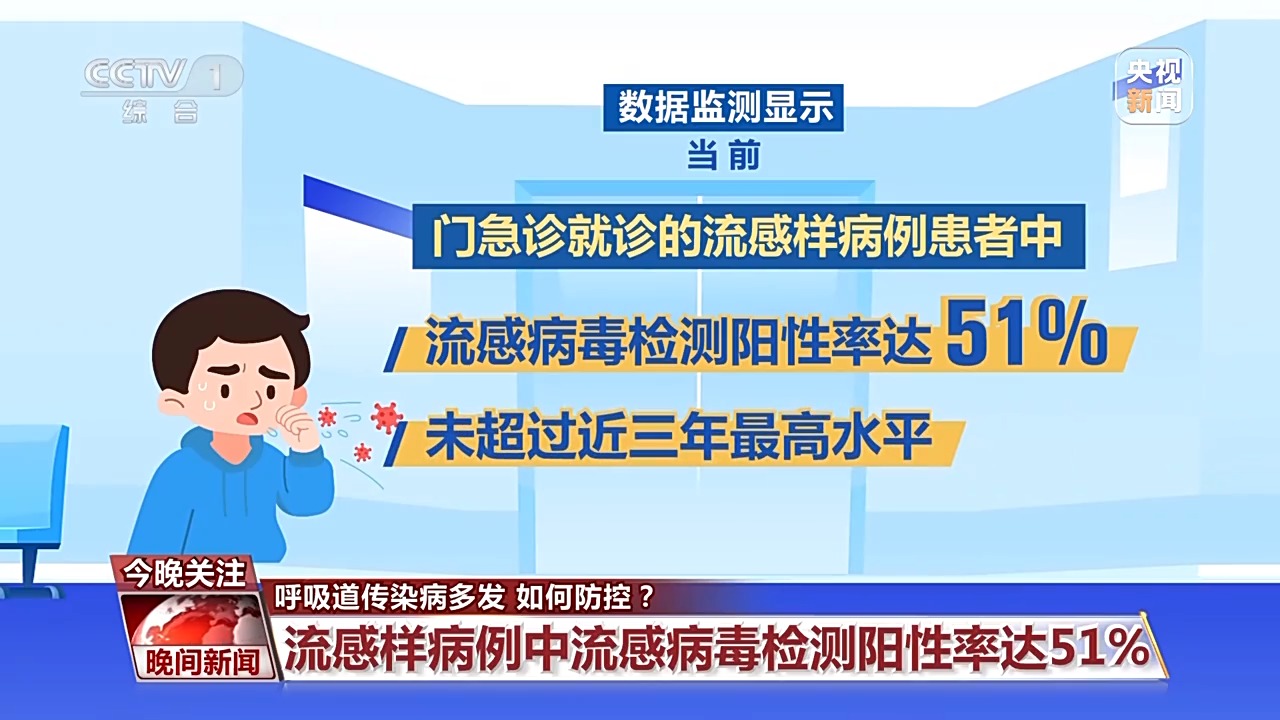
Group 1 - The core viewpoint of the articles highlights the current high prevalence of influenza across China, with 17 provinces experiencing high levels of flu activity and the expectation of peak cases in mid-December [1] - Data monitoring indicates that the positive rate of influenza virus detection among outpatient cases has reached 51%, which is not exceeding the highest levels seen in the past three years [3] - Experts recommend the use of antiviral medications to inhibit virus replication and shorten the duration of illness, although these medications do not directly alleviate symptoms such as fever and sore throat [3] Group 2 - Medical professionals suggest using antipyretic and analgesic medications like ibuprofen and acetaminophen to relieve symptoms such as high fever and body aches [5] - There are risks associated with the practice of sweating out a cold, as it may lead to increased body temperature and potentially life-threatening situations [7] - Criteria for determining when a flu patient is no longer contagious include having a normal temperature for over 24 hours and significant symptom improvement for more than 48 hours [9]
A股市场运行周报第70期:冗余时刻还未结束,目标不变、守株待兔-20251206
ZHESHANG SECURITIES· 2025-12-06 07:38
Core Insights - The market continues to rebound, but with increased volatility. The expectation is for a range-bound market due to significant gains in Q3 and the lack of a leading narrative or sector driving the market upward [1][4][52] - The strategy suggests a "wait and see" approach, avoiding chasing prices and setting targets based on key index levels, while selectively entering positions [1][5][54] Market Overview - Major indices mostly rose, with the ChiNext Index leading the gains. The Shanghai Composite Index, Shanghai 50, and CSI 300 increased by 0.37%, 1.09%, and 1.28% respectively. The ChiNext Index rose by 1.86% [2][12][52] - The materials sector, particularly non-ferrous metals, saw a significant increase of 5.07%, while consumer sectors experienced declines [14][52] - Market sentiment showed a slight decrease in trading volume, with average daily turnover at 1.68 trillion yuan, down from the previous week [20][52] Sector Analysis - The non-bank financial sector, identified as a "key eye" in the market, rose by 2.33%, contributing to the overall market rebound [14][53] - The home appliance sector, which had lagged in the current bull market, increased by 1.73%, marking it as the only industry index to reach a new high in the past three weeks [53] Fund Flows - The margin trading balance slightly increased to 2.48 trillion yuan, with a rise in the proportion of financing purchases to 9.9% [26][52] - The stock ETF saw a net outflow of 6.5 billion yuan, with the securities ETF experiencing the highest inflow [26][52] Valuation Metrics - The current PE ratios indicate that the market is generally reasonably valued, with the ChiNext Index at a relatively low valuation percentile of 38.04% [44][52] - The downward energy model shows that the market's downward energy is at a normal level, indicating no immediate sell signals [45][52]

中国药物双十二招商盛典启幕,邀您共拓健康消费新蓝海
Sou Hu Cai Jing· 2025-12-06 07:17
Core Insights - The health consumption market is becoming a significant growth point, with the pharmaceutical e-commerce scale expected to exceed 1 billion yuan by 2025, driven by steady growth in traditional Chinese medicine and wellness products [1] - The company emphasizes its "quality gene" as the core foundation for winning the market, utilizing a "company + cooperative + farmer" model to ensure quality control from cultivation to processing, adhering to national standards [4] - The company is launching a comprehensive service plan that includes product selection, basic operations, compliance guidance, and logistics coordination to better integrate quality medicinal materials into modern health consumption scenarios [11] Market Trends - The "Double Twelve" shopping festival is seen as a key opportunity for health industry layout, with rising consumer demand for chronic disease medications, Chinese herbal teas, and home health monitoring devices noted during the "Double Eleven" period [7] - The company is implementing targeted support measures, including a green channel for e-commerce platforms, customized product packages, and optimized logistics processes to ensure timely delivery during the shopping festival [7] Policy Support - The traditional Chinese medicine industry is receiving policy support under the "Healthy China" strategy, encouraging digital development and the promotion of quality products [11] - The company aims to leverage this supportive environment to enhance the market recognition of quality medicinal materials and promote reasonable sales of health products during the "Double Twelve" period [11]

稀土只是开场!石破茂坦言:中国握有多张王牌,没中国日本真不行
Sou Hu Cai Jing· 2025-12-06 04:34
日本政坛这一轮风波,来得快,也来得急。 高市早苗上台之后,把对华关系摆到最前头,话讲得硬,姿态也摆得高,一口咬定要"减少对中国的依赖",还提出所谓"自主供应链"的构想。 她不是在试探,而是在施压。 可她好像忘了,施压从来不是单向的。 中国这边没着急回应,但动作早就开始了——不是那种一纸公文式的警告,而是从稀土、医药、民生基础品,再到产业技术链条,一层层收紧。 很多人盯着稀土,觉得这是最狠的招数。 其实不是。 稀土只是表皮,底下藏着的东西,日本压根没准备好面对。 先说稀土。 日本这些年喊着"多元化",拼命往澳大利亚、美国、印度找新来源,投钱建本地提炼厂,看起来热火朝天。 可问题不在矿石有没有,而在能不能用。 稀土从开采到变成手机里的磁铁、电动车里的电机,中间几十道工序,每一步都得靠技术支撑。 中国不光有矿,更有几十年积累下来的精炼、分离、提纯工艺。 日本就算把全世界的矿石都买回来,没有这整套工业能力,照样做不出高端产品。 这不是危言耸听,是现实。 日本在新能源、半导体、精密器械这些领域,全都要用到稀土材料。 一旦中国的深加工环节出问题,哪怕只卡住其中一环,整个生产线就得停。 军工更不用说了——雷达、导弹导引头、 ...

华泰香港市场研究11月精华:三大均衡育新机
Xin Lang Cai Jing· 2025-12-06 01:24
Group 1 - The Hong Kong stock market is entering a value investment phase, with current adjustments providing better cost-effectiveness compared to A-shares [2] - Short-term capital may continue to seek safety, with a focus on underperforming sectors such as consumer services, construction, textiles, and home appliances [2][3] - Certain industries like electronics, pharmaceuticals, automotive, and light manufacturing have experienced significant declines, presenting opportunities for recovery [2] Group 2 - The recent market volatility has highlighted the importance of balanced asset allocation, especially in the context of external disturbances affecting investor sentiment [4] - The Chinese AI industry is seen as a long-term theme supported by national planning, with technology stocks in Hong Kong still offering mid-term investment value [4] - The shift in market style from technology to defensive dividend sectors has been noted since mid-October, with various dividend-focused ETFs available in the Hong Kong market [6]