
Robotics

Search documents
成都人形机器人创新中心董事长张睿睿: 攻坚“大脑”技术 引领机器人产业智能变革
Zhong Guo Zheng Quan Bao· 2026-01-19 21:06
Core Insights - Humanoid robots are seen as a key to realizing "physical AI," but their current limitations in autonomous decision-making and operational constraints hinder their ability to meet continuous production demands in factories [1][2] Group 1: Technological Development - The innovation center focuses on core technologies such as the "brain," "cerebellum," and "limbs" of humanoid robots, emphasizing the need to prioritize breakthroughs in brain technology for better understanding, reasoning, and adaptation to dynamic environments [1][2] - The center has developed several key technologies, including a task generation model based on diffusion architecture and a task execution system based on world models, which have been adopted as benchmarks for national standards [2] - The center has launched lightweight humanoid robots and various specialized robots, marking significant advancements in the industry [2] Group 2: Commercialization and Collaboration - The innovation center's business model combines technology research and industrial collaboration to accelerate the commercialization of its technologies, focusing on customized solutions for major engineering projects in extreme environments [2][3] - The center has established deep collaborations with several state-owned enterprises and leading companies to apply its technologies to real-world needs, aiming for profitability and higher revenue targets by 2026 [3] Group 3: Regional Development and Future Prospects - The establishment of the first humanoid robot manufacturing base in the Midwest is underway, with successful testing of engineering robot products in major projects, indicating a growing industrial ecosystem [4] - The center aims to leverage local advantages and policies to become a leading force in the humanoid robot industry, transitioning from a "parallel run" to a "leading run" in development [4]

SPDR S&P Kensho New Economies Composite ETF (KOMP US) - Portfolio Construction Methodology
ETF Strategy· 2026-01-19 18:39
Core Insights - The SPDR S&P Kensho New Economies Composite ETF (KOMP US) targets U.S.-listed equities in "New Economies" subsectors such as robotics, AI, automation, and connectivity [1] - The underlying index employs a systematic screening process for investability and liquidity, with a modified equal weighting approach and semi-annual rebalancing [1] - Each subsector is weighted by its trailing Sharpe ratio, allowing faster-maturing themes to receive higher weight while early-stage themes are still represented [1] Portfolio Construction Methodology - The Composite aggregates all eligible subsector indices, with issuer weights derived from underlying subsector memberships and caps [1] - Country and sector exposures are determined by the taxonomy breadth rather than market-cap dominance [1] - The methodology includes lifecycle-aware subsector weighting, periodic reconstitution, and semi-annual rebalances to balance diversification, capacity, and turnover control [1]


【公告全知道】商业航天+智能电网+机器人+特高压!公司产品成功应用于C919大飞机工程、太原卫星发射中心等重点工程
财联社· 2026-01-19 15:36
Group 1 - The article highlights the importance of timely announcements in the stock market, including suspensions, shareholding changes, investment wins, acquisitions, earnings reports, and stock unlocks, which are crucial for investors to identify potential investment hotspots and mitigate risks [1] - The company is involved in multiple high-tech sectors such as commercial aerospace, smart grids, robotics, ultra-high voltage, wind power, and military industry, with successful applications in key projects like the C919 aircraft and the Taiyuan Satellite Launch Center [1] - The company also participates in the construction of data center hardware in collaboration with Nvidia's Blackwell series architecture, focusing on smart grids, robotics, domestic chips, third-generation semiconductors, and energy storage [1] Group 2 - The company’s general-purpose chip technology meets the technical requirements across various fields, including commercial aerospace, quantum technology, storage chips, humanoid robots, brain-computer interfaces, computing power, and autonomous driving [1]

发挥“以场景引领产业”优势,林枫:在广州开设机器人6S旗舰店
2 1 Shi Ji Jing Ji Bao Dao· 2026-01-19 11:14
Core Viewpoint - The development of embodied intelligence, represented by humanoid robots, is a significant direction for the next generation of AI and reflects the empowerment of artificial intelligence in new industrialization [2]. Group 1: Government Initiatives - The Guangzhou government has emphasized the importance of nurturing emerging future industries and proposed the establishment of an innovation consortium for embodied intelligent robots [2]. - The mayor of Guangzhou, Sun Zhiyang, presented a government work report during the opening of the 16th session of the Guangzhou People's Congress, highlighting the focus on advanced manufacturing [2]. Group 2: Industry Advantages - Guangzhou has a solid industrial foundation, strong scientific and educational resources, and vast market space in the field of intelligent equipment and embodied intelligent robots, providing a unique first-mover advantage [3]. - The city can leverage high-frequency application scenarios in industries such as automotive, electronic information, healthcare, and low-altitude economy, creating a broad market for products [3]. Group 3: Recommendations for Development - A proposal was submitted to create a scene-based open system to attract more enterprises to gather in Guangzhou, focusing on the development of the embodied intelligent robot industry [5]. - The establishment of a flagship robot 6S store in Guangzhou is planned to serve as a core carrier for industry chain aggregation, aiming to attract more upstream and downstream enterprises [5]. - There is a call for strengthening policy coordination to cultivate ecological advantages in the industry [5].

预告︱机器人及人工智能领域近期相关活动预告
机器人圈· 2026-01-19 10:55
机器人产业蓬勃发展,正极大改变着人类生产和生活方式,为经济社会发展注入强劲动能。2023年年初, 工业和信息化部联合十六大部委印发《"机器人+"应用行动实施方案》,目标到2025年,制造业机器人密 度较2020年实现翻番,服务机器人、特种机器人行业应用深度和广度显著提升,机器人促进经济社会高质 量发展的能力明显增强。11月12日工业和信息化部又印发《人形机器人创新发展指导意见》,提出人形机 器人有望成为继计算机、智能手机、新能源汽车后的颠覆性产品,并明确2025年实现批量生产。 各项政策加持,热度非凡,行业活动也层出不穷,小编通过网络搜集整理了 未来两周国内外机器人及人工 智能领域行业活动活动榜单 ,供大家参考。 主办单位: 中国机电一体化技术应用协会、上海市国际展览(集团)有限公司 3 2026全国传感技术与应用研讨会 2026.01.19-02.01 机器人及人工智能相关活动预告 1 首届"中国工业智能·杭州论坛" 时间: 2026.01.20 地点: 杭州洲际酒店 主办单位: 中国电信浙江公司、杭钢集团、杭实集团、杭州炽橙数字科技有限公司 2 2026上海国际具身智能产业博览会新闻发布会 时间: 202 ...

星动纪元创始人陈建宇:要实现万亿级市场,核心是打造上限更高、更通用的机器人
创业邦· 2026-01-19 10:41
Core Viewpoint - The article emphasizes the potential of robotics to create a trillion-dollar market by developing more versatile and intelligent robots that can adapt to various tasks and environments, similar to human capabilities [4][6][7]. Group 1: Robotics Market Potential - The robotics industry is expected to generate significant productivity, potentially contributing to half of the global GDP [7]. - Current robots are often specialized for single tasks, limiting their market scalability [4][7]. - A consensus has emerged in the industry that robotics will lead to a trillion-dollar market in the future [6]. Group 2: Development of General-Purpose Robots - The focus is on creating robots with higher limits and versatility, enabling them to learn and adapt quickly to different scenarios [4][7]. - The company has made progress in developing humanoid robots with integrated software and hardware, allowing for complex operations [7][19]. - The robots are designed to be general-purpose, utilizing a common model that is not tailored to specific scenarios, thus enhancing adaptability [8]. Group 3: Innovation in Embodied Models - The development of embodied models has evolved through three stages: VLA model based on VLM, integration of world models, and reinforcement learning [11][16]. - The world model allows robots to predict and make decisions based on their understanding of the physical world, enhancing their operational capabilities [14][15]. - The final stage involves reinforcement learning, enabling robots to autonomously improve their performance through trial and error [16]. Group 4: Hardware Development - The company has independently developed key components such as dexterous hands, motors, and actuators, forming a product matrix that translates technology into tangible forms [19][20]. - The humanoid robot STAR1 is highlighted for its advanced capabilities, including high jump and complex task execution [19]. - The wheel-based robot Q5 is designed for service scenarios, showcasing flexibility and precision in operations [20]. Group 5: Commercialization Strategy - The company employs a dual-track strategy for commercialization, providing comprehensive solutions directly to end-user scenarios while also offering tools to other enterprises and academic institutions [21]. - Collaborations with major companies like SF Express, Haier, and Lenovo have been established, allowing for real-world data feedback to optimize models [21]. - The company has attracted nine of the top ten global tech giants as clients, indicating the value of its technological tools [21].

遥操数据没采好,对后续影响有多大?
具身智能之心· 2026-01-19 09:30
但现实很骨感:VLA 模型的性能上限,往往取决于你数据采集的质量。 很多同学在复现 π0、GR00T 或 ACT 时,最常吐槽的就是:" 数据太难采了! " 具身智能的本质是"本体交互"。 如果没有高质量的遥操作数据,再强大的 VLA 算法也只是空中楼阁。 为了帮助大家节省"踩坑"时间,具身智能之心正式推出国内首个 《具身数采与遥操算法全栈课程》 。 这门课不只讲理论,更注重"手感"与"实战"。我们将带你从零 DIY 遥操硬件,打通数据采集的全链路。 最近在具身智能圈子里,VLA(视觉-语言-动作)模型无疑是流量中心。无论是学术界的论文爆发,还是工业 界的 HR 急招,VLA 都被顶到了风口浪尖。 ★ 课程大纲: 更多内容,欢迎咨询小助理 仿真生成数据不真实: 仿真与真机的 Gap(Sim2Real)巨大,模型在仿真里跑得溜,真机上一碰就碎。 遥操手感极差: 动作生涩、延迟高,采集出来的轨迹充满噪声,模型根本学不会。 硬件门槛高: 专业级遥操设备动辄数万,普通学生和初创团队难以负担。 技术全链路断层: 知道怎么控机械臂,但不知道怎么把数据格式对齐 LeRobot 或 RT-X 格式。 | 遥操作概述与基础 | ...
美国开始用机器人造房子了?
机器人大讲堂· 2026-01-19 09:09
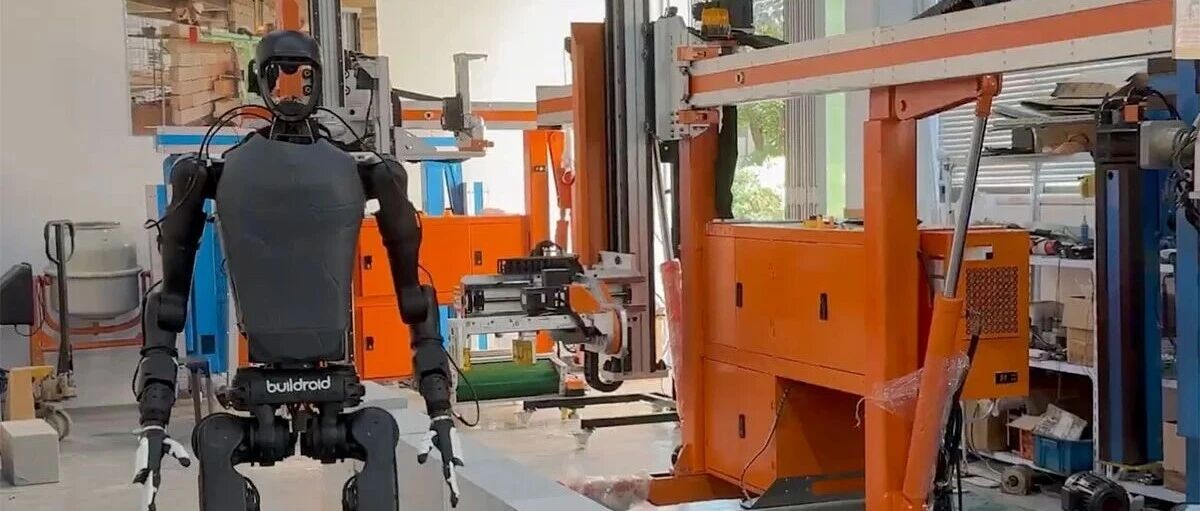
Core Insights - Buildroid is set to launch its construction robot collaboration platform in the U.S. market in Q1 2026 after successful pilot deployments in the UAE [1] - The construction industry currently faces low robot adoption rates due to existing systems only automating isolated tasks, highlighting the need for multi-robot collaboration to enhance overall efficiency [3] - The U.S. construction sector is experiencing significant pain points, including labor shortages, rising labor costs, and a mismatch between construction speed and market demand, creating a market opportunity for Buildroid [5] Group 1: Platform and Technology - Buildroid's platform is compatible with over 40 types of robots and utilizes NVIDIA Omniverse for workflow simulation before deployment [6] - The platform employs a "simulate before deploy" strategy, optimizing workflows through extensive digital twin simulations [6] - Key components include a BIM import process, with a plugin developed for Autodesk Revit to convert models into OpenUSD format, enhancing simulation accuracy [7] Group 2: Market Focus and Applications - Buildroid's initial commercial focus is on block and partition wall installation, a segment valued at $13 billion within the global $17 trillion construction industry [8] - The company has integrated two types of bricklaying robots and a mobile robot for material handling, capable of placing blocks weighing up to 40 kg [8] Group 3: Funding and Business Model - Buildroid raised $2 million in seed funding in November 2025, led by venture capitalist Tim Draper, known for early investments in companies like Tesla and SpaceX [9][16] - The company plans to use the funding to expand pilot projects, enhance simulation algorithms, and prepare for U.S. market deployment [18] - Buildroid operates on a dual revenue model of revenue sharing and Robotics as a Service (RaaS), allowing construction firms to utilize robotic resources without upfront hardware costs [19][20] Group 4: Strategic Advantages and Partnerships - The UAE was chosen as the initial pilot market due to its streamlined compliance processes and urgent demand for automation solutions to address labor shortages [24] - Buildroid has partnered with major contractors like ALEC to test its bricklaying system and utilize BIM simulation tools for workflow optimization [26][27] - The company aims to expand its service range in the U.S. market to cover broader construction workflows and promote multi-robot collaboration [31]
招聘!「机器人大讲堂」高能团队扩列!启程硬核时代,与机器人产业共成长!
机器人大讲堂· 2026-01-19 09:09
Core Insights - The robot industry is experiencing unprecedented growth, with a market size surpassing 100 billion and an annual growth rate exceeding 20% [1] - There is a widening information gap in the industry, highlighting the need for a professional platform that can provide in-depth analysis and insights [1] - The "Robot Lecture Hall" serves as a leading vertical media platform in China, boasting over 1 million precise users and covering the entire industry chain [1] Industry Opportunities - The robot industry is at a historic turning point, with both domestic and international giants investing heavily [1] - The lack of a comprehensive platform for deep analysis presents a unique opportunity for content creators and analysts [1] Platform Advantages - Joining the "Robot Lecture Hall" allows individuals to be at the forefront of observing the robot industry [2] Recruitment Needs - The company is seeking talent across five major sectors, including media, short video production, planning, think tank consulting, and government relations [4][7] - Specific roles include deputy editor, lead writer, and various positions in short video and planning sectors [4][7] Media Sector Roles - The media sector requires individuals with experience in technology media or related fields, capable of producing original content and tracking industry trends [5][8] Short Video Sector Roles - The short video sector is looking for content planners and operators who can create engaging video content and manage social media accounts effectively [9][11] Planning Sector Roles - The planning sector seeks individuals who can conceptualize and execute brand events, ensuring alignment with brand identity and messaging [13][15] Think Tank Consulting Roles - The think tank consulting sector requires senior researchers and industry analysts who can conduct in-depth policy analysis and produce comprehensive reports [16] Government Relations Roles - The government relations sector focuses on establishing and maintaining connections with various government levels to align company resources with governmental needs [17] Company Background - The "Lide Robot Platform" has been a prominent service provider in the robot industry for 10 years, offering various professional services to over 300 leading companies [20][22] - The platform has a strong focus on the development of the robot industry, particularly in key regions like Beijing, Shanghai, and Hangzhou [22]

iShares Robotics and Artificial Intelligence Multisector ETF (IRBO US) - Investment Proposition
ETF Strategy· 2026-01-19 09:07
Core Viewpoint - iShares Robotics and Artificial Intelligence Multisector ETF (IRBO) offers diversified exposure to companies involved in automation, robotics, and AI across various sectors, aiming for long-term capital appreciation through broad allocation across the value chain rather than focusing solely on large-cap stocks [1] Investment Strategy - The strategy emphasizes long-term capital appreciation by investing across the entire value chain, which helps mitigate volatility and sensitivity to funding conditions [1] - Key return drivers include enterprise adoption of automation, advancements in computing architectures, and the integration of AI into end-markets, alongside influences from equity beta and growth and quality factors [1] Portfolio Fit - IRBO is positioned as a thematic satellite, serving as a growth-tilt complement to core equities or an innovation sleeve for long-term capital [1] - It is suitable for investors seeking structural growth themes with a tolerance for drawdowns and for allocators looking for diversified exposure to the automation ecosystem [1] Risk Considerations - A specific risk to monitor is the theme purity and turnover, as evolving definitions and reconstitutions can alter exposures and increase trading costs over time [1]