
电池

Search documents
新华读报|更“接地气”?研究揭示增长最快十大技术领域
Xin Hua She· 2026-01-20 02:39
Core Insights - The article highlights the fastest-growing technology sectors projected for 2026, based on an analysis of 323,272 patents submitted in the U.S. last year [2] Group 1: Fastest-Growing Technology Areas - The fastest-growing technology sectors are expected to focus on practical applications, specifically in battery technology, biosciences, waste management, and materials science [2]
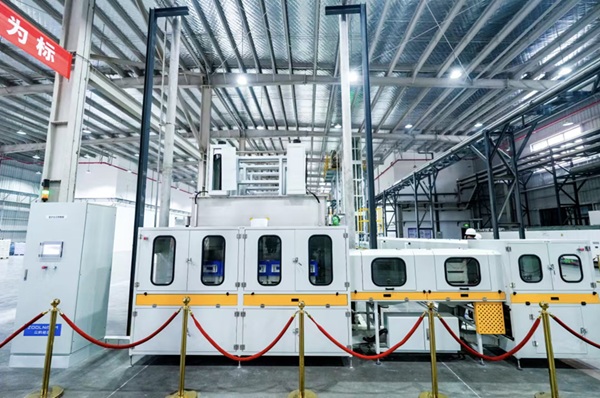
众钠能源:全球首个万吨级硫酸铁钠正极材料量产基地在眉山投产
Zhong Guo Qi Che Bao Wang· 2026-01-20 02:16
Group 1 - The world's first 10,000-ton sodium iron sulfate cathode material production base has officially commenced operations in the Ganmei Industrial Park, marking a significant milestone for the region's new energy industry development [1] - The project, with a total investment of 2 billion yuan, covers an area of approximately 77.1 acres and is set to produce 30,000 tons of sodium iron sulfate cathode materials and a 5GWh sodium-ion battery PACK system annually upon full completion [1] - The first phase of the project has achieved a production capacity of 10,000 tons per year for cathode materials, with an expected annual output value exceeding 4 billion yuan once fully operational [1] Group 2 - The rapid launch of this project exemplifies effective collaboration between government and enterprises, with the local government prioritizing the new energy and materials industry as a key development focus [2] - The project has been supported by a full-chain "assistance and agency" service model, ensuring efficient problem-solving and resource allocation during its development [2] - The production base is expected to drive the development of local industrial clusters by leveraging the parent company's technological reserves and patent advantages, contributing to the establishment of a modern industrial system in the region [4]

【人民日报】中国科大低成本化解全固态锂电池界面问题
Ren Min Ri Bao· 2026-01-20 02:11
Core Viewpoint - Professor Ma Cheng from the University of Science and Technology of China has proposed a low-cost, commercially viable solution to the issue of solid-state lithium batteries relying too heavily on external pressure to maintain good interface contact during cycling, as published in the renowned journal Nature Communications [1] Group 1: Solid-State Lithium Battery Challenges - Solid-state lithium batteries are expected to overcome the limitations of current liquid lithium-ion batteries in achieving both high safety and high energy density [1] - The solid electrolyte and electrode in solid-state lithium batteries require external pressures of tens to hundreds of megapascals to maintain good interface contact, which is nearly impossible to achieve in practical scenarios [1] Group 2: Proposed Solution - The key to solving this issue lies in finding a solid electrolyte that can effectively change shape under low pressure to maintain close contact with the volume-changing electrode materials [1] - The new solid electrolyte developed by Professor Ma is lithium zirconium aluminum chloride oxide, which achieves the desired performance [1]
湖南裕能(301358):2025年业绩预告点评:Q4盈利超预期,涨价落地业绩拐点明确
Soochow Securities· 2026-01-20 01:42
Investment Rating - The report maintains a "Buy" rating for Hunan Youneng (301358) [1] Core Views - The company is expected to achieve a significant earnings turnaround, with Q4 profits exceeding market expectations due to price increases and strong demand [8] - The company forecasts a total revenue of 36.77 billion yuan in 2025, representing a year-on-year growth of 62.69% [1] - The net profit attributable to the parent company is projected to reach 1.28 billion yuan in 2025, reflecting a year-on-year increase of 115.60% [1] - The company is benefiting from a solid market position, with a projected output of over 110,000 tons for the year, a 50% increase year-on-year [8] - The company plans to raise 4.79 billion yuan for capacity expansion in lithium iron phosphate and manganese iron phosphate production, which has been approved by the regulatory authority [8] Financial Summary - Total revenue forecast for 2025 is 36.77 billion yuan, with a projected net profit of 1.28 billion yuan [1] - Earnings per share (EPS) is expected to be 1.68 yuan in 2025, with a price-to-earnings (P/E) ratio of 37.38 [1] - The company anticipates a significant increase in high-end product sales, with projections indicating that the share of high-end products will rise to 70% by 2026 [8] - The company’s gross margin is expected to improve, with a forecasted gross margin of 10.19% in 2026 [9]

国信证券晨会纪要-20260120
Guoxin Securities· 2026-01-20 01:33
Macro and Strategy - The bond market saw the 30-year to 10-year government bond yield spread rise to 46.2 basis points, the highest level since September 2022, driven by structural interest rate cuts signaling a dovish stance from the central bank [6] - The Ministry of Finance initiated the issuance of 30-year government bonds with a competitive bidding total of 32 billion yuan, raising concerns about supply pressure in the long-term bond market [6] - The increase in yield spread indicates a normalization of the bond market from extreme deflationary trading conditions, suggesting that the long-term bond's "scarcity" has been replaced by "scale" [6] Industry and Company Public Utilities and Environmental Protection - Shanxi Province has launched a bidding mechanism for the electricity price of new energy projects for 2026, with a total bidding scale of 9.576 billion kWh, including 3.527 billion kWh for wind power and 6.049 billion kWh for solar power [12] - The public utilities index rose by 0.06%, while the environmental index increased by 0.27%, indicating a relatively stable performance in these sectors [12] - Recommendations include large thermal power companies like Huadian International and national renewable energy leaders such as Longyuan Power and Three Gorges Energy [14] Home Appliances - The home appliance sector is experiencing pressure, with a significant decline in domestic retail sales of major appliances, down over 20% in December [15] - Exports of home appliances decreased by 8% in December, primarily due to high base effects and tariff impacts [16] - Recommendations for investment include leading white goods companies such as Midea Group and Haier Smart Home, as well as small appliance leaders like Roborock Technology [18] Food and Beverage - The food and beverage sector is expected to benefit from cost reductions, particularly in sunflower seed prices, which are projected to decline by over 10% in 2026, benefiting companies like Qiaqia Food [20] - The report highlights the importance of effective cost transmission to improve profitability, emphasizing the need for stable competitive landscapes and strong cost control capabilities [19] - Recommendations include companies with strong market positions and the ability to manage costs effectively [19] Beverage Industry - Dongpeng Beverage is projected to achieve revenue of 20.76 to 21.12 billion yuan in 2025, with a year-on-year growth of 31.07% to 33.34% [21] - The company is expected to face some profit pressure in Q4 2025 due to pre-holiday inventory adjustments and upfront freezer costs [22] - The issuance of H-shares aims to enhance overseas market supply chain capabilities and explore investment opportunities [22] Technology Sector - Haopeng Technology anticipates a revenue increase of 12% to 17% in 2025, driven by growth in AI-related battery applications [27] - The company is focusing on expanding its production capacity for energy-dense batteries to meet rising demand in AI applications [28] - The strategic direction includes significant investments in AI and energy storage projects to capitalize on market growth [28]
峰璟股份(002662.SZ):公司研发的锂电池目前在验证过程中,暂未批量投产
Ge Long Hui· 2026-01-20 01:17
Group 1 - The core point of the article is that Fengjing Co., Ltd. (002662.SZ) has stated on its investor interaction platform that the lithium battery it is developing is currently in the verification process and has not yet entered mass production [1] Group 2 - The company is focused on the research and development of lithium batteries, indicating a commitment to innovation in this sector [1] - The current status of the lithium battery development suggests potential future production capabilities once verification is complete [1]

2025年年报业绩预告进入加速披露期:40余家上市公司净利翻番 AI成业绩增长强大驱动力
Zhong Guo Zheng Quan Bao· 2026-01-20 00:36
Core Viewpoint - The A-share listed companies are entering a rapid disclosure period for their 2025 annual performance forecasts, with a significant number of companies expecting substantial profit growth driven by AI and rising commodity prices [1][2]. Group 1: Performance Forecasts - A total of 451 A-share listed companies have disclosed their 2025 performance forecasts, with 156 companies expecting positive results [1]. - Among these, 42 companies anticipate a net profit growth of over 100% year-on-year [2]. - Notable companies include: - DingTong Technology expects a revenue of approximately 1.593 billion yuan, a 54.37% increase, and a net profit of about 242 million yuan, a 119.59% increase, driven by AI demand in the communications sector [2]. - Baiwei Storage forecasts a net profit between 850 million and 1 billion yuan, representing a growth of 427.19% to 520.22% [3]. Group 2: Mining Sector Performance - Mining companies are experiencing significant growth due to rising prices and demand for gold and copper [4]. - Luoyang Molybdenum expects a net profit of 20 billion to 20.8 billion yuan, a year-on-year increase of 47.8% to 53.71%, attributed to effective cost control and product price increases [4]. - Zijin Mining anticipates a net profit of approximately 51 billion to 52 billion yuan, a growth of 59% to 62%, with increased production across key minerals [5]. Group 3: Innovative Sectors - Companies in semiconductor, innovative pharmaceuticals, and commercial aerospace sectors are gaining market attention [6]. - Haopeng Technology projects a net profit of about 19.5 million to 22 million yuan, a growth of 113.69% to 141.09%, focusing on AI hardware applications [6]. - The pharmaceutical industry is entering a critical phase of innovation and global expansion, with investment opportunities shifting towards companies with global competitiveness [7].

新型厚电极提升电池输出功率约75%
Jin Rong Jie· 2026-01-19 23:17
Core Viewpoint - Researchers at Ulsan Institute of Science and Technology have developed a new type of thick electrode that overcomes the "high capacity, low power" bottleneck in traditional battery designs, significantly enhancing battery performance [1] Group 1: Technological Advancements - The new electrode maintains high energy density while increasing the battery's output power by approximately 75% compared to conventional electrodes [1] Group 2: Publication and Recognition - The findings have been published in the latest issue of the journal "Advanced Energy Materials," indicating the significance and potential impact of this research in the field of energy storage [1]
中国科大低成本化解全固态锂电池界面问题
Ren Min Ri Bao· 2026-01-19 22:29
Core Viewpoint - A new low-cost solution for solid-state lithium batteries has been proposed by Professor Ma Cheng from the University of Science and Technology of China, addressing the challenge of maintaining good interface contact under low external pressure, which is crucial for practical applications [1]. Group 1: Industry Insights - Solid-state lithium batteries have the potential to overcome the limitations of current liquid lithium-ion batteries, which struggle to balance high safety and high energy density [1]. - The challenge with solid-state batteries lies in the need for solid electrolytes and electrodes to maintain contact under high external pressures, often requiring tens to hundreds of megapascals, which is impractical in real-world scenarios [1]. Group 2: Research Developments - The key to solving the interface contact issue is to develop a solid electrolyte that can effectively change shape and maintain tight contact with the electrode materials, even under low pressure [1]. - The newly developed solid electrolyte, lithium zirconium aluminum chloride oxide, demonstrates the desired performance for commercial viability [1].
包钢板材厂爆炸事故已造成6死4失联;万科被执行约10.9亿元;知名大V被罚没超8300万元丨每经早参
Mei Ri Jing Ji Xin Wen· 2026-01-19 22:16
Group 1 - The People's Bank of China will announce the one-year and five-year Loan Prime Rates (LPR) on January 20 [2] - The National Development and Reform Commission will hold a press conference on January 20 to discuss the implementation of the central economic work conference and the "14th Five-Year Plan" [2] - The central bank has released the "Management Measures for the Identification of Beneficial Owners of Financial Institutions," effective from January 20, 2026 [2] Group 2 - The U.S. stock market will be closed on January 19 for Martin Luther King Jr. Day and will resume normal trading on January 20 [3] - On January 19, U.S. stock index futures fell, with the S&P 500 down 0.88%, Dow Jones down 0.80%, and Nasdaq 100 down 1.11% [4] Group 3 - The ICE U.S. Dollar Index fell by 0.33% to 99.065 points, while COMEX gold futures rose by 1.77% to $4,676.70 per ounce [5] - The onshore RMB closed at 6.9640 against the U.S. dollar, appreciating by 80 basis points from the previous trading day [5] Group 4 - The Hang Seng Index rose by 0.20% to 26,640 points, and the Hang Seng Tech Index increased by 0.23% to 5,768 points [6] - European stock indices closed lower, with Germany's DAX down 1.34%, France's CAC40 down 1.78%, and the UK's FTSE 100 down 0.39% [6] Group 5 - China's GDP is projected to exceed 140 trillion yuan in 2025, with a year-on-year growth rate of 5% [7] - The industrial added value for the year increased by 5.9%, while the service sector's added value grew by 5.4% [8] Group 6 - The U.S. plans to impose a 10% tariff on goods from eight European countries starting February 1, with the rate increasing to 25% by June 1 [9] - The Chinese Ministry of Foreign Affairs has reiterated its stance on the Greenland issue in response to U.S. tariffs [10] Group 7 - The Supreme People's Procuratorate of China has emphasized the need to maintain economic and financial security and to punish serious economic crimes [11] - A satellite internet low-orbit launch of 19 satellites was successfully completed on January 19 [11] Group 8 - Tesla will restart the development of its Dojo 3 supercomputer project, indicating a commitment to AI technology [17] - Ford is reportedly in talks with BYD for battery procurement for hybrid vehicles, reflecting traditional automakers' engagement with China's EV supply chain [18] Group 9 - Vanke has been executed for approximately 1.09 billion yuan, raising concerns about risks in the real estate sector [19][20] - Porsche's sales in China for 2025 are projected to decline by 26.28%, with the company focusing on maintaining a healthy supply-demand relationship [21] Group 10 - ByteDance's AI platform "Kouzi" has announced a 2.0 brand upgrade, integrating new capabilities to enhance user experience [22] - Honor has launched a limited edition smartphone in collaboration with Pop Mart, showcasing cross-industry innovation [24]




