
农产品生产与加工

Search documents
农业农村部部长建议大家少吃点油
第一财经· 2026-03-09 12:02
Core Viewpoint - The article emphasizes the need for a shift in China's agricultural focus from quantity to both quality and quantity, highlighting the importance of improving the nutritional value and safety of food products for consumers [4]. Group 1: Current Food Consumption and Production - The Minister of Agriculture and Rural Affairs, Han Jun, reported that the average cooking oil consumption in China exceeds the recommended dietary amount by 40%, while dairy consumption is only one-third of the global average, and soybean intake is below 60% of the recommended level [3]. - In 2022, China's meat production surpassed 100 million tons, with a per capita availability of 72.3 kg, exceeding the global average; poultry and egg production reached 34.98 million tons, with per capita consumption at 25.4 kg, surpassing developed countries; fish production was 76.57 million tons, with per capita consumption at 54.4 kg, also above the global average; milk production was 40.91 million tons, with per capita availability at 29.1 kg; vegetable production exceeded 800 million tons, and fruit production surpassed 36 million tons, ranking high globally [3]. Group 2: Future Agricultural Development - The article suggests that agricultural practices should evolve to enhance post-harvest processing and marketing of agricultural products, ensuring that high-quality products receive fair prices [3]. - There is a growing consumer demand for not just sufficient food but also for high-quality, safe, and healthy agricultural products, indicating a need for improved agricultural quality standards [4].


质量农业守护舌尖上的安全|“四个农业”的广东实践
Nan Fang Nong Cun Bao· 2026-02-12 02:02
Core Viewpoint - The article emphasizes the importance of quality agriculture in Guangdong as a key driver for rural revitalization and high-quality agricultural development, highlighting the province's commitment to establishing a comprehensive quality assurance system for agricultural products [2][4][8]. Group 1: Quality Agriculture as a Priority - Guangdong positions quality agriculture at the core of its agricultural modernization strategy, aligning with the national "14th Five-Year Plan" to promote technological, green, quality, and brand agriculture [5][6]. - The province aims to lead by example in quality agriculture, implementing a full-chain regulatory system to ensure safety from production to consumption [8][12]. Group 2: Comprehensive Regulatory System - Guangdong has established a full-chain regulatory system covering production, processing, circulation, and consumption, ensuring seamless protection from farm to table [15][16]. - The province has developed a smart regulatory platform, with 61,000 personnel involved and over 77 million quality assurance certificates issued, enhancing traceability and accountability in agricultural production [23][24][28]. Group 3: Risk Monitoring and Precision - A risk monitoring network has been set up across all agricultural counties, with a monitoring pass rate of 98.0% for various agricultural products [31][33][87]. - Modern technologies such as IoT, big data, and blockchain are integrated into the monitoring system, improving the precision and efficiency of agricultural oversight [35][41]. Group 4: Standards and Quality Improvement - The establishment of a comprehensive standard system is crucial for driving quality improvement in agriculture, with Guangdong actively participating in high-standard formulation [45][51]. - The province aims to transition from traditional farming practices to standardized production, enhancing product quality and market competitiveness [52][53]. Group 5: Promotion of Green Quality Products - Guangdong has recognized 1,560 green quality agricultural products, with a consistent quality inspection pass rate above 98.0%, contributing significantly to the agricultural sector's development [78][87]. - The province's green quality products, such as Yingde black tea, have achieved substantial market value, with the industry chain value exceeding 10.2 billion yuan [89][90]. Group 6: Market Integration and Brand Development - The establishment of multiple production and sales platforms has facilitated direct market connections for farmers, enhancing the value of quality products [101]. - The "Yue" brand agricultural products have gained national recognition, with brand value increasing by over 10% compared to the industry average [100].

全省第一批消费帮扶产品公示!57款汕尾产品入选→
Xin Lang Cai Jing· 2026-01-08 09:39
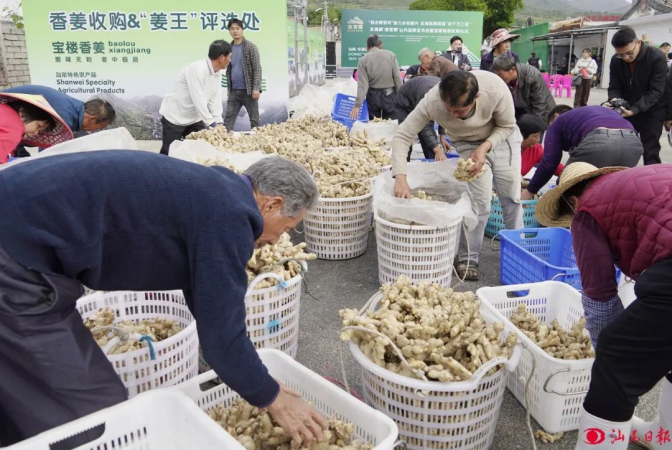
Core Points - The Guangdong Provincial Department of Agriculture and Rural Affairs has announced the first batch of consumer assistance products, with a total of 4,084 products selected across the province, including 57 from Shanwei [1]. Group 1: Product Selection - A total of 4,084 products were selected in the first batch of consumer assistance products in Guangdong Province [1]. - Shanwei has 57 products included in this list, with 14 products specifically from the urban area [1]. Group 2: Product Details from Shanwei - The selected products from Shanwei include various agricultural and processed items such as: - Baolou ginger (2.5 kg) from Shanwei Xujing Agricultural Development Co., Ltd. [4] - Yao Xi Mei tightening skin bath (350 ml) from Shanwei Xupin Agricultural Development Co., Ltd. [4] - Black sugar ginger candy (160 g) from Shanwei Xujing Agricultural Development Co., Ltd. [4] - Various other processed products including walnut dates paste, ginger powder, and herbal teas [4]. Group 3: Product Details from Haifeng - Haifeng has 25 products selected, including: - Farm products like deep-fried tofu and various types of rice and eggs from Shanwei Jinziniu Agricultural Co., Ltd. [7]. Group 4: Product Details from Lufeng - Lufeng has 16 products selected, including: - Sweet potato products, rice, and various oils produced by local agricultural companies [11]. Group 5: Product Details from Luhua - Luhua has 2 products selected, including: - Qingmei wine (375 ml) and Chenpi plum cake (250 g) from Luhua Qinglv Agricultural Technology Co., Ltd. [15].
增设众多新条款,各部门监管责任更明确
Xin Hua Ri Bao· 2025-11-25 21:51
Core Points - The Jiangsu Provincial People's Congress reviewed the revised draft of the Agricultural Product Quality Safety Regulations, marking the second review of this legislation, which has incorporated numerous new clauses based on public opinion and initial review feedback [1] Group 1: Regulatory Responsibilities - The revised draft significantly clarifies the responsibilities of various departments involved in agricultural product quality safety, including agriculture, market regulation, ecological environment, commerce, health, and forestry [2] - The agricultural department is tasked with overseeing the quality safety from planting and breeding to the wholesale and retail markets, including supervision of livestock slaughter and fresh milk acquisition [2] - The draft includes enhanced coordination and enforcement collaboration among departments to address challenges in monitoring agricultural product storage, transportation, and sales [2] Group 2: Environmental Protection and Monitoring - The revised draft emphasizes the need for monitoring, assessment, and protection of agricultural product production areas to prevent pollution and safeguard the environment [3] - New regulations require joint monitoring and assessment by agricultural and ecological departments after remediation efforts in production areas, ensuring compliance with environmental safety standards before any adjustments are made [3] - The draft introduces prohibitions against nine types of illegal activities, including the excessive use of agricultural inputs, reflecting a strong call for stricter enforcement against violations [3]
瓜果丰收季,带您了解农产品增值税适用税率
蓝色柳林财税室· 2025-09-18 13:22
Group 1 - The article discusses the scope of agricultural products and the applicable VAT rate of 9% for various primary products from agriculture, forestry, animal husbandry, and aquaculture [2] - Common misconceptions are addressed, clarifying that some processed products still qualify as agricultural products, such as dumpling skins and dehydrated vegetables, which are subject to the 9% VAT rate [2] - Specific examples of agricultural products include fresh tea leaves, processed medicinal plants, and certain types of tobacco leaves, all of which fall under the 9% VAT category [2] Group 2 - Goods that do not qualify as agricultural products, such as refined tea, canned vegetables, and traditional Chinese medicine, are subject to a higher VAT rate of 13% [4] - The article outlines several VAT exemption policies for agricultural producers, including sales of self-produced agricultural products and certain sales by agricultural cooperatives [5] - Additional exemptions apply to specific sales of vegetables and live meat products by wholesalers and retailers, as well as sales of certain tea products by designated producers [5]

供需联动释放农产品消费潜能
Jing Ji Ri Bao· 2025-09-10 22:10
Core Insights - The 2025 China Harvest Festival has launched a consumption season aimed at promoting agricultural products, with initiatives from e-commerce platforms and financial institutions to support farmers [1][2] - The focus is on optimizing the supply of green and high-quality agricultural products to meet the evolving consumer demand for nutrition and health [4][5] Group 1: Agricultural Supply and Quality - The agricultural sector is actively optimizing its structure to enhance the supply of green and high-quality products, with over 36,000 new certifications for green, organic, and geographical indication products since the start of the 14th Five-Year Plan, a 70% increase from the end of the 13th Five-Year Plan [2] - The total sales of green food reached 609.78 billion yuan in 2024, with a high agricultural product quality safety monitoring pass rate of 97.9% in the first half of the year [2] - Geographical indication products have seen significant growth, with 2,544 recognized products and a direct output value exceeding 960 billion yuan [2] Group 2: Food Processing and Consumption - The food industry plays a crucial role in connecting agricultural production with consumer demand, with a focus on deep processing of agricultural products to enhance consumption [3] - The scale of fresh agricultural product consumption in China reaches 1 billion tons annually, supported by nearly 20 million cubic meters of cold chain facilities [3] - The development of a high-efficiency agricultural product circulation system is essential to reduce losses and meet cross-regional transportation needs [3] Group 3: Nutritional Health Focus - The emphasis on nutrition and health in agricultural production is highlighted by the "China Food and Nutrition Development Outline (2025-2030)," which integrates nutritional needs throughout the food supply chain [4] - There is a growing demand for high-quality protein sources, with a focus on stabilizing meat and egg supply while increasing fish, dairy, and soybean products [4][5] - The need for innovative food technology and a multi-layered nutritional food industry is emphasized to address the dual challenges of excess energy and micronutrient deficiencies [5][6] Group 4: Expanding Consumption Scenarios - The diversification of agricultural product consumption is evident, with new consumption scenarios emerging through rural tourism and experiential agriculture [7] - The development of leisure agriculture has generated nearly 900 billion yuan in revenue, becoming a vibrant area for tourism and consumption [7] - Agricultural branding initiatives are being implemented to enhance consumer confidence and connect quality products with market demand [8]

优化供给端、创新流通端、激活市场端 拓展农产品消费新空间
Jing Ji Ri Bao· 2025-07-31 23:23
Core Viewpoint - The article discusses the implementation plan for promoting agricultural product consumption, which aims to stabilize the agricultural market, increase farmers' income, and drive high-quality agricultural development through various measures [1]. Group 1: Optimizing Supply Side - Agricultural product consumption is increasingly focused on quality and personalization, leading to a rapid growth in demand for branded products and functional foods [2]. - Since the beginning of the 14th Five-Year Plan, 36,000 new green, organic, and geographical indication agricultural products have been certified, a 70% increase compared to the end of the 13th Five-Year Plan [2]. - The goal is to provide over 200 million tons of green and high-quality agricultural products annually, with sales of green food expected to exceed 600 billion yuan in 2024 [2]. Group 2: Promoting Quality - The plan includes improving the green food standard system and promoting the application of organic standards and production procedures to enhance production technology [3]. - The Ministry of Industry and Information Technology is focusing on upgrading the food industry by leveraging biotechnology and promoting deep processing of agricultural products [3]. Group 3: Innovating Distribution - The construction of a modern agricultural product distribution system is crucial for reducing circulation losses and improving product quality, with fresh agricultural product consumption reaching 1 billion tons annually [4]. - By the end of 2024, nearly 20 million cubic meters of cold chain facilities will be supported to enhance the distribution network [5]. - The plan emphasizes the need for digital, intelligent, and standardized transformation of the agricultural supply chain [5]. Group 4: Activating Market Demand - The plan aims to diversify agricultural product consumption scenarios, encouraging activities that promote local specialties and enhance consumer engagement [6]. - Rural leisure tourism is highlighted as a growing area for expanding consumption, with various activities designed to connect urban consumers with agricultural experiences [7]. - Brand agricultural products are increasingly favored by consumers, as they are seen as a guarantee of quality and credibility [7][8]. Group 5: Enhancing Nutritional Health - The plan addresses the need for improved nutritional health services, particularly for specific demographics such as students and the elderly, to promote balanced dietary consumption [8].