医药研发外包(CRO)

Search documents
维亚生物20260317
2026-03-18 02:31
Summary of the Conference Call for VyaBio Company Overview - VyaBio has become the exclusive CRO partner of NVIDIA in the AI + pharmaceutical sector, leveraging the Complexa model to complete the design of minibinders and validate the effectiveness of its "Lab in the Loop" integrated system [2][3][4]. Core Insights and Arguments - **AIDD Platform Maturity**: The AIDD (AI-Driven Drug Discovery) platform has reached a mature commercialization stage, featuring an in-house algorithm team and a leading position in SBDD (Structure-Based Drug Design), with delivery speed significantly surpassing other partners. Results will be showcased at the 2026 GTC conference [2][3]. - **Positive Business Trends**: The company expects its 2025 performance to meet guidance, with strong growth in China and a recent uptick in overseas inquiries. CDMO (Contract Development and Manufacturing Organization) capacity is nearly saturated, prompting the construction and renovation of three facilities to meet unexpected new orders [2][13][14]. - **Business Model Upgrade**: AI empowerment is driving growth in wet lab services, with exploration into transitioning from traditional CRO service fees to higher-level models like Research Collaboration, utilizing returned funds for AI-driven investment incubation [2][11][15]. - **Cost Advantages**: The existing mature wet lab platform allows AI research without incurring high experimental costs, maintaining industry leadership while planning to increase AI investments [2][16]. Additional Important Content - **Collaboration Background with NVIDIA**: The partnership was disclosed during a presentation at NVIDIA's GTC conference, focusing on using molecular generation models within a "Lab in the Loop" framework to design minibinders. This collaboration has validated both NVIDIA's Complexa model and VyaBio's AIDD capabilities [3][4]. - **Strategic Positioning**: VyaBio is uniquely positioned as the only CRO among NVIDIA's AI + pharmaceutical partners, with a strong internal algorithm team and a systematic approach to integrating AI with wet lab processes, enhancing efficiency and success rates in drug design [6][11]. - **Future Plans and Developments**: The collaboration with NVIDIA is expected to yield more projects, including support for VyaBio's proprietary models in computational acceleration. The "Lab in the Loop" system is crucial for rapid prototyping and validation of drug candidates [4][7][11]. - **Investment Incubation**: The company is actively integrating AI with investment incubation, selectively pursuing projects that leverage AI to enhance efficiency and operational cycles, while maintaining a conservative investment strategy [15][16]. Industry Trends - **CRO and CDMO Business Outlook**: The overall industry trend indicates a strong growth trajectory, particularly in the Chinese market, with a recent increase in overseas inquiries. The company is optimistic about its 2026 business development [12][13]. This summary encapsulates the key points from the conference call, highlighting VyaBio's strategic initiatives, collaborations, and industry positioning.

重磅!2025年中国医药研发外包(CRO)行业政策汇总及解读 药审改革制度助力行业发展提速(全)
Qian Zhan Wang· 2026-02-20 08:08
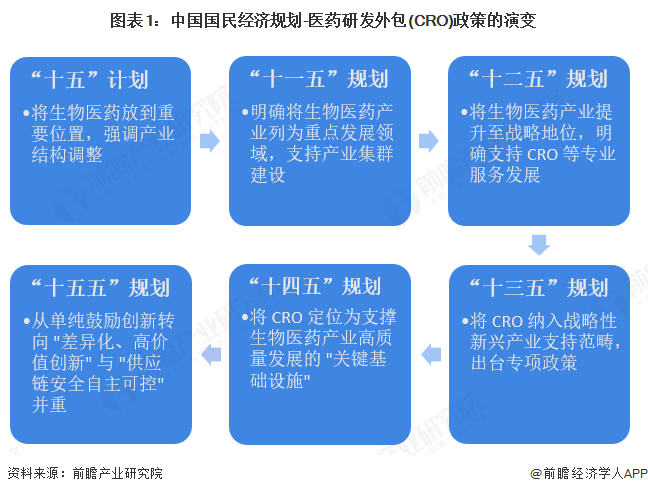
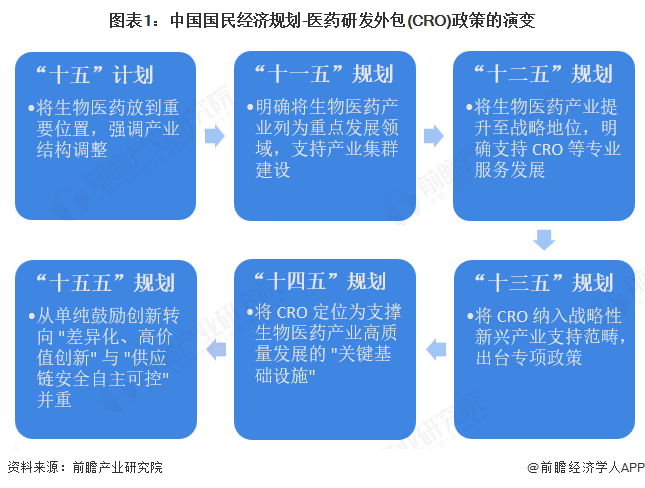
Core Insights - The CRO (Contract Research Organization) industry in China is a strategic emerging industry that supports pharmaceutical innovation and is crucial for the transition from a pharmaceutical power to a pharmaceutical stronghold [1][9] - The development of policies for the CRO industry has evolved from a focus on the overall biopharmaceutical sector to specialized areas, emphasizing innovation, safety, and supply chain security [1][3] Policy Development History - The policy evolution from the "Tenth Five-Year Plan" to the "Fourteenth Five-Year Plan" has progressively recognized the importance of the CRO industry, with increasing support for specialized services [1] - The "Fifteenth Five-Year Plan" emphasizes differentiated, high-value innovation alongside supply chain security [1] National Policy Summary and Interpretation - Since 2006, multiple national policies have been introduced to support the CRO service system, focusing on regulatory standards, clinical trial optimization, and international development [3][7] - Key policies include the establishment of the MAH (Marketing Authorization Holder) system and the optimization of review and approval processes [3][7] Key National Policies (2025 Outlook) - Policies from 2006 to 2025 highlight the strategic importance of biopharmaceuticals and the CRO industry, with a focus on enhancing innovation capabilities and regulatory frameworks [4][5][6] - Recent policies aim to streamline clinical trial approvals and support the development of innovative drugs [6][10] Provincial and Municipal Policy Summary - Various provinces and cities have implemented supportive policies for the CRO industry, including investment subsidies, revenue rewards, and insurance subsidies, with some regions offering up to 50 million yuan in support [11][12] - Specific measures include allowing foreign investment in CROs and promoting AI integration in the industry [11][12][14] Provincial Development Goals - Regions like the Yangtze River Delta focus on high-end CRO service systems, while the Beijing-Tianjin-Hebei area emphasizes collaborative innovation and full-chain outsourcing [14] - Local governments aim to enhance the scale and service capabilities of the biopharmaceutical industry, with targeted initiatives for specific sectors such as seed industry CROs in Hainan [14]





百英生物收入确认准确性被问询,查长春35岁时出任董事长
Sou Hu Cai Jing· 2026-02-05 08:15
Core Viewpoint - Shanghai Baiying Biotechnology Co., Ltd. (Baiying Bio) is preparing for its IPO on the Beijing Stock Exchange, with a focus on antibody and protein expression services, and is responding to inquiries regarding its revenue recognition policies [2][6]. Group 1: Company Overview - Baiying Bio specializes in contract research organization (CRO) services, particularly in antibody and protein expression, as well as antibody discovery and optimization [6]. - The company has developed a high-throughput, high-expression, and rapid delivery platform for antibody and protein expression, aiming to provide one-stop antibody discovery services [6]. - Baiying Bio is actively expanding its overseas market, with the proportion of overseas business increasing year by year [6]. Group 2: Financial Performance - Baiying Bio's revenue for the years 2022 to 2024 is projected to be 260 million yuan, 338 million yuan, and 402 million yuan, respectively [6]. - The net profit for the same period is expected to be 57.65 million yuan, 84.02 million yuan, and 124 million yuan, respectively [6]. - The gross profit margin is forecasted to be 65.88%, 66.15%, and 70.04% for the years 2022, 2023, and 2024, respectively [6]. Group 3: Revenue Recognition Policies - Baiying Bio has different revenue recognition points for domestic and international clients, with domestic clients confirming revenue upon receipt of acceptance emails, while international clients do so upon sending completion emails [2][4]. - The company operates two revenue recognition models: order-based settlement and monthly settlement, which need to be analyzed for their commercial rationality and compliance with industry practices [4][5]. - The inquiry from the Beijing Stock Exchange requires Baiying Bio to detail the revenue recognition policies, execution cycles, and the rationale behind the monthly settlement model, including its stability and potential risks [5].
2025年中国医药研发外包(CRO)行业龙头企业分析 药明康德:营收突破400亿元【组图】
Qian Zhan Wang· 2026-02-02 04:23
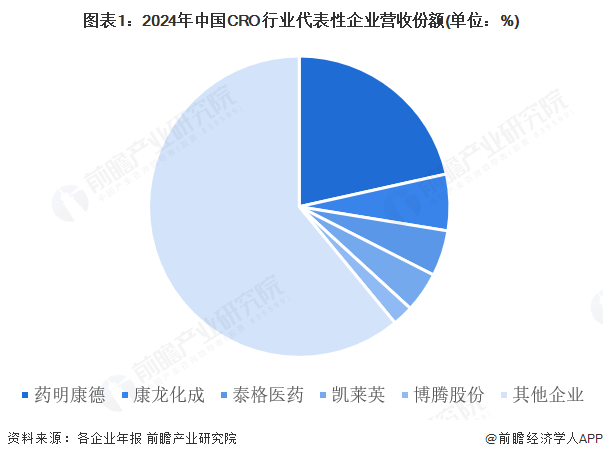
Core Insights - The report highlights the dominance of WuXi AppTec in the Chinese CRO market, holding nearly a quarter of the market share with a revenue of 29 billion yuan, significantly surpassing competitors like Kanglong Chemical and Tigermed [1] Group 1: Company Overview - WuXi AppTec was founded in 2000 in Wuxi, starting with basic chemical synthesis services and went public on the NYSE in 2007, marking its international expansion [3] - The company has integrated the entire industry chain from preclinical to commercialization through self-built production bases and cross-border acquisitions, becoming the absolute leader in China's CRO industry [3] Group 2: Revenue Growth - WuXi AppTec's revenue surged from 16.535 billion yuan in 2020 to 39.355 billion yuan in 2022, more than doubling in three years, with a continued high growth rate [6] - In 2023, the revenue exceeded 40 billion yuan, although a slight decline was observed in 2023-2024 due to the exit from COVID-19 commercialization projects, with revenues of 40.341 billion yuan and 39.241 billion yuan respectively [6] Group 3: Business Strategy - In 2024, WuXi AppTec's business layout is primarily focused on chemical services, generating 29.05 billion yuan, accounting for 74% of total revenue, with TIDES business revenue increasing by 70.1% to 5.8 billion yuan [8] - The company has a pipeline of 3,377 molecules, with laboratory analysis contributing 3.86 billion yuan and clinical CRO/SMO income at 1.81 billion yuan [8] Group 4: Global Positioning - WuXi AppTec is not only the leader in China's CRO industry but also ranks among the top globally, possessing significant international market influence [10] - The company aims to strengthen its global competitiveness by focusing on high-growth sectors like TIDES and CGT, while reducing non-core business activities [10]
阳光诺和收购案再度告吹,“战略摇摆”与“关联交易”风险何解?
Xin Lang Cai Jing· 2026-01-30 06:55
Core Viewpoint - Sunshine Nuohong (688621.SH) has announced the termination of its acquisition of Jiangsu Langyan Life Science Technology Co., Ltd., marking the second time the company has halted this acquisition process, revealing multiple concerns regarding its strategic execution, corporate governance, and integration of targets [1] Group 1: Strategic Fluctuations - The acquisition of Langyan Life has faced significant challenges, with the initial launch in October 2022, a termination in August 2023 due to "market environment changes," a restart in April 2025, and another termination shortly thereafter, raising doubts about the company's strategic consistency and decision-making rigor [2][7] - The company's performance in 2024 showed "increased revenue without increased profit," making the acquisition a critical move for expanding the industrial chain and enhancing production synergy, but the repeated halts indicate a clear obstruction in achieving vertical integration through mergers and acquisitions [2][7] Group 2: Related Transactions and Valuation Concerns - The transaction involves a conflict of interest as the controlling shareholder of Sunshine Nuohong, Li Qian, is also the controlling shareholder of Langyan Life, leading to concerns about potential profit transfer despite the company’s assurances of a profit compensation mechanism [2][7] - Langyan Life's revenue has fluctuated significantly from 510 million yuan in 2021 to 231 million yuan in the first half of 2025, with net profits varying between 20 million and 80 million yuan, raising questions about the sustainability of the optimistic profit forecasts for 2025-2030 against the backdrop of a 1.2 billion yuan valuation [3][8] Group 3: Performance Volatility and Synergy Realization - Langyan Life specializes in high-end chemical drug formulations and raw material production, which, while related to Sunshine Nuohong's CRO business, differ in operational logic, making the anticipated integration and synergy uncertain given the target company's unstable performance and changing industry policies [4][9] - Sunshine Nuohong's own performance has also entered a volatile phase, with a decline in net profit in 2024, and while growth is forecasted for 2025, it is primarily driven by licensing agreements, indicating that the sustainability of core business growth remains to be seen [4][9] Group 4: Conclusion on Caution vs. Hesitation - The repeated termination of the acquisition reflects Sunshine Nuohong's cautious approach in navigating the transaction amidst variable market conditions and target performance, while also indicating potential areas for improvement in strategic execution, due diligence, and risk assessment [5][10] - Investors should monitor whether the company will attempt to restart the acquisition for a third time, as well as the transparency of its corporate governance, the coherence of its strategic deployment, and its ability to build a sustainable profit moat in its core business [5][10]

2025年中国医药研发外包(CRO)行业政策分析 药审改革推动行业发展提速【组图】
Qian Zhan Wang· 2026-01-23 09:08
Core Viewpoint - The report highlights the significant growth and development of China's Contract Research Organization (CRO) industry, driven by a comprehensive policy framework and regulatory reforms that enhance innovation and operational efficiency in the pharmaceutical sector [1][3][9]. Group 1: Industry Overview - The main listed companies in China's CRO industry include WuXi AppTec (603259.SH), Kanglong Chemical (300759.SZ), Tigermed (300347.SZ), Kelaiying (002821.SZ), Zhaoyan New Drug (603127.SH), Jiuzhou Pharmaceutical (603456.SH), Haoyuan Pharmaceutical (688131.SH), Boteng Co., Ltd. (300363.SZ), Chengdu XianDao (688222.SH), and Yaoshi Technology (300725.SZ) [1]. - The CRO industry is recognized as a strategic emerging industry that supports pharmaceutical innovation, transitioning China from a major pharmaceutical market to a strong one [1]. Group 2: Policy Framework - The policy framework for the CRO industry is centered around the National Medical Products Administration (NMPA) and includes collaboration with other regulatory bodies such as the National Health Commission (NHC) and the Drug Administration (CDR) [3]. - Key regulatory measures include the Marketing Authorization Holder (MAH) system, implicit licensing for clinical trials, Good Laboratory Practice (GLP) and Good Clinical Practice (GCP) certifications, and priority review and approval processes [3]. Group 3: Industry Support Policies - National policies provide financial support through initiatives like the "Major New Drug Creation" program, tax reductions for high-tech enterprises, and increased deductions for R&D expenses, which lower operational costs for the industry [6]. - Local governments implement differentiated policies that align with regional industrial characteristics, including subsidies for innovative drug development and funding for CRO platform construction [6]. Group 4: Drug Review Reforms - Recent reforms in drug review processes have significantly improved approval efficiency, reducing the average clinical trial review time from 420 days to 30 days in pilot areas, and addressing a backlog of 22,000 cases [9][12]. - The definition of new drugs has shifted from "China New" to "Global New," aligning with international standards and enhancing the quality of innovation [12]. Group 5: Future Trends - The future of the CRO industry in China is expected to be driven by a robust policy framework, with trends including deeper collaboration in service models, increased application of AI and digital platforms, and a focus on specialized market segments [13]. - The competitive landscape is anticipated to evolve with the rise of domestic leaders and accelerated internationalization, benefiting from improved mechanisms for mutual recognition of clinical trial data [13].
预见2025:《2025年中国医药研发外包(CRO)行业全景图谱》(附竞争格局、行业规模等)
Qian Zhan Wang· 2026-01-21 01:09
Core Insights - The CRO industry in China is experiencing significant growth, with the market size expected to expand from 90 billion yuan in 2021 to 126 billion yuan by 2024, reflecting a compound annual growth rate (CAGR) of 28%, which is substantially higher than the global average of 10% [13][26] - The industry is characterized by a clear competitive landscape, with WuXi AppTec as the dominant player, achieving revenue exceeding 20 billion yuan, while other key players include Kanglong Chemical, Tigermed, and Kelun Pharmaceutical [17][20] Industry Overview - Contract Research Organizations (CROs) are specialized entities that undertake drug development responsibilities on behalf of pharmaceutical companies, helping to reduce costs and risks while ensuring compliance [1] - The CRO industry is divided into preclinical and clinical segments, with preclinical CROs focusing on drug discovery and safety evaluations, while clinical CROs handle clinical trials and data management [1] Industry Development History - The CRO industry in China began in 1996 with the establishment of the first joint venture, and has evolved from a lack of formal organizations to a competitive landscape dominated by local leaders [9] - The industry has undergone significant changes, including the implementation of Good Clinical Practice (GCP) in 2003 and the introduction of the Marketing Authorization Holder (MAH) system, which has facilitated the growth of CRO services [11] Market Demand and Growth - The number of New Drug Applications (NDA) in China has been increasing, from 210 in 2021 to an expected 320 by 2024, driving demand for CRO services [14] - The global CRO market is projected to grow from 71 billion USD in 2021 to 90 billion USD by 2024, driven by increased healthcare demands due to aging populations and the COVID-19 pandemic [13] Competitive Landscape - The competitive structure of the Chinese CRO industry is categorized into three tiers, with WuXi AppTec leading the first tier, followed by Kanglong Chemical and Tigermed in the second tier, and smaller firms in the third tier [17] - Most companies are diversifying their services to include both CRO and CDMO (Contract Development and Manufacturing Organization) capabilities, enhancing operational efficiency [20] Regional Market Dynamics - The Yangtze River Delta region dominates the CRO market in China, accounting for approximately 43% of the market share, followed by the Beijing-Tianjin-Hebei region at 23% and the Pearl River Delta at 19% [23] Future Outlook - The Chinese CRO market is expected to continue its growth trajectory, potentially exceeding 144 billion yuan by 2028, supported by favorable policies and increasing demand for innovative therapies [26] - Despite challenges such as rising compliance costs and market saturation, the overall outlook remains positive, with expectations of sustained double-digit growth over the next five years [26]
十几万元一只的实验猴,助推昭衍新药去年净利润两倍以上增长
Di Yi Cai Jing Zi Xun· 2026-01-20 11:21
Group 1 - The core viewpoint of the news is that Zhaoyan New Drug (昭衍新药) is expected to achieve a significant increase in net profit for 2025, despite a decline in revenue, primarily driven by the fair value changes of biological assets, particularly experimental monkeys [1][2]. - The company forecasts a net profit attributable to shareholders of approximately 233 million to 349 million yuan for 2025, representing a year-on-year increase of about 214.0% to 371.0% [1]. - Zhaoyan New Drug anticipates revenue between 1.573 billion and 1.738 billion yuan for 2025, which reflects a year-on-year decline of 13.9% to 22.1% [1]. Group 2 - The company’s biological assets, mainly consisting of experimental monkeys, have seen a price increase due to rising market prices and natural growth, contributing positively to its performance [1][2]. - The price of experimental monkeys is closely linked to the innovation drug development climate, with prices having fluctuated significantly in recent years, peaking at over 200,000 yuan per monkey during the COVID-19 pandemic and dropping below 100,000 yuan in 2023 [2]. - As of 2025, the price of experimental monkeys is expected to rise again, surpassing 100,000 yuan each, driven by a recovery in the pharmaceutical capital market and increased licensing of domestic innovative drugs [2][3]. Group 3 - Zhaoyan New Drug's performance has experienced volatility in line with the fluctuations in experimental monkey prices, indicating a correlation between the demand for experimental monkeys and the recovery of the innovative drug development sector [3]. - Current market conditions show that the price of 3-5 year old experimental monkeys has risen to 140,000 yuan each, with a supply-demand imbalance indicating a recovery in the domestic innovative drug research and development environment [3].
【干货】中国医药研发外包(CRO)产业链全景梳理及区域热力地图
Qian Zhan Wang· 2026-01-06 03:09
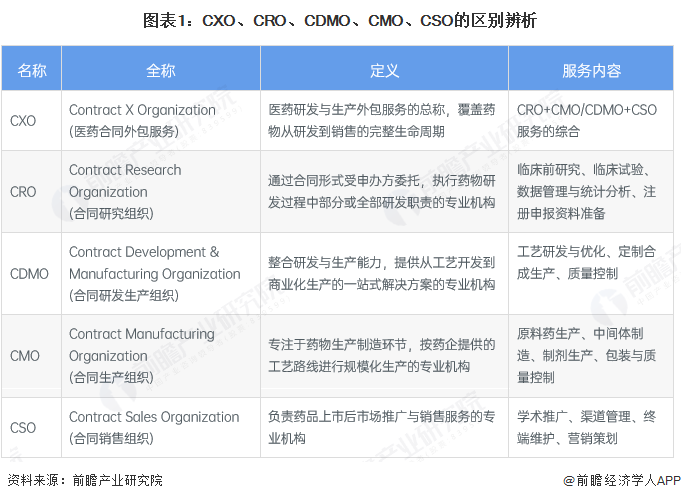
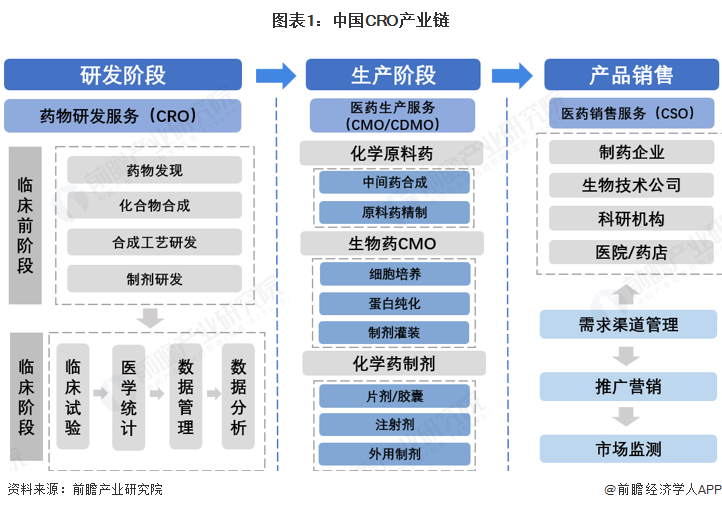
Core Insights - The Chinese CRO industry encompasses the entire drug lifecycle, including drug research services (CRO), pharmaceutical manufacturing services (CMO/CDMO), and sales services (CSO) [1][2][5] - The industry is characterized by a lack of significant upstream relationships, with some mature markets extending services to drug marketing and patent commercialization [2] Industry Overview - The CRO industry in China is segmented into three main phases: research, production, and sales, covering preclinical and clinical stages [1] - Preclinical services focus on drug discovery, compound synthesis, and formulation development, while clinical services involve clinical trials and data analysis [1] - The production phase includes various drug types, such as chemical APIs and biologics, while the sales phase centers on demand channel management for pharmaceutical companies and healthcare institutions [1] Regional Distribution - The distribution of CRO companies in China is highly concentrated in economically developed regions: Beijing (75 companies), Shanghai (59), Jiangsu (43), and Guangdong (38) [7] - These four regions account for a significant share of the total CRO enterprises, while other provinces show limited presence [7] Key Players and Performance - Major listed companies in the CRO sector include WuXi AppTec, Kanglong Chemical, Tigermed, and others [1][5] - In 2024, WuXi AppTec leads with revenue of 29.052 billion yuan, while Chengdu XianDao boasts the highest gross margin at 57.5% [12] - Other notable companies include Kanglong Chemical with 70.47 billion yuan in preclinical revenue and a gross margin of 44.92% [12] Investment Trends - Companies in the CRO sector are focusing on core business optimization, technological enhancement, and strategic collaborations [14] - Recent investments include WuXi AppTec's acquisition of stakes in various companies to strengthen its supply chain and capabilities [16] - Chengdu XianDao has partnered with the Gates Foundation for new drug development, while Kanglong Chemical is acquiring a majority stake in a biotech firm to enhance its technical platform [16]
“囤猴”拖累利润表现,鼎泰药物“卖水人”故事不好讲?
Zhi Tong Cai Jing· 2025-11-20 05:45
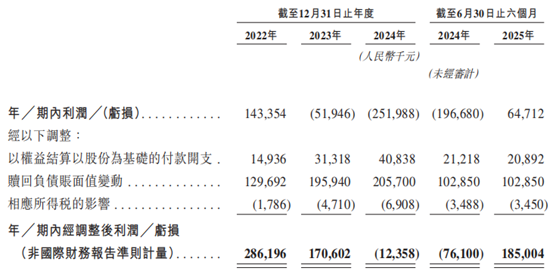
Core Viewpoint - Jiangsu Dingtai Pharmaceutical Research (Group) Co., Ltd. has submitted a listing application to the Hong Kong Stock Exchange, attracting market attention due to its integrated solutions in the CRO sector and the recent recovery in the innovative drug industry [1][2]. Company Overview - Established in 2008, Dingtai Pharmaceutical is a new type of CRO that provides integrated solutions based on disease biology for global pharmaceutical companies and research institutions [1]. - The company offers comprehensive non-clinical safety, efficacy, and DMPK research, as well as integrated clinical trial services from concept validation to pivotal trials, supporting clients throughout the drug development lifecycle [1]. Financial Performance - Despite a recovering industry, Dingtai Pharmaceutical's internal operations show a "hot outside, cold inside" situation, with stable revenue but declining net profits [2]. - Revenue for 2022, 2023, and 2024 was approximately 725 million, 767 million, and 713 million RMB, while net profits were about 143 million, -51.94 million, and -251.99 million RMB, indicating two consecutive years of losses [2][3]. - In the first half of 2025, revenue grew by 21.41% year-on-year to 377 million RMB, with a profit of 64.71 million RMB, but the gross margin remains below the 2022 level of 48.44% [2][3]. Business Strategy - Since 2021, the company has strategically expanded its clinical services, increasing its revenue share from 10.9% to 23.7% over three years, marking it as the most significant growth area [4]. - The company has also made progress in international expansion, with overseas revenue share rising from 10.8% to 30.2% in the first half of 2025 [4]. Market Position and Competition - Dingtai Pharmaceutical has established one of the most comprehensive NHP disease model portfolios in China, ranking as the third-largest CRO in the efficacy research field by revenue in 2024 [6]. - The CRO industry in China is experiencing significant differentiation, with some leading companies performing well while others, like Tigermed, face declines in revenue and profit [10][11]. Industry Dynamics - The price volatility of experimental monkeys, a critical resource for drug safety evaluation, has significantly impacted industry profitability, with prices fluctuating from 42,000 RMB to 184,000 RMB between 2020 and 2022, and then stabilizing around 92,000 RMB in 2025 [7][9]. - The competitive landscape is intensifying as more mature pharmaceutical companies build in-house clinical teams, reducing reliance on traditional clinical CRO services [10][11]. Financial Challenges - Dingtai Pharmaceutical's financial situation remains concerning, with significant losses attributed to changes in redeemable debt values, totaling 196 million and 206 million RMB in 2023 and 2024, respectively [5]. - As of June 30, 2025, the company had total current liabilities of 3.534 billion RMB against current assets of only 1.578 billion RMB, indicating a liquidity gap of nearly 2 billion RMB [5]. - The company's cash flow has been negative in most reporting periods, with only 254 million RMB of operating cash inflow recorded in 2022 [5].