天然气化工

Search documents
宏达股份:预计2025年全年净亏损7000万元—8200万元
2 1 Shi Ji Jing Ji Bao Dao· 2026-01-23 08:31
Core Viewpoint - The company, Hongda Co., is expected to report a significant net loss for the year 2025, with projected losses ranging from 70 million to 82 million yuan, primarily due to challenges in its zinc smelting, natural gas chemical, and phosphate chemical segments [1]. Group 1: Zinc Smelting - The zinc smelting segment is facing pressure from increased domestic zinc production capacity and weakened downstream demand, leading to a decline in zinc product prices. The price of 0 zinc ingots dropped from 25,800 yuan per ton at the beginning of the year to a low of 21,950 yuan per ton in June [1]. - The company is experiencing a cost disadvantage as the production costs of products made from early-year inventory remain high, resulting in a situation where sales prices are lower than production costs [1]. - Despite rising prices for by-products like silver and copper, the significant increase in raw material costs continues to challenge the profitability of the zinc smelting business, leading to expected losses for the year [1]. Group 2: Natural Gas Chemicals - In the natural gas chemical sector, the company is facing increased competition due to a decline in coal prices, which has lowered production costs for ammonia producers, resulting in a rise in ammonia supply and a continuous drop in prices [1]. - The average selling price of ammonia from the company's subsidiary, Sichuan Mianzhu Chuanrun Chemical Co., decreased by 298.27 yuan per ton, representing a decline of 12.22% compared to the previous year [1]. - This competitive environment has led to significant losses in the company's natural gas chemical business for 2025 [1]. Group 3: Phosphate Chemicals - The phosphate chemical segment is impacted by low agricultural product prices and extreme weather conditions in key sales regions, leading to a cautious attitude among end-users and a decline in both sales volume and prices of compound fertilizers [1]. - The prices of key raw materials such as urea and potassium fertilizer have surged, resulting in increased production costs and a decrease in gross margins [1]. - Although the sales volume and prices of phosphate products saw a slight increase compared to the previous year, the tight supply of sulfur in the market has led to a significant price increase of 1,096 yuan per ton, or 103%, further raising production costs and reducing profitability in this segment [1].

一文梳理 | 伊朗局势对国内能化品种有何影响
对冲研投· 2026-01-14 08:01
Core Viewpoint - The article discusses the impact of protests in Iran due to economic stagnation and inflation, exacerbated by U.S. sanctions on Iranian oil, and the potential geopolitical risks that may arise from these events [1]. Group 1: Economic Impact - By the end of 2025, Iran's currency depreciated significantly, leading to inflation and widespread protests in Tehran, with demands for political reform and reduced military spending [1]. - Iran's oil production in 2025 was over 3.2 million barrels per day, accounting for approximately 3.5%-4% of global supply, with about 90% of its oil exports going to China, which represents around 15% of China's total imports [17][18]. - The protests and potential military conflicts could disrupt Iran's chemical and oil exports, particularly affecting methanol and urea production, which are critical for global supply chains [6][19]. Group 2: Supply Chain and Market Dynamics - Iran's methanol imports to China reached approximately 1.27 million tons in 2025, with Iran being the largest supplier, contributing around 60% of China's methanol imports [3]. - The article highlights that Iran is the third-largest high-sulfur oil exporter in the Middle East, supplying about 17% of China's fuel oil imports, which could be impacted by escalating geopolitical tensions [12]. - If military conflicts arise, the supply of methanol and other chemical products from Iran could decline significantly, leading to price increases in the international market [7][20]. Group 3: Geopolitical Risks - The article notes that external forces, particularly the U.S. and Israel, may influence the protests in Iran, with potential military interventions being a concern [1][6]. - The situation in Iran could lead to a significant disruption in global oil supply, especially if the Strait of Hormuz, a critical shipping route for oil, is affected, which could result in oil prices rising by as much as $40 per barrel [12][18]. - The potential for renewed military conflict between Israel and Iran could mirror past incidents, leading to further instability in the region and impacting global energy markets [6][9].


助力西南能化产业构筑风险管理“防火墙”
Qi Huo Ri Bao Wang· 2025-12-24 01:55
Core Viewpoint - The training program organized by DCE aims to enhance the risk management capabilities of the energy and chemical industry in Chongqing, contributing to the high-quality economic development of the region amidst global industrial chain restructuring and market price volatility [1][2]. Group 1: Training Program Overview - The training was held in Chongqing, focusing on the integration of futures and derivatives markets to support the high-quality development of the energy and chemical industry [1]. - DCE has been developing a comprehensive product system in the energy and chemical sector, including 17 futures and options varieties such as LPG, PP, and LLDPE, to provide effective risk management tools [2]. Group 2: Risk Management Strategies - DCE plans to enhance its service capabilities for the energy and chemical industry in Southwest China by focusing on Chongqing's unique industrial chain and developing suitable futures-spot combination models [2]. - The training emphasized the importance of transforming knowledge of futures into practical applications, with a focus on collaborative innovation in futures-spot integration [4]. Group 3: Practical Applications and Case Studies - A case study presented by Jin Neng Chemical highlighted the successful use of futures strategies to lock in processing profits, demonstrating the practical application of futures in managing market risks [4]. - The training also introduced solutions like "basis trading" and "warehouse receipt trading," which help mitigate price risks and improve market efficiency [4]. Group 4: Future Directions - The program is seen as a starting point for collaboration, aiming to equip participants with advanced risk management concepts and tools to navigate market fluctuations effectively [5]. - DCE's role is evolving from a backend tool to a strategic front-line player in the integration of finance and industry, establishing a robust risk management framework for the energy and chemical sector in Southwest China [5].
重庆出台方案 明确到2030年基本构建产品碳足迹管理体系
Zhong Guo Xin Wen Wang· 2025-12-11 07:52
Core Viewpoint - Chongqing aims to establish a product carbon footprint management system by 2030, focusing on green and low-carbon transformation for foreign trade enterprises [1][2]. Group 1: Implementation Plan - The plan includes the development of over 10 national product carbon footprint accounting rules involving enterprises and social entities by 2030 [1]. - It targets over 50 key products for carbon footprint accounting in sectors such as new energy vehicles, laptops, automotive parts, natural gas chemicals, new materials, equipment manufacturing, and specialty agricultural products [1][2]. - The establishment and operational exploration of a product carbon footprint factor database will be a significant focus [1]. Group 2: Support and Services - The plan emphasizes the need for a dynamic classification management directory to support the development of the export foreign trade industry [2]. - It encourages research institutions and enterprises to participate in the formulation of national and industry-specific carbon footprint accounting standards [2]. - A one-stop comprehensive service platform will be created to provide data monitoring, information collection, carbon footprint accounting, and carbon labeling certification services for enterprises [2]. Group 3: Market Integration and Incentives - The plan promotes the integration of carbon footprint accounting with local carbon markets and green electricity policies, making it a key indicator for cultivating green trade demonstration enterprises [3]. - It encourages government and state-owned enterprises to prioritize the procurement of products with lower carbon footprints [3]. - Financial institutions are urged to use carbon footprint certification as a basis for green finance initiatives, including innovative applications linked to carbon footprint [3].
达州:五年砥砺奋进 全力冲刺3000亿
Si Chuan Ri Bao· 2025-11-26 21:59
Group 1: Economic Development Goals - Dazhou aims to establish a comprehensive utilization cluster for natural gas and lithium-potassium resources, positioning itself as a regional economic center in Northeast Sichuan during the 14th Five-Year Plan period [3][4] - The city plans to achieve a GDP exceeding 280 billion yuan in 2024, which is 1.32 times the GDP at the end of the 13th Five-Year Plan, with a target of surpassing 300 billion yuan by the end of the 14th Five-Year Plan [3] Group 2: Industrial and Manufacturing Focus - Dazhou emphasizes industrial growth and manufacturing, with a strategy to attract investment and implement a "dual-park" development model, signing contracts for 10 advanced manufacturing projects worth over 10 billion yuan each [4][5] - The city has established three provincial-level chemical parks and is focusing on the development of natural gas, lithium-potassium, and energy resources [5] Group 3: Transportation Infrastructure - Dazhou has invested 852.3 billion yuan in transportation projects from 2022 to 2024, exceeding its target by 89.4%, and aims to create a comprehensive transportation hub [5][6] - The newly constructed Dazhou Jinya Airport has opened 43 flight routes, significantly improving travel convenience for residents [5] Group 4: Agricultural and Service Sector Growth - Dazhou's grain planting area is projected to reach 8.523 million mu in 2024, with a total output of 3.3 million tons, maintaining its position as the top grain-producing city in the province for twelve consecutive years [6] - The contribution of the tertiary sector to GDP has increased from 47.4% to 56% from 2020 to 2024, highlighting the city's growing status as a consumption center [6] Group 5: Social Welfare and Public Services - Dazhou has maintained over 70% of its budget for public welfare, with 215,000 new urban jobs created over five years and a stable urban unemployment rate below 5.4% [14][15] - The city has expanded educational resources significantly, adding 29 new public kindergartens and 856 new primary and secondary schools, increasing student enrollment capacity [15][16]
做好全产业链“绿色文章”
Si Chuan Ri Bao· 2025-11-09 22:32
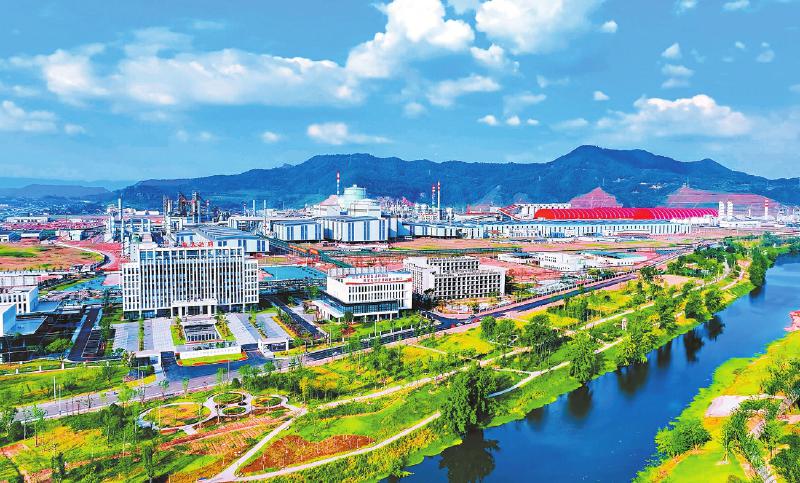
Core Insights - The Luzhou Tianhua Green Circular Development Industry Project has a total investment of 8.17 billion yuan and aims to achieve an output value of 30 billion yuan by 2027 [1] Project Overview - The project covers a total construction area of approximately 120,000 square meters, including standardized factories and smart manufacturing workshops [1] - As of August, the annual investment completion reached 899 million yuan, with a completion rate of 89.8% [1] Infrastructure Development - Road construction within the park is nearing completion, with plans for it to be operational before the Spring Festival [1] - The internal road connects to a national highway, indicating expected high traffic in the future [1] Sub-projects and Innovations - The project includes six sub-projects focusing on natural gas chemicals and fine chemicals, which are progressing rapidly [1] - The first phase of the deuterated industry park project has completed the main factory construction, with plans for production lines for deuterated methanol and other specialty gases [1] Market Positioning - The park aims to establish a unique deuterated industry cluster in China, leveraging technological innovation to expand the deuterated product market [1] - The park has already attracted orders, indicating strong market demand [1] Industry Transformation - The Luzhou Tianhua Chemical Park is focusing on extending and transforming its natural gas chemical industry chain, aiming to build three main industry chains: natural gas chemicals, fine chemicals, and new materials [1] - The new projects are characterized by high-end, fine, and green attributes, shifting the industry structure towards high value-added and high-tech sectors [1] Project Timeline and Goals - The green fine chemical project is set to complete construction by early 2027, with significant underground engineering already completed [1] - The project will produce over 60 specifications of products, applicable in various industries such as petroleum, plastics, and rubber [1] Research and Development Support - The Tianhua Technology Innovation Incubation Platform is part of the green circular development project, scheduled for completion in May next year, aimed at supporting R&D for park enterprises [1]

上合组织天津峰会|纵贯亚欧新脉动——合作共赢铺就上合组织发展坦途
Xin Hua Wang· 2025-08-31 08:22
Core Insights - The Shanghai Cooperation Organization (SCO) is enhancing cooperation in connectivity, trade, and digital technology, fostering a path of mutual benefit and common prosperity for regional development [1][2][3] Connectivity and Trade - The "China-Kyrgyzstan-Uzbekistan" international freight train service has significantly reduced logistics time from 20 days to approximately 10 days, cutting transportation costs and insurance by 30% [2] - Trade volume between China and other SCO member states is projected to reach approximately $512.4 billion in 2024, accounting for 8.3% of China's total foreign trade [3] - The SCO has seen a rise in the number of international freight trains, with over 110,000 trains operated by June this year, ensuring stable supply chains in the region [2] Investment Cooperation - China's investment stock in SCO member countries exceeds $84 billion, with a focus on traditional sectors like oil and gas, as well as emerging fields such as digital economy and green development [5] - Major investment projects include the China-Kazakhstan agricultural integration project and the Uzbekistan automotive factory by BYD, showcasing the vitality and resilience of SCO cooperation [5][6] Financial Collaboration - The SCO has strengthened financial cooperation through currency swap agreements and the establishment of the SCO Banking Union, which supports local projects and enhances regional economic development [6] Digital Economy and Technology - The SCO countries are increasingly integrating digital economy strategies into their national plans, with China proposing initiatives like the establishment of a big data cooperation center and a digital education alliance [7][8] - Numerous digital technology applications have emerged, such as automated cross-border freight systems and secure electronic signature channels, enhancing trade efficiency [8]
长寿经开区阔步迈向近零碳园区
Zhong Guo Hua Gong Bao· 2025-08-11 05:39
Core Viewpoint - The Longshou Economic Development Zone in Chongqing is focusing on green development and aims to establish a near-zero carbon park, showcasing significant advancements in low-carbon transformation and renewable energy utilization. Group 1: Low-Carbon Transformation - The Longshou Economic Development Zone has implemented precise carbon emission management, with 40 key enterprises, including Chuanwei Chemical, actively participating in carbon trading, resulting in a reduction of carbon emission gap to 530,000 tons in 2023, a year-on-year decrease of 21% [2] - The zone has rejected multiple high-pollution projects and has provided comprehensive support for ongoing projects since 2020, leading to 20 enterprises achieving efficient and environmentally friendly production [2] - The near-zero carbon park pilot has successfully passed mid-term evaluation, with energy-saving and carbon-reduction projects cumulatively reducing CO2 emissions by 1.784 million tons [2] Group 2: Renewable Energy Initiatives - Wangbian Electric has completed a rooftop photovoltaic project with an installed capacity of 9.4 MW, contributing to the green power supply in the zone [3] - Chuanwei Chemical has established a hydrogen fuel cell project with a capacity of 3,000 standard cubic meters per hour, reducing CO2 emissions by 500,000 tons annually [3] - The zone promotes distributed photovoltaic planning and has seen other companies, like International Composite, contribute to renewable energy projects [3] Group 3: Circular Economy Development - The Longshou Economic Development Zone has developed a circular economy with leading enterprises like Chongqing Steel, focusing on a full-process recycling industry chain [4] - The carbon capture and utilization device by Kabeile reduces CO2 emissions by 287,000 tons annually while producing 190,000 tons of methanol [4] - The zone has implemented deep treatment of organic waste gas in 10 enterprises, enhancing air quality [4] Group 4: Green Industry Growth - New Zobang's lithium battery material production has strengthened the development of the new energy materials industry in the zone, which has attracted over 230 key enterprises [5] - The zone encourages enterprises to apply for green factory certification, with 18 factories recognized at the municipal level, including 10 at the national level [5] Group 5: Future Outlook - The Longshou Economic Development Zone plans to continue promoting the green low-carbon transformation of traditional industries and enhance the green manufacturing system [6] - The zone aims to deepen the construction of a waste-free industrial park and improve carbon accounting systems to ensure compliance with carbon quotas [6]
中非携手逐梦现代化
Jing Ji Ri Bao· 2025-06-13 20:55
Core Points - The fourth China-Africa Economic and Trade Expo opened in Changsha, showcasing the growing economic ties and cooperation between China and Africa, with over 4,700 enterprises and more than 30,000 attendees participating, marking the largest scale in the event's history [1] - The theme of this year's expo is "China-Africa Joint Action to Pursue Modernization," highlighting the potential for deepening bilateral economic cooperation and shared development opportunities [1] Group 1: Expo Highlights - The expo featured over 800 African specialty products, the highest number to date, emphasizing the increasing attraction of African goods in the Chinese market [1] - The African Goods Exhibition, a key highlight, covered nearly 5,800 square meters and included a dedicated area for African brand products, allowing visitors to experience diverse cultural and economic offerings from over 20 African countries [2] - The introduction of the "African Goodies Exhibition" aimed to better integrate African products into the Chinese market, showcasing over 150 unique items from 13 African nations [3] Group 2: Economic Cooperation - Recent years have seen deepening China-Africa economic cooperation in infrastructure, technology, and local industrial development, with significant projects like the Congo-Brazzaville National Highway being highlighted [4] - The expo also showcased the first batch of China-Africa industrial chain cooperation projects, focusing on agriculture, industry, mining, infrastructure, and renewable energy, with 14 implementation plans and 5 support projects announced [5] - The collaboration aims to create a comprehensive industrial transformation in Africa, with a focus on enhancing local production capabilities and value-added manufacturing [6] Group 3: Future Prospects - African nations, such as Tunisia and Zambia, expressed aspirations to enhance trade routes and increase local production of higher-value goods, with China playing a crucial role in these developments [6][7] - Kenya's government invited increased Chinese investment in infrastructure projects, emphasizing the importance of collaboration in energy, transportation, and digital economy sectors for economic transformation [7] - The expo serves as a new platform for China-Africa cooperation, aiming to build a resilient community and drive modernization efforts in both regions [8]
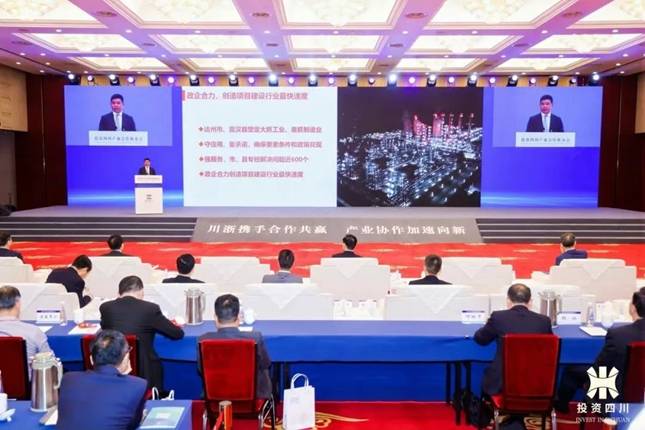
正凯集团董事长沈志刚受邀出席投资四川产业合作推介会并发言
Sou Hu Cai Jing· 2025-06-03 08:47
Group 1 - The investment promotion conference themed "Sichuan-Zhejiang Cooperation for Win-Win Outcomes: Accelerating Industrial Collaboration" was held in Hangzhou, highlighting the importance of collaboration between the two provinces [1] - Zhengkai Group's Chairman Shen Zhigang emphasized the company's commitment to the national East-West cooperation strategy and its strategic investments in Sichuan, including a framework agreement signed with the Sichuan provincial government in June 2021 [3][5] - The Dazhou Advanced Intelligent Manufacturing Industrial Park project has a total planned investment of 23 billion yuan, focusing on natural gas as a core raw material, and aims to address the supply chain gaps in the Southwest region for PET new materials and new energy [5] Group 2 - The project has successfully completed the first phase of investment and construction, becoming the world's largest single natural gas-based ethylene glycol project, supported by high-level promotion from various government levels in Sichuan [5] - Chairman Shen highlighted Sichuan's unique advantages, including the highest natural gas production, hydropower installed capacity, and various mineral resources in the country, along with a multi-modal transport network that connects over 400 million people in the western market [7] - Zhengkai Group aims to further respond to the national industrial transfer strategy and seize the historical opportunity of Sichuan becoming a national strategic backup industrial base, targeting the creation of a trillion-level energy and chemical industry in Sichuan [7]