房地产市场

Search documents
澳洲房价,再现世纪级上涨!
Sou Hu Cai Jing· 2026-02-02 09:10
Core Insights - The Australian real estate market is experiencing a significant price surge by the end of 2025, marking the second major price boom of the 21st century, despite ongoing cost-of-living crises [1][2]. Group 1: Price Trends - By the end of 2025, the median price of independent houses in Australia's eight capital cities has risen to AUD 1.28 million, reflecting a 6.8% increase over the past year [2]. - Brisbane and Perth have shown the most remarkable price increases, with Brisbane's apartment prices experiencing a record quarterly rise of nearly AUD 60,000 (8.1%), reaching over AUD 770,000 [2]. - In Perth, independent house prices surged by nearly AUD 100,000 (9.9%) within three months, pushing the overall median price above AUD 1 million for the first time [2]. - Some regional markets have outperformed capital cities, with independent house prices in remote Northern Territory rising by 23% and Queensland's remote areas by 20.6%, while South Australia's remote apartments saw a staggering annual increase of 26% [2]. Group 2: Market Dynamics - Ray White's chief economist, Nerida Conisbee, describes the current price surge as a "once-in-a-century" event, driven by a combination of factors including severe housing supply shortages, rapid population growth, government policies encouraging first-time homebuyers, and significant project backlogs in the construction industry [4]. - The influx of interstate migrants into cities like Perth and Brisbane, coupled with government investments, has intensified housing competition [4]. - The demand from first-time homebuyers has been stimulated by government initiatives such as a 5% deposit support plan, which has activated the lower price market [4]. - Despite the demand, the market has not provided sufficient new housing supply, leading to a significant imbalance between supply and demand, which has further driven up prices [4]. Group 3: Buyer Demographics - Many active buyers in the market do not represent the average household; they often have dual incomes, family support, or already own property and possess substantial assets [5]. - Domain's chief economist, Nicola Powell, emphasizes that the true drivers of price increases are "marginal buyers," those who still have the financial capacity to purchase homes, rather than the average family [7]. - Joey Moloney from the Grattan Institute notes that housing remains a priority expenditure for many families, even in high-interest rate environments, as people tend to cut back on non-essential items first [7].

Trump's team hints at potential 401(k) home down payment plan. Here's how this option could hurt your retirement
Yahoo Finance· 2026-01-21 21:00
Core Insights - The proposed 401(k) housing affordability plan by the Trump administration has not been detailed as expected, particularly during the World Economic Forum in Davos, despite prior announcements [1][4] - The U.S. housing market is facing challenges, with first-time homebuyers at a 44-year low of 21% in 2025, and a significant increase in the median age of first-time buyers to 40 years [1] - The National Association of Realtors (NAR) has highlighted the need for policies that increase housing inventory and affordability rather than relying on the 401(k) plan, which may not effectively assist those needing down payment help [10] Housing Market Challenges - The housing market is currently hindered by high prices and low inventory, leading to a decline in first-time homebuyers [1] - The median down payment for all buyers is reported at 19%, with first-time buyers facing a 36-year high of 10% [1] Proposed Initiatives - Trump has suggested a 10% cap on credit card interest rates for one year to alleviate financial burdens on potential homebuyers [3] - Other initiatives include directing Fannie Mae and Freddie Mac to purchase $200 billion in mortgage bonds to lower fixed-rate loan costs and an executive order to prevent large institutional investors from buying single-family homes [3] Concerns About 401(k) Withdrawals - Experts warn that using 401(k) funds for home purchases could jeopardize long-term financial health, as early withdrawals incur penalties and result in lost compound interest [6][7] - A withdrawal of $10,000 could potentially cost a young person over $80,000 in lost earnings over 30 years, assuming a 7% annual return [7] Criticism of the 401(k) Plan - Financial experts argue that the 401(k) strategy may not target those who truly need assistance with down payments and could inadvertently drive home prices higher [10] - The NAR has called for more effective policies to unlock housing inventory and promote new construction rather than relying on the 401(k) plan [10] Broader Financial Context - Approximately 54% of Americans have some form of retirement savings, indicating that a significant portion of the population may not benefit from the proposed 401(k) housing plan [9] - The potential changes to 401(k) withdrawal rules would require Congressional approval, which may face challenges in a divided Congress [11]
马勇:通过六大子市场指数,系统衡量中国金融整体形势
Sou Hu Cai Jing· 2025-11-24 03:01
Core Insights - The China Financial Situation Index (CAFI) indicates a gradual recovery in China's financial landscape, moving away from a cold phase, although the foreign exchange and bond markets remain constraints [1][10] - The report suggests maintaining a loose monetary policy and leveraging the Federal Reserve's interest rate cuts to attract international capital back to China, providing new momentum for economic recovery [1][10] Index Construction Methodology - The CAFI is based on the intrinsic relationship between financial activities and the real economy, comprising six sub-market indices: Money Supply Index (MSI), Credit Situation Index (CSI), Stock Market Index (SSI), Bond Market Index (BSI), Exchange Rate Pressure Index (EPI), and Real Estate Situation Index (RSI) [3][4] - The index is designed to provide a quantifiable assessment of China's overall financial situation, reflecting the operational status and structural changes within the financial system [3][4] Current Financial Situation Analysis - As of Q3 2025, the MSI and CSI are in a moderately positive state, indicating a mild recovery in the banking credit market [7][8] - The SSI is also in a positive state, while the BSI shows a slight cooling, reflecting a "see-saw" effect between the stock and bond markets [7][8] - The EPI is currently the lowest among the indices, indicating moderate cooling, primarily due to the impact of the Federal Reserve's interest rate hikes [8] Future Outlook and Policy Predictions - The CAFI index for Q3 2025 shows signs of recovery, with values indicating a shift from a moderately cold state to a warming trend, although the recovery is not yet solidified [10] - Monetary policy is expected to remain moderately loose to support economic recovery and counter deflationary pressures, while credit policies will focus on key economic areas [10][11] - The opening of the Federal Reserve's interest rate cut cycle presents an opportunity to alleviate pressure on the RMB exchange rate and attract international capital, which could be crucial for the financial situation's improvement [11]
2024年首次购房者报告
Sou Hu Cai Jing· 2025-10-07 00:46
Core Insights - The 2024 U.S. first-time homebuyer market is characterized by uncertainty, with buyers facing fluctuating mortgage rates and home prices while sellers remain hesitant [1][9][10] Group 1: Changing Homeownership Trends - The definition of homeownership is evolving, with a notable trend of co-buying among first-time buyers, including partnerships with friends and family [2][12] - In 2023, 61% of first-time buyers purchased homes with a spouse or partner, while 16% co-bought with parents, 11% with friends, and 7% with siblings [2][14] - The percentage of first-time buyers purchasing alone increased to 23% in 2023 from 17% in 2022, indicating a shift towards independent decision-making [2][21] Group 2: Motivations for Homebuying - First-time buyers are motivated by various factors: 44% seek stability and peace of mind, 43% desire more living space, 41% view it as an investment opportunity, and 23% aim to start a family [3][25] - After completing a purchase, 73% celebrate, while 65% question the value of their investment due to the financial burden of homeownership [3][26] Group 3: Challenges and Compromises - Economic factors are the primary barriers, with 53% delaying purchases due to financial reasons and 42% feeling unprepared financially [4][29] - Many buyers are making compromises, with 32% unable to buy in their desired area and 28% not getting all the features they wanted in a home [4][36] - The pressure to purchase is significant, especially among younger buyers, with 70% of those under 40 feeling pressured compared to 55% of older buyers [5][34] Group 4: Variations Among Buyer Demographics - Younger first-time buyers face more pressure, with 70% under 40 feeling urgency to buy, while only 55% of those 40 and older feel the same [5][34] - First-time buyers with children tour fewer homes, averaging 20 or more homes compared to 44% of those without children [5][39] - Gen Z buyers are more likely to experience "tour burnout," averaging 32 home tours, significantly more than Millennials (22) and Gen X (20) [5][43] Group 5: Overall Market Resilience - Despite the challenges, first-time buyers demonstrate resilience, navigating a complex market while adjusting expectations and making compromises to achieve homeownership [6][27]

Mortgage rates are down with the Fed on deck. Will it help the struggling housing market?
Yahoo Finance· 2025-09-12 14:30
Core Insights - The Federal Reserve is expected to implement its first interest rate cut in a year, with mortgage rates at an 11-month low, yet home sales remain at their lowest pace since 1995, indicating a complex housing market situation [2][4] - There is a significant pent-up demand in the housing market, but skepticism exists regarding the Fed's ability to meet market expectations for rapid rate cuts [2][3] - The balance of power between buyers and sellers has improved, although many sellers are reluctant to lower prices, and affordability remains a challenge for many Americans [3][5] Housing Market Conditions - The housing market is currently experiencing a supply of five months, the best summer inventory situation in nearly a decade, with some metro areas classified as buyers' markets [4] - Despite the favorable inventory situation, many sellers are unwilling to sell unless they receive their desired price, and low mortgage rates from the pandemic era deter many homeowners from moving [5] - Homeownership affordability is a significant issue, with average buyers needing to allocate 60% of their paycheck to cover all housing costs for a median-priced home [6] Renting vs. Buying - The current market conditions favor renting over buying, with an average cost difference of about $812 per month, marking the largest margin since the early 1980s [7] - Lower-income households face particularly challenging circumstances in the current housing market [7]
降息后,悉尼这些区房价暴涨!看看有无你家
Sou Hu Cai Jing· 2025-07-17 20:19
Core Insights - The article highlights that lower interest rates have enhanced borrowing capacity, leading Australian buyers to focus on both affordable and high-end property markets [1][3] - There is a trend of price growth convergence across major Australian cities, with previously high-performing markets like Brisbane, Adelaide, and Perth seeing a slowdown, while Sydney and Melbourne are experiencing more stable growth [3][6] Price Growth Trends - The fastest-growing suburbs this year are primarily in smaller, more affordable markets, with significant price increases observed [4][5] - Rangeway in Western Australia saw a 19% increase in median price over six months, reaching AUD 334,000, while other affordable suburbs like Woodroffe and Menangle also experienced notable growth [4][5] - High-end suburbs are also witnessing price increases, with areas like Menangle in Sydney seeing a 16% rise to approximately AUD 1.19 million [5][6] Buyer Demand - There is a strong demand for properties in affordable areas, with some suburbs receiving over 100 inquiries per property [8][9] - High-end markets are also seeing robust interest, with properties in Bellevue Hill averaging 122 inquiries, indicating strong confidence in the luxury segment [9][10] Sales Velocity - Many properties in Adelaide are selling rapidly, with some being purchased within two weeks, reflecting a supply-demand imbalance [11][13] - The average sales time for properties across Australia is 37 days, with faster sales observed in major cities like Sydney and Melbourne [13]
“我不想一辈子还债”:悉尼年轻人西迁潮,放弃北岸只为上车梦
Sou Hu Cai Jing· 2025-06-23 06:29
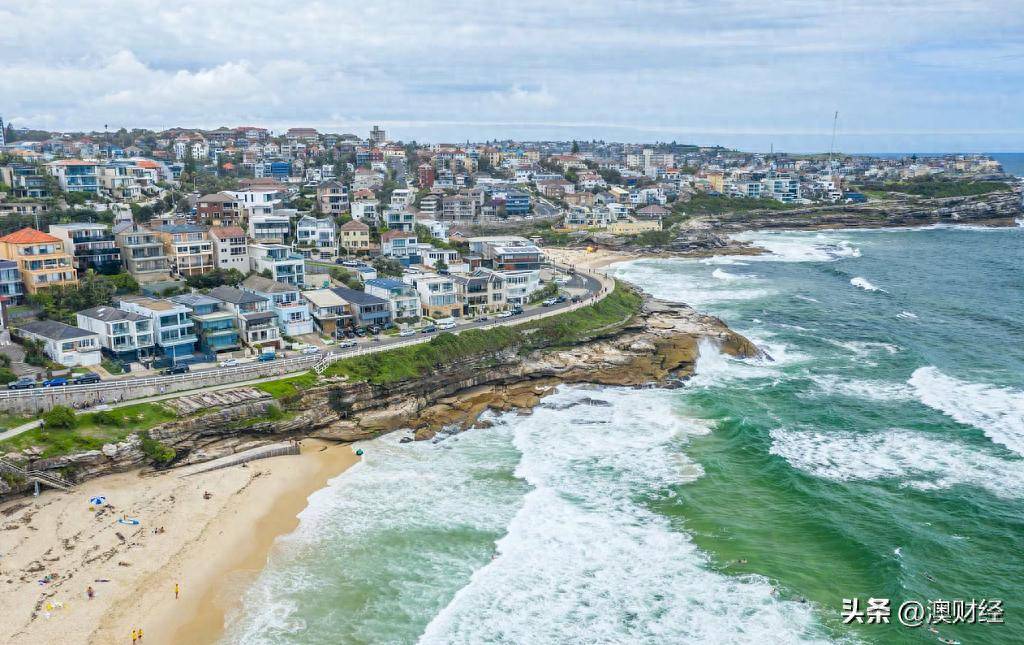
Core Insights - The article highlights a trend among young homebuyers in Sydney, who are increasingly moving westward due to affordability issues in traditional areas like the North Shore [1][3][4] - The migration to western suburbs is driven by the need for more affordable housing options, as many young professionals find it difficult to secure loans for properties in more desirable locations [5][6] - The demand for housing in western Sydney is rising, particularly in areas like Box Hill, Marsden Park, and Schofields, which are experiencing the fastest population growth [4][5] Housing Market Dynamics - Young buyers are forced to adapt to the reality of the housing market, often settling for longer commutes and unfamiliar neighborhoods to remain in Sydney [3][5] - The trend reflects a shift in buyer preferences, with many now willing to live further from the CBD if it means securing a home [6][7] - The current housing market is characterized by a significant supply shortage, with population growth outpacing housing construction [7] Socioeconomic Factors - The article notes that individuals with median incomes in Sydney have limited options for home loans, primarily in lower-priced fringe areas [6] - The acceptance of remote work and longer commuting distances post-pandemic has further facilitated this westward migration [6][7] - Young residents are redefining what it means to live in Sydney, adapting their expectations and choices based on market conditions [8]

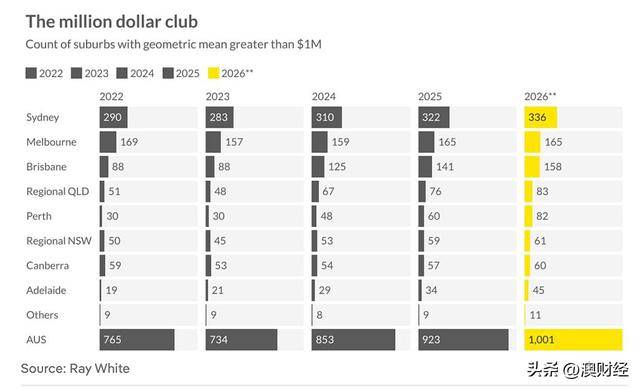
澳洲923个区房价破百万,明年将超1000个!你家上榜了吗?
Sou Hu Cai Jing· 2025-06-11 18:44
Group 1 - The phenomenon of million-dollar properties, once exclusive to Australia's wealthiest areas, has now become a nationwide trend, with 923 regions having a median house price exceeding 1 million AUD, and an additional 78 regions expected to join this "million club" within the next 12 months [1] - By mid-2026, it is predicted that the number of million-dollar regions across Australia may exceed 1,000, according to senior data analyst Atom Go Tian [2] - Perth stands out as the largest highlight in the Australian housing market, accounting for 22 of the 78 new million-dollar regions [5] Group 2 - The housing market in Perth has led the nation in price growth over the past three years, with annual increases ranging from 11% to 14%, indicating a shift in growth dynamics towards previously more affordable areas as inner-city prices surpass 1 million AUD [6] - Brisbane is rapidly catching up with Melbourne in terms of million-dollar regions, with 17 new areas expected to cross the million-dollar threshold, showcasing a stable annual growth rate of 8% to 9% [8][10] - Sydney has added 14 new million-dollar regions, primarily in outer growth areas, with prices in these "affordable" regions also approaching 1.02 to 1.04 million AUD [10]