
智能消费

Search documents
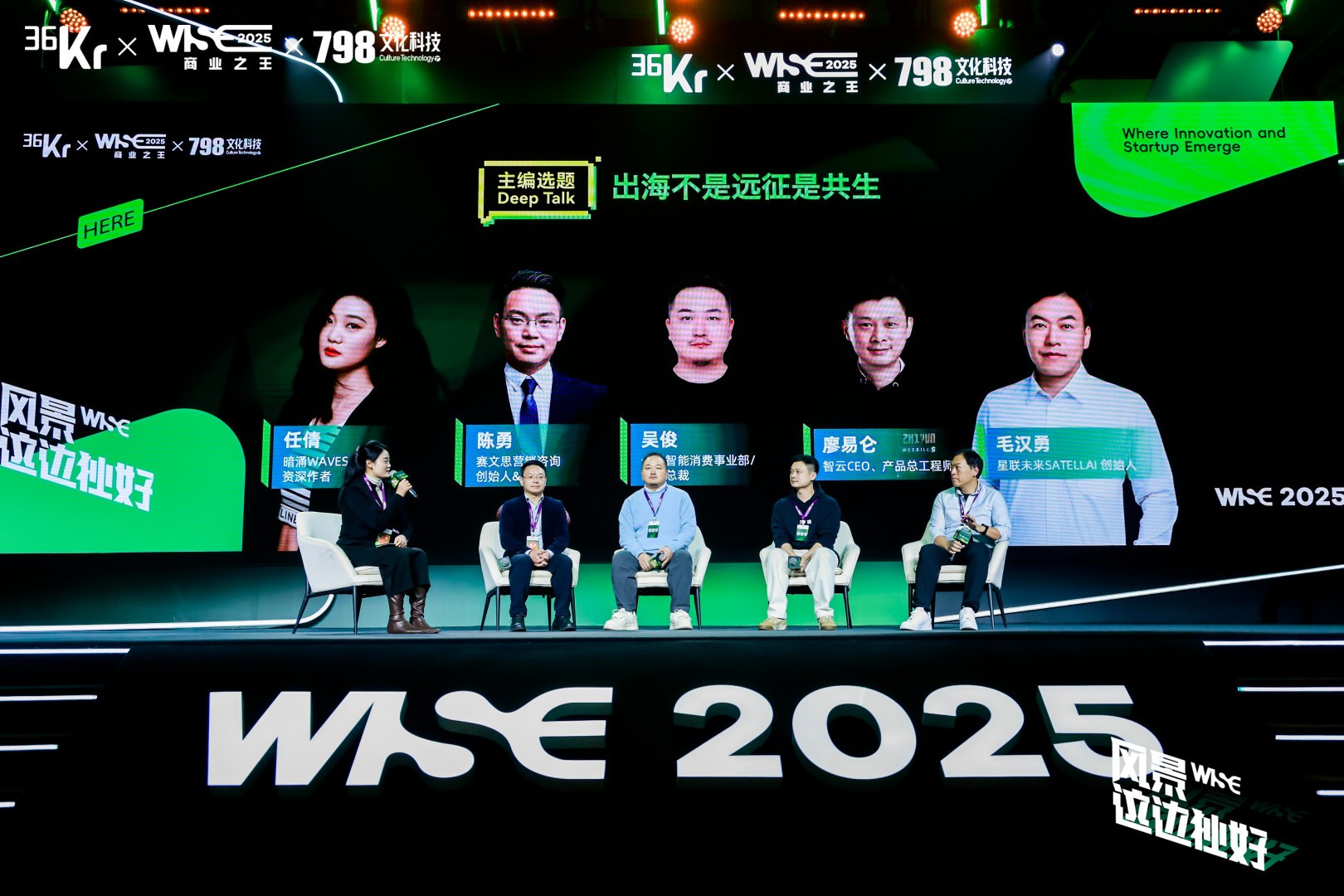
新全球化时刻 出海不是远征是共生 | 36氪 WISE2025 商业之王大会
3 6 Ke· 2025-12-17 10:09
Core Insights - The WISE 2025 conference in Beijing emphasizes an immersive experience rather than a traditional industry summit, focusing on trends in technology and business practices for the future [1] - The roundtable discussion highlights the shift from individual product logic to brand logic in globalization, with a focus on vertical markets and localized integration [3][4] Group 1: Industry Trends - The conference showcases how AI is reshaping hardware boundaries and enabling brands to globalize effectively [1] - The discussion reveals that many large product categories have become saturated, leading to opportunities in niche markets that blend local culture with innovative business models [3][4] - The transition from a price-driven market to a quality-driven market is noted, emphasizing the importance of brand building [10] Group 2: Company Strategies - Companies like Sevens Marketing help Chinese brands achieve global growth through integrated marketing strategies, focusing on brand development rather than just product sales [4][5] - Insights from various company leaders indicate a strong emphasis on understanding local consumer preferences and cultural nuances to drive brand success in international markets [23][24] - The use of AI in customer service and marketing is transforming traditional methods, allowing for more efficient and personalized consumer interactions [11][12] Group 3: Market Opportunities - The pet industry is identified as a significant growth area, with companies like SATELLAI leveraging AI to address consumer concerns about pet safety and health [20][21] - The discussion highlights the importance of data collection and analysis in understanding consumer behavior and improving product offerings [22][30] - Companies are encouraged to focus on building partnerships and ecosystems to enhance their market presence and operational capabilities [40][44]

稳中求进孕育新机 公募基金解码投资策略
Zhong Guo Zheng Quan Bao· 2025-12-11 20:35
Core Viewpoint - The Central Economic Work Conference held on December 10-11 has outlined the direction for economic work in 2026, emphasizing a "steady progress" approach and a series of macro policies and industrial deployments that are expected to support the capital market [1] Policy Direction - The conference highlighted the need for a more proactive fiscal policy and moderately loose monetary policy, focusing on new infrastructure, livelihood projects, and urban renewal to stimulate demand in related industrial chains [3] - The balance between "stability" and "progress" is crucial, aiming to stabilize the economic fundamentals while fostering innovation and green transformation to enhance resource allocation efficiency [2] Investment Opportunities - Investment opportunities are anticipated in three main areas: 1. **Consumption Upgrade**: The focus on domestic demand is expected to benefit the consumer sector, particularly durable goods and smart consumption, supported by policies like trade-in incentives [5] 2. **New Quality Productivity**: Emphasis on innovation and technology breakthroughs, particularly in AI, semiconductors, and high-end manufacturing, is seen as a long-term investment theme [5] 3. **Infrastructure and Unified Market**: Traditional infrastructure sectors such as engineering machinery and building materials are expected to benefit from modernization projects, while logistics and supply chain services will gain from the construction of a unified national market [6] Investment Strategy - Institutions are adopting a balanced investment strategy, focusing on "growth offense + value defense" with four core sectors: 1. Technology growth related to new quality productivity, particularly in AI and autonomous technology [8] 2. Chinese advantages in overseas markets, focusing on the export of industry chains and brands, especially in new energy vehicles and energy storage [8] 3. Domestic demand-driven consumption and manufacturing sectors, emphasizing consumption upgrades and manufacturing recovery [8] 4. High dividend defensive sectors as a stabilizing component of the investment portfolio [8]
身边的“十四五”:新消费 新体验
Sou Hu Cai Jing· 2025-10-23 06:16
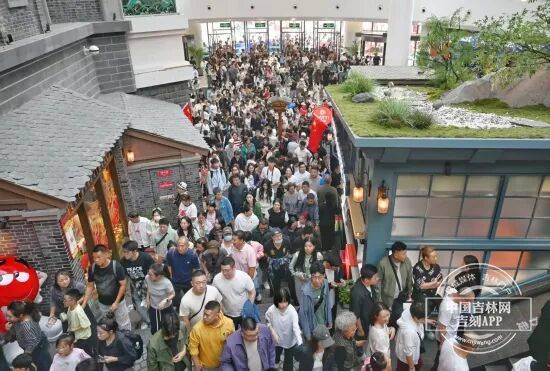
Group 1 - The total retail sales of consumer goods in China is expected to exceed 50 trillion yuan this year, indicating strong consumer participation in the economy [1] - During the recent holiday period, popular tourist destinations saw significant foot traffic, with Beijing's 60 key business districts attracting nearly 60 million visitors, a year-on-year increase of approximately 14% [1][2] Group 2 - The holiday season has transformed into a consumption boom, driven by rich cultural and tourism activities, as well as a vibrant night economy [2] - The emotional consumption market in China has rapidly expanded, with the market size expected to exceed 2.3 trillion yuan in 2024 and surpass 4.5 trillion yuan by 2029 [2] Group 3 - The Chinese "trendy toy" market has experienced accelerated growth, rising from 6.3 billion yuan in 2015 to 60 billion yuan in 2023, with projections to exceed 110 billion yuan by 2026 [2] Group 4 - The retail sales of consumer goods in China increased from 39.1 trillion yuan in 2020 to 48.3 trillion yuan in 2024, with an average annual growth rate of 5.5% [3][4] - The contribution rate of consumption to economic growth is projected to be 44.5% in 2024 [4] Group 5 - The new consumption patterns are emerging, with a focus on smart and personalized products, as traditional manufacturing shifts towards customization [3][4] - The service consumption sector has seen an annual growth rate of 9.6% from 2020 to 2024, with 46% of consumer spending now directed towards services [4] Group 6 - The instant retail market in China reached a scale of 650 billion yuan in 2023, growing 9.46 times over five years and accounting for 4.2% of total online retail sales [5] Group 7 - China has become a significant player in global consumption, with a total import of consumer goods amounting to 7.4 trillion yuan from 2021 to 2024 [6] - The influx of foreign tourists has been facilitated by policies such as "240-hour visa-free" and "immediate tax refund," leading to a 77.8% year-on-year increase in total spending by inbound tourists, reaching 94.2 billion USD in 2024 [8]
高性能材料品类持续丰富 科创板企业加速推出智能消费应用新场景
Zheng Quan Ri Bao Wang· 2025-05-08 05:14
Core Viewpoint - The "Smart Consumption Industry Week" performance briefing highlighted the positive development signals in the smart consumption sector, showcasing the technological innovations and market expansions of participating companies [1] Group 1: Industry Trends - The "Artificial Intelligence +" initiative aims to accelerate the development and application of new technologies in the smart consumption sector, creating high-growth consumption opportunities [2] - The automotive industry's shift towards electrification and intelligence has opened a strategic window for the in-car projection market, with leading companies like XGIMI focusing on smart cockpit and smart lighting projections [3] Group 2: Company Performance - Hengxuan Technology reported a net profit of 191 million yuan in Q1 2025, a 590% increase year-on-year, driven by the rise of smart wearable devices and supportive national policies [2] - Zhuhai Guanyu continues to enhance its competitive edge in consumer batteries while developing sodium-ion and solid-state batteries, aiming for stable and efficient power supply in low-temperature scenarios [4] - Aolaide has maintained steady revenue growth in its materials business for five consecutive years, with ongoing upgrades to its OLED terminal materials and new product developments expected to gain market traction by 2025 [4][6] Group 3: Market Dynamics - Companies are experiencing robust production and sales growth due to consumer confidence recovery and local consumption subsidy policies [5] - Shihua Technology achieved revenues of 795 million yuan and a net profit of 280 million yuan in 2024, with a 442% increase in high-performance optical materials revenue, indicating strong market demand [6] - The maturation of OLED production processes is expected to lower manufacturing costs, facilitating the adoption of OLED displays in mid-range vehicles, thus expanding their market presence [6]


