母婴产品

Search documents
英氏控股IPO获北交所上市委会议通过
Zheng Quan Shi Bao Wang· 2025-12-23 01:27
Core Viewpoint - Ying's Holdings Group Co., Ltd. has received approval from the North Exchange's listing committee for its initial public offering (IPO), aiming to meet the nutritional care needs of infants and young children in China [1] Financial Performance - The company reported revenues of 1.296 billion yuan, 1.758 billion yuan, and 1.974 billion yuan for the years 2022, 2023, and 2024 respectively, indicating a growth trajectory [1] - Net profits for the same years were 117.33 million yuan, 220.20 million yuan, and 210.59 million yuan, showing fluctuations in profitability [1] - Key financial metrics for 2024 include: - Revenue: 1.974 billion yuan - Net profit attributable to shareholders: 210.60 million yuan - Basic and diluted earnings per share: 1.40 yuan - Return on equity: 24.38% - Net cash flow from operating activities: 292.39 million yuan [1] Business Focus - The company operates in two main segments: infant food and hygiene products, focusing on comprehensive development to cater to the needs of mothers and infants [1] - The funds raised from the IPO will be allocated to brand building, production line upgrades, the establishment of an innovation center in Hunan, and the construction of a ready-to-eat infant nutrition porridge production facility [1]
本周9宗上会 12月IPO审核再提速
Bei Jing Shang Bao· 2025-12-22 15:39
Core Viewpoint - The IPO review process in December has accelerated, with a record number of companies scheduled for meetings, indicating a robust pipeline for new listings in the market [1][6]. Group 1: IPO Review Acceleration - From December 22 to 26, nine companies including Sanrui Intelligent and New Hengtai were scheduled for IPO meetings, setting a new high for the year [1][3]. - As of December 22, a total of 25 IPOs have been arranged for review in December, marking a monthly record [6]. - The North Exchange leads with 12 companies scheduled for IPO meetings, followed by the Growth Enterprise Market with 6, and the Main Board with 4 [6]. Group 2: Notable Companies and Fundraising - Vision Technology, aiming for the Sci-Tech Innovation Board, plans to raise approximately 2.015 billion yuan, the highest among the listed companies [1][7]. - Dapu Micro, notable for being the first unprofitable company to apply for an IPO on the Growth Enterprise Market, plans to raise about 1.878 billion yuan [4][10]. - Other companies scheduled for meetings include Ying's Holdings, which aims to raise around 334 million yuan, and Fuen Co., which plans to raise approximately 1.25 billion yuan [3][4]. Group 3: Financial Performance and Industry Focus - Vision Technology reported revenues of approximately 190 million yuan in 2022, with projected losses in subsequent years, but anticipates profitability by 2026 [7][10]. - Dapu Micro's revenues for 2022 to 2024 were approximately 557 million yuan, 519 million yuan, and 962 million yuan, with significant losses reported [10]. - Fuen Co. focuses on sustainable development and has seen an increase in accounts receivable, which raises concerns about its financial health [5]. Group 4: Industry Trends - The majority of companies undergoing IPO reviews are concentrated in the "hard technology" sector, which includes industries such as power semiconductors and medical devices [9][12]. - The acceleration of IPO reviews for "hard technology" companies is attributed to their core technologies and broad industry prospects, aligning with national strategic interests [9][12].


9家公司首发事项将于本周上会
Zheng Quan Shi Bao Wang· 2025-12-22 03:13
Core Viewpoint - This week, a total of 9 companies are scheduled for IPO meetings across various stock exchanges, with significant fundraising amounts expected, particularly from Vision Technology, which aims to raise 2.015 billion yuan [1]. Group 1: Upcoming IPOs - Nine companies will present their IPO applications from December 22 to December 26, with the highest fundraising target set by Vision Technology at 2.015 billion yuan [1]. - The companies include: - Fuen Co., Ltd. and Shenglong Co., Ltd. targeting the Shenzhen Main Board [1]. - Vision Technology aiming for the Sci-Tech Innovation Board [1]. - Sanrui Intelligent and Dapu Micro targeting the Growth Enterprise Market [1]. - Xinhengtai and Puan Medical, among others, targeting the Beijing Stock Exchange [1]. Group 2: Fundraising Amounts - Vision Technology plans to use the raised funds for the expansion of its ultra-high-resolution silicon-based OLED micro-display production line and R&D center [1]. - Dapu Micro and Shenglong Co., Ltd. follow with fundraising targets of 1.878 billion yuan and 1.530 billion yuan, respectively [1]. Group 3: Company Profiles - Shenglong Co., Ltd. is a leading large-scale molybdenum company focused on the comprehensive development and utilization of non-ferrous metal mineral resources [2]. - Fuen Co., Ltd. specializes in the research, production, and sales of eco-friendly fabrics [3]. - Dapu Micro is engaged in the research and sales of enterprise-level SSD products for data centers [4]. - Sanrui Intelligent focuses on the R&D, production, and sales of electric power systems for drones and robots [5]. - Vision Technology is a global leader in micro-display solutions, offering silicon-based OLED micro-displays and value-added services [6]. - Ying's Holdings operates in the infant nutrition and care sector, producing a range of baby products [7]. - Longyuan Co., Ltd. specializes in the R&D, production, and sales of aluminum alloy precision die-casting parts [8]. - Puan Medical focuses on the R&D, production, and sales of medical devices for diabetes care and minimally invasive interventions [9]. - Xinhengtai is involved in the R&D, manufacturing, and sales of plastic foaming materials [10].
2025年中国母婴产品行业市场研究报告
硕远咨询· 2025-12-09 14:06
Investment Rating - The report does not explicitly state an investment rating for the industry Core Insights - The Chinese maternal and infant products market has surpassed 1 trillion RMB, making it one of the largest maternal and infant consumption markets globally, driven by the two-child policy and changing consumer attitudes [12][15] - The industry is experiencing a compound annual growth rate (CAGR) of 8% to 12% over the past five years, significantly outpacing the overall consumer goods market [16] - The market is evolving towards diversification, segmentation, and high quality, with increasing competition among brands focusing on innovation, product upgrades, and service optimization [15][16] Industry Overview - The maternal and infant products industry encompasses a wide range of products, including maternity supplies, infant food and nutrition, maternal and infant care products, children's clothing, and toys, emphasizing safety, comfort, and functionality [3][4] - The industry chain includes upstream raw material supply, midstream production and R&D, and downstream distribution and sales channels, with a focus on quality standards and technological innovation [6][9] Market Size and Growth Trends - As of 2024, the market size of maternal and infant products in China has exceeded 1 trillion RMB, with core products like infant formula and diapers showing stable growth [12][13] - The rise of smart maternal and infant devices and personalized services is becoming a new market trend, driven by technological advancements and consumer demand for customized solutions [12][15] - The online sales channel is rapidly expanding, with e-commerce platforms and social commerce playing a significant role in market growth [12][18] Macro Environment Analysis - Government policies supporting maternal and infant health have significantly improved the market environment, with initiatives like the two-child policy boosting birth rates and market demand [10][20] - The economic environment is favorable, with rising household incomes and a narrowing urban-rural income gap enhancing consumer purchasing power [23][24] Consumer Behavior Research - Consumers prioritize product quality, safety, and brand reputation when purchasing maternal and infant products, reflecting a shift towards high-end, functional, and experiential products [30][33] - Online shopping habits are prevalent among young parents, with e-commerce platforms providing convenience and competitive pricing [36][37] Competitive Landscape Analysis - Leading domestic companies in the maternal and infant market include Beiyinmei, Junlebao, and Haobaozi, which are expanding their product lines and embracing digital transformation [43][44] - International brands like Nestlé and Mead Johnson are also significant players, focusing on high-end market segments and localizing their products to meet consumer needs [44][45] Future Development Trends - The industry is expected to see growth in functional and green products, with a focus on health management and environmental sustainability [62][63] - Personalized services are emerging as a key trend, driven by advancements in data analysis and smart manufacturing [64][65] - The two-child policy and demographic changes present both opportunities and challenges for the industry, with a focus on meeting the diverse needs of modern families [66][67]
【环时深度】APEC为何首次将“应对人口结构变化”设为全面议题?
Huan Qiu Shi Bao· 2025-10-29 23:25
Core Viewpoint - The APEC meeting in South Korea will address the significant demographic changes in the Asia-Pacific region, with a focus on transforming demographic challenges into economic opportunities through regional cooperation [1][2]. Demographic Changes - The proportion of individuals aged 60 and above in the Asia-Pacific region is projected to rise from 15.1% in 2024 to approximately 25% by 2050, indicating a significant demographic shift [3]. - South Korea is expected to enter a "super-aged society" by 2024, with over 20.2% of its population aged 65 and older, while its total fertility rate is projected to drop to between 0.72 and 0.75, marking a historical low [2][3]. Economic Implications - The demographic transition presents both challenges and opportunities for economic restructuring, necessitating reforms to foster new growth drivers and sustainable prosperity [3][4]. - Industries such as traditional manufacturing may face pressure to relocate to regions with younger populations, while sectors related to healthcare, elder care, and technology are anticipated to experience significant growth [4][10]. Policy Responses - Various countries are implementing policies to address declining birth rates, with South Korea reporting a 7.4% increase in births in the first half of the year, attributed to government support measures [6]. - Spain has also seen a positive trend in birth rates due to family support policies, including extended parental leave and enhanced childcare services [7]. Regional Cooperation - The integration of artificial intelligence and demographic change discussions at the APEC meeting highlights the need for collaborative solutions to labor shortages and the creation of new economic opportunities [9]. - The diversity in demographic challenges across Asia-Pacific countries can be leveraged for mutual benefits through labor mobility, capital collaboration, and technology exchange [10].
如何看待当前育儿政策?
Tebon Securities· 2025-08-12 10:59
Policy Overview - The Chinese government has introduced a child-rearing subsidy of 3,600 RMB per child per year for families with children under three years old, starting from January 1, 2025, benefiting over 20 million families annually[4] - The government plans to implement free preschool education for public kindergartens starting from the fall semester of 2025, eliminating care fees for the final year of preschool[4] Regional Policy Impact - In Tianmen City, Hubei Province, families with three children can receive subsidies up to 225,100 RMB, leading to a notable increase in birth rates for the first time in eight years[4] - Cities like Shenyang, Hangzhou, Ningxia, and Changchun have seen varying degrees of birth rate recovery in the year following the implementation of child-rearing subsidies, with some areas exceeding the national average[6] Historical Context and International Comparison - China's birth policies have evolved through three stages since 1970, with a slight recovery in birth rates expected in 2024 after years of decline[4] - Internationally, countries like France have successfully maintained higher birth rates through effective child-rearing subsidies, while East Asian countries like Japan and South Korea continue to struggle with low birth rates despite similar policies[4] Industry Opportunities - The child-rearing subsidy is expected to benefit four key sectors: 1. Maternal and infant products, particularly domestic brands[4] 2. Maternal and infant retail channels, favoring strong national and regional brands[4] 3. Pediatric healthcare, with increased demand for pediatric services and assisted reproductive technologies[4] 4. Early childhood education, with a rise in demand for inclusive childcare services[4] Risk Factors - Potential risks include macroeconomic fluctuations, market competition, and the possibility that subsidy levels may not meet expectations[4]
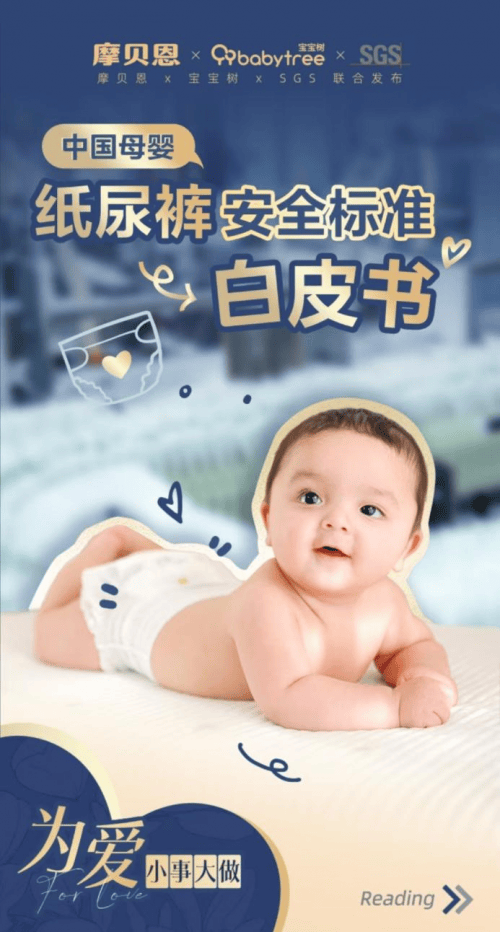
母婴消费新趋势:宝宝树《2025年纸尿裤选购白皮书》解读
Sou Hu Cai Jing· 2025-06-13 06:17
Core Insights - The "diaper quality issues" incident has raised significant concerns regarding the safety of maternal and infant products, prompting a shift in consumer behavior among mothers [1][6] - The release of the "2025 Diaper Selection White Paper" by BabyTree aims to provide a comprehensive guide for mothers while promoting the sustainable development of the maternal and infant industry [1][8] Group 1: Consumer Behavior Changes - The core consumer force in China's parenting market has shifted to young, highly educated mothers, with over 70% being born in the 1990s and nearly 50% holding a bachelor's degree or higher [3] - Post-incident, over 95% of mothers have become more cautious in purchasing diapers, prioritizing raw material safety and product quality as core selection criteria [6] - Mothers are increasingly favoring direct factory brands, believing they offer better quality control and product stability, reflecting a need to rebuild trust in brands after the incident [6] Group 2: Purchasing Preferences - Safety is the primary criterion for mothers when selecting diapers, with over 95% agreeing that safety is the most important factor, followed by quality, reputation, and price [4] - The purchasing channels preferred by mothers include comprehensive e-commerce platforms and offline maternal and infant stores, which provide product guarantees, robust after-sales service, and discounts [3] - As babies grow, mothers frequently change diaper brands, indicating a detailed consideration of product compatibility with their child's developmental needs [3] Group 3: Future Industry Implications - The insights from the "2025 Diaper Selection White Paper" suggest that the maternal and infant industry will move towards greater transparency, safety, and trustworthiness, ultimately benefiting families and children [8]
北交所周报:世昌股份闯进“注册关”,森合高科IPO申请获受理
Sou Hu Cai Jing· 2025-06-09 12:42
Summary of Key Points Core Viewpoint - The Beijing Stock Exchange (BSE) has seen a decrease in trading volume and value over the past week, with a total of 266 listed companies and a total share capital of 37.067 billion shares as of June 8, 2025 [2][3]. Trading Activity - The weekly trading volume from June 2 to June 8 was 4.547 billion shares, a decrease of 28.37% compared to the previous week [3]. - The weekly trading value was 99.367 billion yuan, down 21.90% from the previous week [3]. - The average trading price increased by 9.04% to 21.85 yuan [3]. - The BSE 50 Index rose by 1.30% to 1427.06 points, with 28 stocks increasing, 1 remaining flat, and 21 declining [3]. New Listings and Applications - One company submitted a registration application and another had its listing application accepted during the week [5][9]. - As of June 8, 2024, there are 76 companies awaiting review, including 10 under "accepted," 56 under "inquiry," and 9 under "submitted for registration" [5]. - Three companies passed the counseling acceptance during the week [12]. Company Highlights - Hebei Shichang Automotive Parts Co., Ltd. plans to raise 171 million yuan for a new energy high-pressure oil tank project and working capital, with projected revenue growth of 22.05% in the first half of 2025 [8]. - Guangxi Senhe High-tech Co., Ltd. aims to raise 490 million yuan for an environmentally friendly precious metal extraction agent project, with revenue growth from 3.02 billion yuan in 2022 to 6.23 billion yuan in 2024 [11]. - Guangdong Banzhe Chuangke Electric Co., Ltd. passed counseling acceptance, reporting net profits of 108 million yuan and 148 million yuan for 2023 and 2024, respectively [13][14]. - Tianbo Information Technology Co., Ltd. also passed counseling acceptance, with net profits of 29.59 million yuan and 46.41 million yuan for 2023 and 2024 [15][16]. - Ying's Holdings Group Co., Ltd. reported net profits of 216 million yuan and 190 million yuan for 2023 and 2024, respectively, and passed counseling acceptance [17]. Counseling and Applications - Three companies entered the counseling period during the week [18]. - Two companies submitted counseling materials [25].

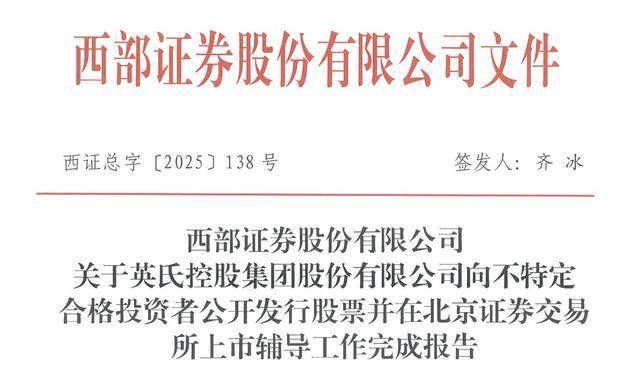
英氏控股拟北交所IPO:45岁董秘易佳法务助理出身,曾任职伟星股份
Sou Hu Cai Jing· 2025-05-20 14:50
Core Insights - Ying's Holdings initiated its IPO counseling on February 25, 2025, after previously withdrawing its IPO counseling filing on December 16, 2024 [1] - The company focuses on meeting the nutritional care needs of infants and young children in China, operating in two main business segments: infant food and hygiene products [1] - In 2024, Ying's Holdings reported a revenue of 1.974 billion yuan, representing a year-on-year growth of 12.29%, while its net profit attributable to shareholders decreased by 4.36% to 211 million yuan [1] Company Overview - Ying's Holdings was established on October 20, 2014, with a registered capital of 150.53 million yuan [2] - The company has no controlling shareholder; the actual controllers are Ma Wenbin, Wan Jianming, and Peng Min, who collectively control 52.02% of the company [2][3] - The company is classified under the manufacturing industry and is set to be listed on the National SME Share Transfer System with the stock code 874431 [2] Management Team - Ma Wenbin, born in June 1970, serves as the Chairman and General Manager of Ying's Holdings, with a background in industrial and decorative design [2][4] - Wan Jianming, born in July 1978, is the Vice Chairman and Deputy General Manager, holding a graduate diploma in integrated marketing communication [2][5] - Peng Min, born in November 1978, is a Director and Deputy General Manager, with a master's degree in business administration [2][5] - Yi Jia serves as the Board Secretary, with a background in law and experience in various administrative roles [6][7]

两只兔子携“安全座椅+腰凳”组合将全面入驻英氏YeeHoO,共筑新生品质成长
Sou Hu Wang· 2025-04-30 10:22
Core Insights - The Chinese maternal and infant market has transitioned from "extensive growth" to "refined parenting upgrades" over the past decade, driven by the new generation of parents born in the 1990s and 1995s [1] - The collaboration between high-end maternal and infant technology brand "Buddy Buzzy" and "YeeHoO," which has been in the baby and child sector for thirty years, aims to create comprehensive solutions for modern families by integrating their products [3][12] - New generation parents prioritize comfort, quality, and safety in their purchasing decisions, moving beyond basic functionality [4][9] Product Innovation - The "2Pro光晖版智能安全座椅" has passed the stringent ECE R129(i-Size)E1 safety certification, showcasing its superior safety performance and setting a benchmark in the industry [6] - The intelligent ventilation heating system in the safety seat adjusts automatically based on environmental temperature, while the "雷霆" intelligent side protection system enhances safety through gravity sensing [8] - The "Across洞感4D腰凳" features innovative design and ergonomic materials, utilizing 4D printing technology for better shock absorption and comfort, and is the only腰凳 product available at YeeHoO [11] Market Response - The partnership between Buddy Buzzy and YeeHoO represents a deep integration of quality and technology, responding to the evolving needs of new generation parents [12] - The collaboration is seen as a reflection of the industry's shift from "functional supply" to "user demand," emphasizing the importance of addressing unmet consumer pain points [13]