氢能与核聚变

Search documents
我国潜在独角兽企业816家
Xin Lang Cai Jing· 2025-12-21 22:46
Group 1 - The core viewpoint of the report is that by the end of 2024, China will have a total of 816 potential unicorn companies, with 255 new entrants, indicating a significant growth in the number of such companies, driven by cutting-edge technology and capital talent aggregation [1][2] - The number of potential unicorn companies in China has increased from 296 to 816 over the past six years, representing a growth of approximately 1.8 times, with over 200 new companies added each year, resulting in a substantial pool of high-quality tech innovation companies [1] - Over 90% of potential unicorn companies are in the frontier technology sector, with nearly 70% holding authorized invention patents, totaling 13,000 patents, and an average of 6 PCT applications per company [1] Group 2 - In 2024, 50% of potential unicorn companies (409 companies) are expected to secure new financing, totaling nearly $13 billion, which is an 18.7% year-on-year increase [2] - More than 60% of companies in sectors such as chips, new semiconductors, robotics, new energy vehicles, new materials, and commercial aerospace have received new financing [2] - Over 80% of potential unicorn companies have received investment from state-owned investment institutions, highlighting the significant role of state capital in the investment landscape [2]
十五五,攻坚牛——2026年度策略
2025-12-17 15:50
Summary of Key Points from Conference Call Records Industry and Company Overview - The conference call discusses the Chinese economy and its growth prospects during the "Fifteen" period, aiming to surpass 70% of the US GDP by 2026, with industrial added value reaching 1.6 times that of the US, driven by R&D investment and industrial system construction [1][3][5]. Core Insights and Arguments - **Economic Growth and Challenges**: The US faces increasing debt and fiscal deficit challenges, with a potential long-term economic growth rate of only 1.2%. Concerns over US debt security are prompting foreign investors to reduce US debt holdings, while central banks are increasing gold purchases [1][3]. - **Investment Opportunities**: The next five years will focus on industrial upgrades, technological innovation, and consumption enhancement. High R&D investment and a complete industrial system provide a solid foundation to counter external technological blockades [1][5]. - **Export Performance**: China's export share is at a record high, with reliance on the US dropping below 10%. This diversification strategy enhances export resilience and leads to a continuous trade surplus, indicating improved competitiveness [1][9]. - **Consumer Spending**: To address weak consumption, China aims to increase the resident consumption rate, optimize "two new" policies, and strengthen stimulus measures to support domestic demand [1][11]. Additional Important Content - **Financial Market Reforms**: The 2025 financial market reforms aim to shift fund management from scale-oriented to benefit-oriented, with a tighter IPO schedule and low levels of share reduction expected to continue into 2026 [2][14][17]. - **Investment Focus for 2026**: Key investment opportunities include high-growth export chains, cyclical stocks, and sectors benefiting from a consumption rebound, with a focus on retail sales and CPI indicators to validate trends [2][18]. - **Emerging Industries**: Significant attention is directed towards emerging industries such as quantum technology, biomanufacturing, hydrogen energy, nuclear fusion, and brain-computer interfaces, which align with national strategic goals [1][10][19]. - **Domestic Economic Dynamics**: Enhancing domestic circulation's endogenous power and reliability through investment in both goods and human resources is crucial for sustainable economic growth [13]. This summary encapsulates the essential insights and projections from the conference call, highlighting the strategic focus areas for China's economic development and investment landscape.
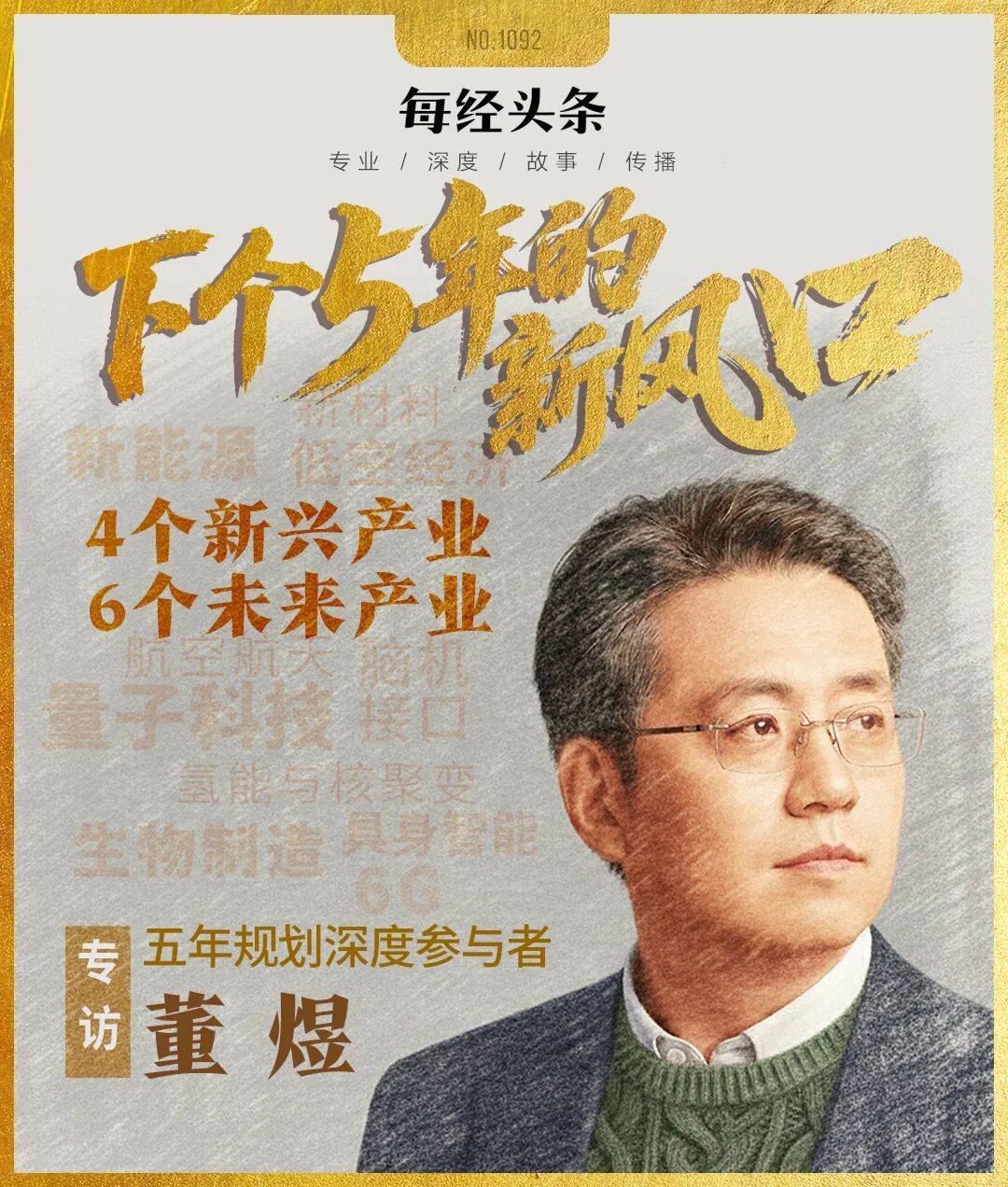
“十五五”新风口,专访五年规划深度参与者董煜:锚定4大新兴产业和6大未来产业
3 6 Ke· 2025-11-07 00:05
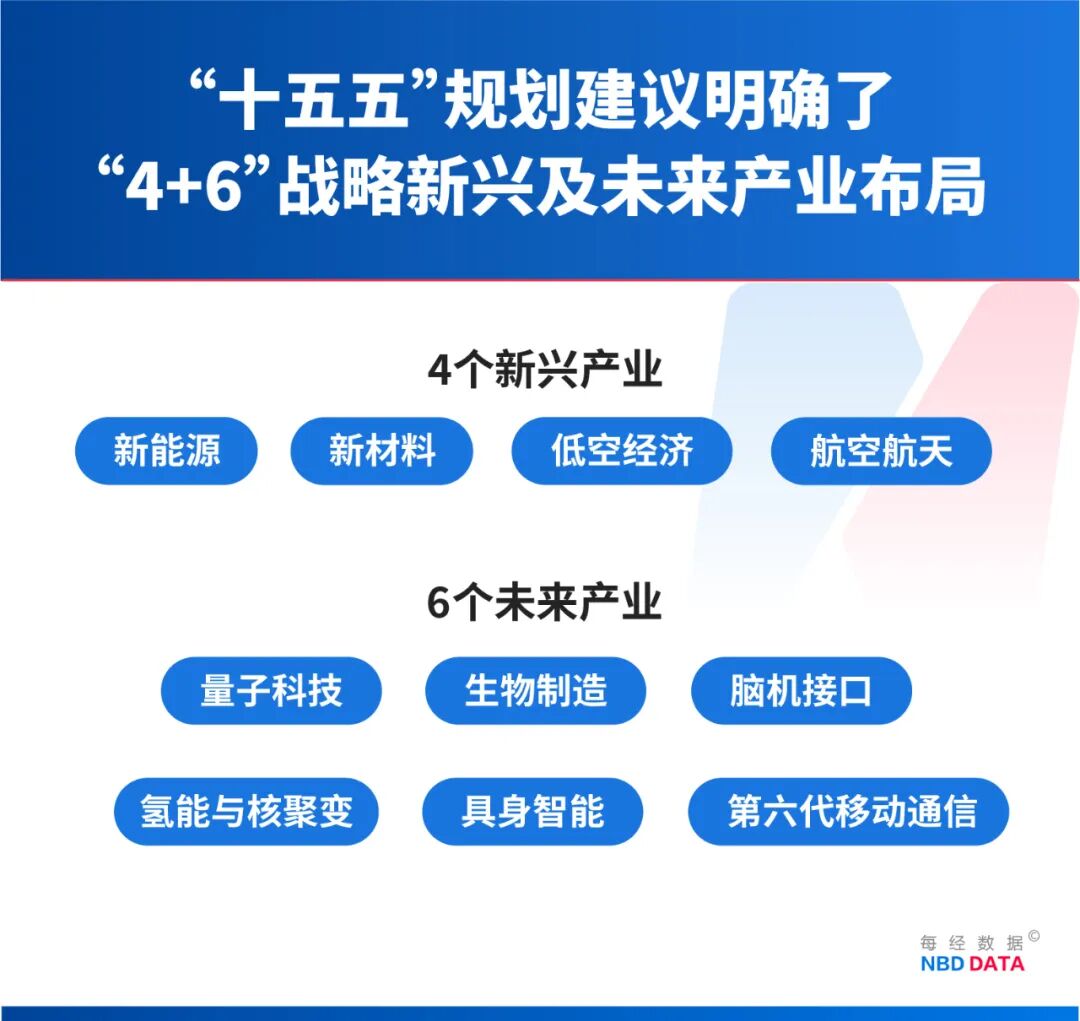
Group 1: Economic and Industrial Development - The "15th Five-Year Plan" emphasizes the construction of a modern industrial system as a foundation for economic modernization, highlighting the importance of strengthening the real economy and core competitiveness in response to external changes [2][4]. - The plan identifies "4+6" strategic emerging and future industries, with four emerging industries (new energy, new materials, low-altitude economy, and aerospace) expected to become pillar industries, while six future industries (quantum technology, biomanufacturing, brain-computer interfaces, hydrogen energy and nuclear fusion, embodied intelligence, and sixth-generation mobile communication) are recognized for their potential growth [7][4]. - The plan aims to enhance traditional industries and foster new and future industries, positioning new quality productivity as a priority for development [4][7]. Group 2: Social and Employment Policies - The plan places significant emphasis on improving people's livelihoods, focusing on three high-quality aspects: full employment, high-quality real estate development, and high-quality population development [11][12]. - It aims to address employment issues by ensuring sufficient job opportunities while enhancing job quality and sustainability, directly impacting household income [11]. - The plan proposes comprehensive support for family planning and child-rearing, aiming to create a family-friendly society and alleviate the burdens of child-rearing, thereby enhancing overall happiness [12]. Group 3: Market and Regulatory Framework - The plan stresses the need to eliminate barriers to building a unified national market, providing clear guidance for market participants and enhancing the efficiency of market operations [13][16]. - It emphasizes the establishment of six foundational market institutions, including property rights protection and market access, to reduce transaction costs and uncertainties in the market [13][16]. - The plan aims to create a favorable market environment by regulating competition and ensuring fair practices among market entities [16].

“十五五”新风口!专访五年规划深度参与者董煜:锚定4大新兴产业和6大未来产业
Sou Hu Cai Jing· 2025-11-06 12:11
Group 1 - The core idea of the article is the release of the "15th Five-Year Plan" which outlines the guiding principles for China's economic and social development for the next five years, emphasizing the modernization of the industrial system and the strengthening of the real economy [2][19]. - The "15th Five-Year Plan" prioritizes the construction of a modern industrial system as a crucial foundation for China's modernization, highlighting the need to enhance core competitiveness in the face of changing external environments [3][19]. - The plan identifies "4+6" strategic emerging and future industries, including four emerging industries (new energy, new materials, low-altitude economy, and aerospace) and six future industries (quantum technology, biomanufacturing, brain-computer interfaces, hydrogen energy and nuclear fusion, embodied intelligence, and sixth-generation mobile communication) as new growth points for the economy [8][9]. Group 2 - The plan emphasizes the importance of digital economy as a key driver for modern industrial systems, facilitating technological upgrades and structural optimization in the real economy [4]. - The "15th Five-Year Plan" outlines specific tasks to cultivate new productive forces, focusing on optimizing traditional industries and nurturing emerging and future industries, thereby establishing a clear direction for industrial development [5]. - The plan includes measures to support future industries, such as innovative regulatory approaches, venture capital development, and risk-sharing mechanisms to ensure effective funding and support for these high-risk sectors [9][12]. Group 3 - The plan places significant emphasis on improving people's livelihoods, with a focus on high-quality employment, real estate development, and population policies to address demographic challenges [12][13]. - It aims to enhance service consumption by expanding access and encouraging innovation in service sectors, thereby improving the quality of life for citizens [13]. - The plan stresses the need to eliminate barriers to building a unified national market, which is essential for fostering fair competition and enhancing market expectations [14][18].
中国的顶级阳谋:未来5年,中国经济的3大“新钱景”!10万亿级市场机会浮出水面
Sou Hu Cai Jing· 2025-10-24 18:44
Group 1 - The core message highlights the emergence of new growth engines in the Chinese economy, with significant opportunities in various sectors over the next five years [1][3] - The "new pillar industries" such as renewable energy, new materials, and aerospace are expected to form competitive industrial clusters, while the "low-altitude economy" is seen as a new growth point [3] - Future industries like quantum technology, biomanufacturing, hydrogen energy, nuclear fusion, brain-computer interfaces, and 6G are identified as key areas for national investment, potentially creating a scale equivalent to "rebuilding a high-tech industry in China" over the next decade [3] Group 2 - The marine economy in China has surpassed 10 trillion yuan, and the green low-carbon industry has reached approximately 11 trillion yuan, indicating a strong foundation for future growth [3] - The green low-carbon industry is projected to double in size during the "14th Five-Year Plan" period, reflecting a significant opportunity for investment and development [5] - Traditional industries are undergoing a transformation through technological upgrades, with an estimated market space of around 10 trillion yuan expected to be added in the next five years [5] Group 3 - Major investments in infrastructure, such as the construction and renovation of over 700,000 kilometers of underground pipelines, are anticipated to generate an investment demand exceeding 500 billion yuan [7] - The overall economic scale of China is projected to reach 140 trillion yuan this year, positioning the "14th Five-Year Plan" as a fertile ground for opportunities and growth [7]