水产养殖与捕捞

Search documents
江苏首单跨境电商进口鲜活波士顿龙虾登陆连云港
Xin Hua Ri Bao· 2026-02-12 21:54
Core Viewpoint - The successful import of live Boston lobsters through a cross-border e-commerce model marks a significant development in Jiangsu Province's logistics and seafood market, enhancing efficiency and reducing costs for consumers [1] Group 1: Cross-Border E-Commerce and Logistics - The first batch of live Boston lobsters was imported into the Lianyungang Free Trade Zone under the supervision of customs, utilizing a cross-border e-commerce bonded stockpiling model [1] - This model significantly compresses intermediate links and improves circulation efficiency, benefiting both businesses and consumers [1] - The Lianyungang Customs has established a 3,600 square meter cross-border e-commerce seafood temporary breeding pool, equipped to temporarily hold 100 tons of seafood [1] Group 2: Sales Performance - On the first day of sales, the company achieved a sales volume of 500 lobsters through its Tmall flagship store [2]

越南水产品对日本出口积极增长
Shang Wu Bu Wang Zhan· 2025-12-12 03:48
Core Insights - Vietnam's seafood exports to Japan reached approximately $1.6 billion in the first 11 months of 2025, marking an 11% year-on-year increase [1] - Japan is currently Vietnam's third-largest seafood supplier, accounting for 7.4% of Japan's total seafood imports [1] - Japan represents one of the top three markets for Vietnam's seafood exports, contributing about 15% to the total seafood export value [1] - Experts predict that if the current growth rate is maintained, Vietnam's seafood exports to Japan could exceed the record of $1.7 billion set in 2022 by 2025 [1] Industry Performance - In the first 11 months of 2025, Vietnam's total seafood export value was approximately $10.5 billion, reflecting a year-on-year growth of 14.6% [1] - The total seafood export value for Vietnam is expected to reach between $11.2 billion and $11.3 billion for the entire year of 2025, further solidifying Vietnam's position in the global seafood supply chain [1]
越南对华出口龙虾大幅增长
Shang Wu Bu Wang Zhan· 2025-11-29 04:47
Core Insights - Vietnam's lobster exports to mainland China and Hong Kong reached $702 million in the first ten months of 2025, marking a significant year-on-year increase of 135% [1] Group 1: Export Performance - The export of lobsters from Vietnam to China and Hong Kong accounted for approximately 10% of the total export value of this product category [1] - Mainland China and Hong Kong remain crucial growth drivers for Vietnam's lobster export market [1]
日本水产公司:扇贝对华出口11月初刚恢复,现在又被叫停,心情沉重
Feng Huang Wang Cai Jing· 2025-11-26 08:28
Core Viewpoint - The Chinese government's suspension of imports of Japanese seafood, particularly scallops, has significantly impacted Japanese seafood companies, leading to a near-zero export level to China and potential negative effects on company performance [1] Group 1: Impact on Companies - A Japanese seafood company expressed deep concern over the sudden halt of scallop exports to China, which had just resumed in early November [1] - The company indicated that previous inquiries and orders for frozen scallops are likely to be voided, resulting in adverse effects on their business performance [1] - The company noted that long-term partners, including Japanese fishermen and seafood processing firms, are worried about potential unsold inventory, complicating the assurance of regular supply [1] Group 2: Market Adjustments - Due to operational safety considerations, the company may redirect its sales channels to domestic Japanese restaurants [1] - Over 170 Japanese seafood companies are reported to be directly affected by the suspension of exports to China [1]
各国特色海鲜加速进入海南市场
Zhong Guo Xin Wen Wang· 2025-11-25 11:02
Core Points - The import of fresh aquatic animals in Hainan has significantly increased due to the open policies of the Hainan Free Trade Port and improved logistics, with a total of 13.33 tons valued at 3.42 million yuan, representing a year-on-year growth of 41.3% and 26.8% respectively [1][2] - The demand for fresh aquatic animals has surged during the peak tourist season in Hainan, leading to efficient customs processes that facilitate the import of various seafood, including Russian king crabs and Indonesian live mantis shrimp [1][2] Group 1 - The Sanya Airport Customs has optimized customs services to meet the urgent demand for fresh aquatic animals, establishing a "green channel" for fresh products and a "people wait for goods" customs model to ensure zero-delay clearance [2] - The efficient inspection process implemented by customs has encouraged companies to accept more international orders, highlighting the importance of timely sales in the fresh aquatic animal market [1][2] - The customs authority aims to continuously enhance regulatory services using advanced technology and quick customs processes to support the influx of seafood into the Hainan market [2]
日本被停海鲜后,印度竟冲上来了
Sou Hu Cai Jing· 2025-11-21 05:13
Core Viewpoint - India's seafood industry is reacting enthusiastically to the potential opportunity created by China's suspension of Japanese seafood imports, viewing it as a chance to fill a market gap left by Japan [1][4][9] Group 1: Market Reaction - Indian seafood exporters' stock prices surged by up to 11% following the news, indicating a strong market reaction to the perceived opportunity [3] - The Indian government has allocated over 450 billion rupees to support the foreign trade sector, particularly focusing on shrimp exports [3][4] Group 2: Challenges and Realities - The suspension of Japanese seafood imports is politically motivated, not a supply chain issue, which complicates India's ability to replace Japan in the Chinese market [6][9] - Indian seafood has seen growth in the Chinese market, but this growth is due to long-term supply channel openings rather than an immediate response to Japan's exit [6][9] Group 3: Future Considerations - The ability of India to truly capitalize on this opportunity depends on its credibility, supply stability, and brand recognition in the Chinese market [6][9][10] - The ongoing U.S. tariffs on Indian seafood exports remain a significant concern, as one-third of India's seafood exports are affected [7][10]

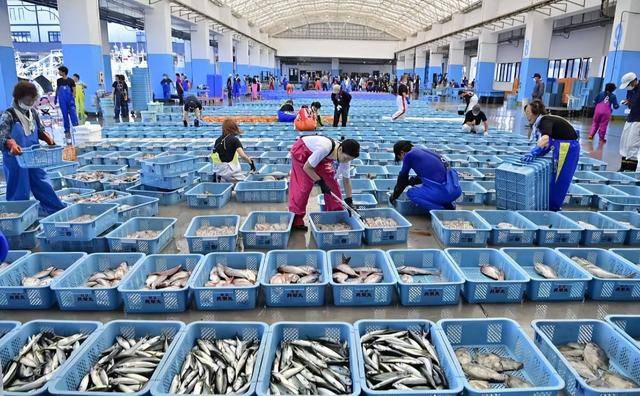
外交部再次强调:当前形势下日本水产品来了中国也没有市场
Yang Shi Xin Wen· 2025-11-20 07:37
Core Viewpoint - The Chinese government is conducting a scientific assessment and strict review of Japanese seafood imports to ensure compliance with Chinese standards, but current political tensions have diminished the market for these products in China [1] Group 1: Regulatory Actions - Chinese authorities will perform a scientific evaluation of Japanese seafood imports [1] - Strict reviews will be conducted to ensure that the seafood meets Chinese standards [1] Group 2: Market Conditions - Due to recent controversial statements by Japanese leaders on significant issues like Taiwan, there is currently no market for Japanese seafood exports to China [1]
找不到有效替补市场,日本水产品有多依赖中国市场
Di Yi Cai Jing· 2025-11-20 05:13
Core Viewpoint - China has suspended imports of Japanese seafood due to Japan's failure to provide promised technical materials and the recent political tensions, significantly impacting Japan's seafood export market [1][2]. Group 1: Export Data and Trends - In 2022, Japan's agricultural and fishery product exports reached 1.4 trillion yen (approximately 73.5 billion yuan), with China being the largest market, contributing 278.3 billion yen, a 25.2% increase [2]. - Japanese seafood exports to China were approximately 87.1 billion yen (around 4.3 billion yuan) in 2022, accounting for about 22% of Japan's total seafood exports [2]. - Following the Fukushima nuclear wastewater discharge in August 2023, Japan's seafood exports to China plummeted from 87.1 billion yen to 32 billion yen in 2023, marking the largest decline since 1998 [2][3]. Group 2: Market Impact and Future Projections - In 2024, Japan's agricultural and fishery product exports to China are projected to decrease by 29% to 168.1 billion yen, continuing a downward trend for the second consecutive year [3]. - The export value of Japanese seafood to China is expected to drop to approximately 6.1 billion yen in 2024, a decline of over 90% compared to 2022 [3]. - Japan's seafood industry is struggling to find alternative markets to replace the lost Chinese market, with efforts to explore new buyers in regions like the U.S., Mexico, and Southeast Asia [4]. Group 3: Challenges and Government Goals - Japan's government aimed to increase agricultural and fishery product exports to 2 trillion yen by 2025 and 5 trillion yen by 2030, but these goals are now facing significant challenges [5]. - The imposition of a 15% tariff by the Trump administration has further complicated Japan's seafood export situation, leading potential buyers to reconsider their purchasing plans [5]. - The overall export value of Japanese seafood is projected to decline to approximately 360.9 billion yen in 2024, down 7.5% from 2023, indicating that the loss of the Chinese market has not been compensated by gains in other sectors [4].
记者探一线丨国庆中秋双节水产市场火热
Sou Hu Cai Jing· 2025-10-06 04:15
Core Insights - The seafood market in Li Village is experiencing a sales peak ahead of the Mid-Autumn Festival, with sales increasing by approximately 40% since August [1] - High-demand seafood varieties include bass, yellow croaker, and tongue fish, with significant quantities being shipped to provinces as far as Xinjiang, Gansu, and Inner Mongolia [1] - The quality of crabs this year is reported to be good, but local crab production has decreased, leading to high demand for larger-sized crabs, priced between nearly 100 yuan to over 300 yuan per pound [1] - Consumers are showing a heightened preference for seafood quality and appearance, prompting merchants to enforce strict quality controls from the sourcing stage [1] - The seafood market is expected to remain robust throughout the holiday period due to the overlap of the Mid-Autumn Festival and National Day [1]
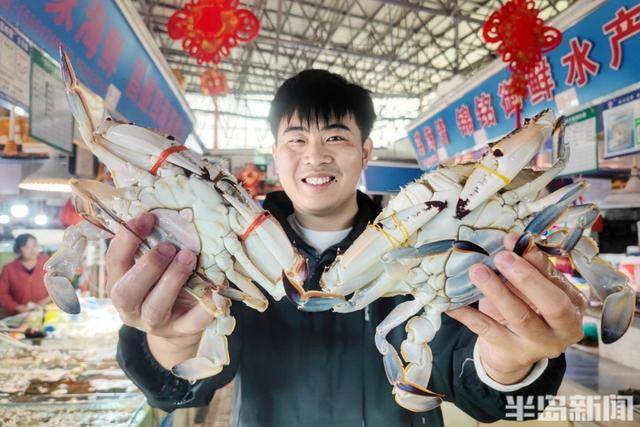
(活力中国调研行)从深海到餐桌:珲春打造帝王蟹入境“黄金通道”
Zhong Guo Xin Wen Wang· 2025-07-21 05:43
Core Insights - The article highlights the establishment of Hunchun as a significant gateway for importing king crabs from Russia, with over 1.5 million crabs entering China annually, accounting for approximately 80% of the national market [1][2]. Group 1: Import and Trade - Hunchun port has become a crucial entry point for Russian king crabs, with trucks transporting up to 4,000 kilograms of crabs per trip [1]. - The city has invested over 600 million RMB in the Northeast Asia Fresh Seafood Park project to enhance processing trade and establish itself as a major distribution center for fresh seafood in northern China [2]. Group 2: Logistics and Quality Assurance - The newly established "Kamchatka-Zarubino-Hunchun" shipping route has improved the stability and efficiency of seafood transportation between China and Russia [4]. - Hunchun Customs has implemented a green channel for year-round, 24/7 inspection services to ensure the freshness of imported products, aiming for 12,000 tons of king crab imports valued at over 3 billion RMB in 2024 [4]. Group 3: Market Demand and Tourism - The demand for live king crabs has expanded beyond Northeast China to major cities like Beijing, Shanghai, Guangzhou, and Shenzhen [2]. - The local seafood street has become a tourist attraction, offering various cooking styles and one-stop services for processing and shipping king crabs [4].