
贸易限制

Search documents
铁矿石:产业政策发酵,短期波动加剧
Hua Bao Qi Huo· 2026-03-13 03:17
1. Report Industry Investment Rating No relevant content provided. 2. Core Viewpoint of the Report - The short - term domestic anticipation of the iron ore market is in line with expectations, and the supply - demand contradiction is continuously accumulating. Supply is growing at a high rate year - on - year, while demand is still restricted by the industrial chain profit. The futures price is mainly driven by trade restriction policies, Iranian supply disruptions, and rising shipping costs, leading to a continuous weakening of the basis. Considering the continued weakness of the steel industry chain, there is significant upward pressure. It is recommended to participate in bull spreads. The expected price range is 104 - 109 US dollars/ton (61% index), corresponding to 790 - 825 yuan/ton for Dalian iron ore futures. The strategy is to conduct range trading and sell call options [2]. 3. Summary by Relevant Catalogs Supply - Current overseas ore shipments have emerged from the off - season, with off - season shipments showing above - seasonal growth and reaching the highest level in the same period of the past five years. In the short term, Australia and Brazil have seen some reduction due to maintenance. There are concerns about the impact of the geopolitical factors between the US and Iran on Iran's global iron ore supply, and there are also transfer pressures from other countries. The supply of domestic ore is expected to enter a seasonal recovery cycle. Overall, the short - term supply pressure remains high, providing a downward driving force [2]. Demand - Domestic iron ore demand mainly depends on the profit level of steel mills and the degree of steel inventory reduction. The probability of an unexpected increase in terminal demand is low. Attention should be paid to the timing of steel inventory reduction and the intensity of resumption of work. The environmental protection restrictions in North China are about to be lifted, creating restocking demand. However, considering the low profit level of steel mills and weak demand expectations, the upward driving force of demand is weak [2]. Inventory - Steel mills are maintaining a low - inventory operation mode and are cautious in procurement. There is short - term restocking demand. Currently, port inventories are still accumulating, and the short - term port inventory pressure remains high, with the inventory driving force being downward [2].
敦促减少贸易限制,IMF警告美国:政策不确定性可能造成超预期拖累
Huan Qiu Shi Bao· 2026-02-26 22:46
Group 1 - The International Monetary Fund (IMF) criticizes the U.S. government's economic policies, particularly regarding tariffs, suggesting a need for a different approach to avoid negative economic consequences [1] - The IMF's statement highlights that tariffs have a "negative supply effect" and are a "headwind to growth," predicting a 0.5% increase in the personal consumption expenditure price index and a 0.5% decrease in output levels by early 2026 [1] - The IMF emphasizes that international trade is crucial for economic growth, job creation, and resilience, warning that increased tariffs will distort resource allocation, disrupt global supply chains, and weaken trade benefits, leading to additional costs [1] Group 2 - The IMF warns that the U.S. government's fluctuating tariff policies disrupt global supply chains and financial markets, potentially causing unexpected drag on U.S. economic activity, especially if supply chain restructuring is not achievable in the short term [2] - Concerns are raised regarding significant layoffs among federal workers, with a reported 15% reduction in the federal workforce over the past year, which could impact the functions of statistical, regulatory, and tax authorities [2] - The IMF forecasts that stricter border controls and increased deportations will slow job growth and slightly raise inflation, leading to a projected 0.4% reduction in U.S. economic activity by 2027, alongside rising public debt as a percentage of GDP posing risks to both U.S. and global economies [2]
IMF敦促美国开展合作 减少贸易限制
Sou Hu Cai Jing· 2026-02-26 10:41
Group 1 - The International Monetary Fund (IMF) emphasizes the need for the United States to engage in constructive cooperation with its trading partners to address concerns over unfair trade practices and to work towards reducing trade restrictions that have negative cross-border impacts [1][5] - The IMF statement highlights that trade and investment measures based on national security reasons, including tariffs and export controls, should be narrowly defined to minimize their negative effects on both domestic and international levels [3] - The imposition of tariffs is noted to distort the allocation of productive resources, disrupt global supply chains, and weaken the benefits of global trade, ultimately leading to increased costs [3] Group 2 - The fourth article consultation is an annual assessment by the IMF of member countries' economic performance and macroeconomic policies, with the current evaluation focusing on the implications of U.S. economic policy shifts in 2025 for the U.S., its trading partners, and the global economy [5] - The U.S. government began implementing extensive tariff policies in early 2025, which have disrupted global trade order and hindered U.S. export markets [7]

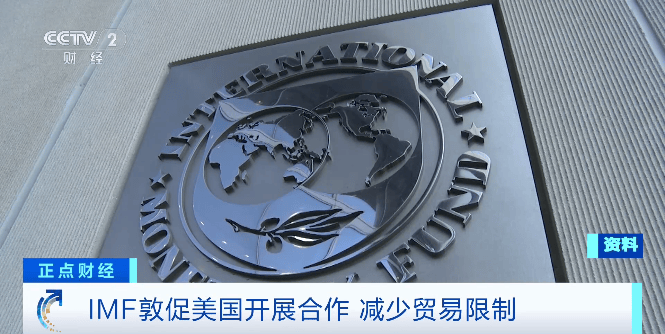
IMF敦促美国开展合作减少贸易限制
Sou Hu Cai Jing· 2026-02-26 01:53
Core Viewpoint - The International Monetary Fund (IMF) emphasizes the need for the United States to engage in constructive cooperation with its trading partners to address concerns over unfair trade practices and to reach agreements on reducing trade restrictions that have negative cross-border impacts [1] Group 1: Trade Policies - The IMF statement highlights that trade and investment measures based on national security reasons, including tariffs and export controls, should be limited in scope to minimize negative impacts domestically and internationally [1] - Increasing tariffs is identified as a measure that distorts productive resources, disrupts global supply chains, and undermines the benefits of global trade while also raising costs [1] Group 2: Economic Assessment - The fourth article consultation is an annual assessment by the IMF of member countries' economic performance and macroeconomic policies, focusing on the implications of the U.S. economic policy shift in 2025 [1] - The U.S. government's implementation of extensive tariff increases starting in early 2025 is noted to disrupt global trade order and hinder U.S. export markets [1]
Oil Companies in ‘Active' Talks Over Recouping Venezuela Losses
Youtube· 2026-02-13 21:59
Group 1: U.S.-China-Venezuela Relations - The U.S. is strategically positioned in the trade dynamics between Venezuela and China, with China being a significant supporter of Venezuela alongside Russia and Iran [1] - The U.S. is restricting China's access to Venezuelan oil, which is likened to a "giant anaconda" around China's economy, impacting its energy asset control [2] - China's debt exposure related to Venezuela is estimated between $10 billion to $20 billion, primarily structured as oil-for-loans, indicating a significant financial concern for Beijing [3][4] Group 2: U.S. Oil Companies and Venezuela - There is skepticism regarding U.S. oil companies' enthusiasm to invest in Venezuela due to past negative experiences, despite the Trump administration's push for investment [5] - The current governance situation in Venezuela is unstable, with unresolved legitimacy issues, which poses challenges for potential investors [6] - Long-term capital and stable governance are essential for repairing Venezuela's infrastructure, which is currently insecure [6] Group 3: Tariff Dynamics - Tariff percentages are expected to decrease, but the situation remains complex due to ongoing negotiations and outstanding rulings [8][9] - Exemptions are being granted for essential imports to the U.S., which could lead to inflationary pressures if tariffs remain in place [9]

美国启动对摩洛哥磷肥关税复审
Shang Wu Bu Wang Zhan· 2026-01-31 02:30
Core Viewpoint - The United States has initiated a review process for tariffs on phosphate fertilizers imported from Morocco and Russia, which has garnered significant attention in the international agricultural and fertilizer markets [1][2] Group 1: Review Process - The review will officially start in March 2026 and is part of a five-year review mechanism mandated by U.S. trade regulations, with a maximum review period of 360 days [1] - This review pertains to the countervailing measures imposed on Moroccan phosphate products since February 2021, following a complaint by Mosaic Company in 2020 [1] Group 2: Tariff Impact - The initial countervailing duty rate was set at 19.97%, significantly affecting the price competitiveness of Moroccan phosphate products in the U.S. market [1] - In 2023, the U.S. Department of Commerce revised the duty rate for OCP Group to 2.12%, although the countervailing measures remain in place [1] Group 3: Focus Areas of the Review - The review will assess whether the removal of current tariffs could harm the U.S. domestic fertilizer industry [2] - It will evaluate the impact of existing tariff policies on U.S. agricultural production costs and fertilizer price levels [2] - The review will also consider the long-term effects of these measures on the competitive landscape of the U.S. domestic market [2]
日本要去“叫家长”:美日要剥夺中国稀土“武器化”能力
Guan Cha Zhe Wang· 2026-01-10 02:02
Core Viewpoint - Japan is seeking to establish a rare earth supply chain in collaboration with the US and Europe, aiming to reduce its dependence on China and counteract China's influence in the rare earth market [1][5]. Group 1: Japan's Actions and Statements - Japanese Finance Minister Shunichi Suzuki announced plans to visit the US to discuss critical mineral issues with counterparts from "democratic countries" [1]. - Suzuki expressed concerns about Japan's reliance on Chinese rare earths, stating that without action, China would continue to pose a threat to Japan's economy [1][5]. - The Japanese government aims to create a rare earth market composed of "normal democratic countries and market economies" [1]. Group 2: China's Response and Economic Impact - China has implemented export controls on dual-use products to Japan and initiated anti-dumping investigations on certain Japanese imports [5]. - Analysts estimate that if China restricts rare earth exports to Japan for three months, it could result in a loss of approximately 660 billion yen, impacting Japan's nominal and real GDP by 0.11% [7]. - If the restrictions last for a year, the losses could escalate to 2.6 trillion yen, leading to a 0.43% decrease in GDP [7]. Group 3: Broader Implications and Market Reactions - The G7 countries, including Japan, have not abandoned plans to intervene in rare earth pricing, with discussions about setting a price floor and imposing tariffs on Chinese exports [2]. - UBS analysts noted that if rare earths are included in trade restrictions, the impact would be widespread, particularly affecting the automotive, electronics, and precision instruments sectors [7]. - Japan's reliance on Chinese heavy rare earths for electric vehicle motors is nearly 100%, indicating significant vulnerability to supply disruptions [7].


大疆:对美方决定表示遗憾
第一财经· 2025-12-23 02:50
Core Viewpoint - DJI expresses regret over the FCC's decision to include all non-U.S. manufactured drones in the "Covered List," which limits consumer choice and undermines market competition principles [3][4]. Group 1: Company Response - DJI emphasizes its role as a pioneer in civil drone and aerial photography technology, committed to providing innovative tools for creators worldwide [3]. - The company highlights the deep applications of its products in critical areas such as agriculture, inspection, surveying, firefighting, and natural resource protection, contributing to productivity and public safety [3]. - DJI asserts that the safety and reliability of its products have been validated by global markets and independent third-party organizations over the years [3]. Group 2: Regulatory Impact - The FCC's designation means that foreign drone companies, including DJI, will not be able to obtain FCC approval for new drone models to be sold in the U.S. [4]. - This ruling does not prohibit the import, sale, or use of existing devices that have already received FCC authorization, nor does it affect drones that have already been purchased [4].

美国FCC将所有非美国制造的无人机列入“受管制清单”,大疆回应
Huan Qiu Wang· 2025-12-23 01:47
Core Viewpoint - DJI expresses regret over the FCC's decision to include all non-U.S. manufactured drones in the "Covered List," which limits consumer choice and undermines market principles of openness and fair competition [1][2] Group 1: Company Response - DJI emphasizes its role as a pioneer in civil drone and aerial photography technology, committed to providing innovative tools and inspiration for creators worldwide [1] - The company highlights the deep applications of its products in critical areas such as agriculture, inspection, surveying, firefighting, and natural resource protection, contributing to productivity and public safety [1] - DJI asserts that the safety and reliability of its products have been validated by global markets and independent third-party organizations over the years [1] Group 2: Regulatory Impact - The FCC's designation means that foreign drone companies will not be able to obtain approval for new drone models to be sold in the U.S. [2] - The ruling does not prohibit the import, sale, or use of any existing models that have already received FCC authorization, nor does it affect drones that have already been purchased [2]
美国FCC将限制进口外国制造无人机及关键部件
Xin Lang Cai Jing· 2025-12-22 20:42
Core Points - The Federal Communications Commission (FCC) has added key components of foreign-manufactured drones or drone systems to its "covered list," effectively blocking most future imports [1][2] - FCC Chairman Brendan Carr announced this update on the X platform, emphasizing that devices on the "covered list" will not be eligible for FCC certification, which is necessary for the import and sale of most electronic products [2] - The update does not affect foreign-manufactured drones and key components that are already in the domestic market [1][2]