滨海旅游

Search documents
总投资218亿元 涵盖产业升级海洋经济等重点领域 汕头一季度40个重大项目集中开工
Nan Fang Ri Bao Wang Luo Ban· 2026-02-27 08:59
Core Insights - Shantou City launched 40 major projects with a total investment of 21.8 billion yuan, focusing on industrial upgrades, infrastructure, public welfare, and marine economy [1] Group 1: Project Categories - The projects are divided into two main categories: industrial projects (30 projects with a total investment of 11.865 billion yuan) and "Hundred Million Thousand Project" (10 projects with a total investment of 9.925 billion yuan) [1] - Industrial projects are the core focus, targeting sectors such as smart manufacturing, textiles and apparel, new energy, food processing, and high-end equipment manufacturing [1] - The "Hundred Million Thousand Project" emphasizes public welfare and industrial support, including transportation networks, drainage systems, park facilities, and coastal tourism [1] Group 2: Key Project Highlight - The Shantou Coastal Tourism Highway project is a significant component of Guangdong's coastal tourism infrastructure, with a total length of 128 kilometers and an investment of approximately 5.2 billion yuan [1] - This project will connect five administrative districts and two functional areas, aiming to integrate transportation, cultural tourism, industrial empowerment, and rural revitalization into a strategic development axis [1] - The Coastal Tourism Highway is positioned as a landmark project for Shantou's initiative to advance the "Hundred Million Thousand Project" and develop a distinctive modern marine city [1]
福建发布海浪蓝色预警 厦金“小三通”客运航线停航
Zhong Guo Xin Wen Wang· 2026-02-08 23:32
Core Viewpoint - The coastal areas of Fujian Province are experiencing strong northeast winds exceeding level 8, leading to the suspension of the "Mini Three Links" passenger ferry service between Xiamen and Kinmen due to adverse weather conditions [1] Weather Impact - Fujian's Marine Forecast Center issued a blue wave warning, predicting waves of 4.0 to 5.55 meters in major fishing grounds and the Diaoyu Islands from the afternoon of February 8 to the morning of February 9, which will decrease to 3.0 to 4.3 meters [1] - Coastal areas of Pingtan, Putian, Quanzhou, and Zhangzhou are expected to see waves ranging from 2.3 to 3.3 meters, reducing to 1.3 to 2.3 meters by the morning of February 9 [1] - The coastal regions of Ningde, Fuzhou, and Xiamen will experience waves of 1.5 to 2.5 meters, decreasing to 1.0 to 2.0 meters by the morning of February 9 [1] Industry Effects - The ongoing cold air has negatively impacted shipping, coastal tourism, and the fishing industry in Fujian [1] - The "Mini Three Links" passenger ferry service between Fuzhou Mawei and Matsu has been suspended for two consecutive days as of February 8 [1] Future Projections - During the 2026 Spring Festival travel period, the Xiamen to Kinmen "Mini Three Links" passenger ferry service is expected to operate 948 ferry trips, transporting over 200,000 passengers [1]
福建多举措应对寒潮天气 福州马尾至马祖“小三通”航线持续停航
Xin Lang Cai Jing· 2026-01-21 14:27
Core Viewpoint - The "Mini Three Links" passenger ferry route from Mawei, Fuzhou to Matsu will continue to suspend operations due to cold wave weather, marking three consecutive days of suspension [1] Group 1: Weather Impact - A low-temperature warning was issued by the Fujian Meteorological Station, indicating that certain areas in Nanping, Sanming, Ningde, and Longyan may experience minimum temperatures between -3 to 0°C, with potential for ice formation [1] - The prolonged cold weather is expected to adversely affect maritime shipping, coastal tourism, and fisheries [1] Group 2: Operational Adjustments - The Fuzhou Port passenger station announced the continued suspension of the ferry route due to poor sea conditions [1] - The Fujian region has four "Mini Three Links" passenger ferry routes, including Fuzhou to Matsu, Fuzhou to Huangqi, Quanzhou to Kinmen, and Xiamen to Kinmen [1] Group 3: Response Measures - The Xiamen Maritime Safety Administration is enhancing collaboration with meteorological and oceanic departments to monitor the cold wave's path and intensity, providing timely warnings to shipping companies and vessels [1] - The China Railway Nanchang Bureau Group is implementing multiple measures, including adjusting train operation plans and increasing equipment inspection frequency, to ensure smooth travel for passengers [1]
制度型开放赋能福建海洋经济高质量发展
Xin Lang Cai Jing· 2026-01-19 23:20
Core Viewpoint - The 20th Central Committee of the Communist Party of China has established "steadily expanding institutional openness" as the core path for deepening reform and expanding openness, emphasizing the need to "enhance maritime capabilities and promote high-quality development of the marine economy," providing fundamental guidance for coastal provinces to build a higher-level open marine economic system [1]. Historical Logic of Institutional Openness Empowering Fujian's Marine Economic Development - The development trajectory of Fujian's marine economy is essentially a process of deepening and evolving institutional openness, with historical roots in ancient maritime trade traditions and modern port openings [2]. - Fujian's historical maritime trade, particularly during the Tang and Song dynasties, established a foundation for an open and inclusive marine culture, which has been further strengthened by modern advancements in maritime technology and management [2]. Theoretical Logic of Institutional Openness Empowering Fujian's Marine Economic Development - Institutional openness, characterized by the alignment of rules, regulations, management, and standards, is essential for the high-quality development of the marine economy, which inherently requires support from institutional frameworks [3]. Practical Logic of Institutional Openness Empowering Fujian's Marine Economic Development - Fujian aims to leverage unique marine resources and strategic positioning through institutional innovation in customs facilitation, industrial clustering, regional collaboration, and ecological protection to establish a high-quality development path for its marine economy [6]. Key Initiatives for Institutional Innovation - **Customs Service Innovation**: Aiming to overcome bottlenecks in marine trade facilitation by promoting integrated customs processes and optimizing cross-border trade mechanisms [7]. - **Industrial Policy Innovation**: Focused on enhancing the capabilities of emerging marine industries through dynamic policy adjustments and collaborative mechanisms for technology transfer [8]. - **Regional Collaboration**: Enhancing the efficiency of land-sea hubs and establishing information-sharing networks to facilitate the flow of marine products [8]. - **Ecological Innovation**: Strengthening the foundation for green development in the marine economy by improving carbon trading systems and enhancing marine environmental protection measures [8].
勇担当重实干 加快建设区域性中心城市
Xin Lang Cai Jing· 2026-01-16 22:13
Group 1 - The core viewpoint emphasizes the importance of practical work and task implementation to achieve high-quality development in Jinzhou, aligning with the provincial economic work conference's spirit [1] - Jinzhou aims to enhance regional collaborative development by improving the functionality of regional central cities and integrating into the Northeast Sea-Land Corridor and Hydrogen Corridor [1] - The city plans to develop marine economy sectors such as marine fisheries, maritime transport, marine oil and gas, and coastal tourism [1] Group 2 - Jinzhou is focused on expanding domestic demand as a strategic foundation, promoting consumption through various initiatives, and enhancing urban and rural residents' income [2] - The city aims to attract over 1,000 key projects throughout the year, emphasizing investment in "two heavy" and "two new" sectors [2] - Jinzhou is committed to deepening the integration of technological innovation and industrial innovation, targeting the development of two trillion-level industrial clusters in petrochemicals and new materials [2] Group 3 - The city is determined to improve the business environment significantly and rapidly, implementing a systematic approach to optimize the business environment [3] - Jinzhou plans to enhance government service efficiency, aiming for over 40% of services to be immediately accessible [3] - The city will conduct special actions to improve service quality and ensure a culture of integrity in business operations [3]
第五届汕尾发展大会召开 88个项目签约 总投资超197亿元
Nan Fang Ri Bao Wang Luo Ban· 2026-01-16 07:53
Group 1 - The fifth Shantou Development Conference was held on January 15, focusing on the theme of "Collaborative Development of the Greater Red Bay Area, Building a New Growth Pole for the Marine Economy" [1] - The conference aimed to gather wisdom from various sectors to explore new paths for the marine economy and to jointly draft a new blueprint for high-quality development in Shantou and the Greater Red Bay Area [1] - Shantou has implemented the "High-Quality Development Project for 100 Counties, 1,000 Towns, and 10,000 Villages," emphasizing the transformation of marine resource advantages into development strengths [1] Group 2 - During the "14th Five-Year Plan" period, the number of registered business entities in Shantou increased from 172,000 to 341,000, with an average annual growth rate of 14.69% [1] - The number of newly established enterprises and the number of individual businesses transitioning to enterprises grew at average annual rates of 19.54% and 8.60%, respectively [1] - The resident population in Shantou exceeded 2.7 million, achieving three consecutive years of growth [1] Group 3 - The fifth Shantou Development Conference resulted in the signing of 88 projects with a total investment amount of 19.788 billion yuan [2] - Key industries discussed included new energy vehicles, marine engineering equipment, marine energy, marine ranching, coastal tourism, and public platforms [2] - Zhongke Fenggu Energy (Shenzhen) Co., Ltd. signed a project related to graphene raw materials, which will be applied in new energy batteries, aerospace, and medical fields [2] Group 4 - The conference marked a transition for Shantou's marine economic development from "single-point breakthroughs" to "full-domain collaboration," enhancing the momentum for building a strong marine economy [2]
“隐秘”取景地 硬核产业城:一个沿海经济带的突围样本
2 1 Shi Ji Jing Ji Bao Dao· 2026-01-15 14:23
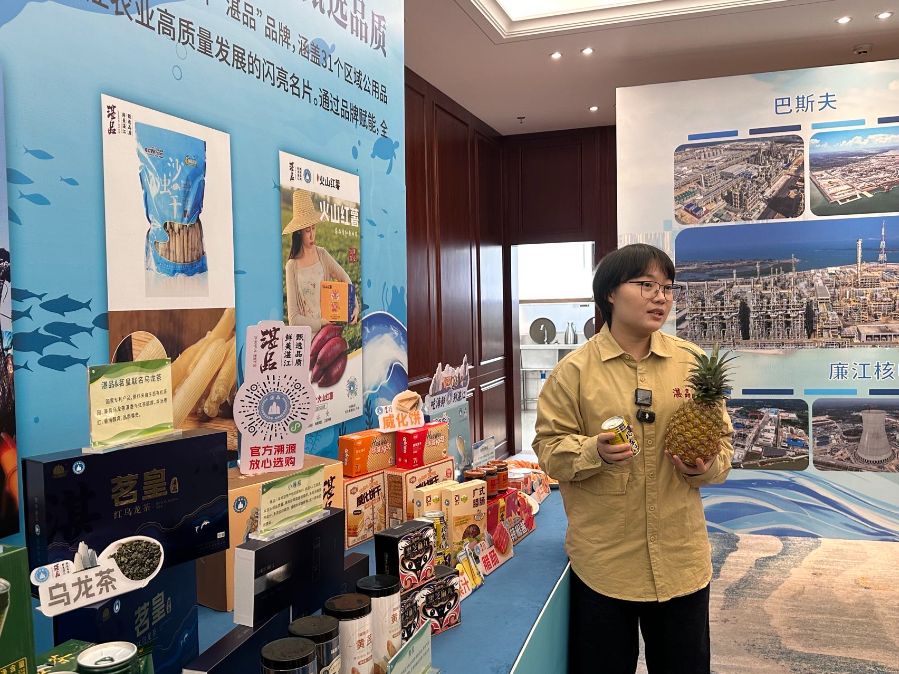
Core Viewpoint - Zhanjiang is emerging as a significant development hub in the Guangdong coastal economic belt, driven by the recent opening of the Guangzhan high-speed railway, which integrates the city into the Greater Bay Area's "1.5-hour living circle" [1] Group 1: Economic Development - The city has established a solid industrial foundation through coordinated land and marine development, with major projects like BASF's integrated base and Baosteel's hydrogen-based steel production line contributing to its economic growth [2][3] - Zhanjiang aims to achieve a GDP of 400 billion yuan by 2025, with industrial added value expected to exceed 100 billion yuan, supported by significant investments in major projects [2][3] Group 2: Green Industry Initiatives - Zhanjiang is developing a modern industrial system characterized by "four greens and one blue," focusing on green steel, green petrochemicals, green energy, and green food, with two major industrial clusters each surpassing 100 billion yuan in annual output [2][4] - The Baosteel Zhanjiang steel plant, utilizing hydrogen metallurgy, is projected to reduce carbon emissions by over 3.14 million tons annually, equivalent to reforesting 2,000 square kilometers [3][4] Group 3: Marine Economy - The blue ocean economy is a crucial component of Zhanjiang's industrial framework, with marine production value expected to increase significantly, contributing to 34.2% of the city's GDP by 2024 [9] - Zhanjiang's marine industries, including fisheries, oil and gas, chemical industries, and tourism, each generate over 100 billion yuan in added value [9] Group 4: Aquaculture Innovations - Zhanjiang has developed advanced aquaculture platforms, such as the floating dynamic positioning platform "Zhanjiang Bay No. 1," which enhances the value of high-end fish processing [6][7] - The city has successfully bred several high-value fish species, with significant contributions from local research institutions, ensuring a robust supply chain for the aquaculture industry [8] Group 5: Tourism Growth - Zhanjiang's coastal tourism is rapidly growing, with projected increases in tourism value, particularly during the winter season, highlighting the city's potential as a tourist destination [11]

晶采观察丨海洋经济“乘风破浪” 锚定中国发展新机遇
Yang Guang Wang· 2025-12-19 12:09
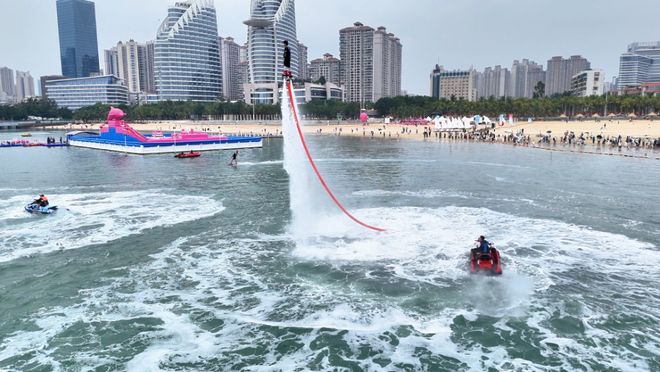
Core Insights - The Central Economic Work Conference held on December 10-11, 2023, emphasizes the importance of marine economic development and the construction of the Hainan Free Trade Port as key national strategies, which will significantly impact both coastal and inland regions, injecting strong momentum into economic and social development [1][3] Group 1: Marine Economic Development - The marine GDP of China is projected to exceed 10 trillion yuan in 2024, with 7.9 trillion yuan achieved in the first three quarters of 2025, reflecting a year-on-year growth of 5.6%, significantly outpacing many other industries [1] - The focus of marine economic development has shifted from traditional sectors like fishing and coastal tourism to a composite economic model integrating technology, ecology, and industry, becoming a crucial engine for stable national economic growth [1][2] Group 2: Strategic Planning and Implementation - The new development strategy emphasizes precise planning for major bays, moving away from blind development to a more sustainable approach, exemplified by innovative ecological restoration projects in Jiangsu and Hainan [2] - The "blue opportunities" presented by marine economic development are not exclusive to coastal areas but are relevant to all citizens, with the "14th Five-Year Plan" highlighting the need for coordinated land-sea development and high-quality marine economic growth [3] Group 3: Hainan Free Trade Port - The Hainan Free Trade Port is set to officially start full island closure on December 18, 2025, enhancing international marine trade channels and promoting collaborative development of upstream and downstream industries, thereby benefiting a broader population [3]
湛江海洋经济成绩单:竞争力全省第三,力争年产值破1400亿
2 1 Shi Ji Jing Ji Bao Dao· 2025-12-05 09:33
Core Viewpoint - The marine economy is a vital area for the development of new productive forces in Zhanjiang, contributing significantly to the city's economic growth and aiming to establish a national high-quality marine economy demonstration zone by 2025 [1] Economic Development - By 2025, Zhanjiang aims to rank 19th nationally and 3rd in Guangdong in terms of marine economic competitiveness, with a target marine GDP of over 140 billion yuan, reflecting a growth rate of approximately 6.5% [1] - In the first half of the year, Zhanjiang's marine production value reached 62.331 billion yuan, marking a 6.1% increase and accounting for 34.4% of the regional GDP [1] Marine Industry Strengths - Zhanjiang has maintained its position as the leading province in marine fisheries for 30 consecutive years, earning multiple national titles such as "China's Seafood Capital" and "China's Gold Pomfret Capital" [1] - The city has established four major marine ranch clusters with a total of 18.6 million cubic meters of aquaculture water, and it holds 51% of the province's deep-water net cages [2] Technological Innovations - The introduction of advanced technologies such as the autonomous lifting platform "Zhan Nong 1" and various intelligent equipment has significantly enhanced marine ranch construction [2] - Zhanjiang has made breakthroughs in local artificial breeding technology for tidal flat yellow croaker and has a substantial number of aquaculture seedling farms, accounting for 23.6% of the province [2] Aquaculture and Processing - The city has over 200 aquaculture processing enterprises, with an annual processing capacity exceeding 1 million tons, establishing itself as an international trading center for shrimp [3] - The total output value of the fishery industry chain has surpassed 100 billion yuan, with key species like oysters, gold pomfret, and shrimp each exceeding 10 billion yuan in output value [2] Tourism Development - Zhanjiang has seen a significant increase in tourism, with 22.865 million visitors in the first nine months of 2025, a year-on-year growth of 21.8%, and total tourism revenue reaching 23.14 billion yuan, up 24.2% [4] - The city is enhancing its coastal tourism brand and infrastructure, with projects like the Zhanjiang Cultural Center and the China Seafood Capital complex underway [3] Clean Energy Initiatives - As of August this year, Zhanjiang's installed power capacity reached 13.146 million kilowatts, with 56% from clean energy sources, indicating a shift towards a greener energy structure [6] - The offshore wind power industry is a key component of Zhanjiang's energy transition, with multiple projects underway and a total installed capacity of 1.5 million kilowatts [6] Strategic Investments - Zhanjiang has attracted leading marine equipment companies and established a 10 billion yuan industrial fund to support high-tech enterprises in marine observation and operations [7] - The city has released a list of 48 projects for national collaboration, focusing on innovative applications in marine economy, including unmanned vessels and low-altitude aircraft [6]
四中全会精神在基层 | 陆海统筹做大做强向海经济
Guang Xi Ri Bao· 2025-11-23 02:50
Core Insights - The development of the marine economy in Fangchenggang City is highlighted as a key strategy for rural revitalization and economic growth, with successful examples in aquaculture and infrastructure development [1][2][3] Group 1: Aquaculture Development - The establishment of a 24.1-hectare aquaculture base in Meili Village, which is the first village-level base with both sea area usage rights and aquaculture permits, has enabled local farmers to expand production [1] - The cooperative model involving 45 farmers has led to innovations in packaging technology, allowing "Meili bass" to enter high-end markets, with annual production exceeding 600,000 kilograms and generating over 15 million yuan in revenue [1] - The collective economy of the village has seen an increase of 137,500 yuan due to the successful aquaculture operations [1] Group 2: Port and Trade Development - Fangchenggang City, as a key node in the Belt and Road Initiative, boasts the largest port in the western region with significant infrastructure, including 57 berths for vessels over 10,000 tons and ongoing construction of larger terminals [2] - The city's annual throughput has surpassed 200 million tons, with foreign trade import and export volumes ranking second in the region, showing a 30.3% increase in imports and an 87.3% increase in exports [2] - The local economy has diversified into traditional and emerging industries, with a combined annual output exceeding 200 billion yuan from sectors like steel and aluminum [2] Group 3: Ecological and Sustainable Development - The city is implementing "blue carbon" pilot projects to explore carbon trading from mangrove forests, aiming to transform ecological assets into economic benefits [3] - There is a strong emphasis on green transformation of industries, requiring environmental facilities to be built alongside new projects and promoting a circular economy [3] - The development of an ecological tourism belt is underway, leveraging the region's natural beauty to attract investment and talent, positioning Fangchenggang as a "blue pearl" in the Beibu Gulf [3]