灯饰照明

Search documents
深圳中山惠州广州接连举办“广货行天下”春季行动工业品促销活动
Nan Fang Ri Bao Wang Luo Ban· 2026-02-04 08:26
Group 1: Overview of "Guangdong Goods Going Global" Initiative - The "Guangdong Goods Going Global" initiative showcases the transformation of Guangdong's manufacturing industry, shifting from scale advantages to quality and value competition, and moving towards a systematic output of standards, solutions, and culture [2][14] - The initiative involves collaboration among four cities: Shenzhen, Zhongshan, Huizhou, and Guangzhou, each hosting themed promotional activities to highlight the capabilities of Guangdong's manufacturing sector [2][14] Group 2: Consumer Electronics Sector - The consumer electronics event in Shenzhen attracted over 800 international buyers and generated sales exceeding 2.5 million yuan within four hours, with online sales surpassing 2 million yuan [3][5] - Shenzhen's robotics industry is projected to have over 74,000 enterprises and a total output value of 201.2 billion yuan by 2024, leading the nation in this sector [4] - The core competitiveness of Shenzhen's consumer electronics lies in its complete industrial ecosystem, with over 90% localization and rapid production capabilities [3][4] Group 3: Lighting Industry - The lighting industry event in Zhongshan saw over 100 companies participating in live broadcasts, resulting in a 70%-80% increase in daily exposure and a 120% rise in transaction volume [7][8] - Guangdong's lighting industry accounts for approximately 71% of the national output, with a highly efficient supply chain concentrated within a 5-kilometer radius [8] - The industry is transitioning from product sales to comprehensive lighting planning and operational services for overseas projects [8] Group 4: Leather and Footwear Industry - The leather and footwear event in Huizhou highlighted the value re-evaluation of traditional manufacturing, with 25 companies participating in live broadcasts and significant order increases [9][10] - Guangdong's footwear industry is projected to account for 20.5% of the national market share, with revenues reaching 137.3 billion yuan in 2024 [10] - The industry is characterized by a complete ecosystem that includes over 6,800 operating units and supports more than 160,000 jobs [10] Group 5: Textile and Apparel Industry - The textile and apparel event in Guangzhou emphasized the need for a strong central platform for resource allocation, with the region housing 4,240 enterprises and generating 21.78 billion yuan in revenue [12][13] - The collaboration between Xi Yin and the Zengcheng Investment Group aims to facilitate the export of textile and apparel products, addressing challenges faced by small and medium-sized enterprises [12][13] - The integration of cultural elements into design is seen as a key strategy for elevating "Guangdong Goods" from mere products to cultural symbols [13] Group 6: Broader Implications of the Initiative - The initiative reflects Guangdong's efforts to create a comprehensive consumption chain that connects various sectors, from technology to agriculture [14][15] - The transformation from a cost-driven "world factory" to an innovative community capable of systematic output is highlighted as a significant shift in Guangdong's manufacturing narrative [14][15] - The initiative serves as a response to global economic adjustments, showcasing Guangdong's creativity and cultural identity through its products [15]
“广货”为什么行?靠粤企“向新求质”,靠硬核科技创新,靠制造向智造跃迁
Sou Hu Cai Jing· 2026-01-25 05:49
Group 1: Overview of Guangdong Products - The "Guangdong Products Going Global" initiative is gaining momentum as the Spring Festival approaches, with a focus on promoting local goods both online and offline [3] - Guangdong products, ranging from traditional items like Guangzhou flower arrangements to innovative industrial and biopharmaceutical products, are becoming a significant part of the consumer market [3] - The success of Guangdong products is attributed to rich innovation stories and significant industry transformations [3] Group 2: Drone Industry - Guangdong's drone industry, exemplified by Chengzhi Intelligent, has seen significant growth, with products sold in over 50 countries [6] - Chengzhi Intelligent focuses on developing various drone payloads for emergency rescue and public safety applications, showcasing strong innovation and quality [7] - The company's products gained popularity through word-of-mouth and social media, highlighting the importance of innovation in global marketing [7] Group 3: Lighting and Home Appliances - The lighting industry in Zhongshan is evolving with a focus on customization and technology, moving from standardized to tailored products [10] - Companies are addressing market challenges by innovating and finding user pain points, demonstrating a commitment to quality and technological advancement [11] - The success of these companies is attributed to their ability to adapt and innovate within traditional sectors [11] Group 4: Biopharmaceutical Industry - The Guangdong biopharmaceutical sector is undergoing a transformation, moving from traditional herbal medicine to cutting-edge technologies that influence global health guidelines [13][15] - Companies like Dabo Biotech and Shiyao Mingfu are facing challenges in funding and regulatory processes, emphasizing the resilience required in the industry [14] - The government is responding to industry needs with new policies aimed at facilitating the development of innovative drugs [14] Group 5: Floral Industry - Guangzhou's floral industry is a significant economic contributor, with a market size exceeding 30 billion yuan and annual exports over 1.2 billion yuan [18][19] - Local representatives and businesses are actively promoting the floral industry, showcasing its potential for growth and innovation [20] - The collaboration among various stakeholders, including farmers and tech developers, is vital for sustaining the industry's vitality [20] Group 6: Film and Entertainment Industry - Guangdong's film industry is recognized as a leading market in China, supported by innovative practices in cinema operations and audience engagement [23] - The province's policy support for cultural industries has fostered a thriving environment for film production and creativity [24] - Recent successes in animation and film highlight the advancements in technology and storytelling within the Guangdong entertainment sector [24]


主播说:广货何以行天下?我们看到了向新力、突围力与协同力
Nan Fang Du Shi Bao· 2026-01-24 01:41
Group 1: Guangdong Products and Market Trends - The "Guangdong Products Going Global" spring campaign is gaining traction, showcasing a variety of Guangdong goods that blend traditional craftsmanship with modern technology [2][4] - Guangdong's flower industry is a significant sector, with a market scale exceeding 30 billion yuan and an annual import-export value of over 1.2 billion yuan, making it the largest small potted plant production base in China [14][16] - The Guangdong film industry is experiencing growth, supported by government policies aimed at high-quality cultural development, which includes various sectors such as film and animation [44][45] Group 2: Innovation in Traditional Industries - The lighting industry in Zhongshan is shifting from standardization to customization, with companies focusing on technology-intensive solutions to meet diverse consumer needs [6][8] - Guangdong's biopharmaceutical sector is evolving from traditional herbal medicine to cutting-edge technologies, with companies like Kangfang Biotech achieving significant international milestones [28][30] - The drone industry in Guangdong is represented by companies like Chengzhi Intelligent, which has developed innovative products for emergency rescue operations, gaining popularity in over 50 countries [22][26] Group 3: Community and Collaborative Efforts - Local representatives and community members are actively promoting the flower industry, emphasizing the importance of collective efforts in sustaining the sector's vitality [16][19] - The Guangdong film industry benefits from collaboration among various stakeholders, including cinema operators and technology providers, enhancing the overall viewing experience [40][42] - The biopharmaceutical industry is seeing increased support from local governments, responding to the challenges faced by small and medium-sized biotech firms [32][34]

香山先贤开百货先河 中山智造续商脉荣光
Nan Fang Du Shi Bao· 2026-01-23 02:05
Group 1 - The article highlights the historical significance of the establishment of the first global department store in inland China, the "Xianshi Company," which opened on October 20, 1917, in Shanghai, marking a milestone in modern Chinese commerce [1][4][6] - The founders, Ma Yingbiao and his contemporaries, were pioneers from Xiangshan (now Zhongshan), who ventured into Shanghai, leading to the establishment of several major department stores, including Yong'an Company and Xinxin Company, creating a competitive landscape known as the "Four Major Department Stores" [1][10][12] - The competition among these department stores not only transformed the retail landscape but also introduced modern business practices such as fixed pricing, window displays, and the use of female sales staff, significantly enhancing the consumer experience in Shanghai [14][12] Group 2 - The article emphasizes the enduring spirit of Xiangshan's commercial legacy, which has evolved from the early 20th century to the present, showcasing local innovations in smart appliances, fashion, and culinary arts [3][15] - Zhongshan, as a key node in the Guangdong-Hong Kong-Macau Greater Bay Area, has developed a robust manufacturing sector with 33 out of 39 industrial categories represented, including significant clusters in lighting, smart locks, and home appliances [17] - The article also notes the cultural and historical richness of Zhongshan, which attracts tourism and supports a vibrant local economy, further enhancing its reputation as a modern manufacturing hub [19][21]
广东中山古镇镇:小镇灯饰照亮世界
Xin Lang Cai Jing· 2025-12-24 20:50
Core Insights - The article highlights the remarkable growth of Guzhen Town, known as the "Lighting Capital of China," which produces approximately 70% of China's and nearly 50% of the world's lighting products, exporting to over 180 countries and regions [1][2] Industry Development - Guzhen's lighting industry began in the early 1980s, with the first generation of "lighting entrepreneurs" starting small-scale production after being inspired by designs from Hong Kong [1] - The establishment of the Guzhen International Lighting Fair in 1999 marked a significant turning point, transforming Guzhen from a regional production area to a national distribution center, attracting over 350,000 professional buyers annually [2] - The local government's strategic planning, including the development of specialized markets and logistics networks, has been crucial in fostering the industry's growth, leading to the formation of a complete supply chain [2] Market Position - Guzhen has evolved into a hub with over 30,000 lighting-related enterprises, generating an annual output value exceeding 100 billion yuan, covering surrounding cities and towns [2] - The industry has shifted from a national focus to a global scale, establishing Guzhen's reputation as the "World Lighting Capital" [2] Future Trends - The industry is now focusing on technological advancements, with smart lighting and green energy becoming key development directions [3] - The introduction of AI in the lighting sector, exemplified by the launch of the "Xingyao★Zhihui" AI platform, aims to enhance the entire production chain from design to smart dimming [3] - Environmental sustainability is becoming a core principle, with companies adopting recyclable materials and energy-efficient production processes to meet carbon neutrality goals [3] Conclusion - The story of Guzhen Town exemplifies the potential of local industries to achieve global competitiveness through market insight, collective industrial strength, and continuous innovation [4]
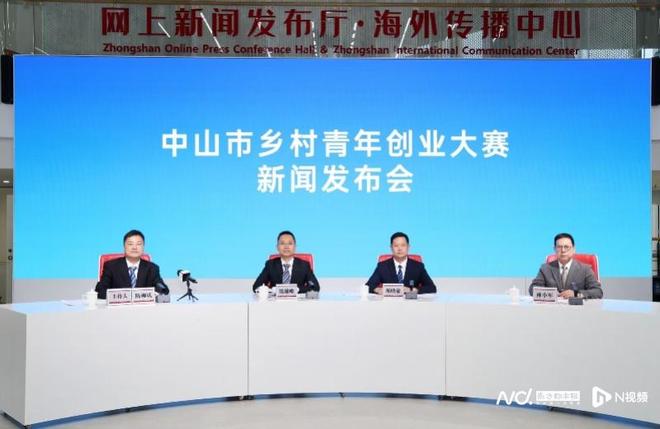
聚焦三大赛道,中山市乡村青年创业大赛即将启动
Nan Fang Du Shi Bao· 2025-11-15 12:57
Core Points - The Zhongshan Rural Youth Entrepreneurship Competition aims to stimulate innovation and entrepreneurship among rural youth, aligning with the "Hundred Million Thousand Project" to gather significant support for rural revitalization [1][5][7] Group 1: Competition Overview - The competition is themed "Create and Share Hundreds of Millions, Build Dreams in New Countryside" and will take place from mid-November 2025 to January 2026 [1] - It features a multi-dimensional platform for showcasing achievements, storytelling, entrepreneurial competition, and brand promotion [1][5] - The competition will adopt a three-tier evaluation process involving town and street recommendations, city-level assessments, and final evaluations [3][4] Group 2: Competition Tracks - The competition includes three main tracks: Modern Agriculture, New Quality Productivity, and Rural Leisure Tourism [3][4] - The Modern Agriculture track encourages innovation in agricultural production, processing, circulation, and sales, focusing on traditional local products and the introduction of new agricultural varieties [3][4] - The New Quality Productivity track aims to strengthen collective village economies and promote traditional industries through digital transformation and the development of emerging industries [4] - The Rural Leisure Tourism track focuses on enhancing the quality and uniqueness of rural tourism, promoting new business models such as rural homestays and eco-tourism [4] Group 3: Support and Incentives - The competition integrates resources from various departments to provide comprehensive support for participants, including awards and recognition for outstanding projects [6][8] - Awards include the "Top Ten Rural Youth Entrepreneurship Pioneers" and various other recognitions, along with post-competition support services [6] - Media channels will be utilized to enhance the visibility and impact of entrepreneurial projects and participants [6] Group 4: Participation Requirements - Participants must be aged between 18 and 45, with a focus on those actively engaged in rural revitalization and entrepreneurship [8] - All projects must be registered within Zhongshan and comply with relevant laws and regulations, demonstrating positive economic and social impacts [8]

古镇灯饰传媒专访:宏光照明董事长黄亮竣亲述宏光照明 24 年追光路!
Sou Hu Cai Jing· 2025-08-28 11:24
Core Insights - The article highlights the journey of Hongguang Lighting from its humble beginnings to becoming a leading brand in modern lighting, emphasizing the importance of innovation and brand development in its success. Group 1: Foundational Journey - The founder, Huang Liangjun, was inspired to enter the lighting industry due to his wife's background in lighting sales and the potential he saw in Zhongshan's manufacturing capabilities [3][5] - The initial struggles included a lack of resources and market access, leading to a near failure in the first year, but perseverance and support from family helped the company pivot successfully [5][7] Group 2: Innovation and Market Leadership - A significant turning point for the company was the introduction of aluminum lighting in 2004, which addressed safety concerns associated with glass lighting and set a new trend in the industry [7][8] - The company was recognized as the "first brand of aluminum lighting," establishing a strong market position and influencing the broader industry [7][8] Group 3: Brand Development - The decision to pursue a brand-focused strategy in 2005 marked a critical shift, moving away from a relationship-based business model to one centered on product quality and service [8][11] - The company invested in research and development, collaborating with institutions and engaging in marketing efforts to enhance brand visibility and credibility [8][11] Group 4: Adapting to Market Trends - As logistics improved and competition intensified, the company transitioned from a provincial agency model to a direct supply model, allowing for better market responsiveness [12][14] - The introduction of modern lighting in 2015, leveraging existing expertise in aluminum lighting, led to significant market success and attracted new partnerships with distributors [12][14]

粤贸一线观|内外贸协同发力 广东灯饰撬动“看不见的蛋糕”
Sou Hu Cai Jing· 2025-07-17 13:05
Core Viewpoint - The article discusses the transformation of Guangdong's lighting industry from a high reliance on foreign trade to expanding domestic sales, highlighting the resilience and adaptability of the industry amid global trade challenges [1][2]. Group 1: Industry Overview - Guangdong is the largest lighting production region globally, with one in every two lighting fixtures coming from this area [1]. - The lighting industry in Guangdong has developed a complete supply chain, from manufacturing to design, contributing to its significant market share both domestically and internationally [2][3]. - The export value of Guangdong's lighting products accounts for approximately 32% of the national total, making it the leading province in lighting exports [3]. Group 2: Challenges Faced - The industry is experiencing pressure due to trade wars and fluctuating overseas demand, prompting companies to reassess domestic market potential [1][4]. - Many lighting enterprises are small and face challenges such as price competition and low bargaining power, leading to a lack of strong market presence [3]. Group 3: Strategic Responses - Guangdong lighting companies are proactively seeking opportunities in the domestic market, leveraging their complete supply chain and innovative capabilities [4][10]. - The industry is witnessing a shift towards "product + service" models to meet diverse consumer needs, with a focus on smart and energy-efficient lighting solutions [9][10]. Group 4: Government Support - The Guangdong government is facilitating the transition to domestic sales through various initiatives, including hosting trade exhibitions and providing financial support for enterprises [10][11]. - Local governments in cities like Guangzhou and Shenzhen are implementing tailored measures to assist lighting companies in expanding their domestic market presence [11].