
短剧制作

Search documents
短剧剧变:有人欠薪有人跑路
第一财经· 2026-03-26 13:16
Core Viewpoint - The short drama industry, which rapidly grew from a market size of less than 1 billion to over 50 billion in just five years, is now facing significant challenges, including widespread wage arrears affecting hundreds of workers and a shift in production dynamics due to the emergence of AI-driven content creation [4][11]. Group 1: Industry Growth and Current Challenges - The short drama industry has seen explosive growth, with the market size increasing to over 500 billion in just five years [4]. - Many short drama professionals, including over 400 actors, are experiencing delayed payments, with some companies reportedly "running away" after failing to pay [4][10]. - The industry is facing a downturn, with a noticeable decrease in job opportunities and income for workers, as evidenced by a significant drop in work for professionals like cameraman Fan Xiang [10] and actress Liu Fang [10]. Group 2: Impact of AI and Changing Production Models - The introduction of AI short dramas is disrupting traditional production models, significantly reducing costs and impacting the livelihoods of many industry workers [11]. - Traditional short drama production required substantial investment in crew and resources, while AI-driven productions can operate at a fraction of the cost, leading to a potential loss of jobs across the production chain [11]. - The shift from a paid model to a free model in the short drama industry has also contributed to financial instability, as companies struggle to maintain quality while chasing advertising revenue [12][13]. Group 3: Industry Response and Future Outlook - In response to the wage arrears issue, the China Network Audio-Visual Program Service Association has introduced self-regulatory agreements to ensure timely payment and protect workers' rights [13]. - Despite these measures, there are concerns about the actual implementation and effectiveness of these regulations, as many industry professionals remain anxious about recovering owed wages [14].


AI短剧狂飙:一天能上20部,成本千元一分钟
第一财经· 2026-03-13 10:38
Core Viewpoint - The AI short drama industry is experiencing rapid growth in 2026, with significant advancements in production efficiency and cost reduction, leading to a surge in content creation and audience engagement [3][5][15]. Group 1: Industry Growth and Trends - The total viewership for short dramas during the Spring Festival in 2026 reached 8.67 billion, with AI-generated dramas accounting for nearly 30% of this figure [4]. - The production cost for AI short dramas has dramatically decreased from 15,000 yuan per minute in 2024 to around 1,000 yuan per minute by the end of 2025, enabling higher profitability potential [6][10]. - The audience demographic for AI short dramas has expanded from primarily 18-25-year-olds to include 30-40-year-old males, indicating a broader market appeal [7][8]. Group 2: Production and Cost Dynamics - The rapid increase in production capacity has led to a doubling of output, with teams now able to produce one drama per day [15]. - Despite the increase in production, profit margins have not significantly improved due to competitive pricing pressures, with many companies adjusting their rates downward to secure orders [15][16]. - The ROI for acquiring users in the AI short drama sector is reported to be between 1.05 and 1.2, which is considerably lower than that of the e-commerce sector [16]. Group 3: Challenges and Competition - The industry is facing a saturation of content, leading to a decrease in differentiation among production teams, which affects their bargaining power [15]. - There is a growing anxiety among industry professionals regarding profitability, with many companies struggling to achieve financial success despite increased production [16]. - The competition is shifting towards creating high-quality, differentiated content as AI tools become more advanced, necessitating a focus on storytelling and aesthetic quality [17][18]. Group 4: Future Outlook - The future of the AI short drama industry will likely hinge on the ability to create unique narratives and visual experiences that AI cannot easily replicate [18]. - As AI technology continues to evolve, the industry may see a shift where human creativity and judgment become the primary differentiators in content production [18].

企呼我应助企纾困 营商赋能共赢未来
Xin Lang Cai Jing· 2026-02-27 17:29
Core Viewpoint - The article emphasizes the importance of optimizing the business environment in Qujiang District, highlighting the innovative mechanisms and services that enhance enterprise support and satisfaction, ultimately driving regional economic development [1][12]. Group 1: Mechanism Innovation - Qujiang District has established a three-dimensional closed-loop mechanism called "No Worry Handling · Three-Color Assessment + Timely Response + Face-to-Face on Tuesdays" to address enterprise demands efficiently [2][3]. - The mechanism categorizes enterprise requests based on complexity and urgency, ensuring rapid and precise responses, as demonstrated by the resolution of a certification issue for a local property management company [2][3]. - A special task force was formed to coordinate with various governmental levels to address complex requests, leading to significant improvements in service delivery and efficiency [3][4]. Group 2: Service Quality Enhancement - The "Enterprise Comprehensive Service Center" in Qujiang District has been established to streamline services, achieving a satisfaction rate of 99.96% among enterprises [1][7]. - The district has implemented a "one-stop" service model, integrating various service functions to reduce bureaucratic hurdles and enhance the overall experience for businesses [5][7]. - The district's proactive approach to service delivery has resulted in a significant reduction in processing times for policy implementation, with a 90% rate of immediate policy enjoyment for enterprises [7][8]. Group 3: Industry Empowerment - Qujiang District focuses on industry-specific support, particularly in the logistics and short drama sectors, to foster high-quality development [9][10]. - The district has created a comprehensive service model for the Qujiang Port area, reducing logistics costs by 30% and enhancing operational efficiency for businesses [9][10]. - The establishment of a dedicated service window for the film industry has streamlined the approval process for filming, making Qujiang a preferred location for short drama productions [11].
上千部短剧激战春节档,机器人5小时内“学会演戏”
Bei Ke Cai Jing· 2026-02-16 04:37
Core Insights - The short drama industry is experiencing a shift from a focus on traffic to a competition for content quality, with an emphasis on diverse themes and high production values for the Spring Festival season [1][15] - The number of short dramas being produced has significantly increased, with over 1,000 new short dramas expected to be released during the Spring Festival, indicating a growing market [2][14] - Innovations in storytelling and technology, including the use of AI and robots in production, are becoming more prevalent, enhancing the visual appeal and narrative depth of short dramas [4][9][12] Industry Trends - The competition among platforms and production companies has intensified, with a greater willingness to invest in quality scripts and production [1][15] - The emergence of AI-generated content and the integration of technology in storytelling are reshaping the production landscape, leading to a potential restructuring of traditional content creation processes [9][14] - The trend of IP development is gaining traction, with platforms focusing on long-term series rather than standalone hits, as evidenced by the return of popular sequels during the Spring Festival [14] Content Innovation - Short dramas are diversifying their themes, with genres ranging from family-friendly to fantasy and emotional narratives, catering to a wider audience [2][13] - The integration of cultural elements and emotional storytelling is becoming more important, as creators aim to resonate with viewers on a deeper level [10][12] - The use of robots and AI in production is being explored, although challenges remain in terms of emotional expression and real-time interaction [4][5][9]


掌阅科技借势Seedance 2.0“连砍”5板,字节跳动隐身其后
Xin Lang Cai Jing· 2026-02-13 11:37
Core Viewpoint - The recognition of ByteDance's Seedance 2.0 has significantly boosted the stock prices of short drama concept stocks in A-shares, with Zhangyue Technology being a notable beneficiary [1][2]. Group 1: Company Performance - On February 13, Zhangyue Technology's stock price surged, achieving five consecutive trading limits, closing at 37.62 yuan, and its market capitalization rose to 16.51 billion yuan [2][16]. - The company reported a revenue of 15.26 billion yuan for the first half of 2025, with short drama and derivative businesses accounting for over half of total revenue, reaching 8.38 billion yuan [5][16]. - Zhangyue Technology is recognized as a leading player in the domestic short drama market, having produced several successful works [5][16]. Group 2: Business Model and Strategy - Zhangyue Technology's business model involves sourcing digital content from publishers, copyright agencies, and authors, and it has been rapidly expanding its short drama business since 2023 [4][16]. - The company has launched the iDrama platform for overseas short dramas, offering thousands of works in multiple languages, targeting markets such as the USA, South Korea, and Indonesia [5][16]. - The company is also exploring AI short dramas, having launched several projects, although the revenue from AI short dramas is expected to remain below 1% of its main business revenue for the 2025 fiscal year [5][17]. Group 3: Relationship with ByteDance - Zhangyue Technology has a historical connection with ByteDance, having received an investment of approximately 1.1 billion yuan from ByteDance's Quantum Leap in 2020, making it the first A-share company favored by ByteDance [3][18]. - Despite some share reductions by ByteDance, the collaboration remains strong, with significant transactions between Zhangyue Technology and ByteDance's ecosystem, amounting to 11.6 billion yuan in the first eleven months of 2025 [10][22]. - The company anticipates an increase in its reliance on ByteDance's platforms as it continues to develop its short drama business [10][14]. Group 4: Leadership and Future Outlook - Cheng Xiangjun, the founder of Zhangyue Technology, has been pivotal in navigating the company through various market challenges, including the transition to paid reading models and the recent focus on short dramas [11][25]. - The company aims to leverage the growing popularity of short dramas, especially with the integration of AI technologies, to enhance its market position and financial performance [25].


短剧厂牌听花岛赵优秀:“用户反感套路化”比预想来得更快 | 36氪专访
3 6 Ke· 2025-12-18 05:16
Core Insights - The short drama industry is characterized by a rapid production cycle, with companies like ByteDance's Hongguo achieving significant user growth, while others like Tinghuadao are opting for a slower, more deliberate approach to content creation [3][4][5] Industry Growth - Hongguo's monthly active users reached 236 million in Q3, a 93.9% year-on-year increase, surpassing platforms like Bilibili and Youku, and only trailing behind Tencent Video, iQIYI, and Mango TV [3] - The industry is witnessing a trend where companies are focusing on quantity to boost production capacity, contrasting with Tinghuadao's strategy of investing more time in fewer, high-quality productions [2][3] Company Strategy - Tinghuadao, established in 2023, aims to create original IPs, which entails longer production cycles and higher risks, but allows for differentiation in a crowded market [4][5][15] - The company has produced over 20 dramas in the first half of the year and aims for seven to eight per month in the latter half, which is considered low in the industry [12] Content Creation Approach - Tinghuadao's producer, Zhao Youxiu, emphasizes the importance of innovation and audience engagement, stating that the rapid evolution of audience tastes necessitates a focus on unique storytelling [11][24] - The company has shifted towards free content, which allows for greater creative freedom compared to the constraints of paid content [18][19] Market Dynamics - The market is becoming increasingly competitive, with a growing number of companies entering the short drama space, leading to a faster evolution of viewer preferences [27][24] - Zhao notes that the audience's aversion to traditional short drama tropes is accelerating, indicating a need for fresh content [24][25] Financial Performance - While Tinghuadao's revenue has improved compared to previous hits, it has not reached the exaggerated figures reported in the media, with actual earnings being significantly lower than speculated [21][22] Talent Management - The company has recently ventured into talent management, signing over 20 actors to enhance its content creation capabilities and ensure better alignment between actors and scripts [29][31] - The competitive landscape for actors is intense, with daily fluctuations in their market value, making it crucial for the company to maintain reasonable compensation structures [32] Content Limitations - Zhao advises against entering the mystery genre currently, citing high production demands and a mismatch between the typical short drama audience and mystery viewers [34][37]

002723,实控人拟变更!短剧公司老板入主
Zheng Quan Shi Bao Wang· 2025-12-18 00:15
Group 1 - The controlling shareholder of Xiaosong Co., Ltd. (002723) has signed a share transfer agreement with Shanghai Jiasheng Times, transferring 30.7379 million shares, representing 9.25% of the total share capital, at a price of 9.32 yuan per share, totaling 286 million yuan [1] - Following the completion of the share transfer, Jiasheng Times will nominate more than half of the board members, leading to a change in the actual control of Xiaosong Co., Ltd. to Luo Minghua and Liu Lingshuang [1] - Xiaosong Co., Ltd. primarily engages in home appliance and engineering construction businesses, reporting a revenue of 764 million yuan and a loss of 71.1058 million yuan in the first three quarters of the year [4] Group 2 - Jiasheng Times was established on November 18 of this year with a registered capital of 200 million yuan, with shareholders including Shanghai Yanxi Chuangji, Zhongshan Hengdeshun Technology, Luo Minghua, and Liu Lingshuang [2] - Luo Minghua has a background in finance and has held various positions, including a role at Minshen Textile Group, while Liu Lingshuang has extensive experience in investment and management across multiple companies [3] - Jiasheng Times is positioned to leverage the growing short drama market, with its affiliated company, Wansheng Tianhua, being a significant player in producing numerous short and medium-length dramas [3]


MCN扎堆短剧,暂时不为挣钱
Xin Lang Cai Jing· 2025-11-29 03:46
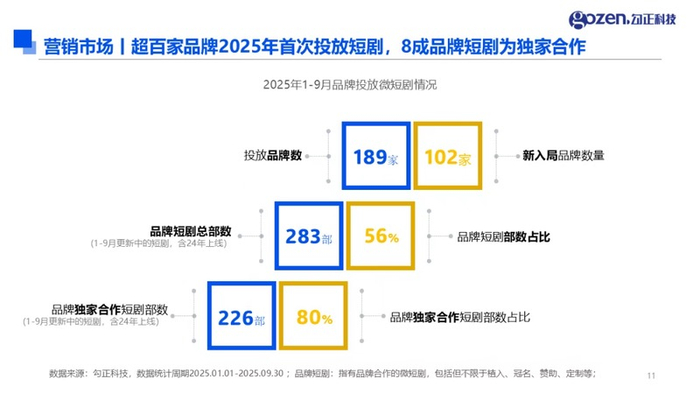
Core Viewpoint - The rise of short dramas in China has attracted multiple MCNs (Multi-Channel Networks) to enter the market, leveraging their understanding of user preferences and content marketing strategies to enhance brand engagement and drive sales during promotional events like Double Eleven [1][2][4]. Group 1: Market Trends and Growth - The short drama market in China is projected to exceed 63.4 billion yuan by 2025, with a user coverage rate of 68.4% [1]. - The number of institutions entering the short drama space is expected to grow explosively from the second half of 2023 to early 2024, driven by increased user acceptance [1][2]. - Major brands like McDonald's, Starbucks, and KFC have already begun utilizing short dramas as part of their marketing strategies, indicating a rising trend in consumer engagement [1]. Group 2: MCN Strategies and Operations - MCNs are leveraging their advertising capabilities and insights into consumer preferences to produce short dramas, which serve as a new marketing avenue beyond traditional live-streaming [2][4]. - The production of short dramas is primarily handled by dedicated content marketing and video teams within MCNs, which have previously developed successful IP projects [2]. - MCNs are cautious in their investment in short dramas, often opting for collaborative production models to manage costs effectively [6]. Group 3: Audience Engagement and Content Development - Interactive projects like "Who Acts, You Decide" have been introduced to enhance engagement between short drama content and live-streaming audiences, achieving a content match rate of over 70% with target demographics [5]. - The integration of short dramas into live-streaming platforms is seen as a way to increase user participation and enhance brand visibility prior to product launches [5]. Group 4: Competitive Landscape and Challenges - The entry of various content institutions, including traditional film and television companies, has intensified competition in the short drama market [10]. - Many MCNs have paused their independent short drama operations or expansion efforts, indicating challenges in establishing sustainable business models [9]. - The success of short dramas is influenced by various factors such as themes, actors, and release timing, which may be better managed by specialized production companies [10].
“星探”终于探到中老年了
3 6 Ke· 2025-11-17 08:36
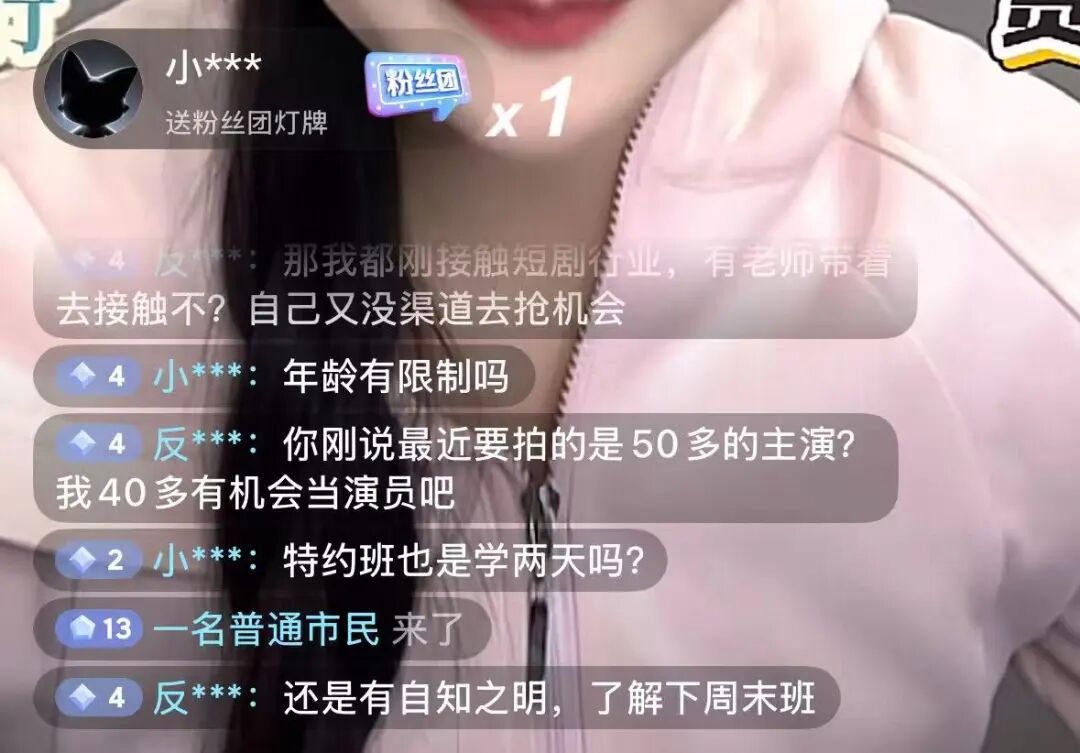
Core Viewpoint - The article discusses the emerging trend of middle-aged and elderly individuals pursuing careers as short drama actors, highlighting both the legitimate training opportunities and the potential for exploitation within this burgeoning market [1][4][25]. Group 1: Industry Overview - The short drama training industry for middle-aged and elderly individuals is rapidly growing, with numerous training institutions and film bases emerging to cater to this demographic [3][9]. - The average age of trainees is around 45, with some participants being as old as 63, indicating a significant interest among older adults in acting [6][11]. - The industry is characterized by a mix of legitimate training programs and potential scams, with some companies charging exorbitant fees without providing real opportunities for acting [4][25]. Group 2: Business Model and Practices - Training programs often categorize courses into different levels, with fees increasing accordingly, and the definition of "excellent students" is somewhat subjective, often tied to the amount of money spent [6][8]. - Companies claim to provide real acting opportunities, with some students reportedly earning between 3,000 to 5,000 yuan per day for acting roles, although the actual demand for elderly actors may be limited [9][11]. - The training institutions often collaborate with local film bases, allowing them to place students in roles, albeit sometimes as background actors rather than leading roles [8][20]. Group 3: Psychological and Social Factors - Many older adults are motivated by a desire for recognition and a sense of purpose, seeking to re-establish their value in society through acting [19][21]. - The content of the short dramas often reflects the life experiences and desires of the elderly, with themes centered around family and societal values rather than revenge or personal success [19][20]. - The article suggests that the trend of older individuals pursuing acting is not merely a financial endeavor but also a means of emotional expression and social engagement [20][26]. Group 4: Market Dynamics and Future Prospects - The market for elderly actors is expanding beyond traditional film hubs, with cities like Hangzhou and Chengdu developing their own short drama filming bases [21][25]. - There is a growing trend of older individuals not only acting but also writing scripts and investing in content, indicating a shift towards a more participatory role in the entertainment industry [25][26]. - The article raises concerns about the sustainability of this market, questioning whether it will lead to genuine opportunities or merely serve as a vehicle for exploitation [26].
小鱼盈通(00139.HK)近期运用AIGC技术制作生成了五部短剧
Ge Long Hui· 2025-10-21 11:39
Core Viewpoint - The company has made significant advancements in AIGC technology, demonstrating its capabilities in script creation, dialogue dubbing, and special effects synthesis, which have led to substantial cost and time savings in short drama production [1] Group 1: AIGC Technology Implementation - The company has successfully produced five short dramas using AIGC technology, showcasing its practical application in content creation [1] - The average production cost of each short drama has been reduced by approximately 50% compared to traditional live-action filming [1] - The production cycle has been shortened by about two-thirds, indicating a significant efficiency improvement [1] Group 2: Future Strategy and Impact - The board believes that AIGC technology will have a revolutionary impact on cost reduction and efficiency enhancement in the short drama industry [1] - The company plans to continue promoting the integration of technological innovation with content creation, increasing R&D investment in AIGC [1] - The goal is to cultivate core competitiveness and provide users with richer and more creative content experiences, ultimately creating long-term value for shareholders [1]