
矿产行业

Search documents
100%关税,卡尼不忍了,公然叫嚣特朗普:加拿大从此不买美国货!
Sou Hu Cai Jing· 2026-01-27 05:08
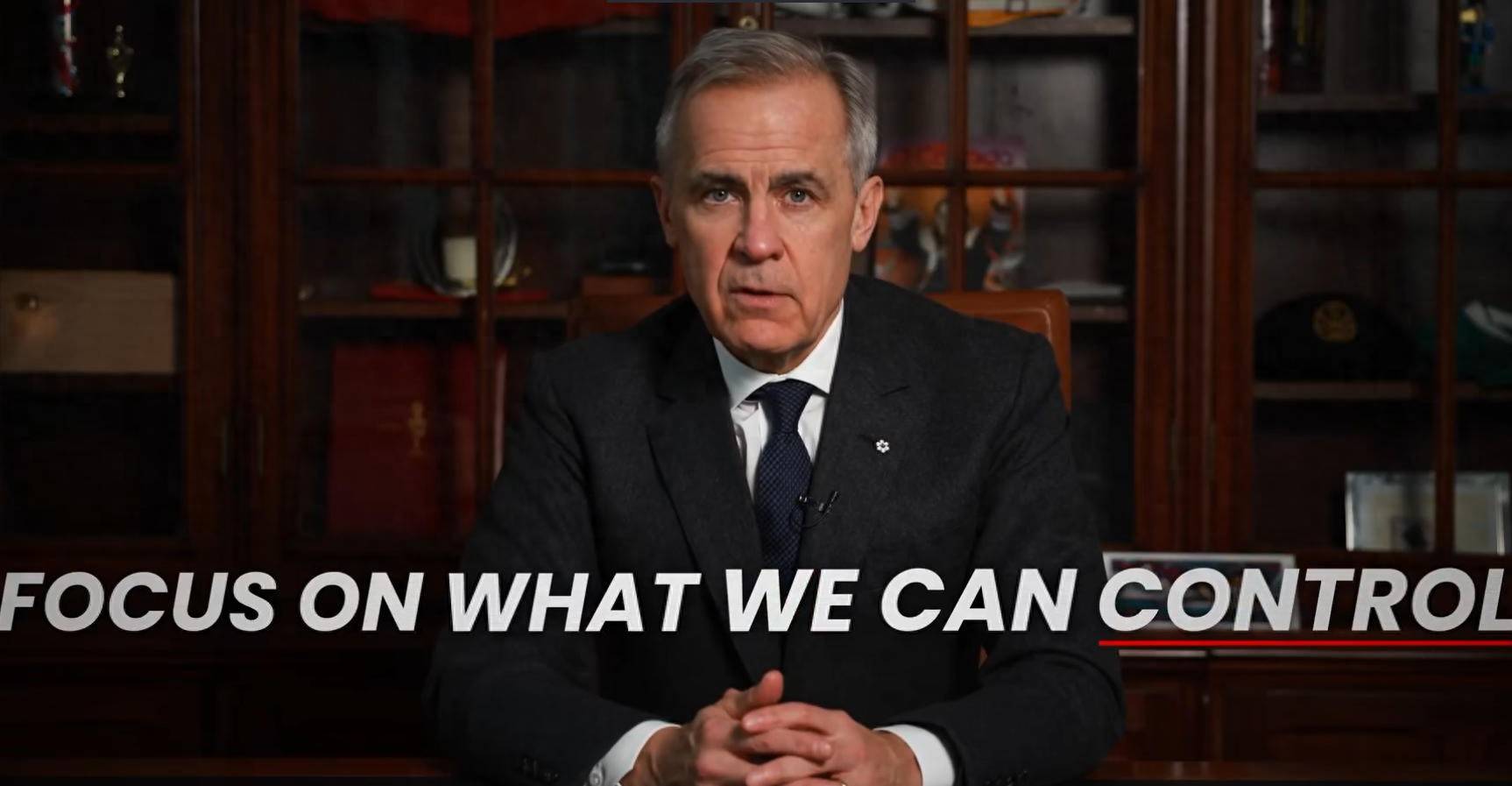
Group 1 - Canada has taken a bold stance against the U.S., with Prime Minister Carney openly criticizing American hegemony and urging citizens to avoid buying American goods [1][2] - A significant five-year critical mineral supply agreement was signed, involving lithium, cobalt, and nickel, which are essential for industries in Detroit and Silicon Valley [1][2] - The second agreement allows for direct currency settlement between Canada and China, bypassing the U.S. dollar, which poses a challenge to U.S. financial dominance [2][10] Group 2 - Carney's repeated emphasis on Canada as a "middle power" during his speech at Davos signifies a strategic shift in Canada's foreign policy, positioning itself as an independent player rather than a subordinate ally [4][12] - The language used by Carney reflects a fracture in the narrative of Western leadership, suggesting that Canada is no longer bound to the U.S. and can choose its partners based on issues rather than ideology [6][12] - The potential for other nations, such as Japan and South Korea, to reassess their loyalty to the U.S. in light of Canada's actions indicates a broader shift in global alliances [8][10] Group 3 - The agreements signify a move towards a transactional relationship among nations, where loyalty is no longer guaranteed and can be negotiated [8][12] - Carney's actions and the growing anti-American sentiment in Canada, with 64% of the public expressing negative views towards the U.S., provide a strong foundation for this new approach [10][12] - The implications of these developments suggest that the era of unquestioned U.S. dominance may be coming to an end, as other nations explore alternatives to American influence [12][14]

澳大利亚称在关键矿产战略储备中优先考虑锑镓和稀土元素
Xin Lang Cai Jing· 2026-01-12 04:42
Core Viewpoint - Australia prioritizes antimony, gallium, and rare earth elements as part of its AUD 1.2 billion (approximately USD 802 million) critical minerals strategy reserve, announced ahead of the G7 meeting to discuss key minerals [1][5]. Group 1: Strategic Importance - Australia is a leading producer of critical minerals and is developing strategic reserves to mitigate supply chain vulnerabilities [6]. - The Australian Treasurer, Chalmers, stated that the world needs important mineral resources, and Australia possesses abundant mineral resources that will help counter global economic uncertainties and promote trade and investment [6]. Group 2: Focused Minerals - The initial focus of the mineral reserve will be on minerals crucial for clean energy, high-tech manufacturing, and advanced military equipment [6]. Group 3: Legislative and Institutional Framework - Australia plans to legislate to expand the powers of its Export Finance Agency (EFA) and the Department of Industry, which will oversee transactions related to the reserves [6]. - The reserve plan is set to launch in mid-2026 and will be operational by the end of that year [7]. Group 4: Contract Management - The EFA will enable fixed or floating price purchase agreements to be traded in forward contracts, which are set for future physical supply delivery [8]. - The EFA will also manage purchase agreements, intermediate demand and supply aggregation, as well as inventory and contracts for difference [8]. - Contracts for difference are tools that help manage price risks from the start of the contract to delivery [4].
物价高烧不退?白宫暗示:将对食品关税“动刀”
Jin Shi Shu Ju· 2025-11-13 02:24
Core Insights - The Biden administration is under pressure to address a cost-of-living crisis affecting millions of Americans, with potential adjustments to grocery tariffs being considered to lower prices [1] - The National Economic Council Chairman Kevin Hassett indicated that discussions are ongoing regarding food tariff adjustments, suggesting more changes may follow [1] - Former President Trump plans to make a significant announcement aimed at stabilizing food prices, including items like coffee and bananas [1] Group 1 - The inflation rate is currently at 3%, which Hassett believes is moving in the right direction, but acknowledges that grocery prices have continued to rise during Trump's presidency [2] - Typical monthly grocery spending for a family increased from approximately $400 when Trump left office to about $512 currently, indicating a significant rise in food costs [2] - Trump's imposition of large tariffs on most trade partners raised the average tariff level in the U.S. to its highest point since World War II [2] Group 2 - The U.S. has granted exemptions from retaliatory tariffs for certain industries like chips, pharmaceuticals, and critical minerals, while investigations are ongoing that may lead to future tariffs [2] - Many countries are seeking limited agreements with the U.S. to reduce some of the tariffs imposed by Trump, but the government maintains a baseline tariff of at least 10% on nearly all trade partners [2]
美澳签署关键矿产协议目的是针对中国?外交部回应
Huan Qiu Shi Bao· 2025-10-21 14:35
Core Viewpoint - The recent mineral agreement signed between Trump and Australian Prime Minister Albanese is perceived as a strategic move aimed at countering China, highlighting geopolitical tensions in the mineral supply chain [1]. Group 1: Geopolitical Context - The agreement is part of a broader strategy to secure critical mineral resources, which are essential for various industries and technologies [1]. - The Chinese government emphasizes that the formation of global supply chains is a result of market and enterprise choices, indicating a push for stability in trade relations [1]. Group 2: Industry Implications - Key mineral resource countries are urged to play a proactive role in ensuring the security and stability of industrial and supply chains, which may influence future trade dynamics [1]. - The focus on normalizing economic and trade cooperation suggests potential shifts in how countries engage in resource management and trade agreements [1].
【财经分析】6月中国大宗商品价格指数为110.8点 化工有色等稳中有进
Zhong Guo Jin Rong Xin Xi Wang· 2025-07-05 02:38
Core Insights - The China Commodity Price Index (CBPI) for June 2025 is reported at 110.8 points, reflecting a month-on-month increase of 0.5% but a year-on-year decrease of 5.2% [1][3] - The index has shown a moderate recovery over the past two months, indicating a stable overall operation in the commodity market, supported by positive signals from US-China trade talks and enhanced domestic counter-cyclical policies [1][3] Commodity Price Index Summary - **Overall Index**: CBPI at 110.8 points, up 0.5% month-on-month, down 5.2% year-on-year [1][3] - **Energy Price Index**: 97.3 points, up 1.0% month-on-month, down 12.9% year-on-year [3][7] - **Chemical Price Index**: 104.3 points, up 1.4% month-on-month, down 12.6% year-on-year [3][6] - **Black Metal Price Index**: 76.6 points, down 2.6% month-on-month, down 11.8% year-on-year [3][8] - **Non-Ferrous Metal Price Index**: 128.8 points, up 0.8% month-on-month, down 2.0% year-on-year [3][6] - **Mineral Price Index**: 73.6 points, down 2.6% month-on-month, down 11.9% year-on-year [3][8] - **Agricultural Product Price Index**: 98.1 points, down 0.2% month-on-month, up 2.2% year-on-year [3][7] Price Changes of Key Commodities - **Methanol**: Price increased by 7.8% month-on-month [4][6] - **Diesel**: Price increased by 5.4% month-on-month [4][7] - **Xylene**: Price increased by 5.0% month-on-month [4][6] - **Natural Rubber**: Price decreased by 6.9% month-on-month [6][7] - **Coke**: Price decreased by 10.5% month-on-month [5][7] Market Analysis - The chemical price index's rise is attributed to increasing international oil prices, which have pushed up the prices of chemical fibers and basic chemicals [6] - The non-ferrous metal price index's increase is linked to a weaker US dollar, which has positively impacted the prices of metals priced in dollars [6] - The energy price index's rebound is primarily due to rising international crude oil prices, which have strengthened the cost support for products like gasoline and diesel [7] - The black metal price index's decline is driven by falling costs of raw materials like coke and iron ore, coupled with insufficient downstream demand [8]

乌最高拉达批准预算法修正案 以落实美乌矿产协议
news flash· 2025-06-04 09:07
Core Points - The Ukrainian Parliament has approved a budget amendment to implement a mineral agreement with the United States [1] - The funds from this agreement will be allocated to a reconstruction special fund within the Ukrainian national budget [1] - The agreement, referred to as the "U.S.-Ukraine Mineral Agreement," was signed by both parties on April 30, establishing the U.S.-Ukraine Reconstruction Investment Fund [1]