关键矿产战略储备

Search documents
美国急建“去中国”关键矿产体系,日媒:至少面临长达十年的艰巨挑战
Xin Lang Cai Jing· 2026-02-18 01:53
Core Viewpoint - The United States is attempting to reduce its dependence on China in the critical minerals sector through significant investments, strategic reserves, and supply chain restructuring, but faces a challenging reality that may take up to a decade to overcome [1][4]. Group 1: U.S. Initiatives - The U.S. government has launched a $12 billion strategic reserve plan for critical minerals and is forming a "critical minerals trade alliance" to exclude China [1]. - The Biden administration has committed over $30 billion in investments and loans to the private sector in the past six months for critical minerals [1][3]. - The "Project Vault" initiative aims to establish a strategic reserve with $10 billion in loans from the Export-Import Bank and nearly $2 billion in private sector investments [3]. Group 2: Challenges and Limitations - Experts warn that the U.S. measures may not adequately address short-term supply shocks, as replacing Chinese suppliers quickly is highly challenging [3][4]. - China controls 60% of global rare earth mining and 90% of refining capacity, making it difficult for the U.S. to achieve self-sufficiency in the near term [4][8]. - The average time from discovering a mine to operational status is about 16 years, complicating the U.S. efforts to ramp up domestic production [7]. Group 3: Market Dynamics - The "Project Vault" may only cover 45 days of demand for 44 critical minerals, raising concerns about its effectiveness [4][5]. - The U.S. government's transparency regarding its budget and plans may weaken its bargaining power, potentially increasing procurement costs [5]. - The U.S. has invested in several mining companies, including MP Materials, which operates the only rare earth mine in the U.S. [5][8]. Group 4: Long-term Outlook - Analysts suggest that it may take years for the U.S. to build sufficient rare earth supplies, and by then, China's need for export controls may diminish [4][10]. - A more promising alternative could be investing in new technologies to enhance refining and processing capabilities, which have shown potential for innovation [8][9]. - Japan's experience shows that even with over a decade of investment, reducing dependence on China in critical minerals is a long-term challenge [10].

橡胶:引发商品大涨的原因仍会持续吗?
Wu Kuang Qi Huo· 2026-02-10 01:03
Report Summary 1. Industry Investment Rating No industry investment rating is provided in the report. 2. Core Viewpoint The macro - factors that triggered the sharp rise in commodities are likely to continue in the next stage. Rubber, which has not experienced a significant increase for many years, is an elastic variety for long - position trading. However, in the first and second quarters, rubber prices are still more likely to fall than rise, and a hedging arbitrage of buying NR and selling RU may be relatively stable. After the third quarter, if there are supply disruptions and positive demand expectations, long positions can be considered [1][35][42]. 3. Summary by Relevant Catalogs 3.1 US Actions and Global Reactions - **US Actions on Canada and Greenland** - **Canada**: The US made controversial remarks and threats on issues such as sovereignty, aircraft licensing, and trade agreements. Canada responded by selling US Treasury bonds, with the Bank of Canada selling $56.7 billion in October 2025, and some institutions reducing their US dollar and US Treasury bond holdings [5][6]. - **Greenland**: The US repeatedly expressed its desire to obtain Greenland, and the Trump administration continued to pressure Denmark and Greenland through negotiation or coercion, and strengthened military deployment in the Arctic [7][8]. - **NATO Reactions**: Western European and Nordic countries gradually reduced their US Treasury bond holdings from August 2025 to February 2026, which led to fluctuations in the 10 - year US Treasury bond yield and the US dollar index [9][10][14]. - **US Actions in South America** - **Venezuela**: The US imposed a full - scale economic blockade and sent special forces to control President Maduro. This increased market concerns about supply disruptions and raised the willingness to allocate key South American commodities such as copper, lithium, silver, and oil [21]. - **Cuba**: The US re - listed Cuba as a "state sponsor of terrorism", strengthened economic sanctions and military deterrence [22][23]. - **Other South American Countries**: The US had various actions and demands on countries like Colombia, Brazil, Argentina, and Peru, and announced the "America Prosperity Partnership" plan to strengthen economic ties and counter China's influence [24][25]. - **US Actions on Iran** - The US made threats against Iran, deployed military forces in the Middle East, and exposed three types of combat options against Iran, which pushed up the market's expectation of rising crude oil prices [29][30]. 3.2 Key Mineral Reserves - **US**: In February 2026, the US announced the "Project Vault", a national - level strategic reserve project for key minerals with a total scale of $12 billion, aiming to ensure the supply of key minerals for strategic industries [31]. - **China**: China is considering including copper concentrates in the national reserve, expanding the strategic reserve of refined copper, and exploring a commercial reserve mechanism to build a dual - drive copper resource security system [31]. - **Rubber**: As an important strategic material, rubber is officially reserved in the US and the EU. China is the world's largest consumer of natural rubber, about 80% of which is imported, and the market expectation of rubber reserve is rising [32][34]. 3.3 Rubber Fundamentals - **ANRPC Countries**: In December 2025, the rubber production of ANRPC countries was 1,127,800 tons, a year - on - year decrease of 12.46% and a month - on - month decrease of 3.72%. Exports were 889,400 tons, a year - on - year decrease of 9.96% and a month - on - month increase of 8.76%. Consumption was 956,300 tons, a year - on - year increase of 1.22% and a month - on - month decrease of 0.17% [37][39][40]. - **Non - ANRPC Countries**: The natural rubber exports of Cote d'Ivoire in 2025 increased by 12.4% year - on - year, and Laos' exports to China increased by 52.06% year - on - year. The annual marginal increase in non - ANRPC supply was about 310,000 tons. The global rubber supply increased by 130,000 tons, with an annual supply of 1,473 million tons, a growth of 0.89%, showing a balanced supply - demand situation [41]. 3.4 Outlook on Rubber Prices - In the first and second quarters, rubber prices are more likely to fall than rise, and a hedging arbitrage of buying NR and selling RU may be relatively stable. - After the third quarter, with the seasonal rise in rubber prices, long positions can be considered if there are supply disruptions and positive demand expectations [44].
金属行业周报:钽铟钨铼加速上涨,等降波加仓-20260208
CMS· 2026-02-08 10:42
Investment Rating - The report maintains a long-term positive outlook on non-ferrous resource stocks and suggests increasing positions during market corrections [1] Core Insights - The U.S. has initiated a strategic reserve plan for critical minerals, indicating a strong intent for resource protection [1] - The report highlights a significant decline in leading stocks, approximately 20%, presenting a rare opportunity for accumulation [1] - Focus is directed towards small metals such as tantalum, indium, tungsten, and rhenium, alongside a mid-to-long-term interest in gold, silver, copper, aluminum, rare earths, tungsten, uranium, tantalum, lithium, cobalt, magnesium, and nickel [1] Industry Overview - The report notes that the domestic inventory of electrolytic aluminum ingots reached 836,000 tons, an increase of 54,000 tons month-on-month, as downstream sectors enter a traditional off-season [2] - The aluminum price fluctuated between 23,000 to 24,000 yuan/ton, with expectations of price pressure if inventory continues to rise [2] - The report emphasizes the importance of monitoring the inventory levels of aluminum post-Spring Festival, as sustained increases could impact prices [2] Performance Metrics - The non-ferrous metal industry index experienced a decline of 8.51%, ranking 31st among sectors [3] - The report indicates a significant performance disparity among sub-sectors, with energy metals showing a slight increase of 0.02%, while industrial metals faced a decline of 17.38% [3] - The report highlights the best-performing stock, Western Materials, with a weekly increase of 12.19%, and the worst performer, Hunan Silver, with a decline of 32.56% [3] Price Movements - Tungsten prices surged by 13.53% due to tight supply and increased demand from downstream steel enterprises [3] - Silver prices dropped by 32.47%, attributed to profit-taking after a previous increase of over 60% [3] - The report anticipates continued upward pressure on copper prices, supported by increased procurement interest at the 100,000 yuan price level [3][4] Small Metals Focus - Lithium prices are expected to face further declines, but a tight balance or slight deficit is anticipated in 2026, which may support price recovery [6] - Tungsten prices are projected to maintain a long-term upward trend, with a focus on companies like China Tungsten High-Tech and Xiamen Tungsten [6] - Nickel prices are under short-term pressure, but potential supply constraints from Indonesia may provide medium to long-term support [4][6]


有色金属周报 20260208:情绪趋稳,商品价格筑底
Guolian Minsheng Securities· 2026-02-08 10:30
Investment Rating - The report maintains a "Buy" rating for all key companies listed, including Zijin Mining, Luoyang Molybdenum, and Huayou Cobalt, among others [2][3]. Core Views - The report indicates that the sentiment in the non-ferrous metals sector is stabilizing, with commodity prices forming a bottom [1]. - Industrial metal prices are experiencing fluctuations due to seasonal supply excess and macroeconomic factors, while energy metals like cobalt and nickel are expected to see price increases due to supply constraints [7][21][41][59]. - Precious metals are undergoing a significant price correction, but long-term support remains strong due to central bank purchases and geopolitical uncertainties [7][75]. Summary by Sections Industry and Stock Performance - The report highlights a decline in major indices, with the SW Non-ferrous Index dropping by 4.68% during the week [7]. - Key companies are recommended based on their earnings forecasts and valuations, with all listed companies receiving a "Buy" rating [2]. Base Metals - **Aluminum**: Prices have stabilized after a period of volatility, with LME aluminum prices at $3,110 per ton, down 0.81% week-on-week [13][21]. - **Copper**: The price remains under pressure due to macroeconomic factors, with a current price of $13,060 per ton, down 0.08% [13][41]. - **Zinc**: Prices are fluctuating, with LME zinc at $3,287.5 per ton, down 2.45% [13][47]. - **Lead and Tin**: Lead prices are under pressure, currently at $1,948.5 per ton, while tin prices are experiencing a downward trend due to seasonal demand [58][59]. Precious Metals and Minor Metals - **Gold and Silver**: Gold prices are at 1,110.73 CNY per gram, down 0.34%, while silver is at 25,465 CNY per kilogram, down 9.98% [75]. - **Cobalt**: The market is facing supply constraints, with prices expected to rise due to ongoing shortages [89]. Rare Earths - The report does not provide specific updates on rare earths but indicates ongoing interest in the sector due to its strategic importance [9].




有色金属周报 20260208:情绪趋稳,商品价格筑底-20260208
Guolian Minsheng Securities· 2026-02-08 07:18
Investment Rating - The report maintains a "Buy" rating for all key companies listed, including Zijin Mining, Luoyang Molybdenum, and Huayou Cobalt, among others [2][3]. Core Insights - The report indicates a stabilization in market sentiment, with commodity prices finding a bottom. Industrial metal prices have shown fluctuations, with copper and aluminum facing downward pressure due to macroeconomic factors and seasonal supply excess [7][21][41]. - The report highlights the ongoing supply constraints in cobalt and nickel, with expectations for price increases in these metals. Conversely, lithium prices are on a downward trend due to market dynamics [7][41][60]. - The precious metals market is experiencing a significant pullback, primarily driven by technical factors and profit-taking, but long-term support remains strong due to central bank purchases and geopolitical uncertainties [7][75]. Summary by Sections 1. Industry and Stock Performance - The report notes a decline in major indices, with the SW Nonferrous Index dropping by 4.68% during the week [7]. - Key companies such as Zijin Mining and Luoyang Molybdenum are highlighted for their strong earnings forecasts and attractive valuations [2]. 2. Base Metals 2.1 Price and Stock Correlation Review - The report provides a detailed analysis of the price movements of various base metals, including aluminum, copper, zinc, lead, nickel, and tin, with specific price changes noted for each metal [13][21]. 2.2 Industrial Metals - Aluminum prices have shown a slight decline, with LME prices at $3,110 per ton, down 0.81% week-on-week. Copper prices are at $13,060 per ton, down 0.08% [13][21]. - The report emphasizes the seasonal supply excess impacting copper demand, particularly as the Chinese New Year approaches [41]. 2.3 Lead, Tin, Nickel - Lead prices have decreased to $1,948.5 per ton, while nickel prices have faced significant pressure, dropping below $17,000 per ton due to macroeconomic sentiment shifts [58][60]. 3. Precious Metals and Minor Metals 3.1 Precious Metals - Gold prices have decreased to an average of 1,110.73 CNY per gram, while silver prices have dropped to 25,465 CNY per kilogram, reflecting a broader market correction [75]. 3.2 Energy Metals - Cobalt prices are under pressure but are expected to stabilize due to ongoing supply constraints. The report notes that the current market price for cobalt is around 415,000 CNY per ton [60].
新浪财经资讯AI速递:昨夜今晨财经热点一览 丨2026年2月6日
Xin Lang Cai Jing· 2026-02-06 04:07
Group 1 - The U.S. government has launched a $12 billion "Treasury Plan" aimed at establishing a strategic reserve of critical minerals in collaboration with companies like General Motors and Boeing to mitigate supply chain risks and reduce dependence on China [1][7] - Bitcoin has fallen below $70,000, marking a new low since October 2024, driven by forced liquidations of leveraged positions and increased market risk aversion [1][7] - Global gold ETFs saw a record inflow of $19 billion in January 2026, raising total assets under management to $669 billion, with North America and Asia being the primary demand drivers [1][7] Group 2 - Zhang Yidong has joined Guotai Junan as the head of the International Securities Stock Research Department and Chief Economist, focusing on expanding overseas business and capital markets [2][8] - Mixue Ice Cream is planning to enter the theme park business, targeting a market similar to Disney and Universal Studios, leveraging its strong supply chain and significant liquidity of over 17.6 billion yuan [3][9] - Emperor Entertainment has sold a 79 kg gold brick embedded in its hotel lobby for approximately HKD 99.7 million, aiming to capitalize on high gold prices and improve financial conditions [4][10] Group 3 - GlaxoSmithKline reported a revenue of £32.667 billion for 2025, a 7% year-on-year increase, with strong performance in its HIV drug segment and a significant rise in sales of its PD-1 drug Jemperli [4][10] - Jilin Province has initiated a special investigation into 48 drugs with hospital prices significantly higher than retail prices, including emergency medication, to address price discrepancies [5][11] - The actual controller of Beiliqingsong is under investigation for alleged market manipulation, but the company asserts that operations remain unaffected [6][12] Group 4 - UBS's Chief Economist has stated that stocks are currently the most advantageous asset class, predicting a 10% increase in the U.S. stock market and around 8% growth in European and Japanese markets by 2026 [6][13]
有色金属月度策略-20260204
Fang Zheng Zhong Qi Qi Huo· 2026-02-04 05:37
1. Report Industry Investment Rating No information provided in the content. 2. Core Views of the Report - The non - ferrous metals sector experienced a sharp decline and then a partial recovery. After a period of rapid rise in non - ferrous precious metals, the profit - taking pressure increased. The nomination of Fed Chairman candidate Wash and the geopolitical situation in Iran led to a strong rebound in the US dollar, triggering profit - taking in the market. However, as market sentiment was digested, the leading non - ferrous metals showed resistance, driving the sector to repair and consolidate [12][13]. - After significant adjustments, the non - ferrous metals sector is expected to see opportunities for long - position entry based on the strength of fundamentals after the adjustment pressure is fully released. Traders still need to pay attention to the pressure release from the precious metals sector, the sustainability of the US dollar's rebound, and geopolitical changes [13]. 3. Summary by Relevant Catalogs 3.1 First Part: Non - ferrous Metals Operating Logic and Investment Recommendations - **Macro Logic**: The non - ferrous metals sector adjusted rapidly after a sharp rise. The nomination of Wash led to a rebound in the US dollar. Economic data in the US and the eurozone showed certain characteristics, such as the US 12 - month PPI exceeding expectations and the eurozone's Q4 GDP growth being higher than expected. Trump planned a $12 billion investment in strategic mineral reserves. After the adjustment, as the market sentiment was digested, the sector showed signs of recovery [12]. - **Non - ferrous Metals Strategy**: - **Copper**: Affected by the sharp decline in the gold and silver markets, copper prices initially fell but rebounded in the afternoon. Trump's plan for a strategic mineral reserve may bring a premium to copper. The rise in copper prices in January was mainly due to valuation repair, and the fundamentals had limited positive effects. The Fed's policy and the long - term downward trend of the US dollar index are favorable for copper. In the short - term, the supply of copper concentrates is tight globally, but the domestic supply is still abundant. The demand is in a seasonal off - peak, and inventories are expected to increase. It is recommended to gradually go long on copper at low prices, with a short - term upper pressure range of 108,000 - 110,000 yuan/ton and a lower support range of 98,000 - 99,000 yuan/ton [3][14][15]. - **Zinc**: The decline in zinc prices converged. The geopolitical situation in Iran and the low inventory of LME zinc supported the external market. The domestic mine TC was stable, and imports slightly decreased. Downstream demand was weak, and inventories were likely to accumulate. It is recommended to consider going long on zinc at low prices if it stabilizes, with a short - term support range of 24,000 - 24,300 and a pressure range of 25,000 - 25,500 [4][15]. - **Aluminum Industry Chain**: Copper's rebound slightly improved the sentiment in the non - ferrous metals sector. For aluminum, it is recommended to wait and see or go long at low prices, with an upper pressure range of 26,000 - 27,000 and a lower support range of 22,000 - 23,000. For alumina, it is recommended to wait and see, with an upper pressure range of 2,900 - 3,000 and a lower support range of 2,300 - 2,600. For recycled aluminum alloys, it is recommended to wait and see, with an upper pressure range of 24,000 - 26,000 and a lower support range of 21,000 - 21,500 [5][15]. - **Tin**: The weak performance of the tin market improved, and it is expected to stabilize. It is recommended to wait and see, with an upper pressure range of 450,000 - 460,000 and a lower support range of 330,000 - 350,000 [6][7][15]. - **Lead**: The decline in non - ferrous metals slowed down. The supply and demand of lead were in a state of increasing supply and weak demand. It is expected to maintain a volatile pattern and weaken temporarily. It is recommended to go long on lead at low prices if the adjustment pressure in the sector is further alleviated, with a short - term support range of 16,400 - 16,600 and an upper pressure range of 17,000 - 17,300 [8][16]. - **Nickel and Stainless Steel**: The decline in non - ferrous metals slowed down. The US Treasury's inventory plan for nickel and the expected adjustment of Indonesia's nickel ore quota affected the market. The cost of nickel products increased, and the inventory of LME nickel was above 280,000 tons. It is recommended to go long on nickel and stainless steel at low prices after the adjustment is sufficient. For nickel, the upper pressure range is 138,000 - 140,000 yuan, and the lower support range is 125,000 - 128,000 yuan. For stainless steel, the upper pressure range is 13,800 - 14,000, and the lower support range is 13,000 - 13,400 [9][16]. 3.2 Second Part: Non - ferrous Metals Market Review The closing prices and price changes of various non - ferrous metal futures were presented, such as copper closing at 104,500 with a 6.01% increase, zinc closing at 24,960 with a 1.82% increase, etc. [17] 3.3 Third Part: Non - ferrous Metals Position Analysis The latest position analysis of the non - ferrous metals sector was provided, including the price changes, net long - short strength comparison, net long - short position differences, changes in net long and net short positions, and influencing factors of various varieties [21] 3.4 Fourth Part: Non - ferrous Metals Spot Market The spot prices and price changes of various non - ferrous metals were listed, such as the Yangtze River Non - ferrous copper spot price at 101,420 yuan/ton with a 0.27% increase, and the Yangtze River Non - ferrous 0 zinc spot average price at 25,050 yuan/ton with a 0.44% increase [22] 3.5 Fifth Part: Non - ferrous Metals Industry Chain Graphs related to the industry chain of various non - ferrous metals were provided, including copper, zinc, aluminum, alumina, tin, lead, nickel, and stainless steel, such as the change in copper inventory in exchanges and the change in zinc concentrate processing fees [24][25] 3.6 Sixth Part: Non - ferrous Metals Arbitrage Graphs related to the arbitrage of various non - ferrous metals were provided, such as the change in the copper Shanghai - London ratio and the change in the zinc Shanghai - London ratio [49][52] 3.7 Seventh Part: Non - ferrous Metals Options Graphs related to the options of various non - ferrous metals were provided, such as the historical volatility of copper options and the weighted implied volatility of zinc options [68][70]
特朗普要对稀土等关键矿产发力了
Xin Lang Cai Jing· 2026-02-04 05:07
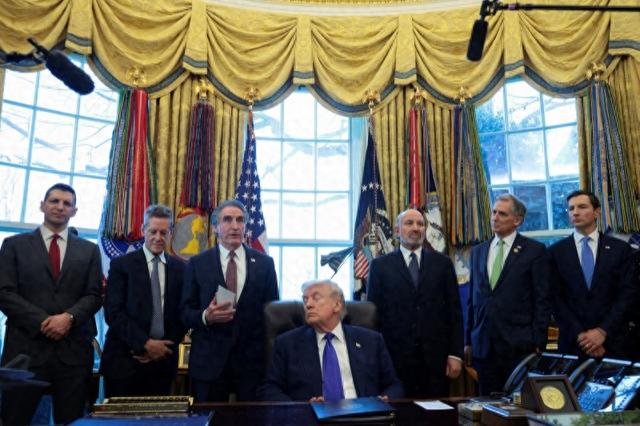
Core Viewpoint - The U.S. government, under President Trump, is launching a $12 billion "Critical Minerals Strategic Reserve" project, named the "Vault Plan," to stockpile essential minerals like rare earths, gallium, and cobalt for American manufacturing [1] Group 1: Project Details - The project aims to integrate $2 billion in private capital with $10 billion in loans from the U.S. Export-Import Bank to create a centralized procurement and storage system for critical minerals [1] - Participating companies include major players in American manufacturing such as General Motors, Boeing, and Google, indicating the project's significance to the U.S. industrial base [1] Group 2: Strategic Context - The urgency of the project stems from past supply chain vulnerabilities exposed by China's export controls on rare earths, which impacted the U.S. during the trade war [1] - The "Vault Plan" is part of a broader strategy where the U.S. is investing heavily in domestic rare earth companies and seeking to build alliances with G7 nations to create a "mineral club" that excludes China [1] Group 3: Challenges and Expert Opinions - Experts suggest that rebuilding a secure and independent rare earth supply chain could take 10 to 20 years, indicating that the current efforts may not yield immediate results [1] - The focus on financial investment in mining may overlook critical technological and production capacity challenges that cannot be resolved solely through funding [1]
铂钯数据日报-20260204
Guo Mao Qi Huo· 2026-02-04 03:20
Group 1: Report Industry Investment Rating - Not provided Group 2: Core View of the Report - On February 3, platinum and palladium prices rebounded overall. The PT2606 contract closed up 3.54% to 572.95 yuan/gram, and the PD2606 contract closed up 8.62% to 450.5 yuan/gram. The market sell - off has temporarily ended, and the sentiment repair supports palladium. Trump's plan for a $12 billion critical minerals strategic reserve and the EU's consideration of new sanctions on Russian platinum exports are beneficial to platinum and palladium prices, especially palladium. In the short - term, platinum and palladium prices may run strongly in a wide range, and palladium may perform better than platinum. In the long - term, the supply - demand prospects of platinum and palladium are different, with a supply gap for platinum and a trend towards looser supply. The strategy suggests unilateral low - level allocation or the "long platinum, short palladium" arbitrage strategy [6]. Group 3: Summary According to the Directory Domestic Price (yuan/gram) - Platinum futures main contract closing price: 572.95, up 3.77% from the previous value of 552.15 [4] - Platinum spot price (99.95%): 548, down 0.45% from the previous value of 550.5 [4] - Platinum basis (spot - futures): - 24.95, up 1412.12% from the previous value of - 1.65 [4] - Palladium futures main contract closing price: 450.55, up 8.91% from the previous value of 413.7 [4] - Palladium spot price (99.95%): 439, up 1.62% from the previous value of 432 [4] - Palladium basis (spot - futures): - 11.55, down 163.11% from the previous value of 18.3 [4] International Price (15:00, dollars/ounce) - London spot platinum: 2199.613, up 13.68% from the previous value of 1934.9 [4] - London spot palladium: 1786.257, up 10.81% from the previous value of 1612.038 [4] - NYMEX platinum: 2194.9, up 14.34% from the previous value of 1919.7 [4] - NYMEX palladium: 1786, up 13.58% from the previous value of 1572.5 [4] Internal - External 15:00 Spread (yuan/gram) - Dollar/renminbi central parity rate: 6.9608, down 0.12% from the previous value of 6.9695 [4] - Guangzhou platinum - London platinum spread: 16.69, down 73.17% from the previous value of 62.23 [4] - Guangzhou platinum - NYMEX platinum spread: 17.89, down 72.93% from the previous value of 66.07 [4] Ratios - Guangzhou Futures Exchange platinum/palladium ratio: 1.2717, down 0.0630 from the previous value of 1.3347 [5] - London spot platinum/palladium ratio: 1.2314, up 0.0311 from the previous value of 1.2003 [5] Inventory (troy ounces) - NYMEX platinum inventory: 655182, unchanged from the previous value [5] - NYMEX palladium inventory: 224021, unchanged from the previous value [5] Position - NYMEX total position of platinum: 79009, down 0.55% from the previous value of 79441 [5] - NYMEX non - commercial net long position of platinum: 13922, down 7.95% from the previous value of 15124 [5] - NYMEX total position of palladium: 19167, down 0.23% from the previous value of 19123 [5] - NYMEX non - commercial net long position of palladium: 888, down 22.97% from the previous value of 684 [5]
美国日本为稀土疯狂!日本称开采出含稀土泥浆,中方回应 A股稀土板块雄起
Jin Rong Jie· 2026-02-03 10:47
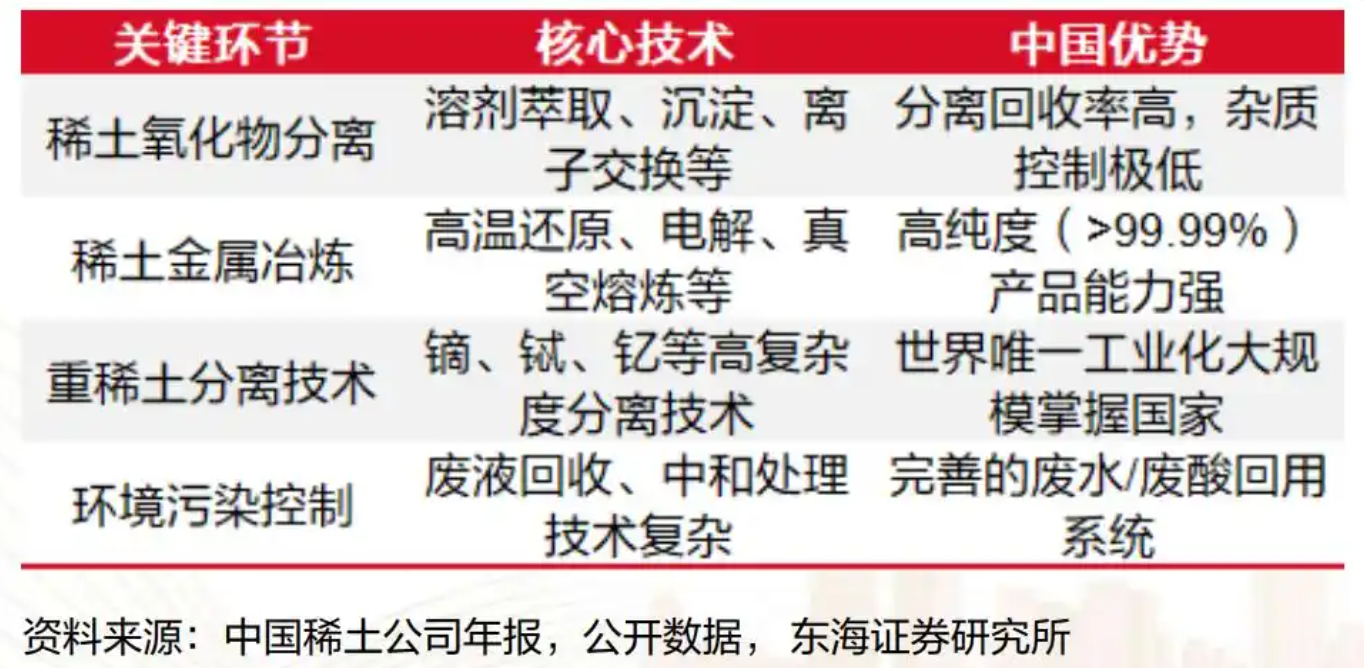
Core Insights - The U.S. and Japan are actively seeking to reduce their dependence on rare earth elements, with Japan conducting successful trials for rare earth mud extraction in the Pacific Ocean [1] - Japan currently relies on China for over 70% of its rare earth imports, prompting increased focus on domestic development following China's export restrictions [1] - The U.S. plans to initiate a critical mineral reserve program with an initial funding of $12 billion to decrease reliance on China for rare earth resources [1] - China maintains a dominant position in rare earth resources, extraction technology, and downstream applications, making it challenging for other countries to rebuild their rare earth supply chains [1] Industry Performance - The A-share rare earth sector showed strong performance, with the sector rising by 3.80%, led by companies like Longhua Technology, which increased by 11.46% [3] - Analysts highlight a supply-demand resonance in the rare earth market, with increasing supply concentration and growing demand from sectors like new energy and high-end manufacturing [3] - The strategic value of rare earth resources is becoming more pronounced globally, with many countries emphasizing the importance of critical mineral reserves [3] Company Highlights - Shenghe Resources is a significant player in the domestic rare earth industry, involved in mining, refining, and recycling, with projected earnings growth exceeding 339% by 2025 [5] - Northern Rare Earth is one of the largest rare earth production and processing bases in China, benefiting from resource advantages and stable product supply [5] - Jieneng Permanent Magnet is a high-tech enterprise specializing in rare earth permanent magnet materials, positioned to benefit from the growing demand in sectors like electric vehicles and wind power [5]