
私募股权基金

Search documents
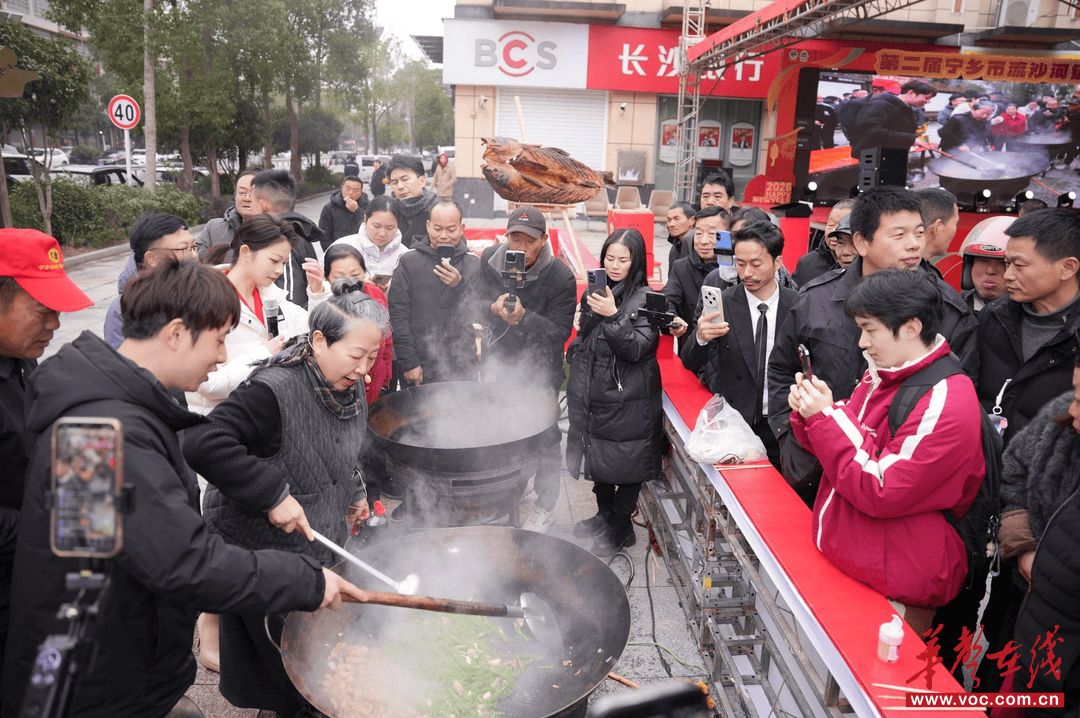
农文旅融合点燃年味消费 第二届宁乡市流沙河镇花猪节开幕
Sou Hu Cai Jing· 2026-02-07 12:21
Core Viewpoint - The second Flower Pig Festival in Liushahu Town, Ningxiang City, focuses on industrial revitalization, brand building, and festive consumption, creating a comprehensive rural revitalization event that integrates cultural display, product sales, and industrial cooperation [1][2]. Group 1: Event Overview - The main venue for the Flower Pig Festival is set in Liushahu Town's Jin Street, with brand activities also taking place in various locations including the Runze Garden community in Yuelu District and Changsha Huanghua International Airport, achieving urban-rural linkage and online-offline integration [2]. - Attendees can enjoy culinary demonstrations, traditional customs like writing "Fu" characters and paper-cutting, and taste freshly cooked flower pig dishes, along with one-stop shopping for flower pig gift boxes, cured meats, and other festive products [2]. Group 2: Industry Development - A signing ceremony was held between the Liushahu Town People's Government and several organizations, marking a new phase in the cooperation of the flower pig industry for rural revitalization projects [5]. - Ningxiang Flower Pig, recognized as a millennium-old breed and a national geographical indication product, serves as a "golden business card" for rural revitalization in Liushahu Town [5]. - The town is actively promoting a development strategy centered on "industry-driven town and brand-strengthened town," focusing on the flower pig industry and leveraging flower pig culture and leisure dining to create a "Flower Pig Town" that integrates themed farms, cultural exhibition halls, and specialty product sales centers [5]. - The successful hosting of the Flower Pig Festival not only showcases the Ningxiang Liushahu flower pig brand but also exemplifies the town's efforts in deepening the integration of agriculture, culture, and tourism while exploring paths for the revitalization of specialty industries [5].

险资加速布局私募股权基金
Zheng Quan Ri Bao Zhi Sheng· 2026-01-27 16:42
Core Insights - China Life Insurance has announced plans to invest in a pension industry equity investment fund and a private equity fund in the Yangtze River Delta, with a total commitment of nearly 12.5 billion yuan [1][2] Group 1: Investment Announcements - The pension industry equity investment fund will be established in partnership with Guoshou Qiyuan (Beijing) Pension Industry Investment Management Co., with a total commitment of 8.5 billion yuan, where China Life will contribute approximately 8.4915 billion yuan [2] - The Yangtze River Delta private equity fund aims to focus on AI-driven technology innovation and industrial upgrades, with a total commitment of 5.0515 billion yuan, where China Life will contribute 4 billion yuan [2] Group 2: Factors Driving Investment - Two main factors are driving the increase in private equity investments by large state-owned insurance companies: the need for long-term capital investment and the flexibility of private fund management companies in talent acquisition and governance [3] - The macroeconomic environment of declining interest rates has led to lower yields on fixed-income assets, prompting insurance companies to increase equity allocations for higher returns [5] Group 3: Market Trends - Since 2025, insurance institutions have significantly increased their contributions to private equity funds, with a total of 109.756 billion yuan, marking a 55.85% increase compared to the previous year [4] - Life insurance companies have been the largest contributors, with investments reaching 88.529 billion yuan, a year-on-year increase of 57.05% [4] Group 4: Future Outlook - The trend of increasing equity asset allocation by insurance capital is expected to continue, with diversification in investment sectors and asset classes [6] - The investment strategy will likely evolve to include a mix of public and private markets, with a growing emphasis on non-standard equity assets such as private equity and infrastructure REITs [6]

四川双马1月23日获融资买入1390.96万元,融资余额11.28亿元
Xin Lang Cai Jing· 2026-01-26 01:25
Group 1 - The core viewpoint of the news highlights the financial performance and trading activities of Sichuan Shuangma, indicating a decline in stock price and significant financing activities on January 23 [1] - On January 23, Sichuan Shuangma's stock price fell by 0.72%, with a trading volume of 176 million yuan. The financing buy amount was 13.91 million yuan, while the financing repayment was 25.89 million yuan, resulting in a net financing outflow of 11.98 million yuan [1] - As of January 23, the total financing and securities lending balance for Sichuan Shuangma was 1.129 billion yuan, with the financing balance exceeding 90% of the level over the past year, indicating a high position [1] Group 2 - As of September 30, the number of shareholders for Sichuan Shuangma was 29,200, a decrease of 5.50% from the previous period, while the average circulating shares per person increased by 5.83% to 26,145 shares [2] - For the period from January to September 2025, Sichuan Shuangma achieved an operating income of 917 million yuan, representing a year-on-year growth of 23.21%, and a net profit attributable to shareholders of 294 million yuan, up 20.03% year-on-year [2] Group 3 - Sichuan Shuangma has distributed a total of 931 million yuan in dividends since its A-share listing, with 259 million yuan distributed over the past three years [3] - As of September 30, 2025, Hong Kong Central Clearing Limited was the eighth largest circulating shareholder of Sichuan Shuangma, holding 6.7258 million shares, an increase of 3.0976 million shares compared to the previous period [3]

以创新践行使命 用责任书写“金融强国”篇章
Shang Hai Zheng Quan Bao· 2026-01-22 18:37
Core Viewpoint - The private equity industry plays a crucial role in implementing the national innovation-driven development strategy, serving the real economy, and promoting the development of new productive forces, as outlined in the 20th National Congress of the Communist Party of China [1][2]. Group 1: Industry Development and Strategic Focus - The private equity sector is emphasized as a key driver for original innovation and tackling core technologies, providing essential funding support for the integration of technological and industrial innovation [2]. - The company aims to guide capital towards strategic emerging industries such as integrated circuits, new-generation information technology, high-end equipment, new energy, and biomedicine, while also acting as a value discoverer and resource allocator [2]. - During the 14th Five-Year Plan period, the company will continue to support strategic emerging industries and future sectors like quantum technology, hydrogen energy, and biomanufacturing, contributing to the enhancement of the technological innovation system [2][4]. Group 2: Investment Strategies and Market Adaptation - The current investment ecosystem in China is undergoing significant changes, with challenges in the entire investment chain, particularly in exit strategies, which are critical for high-quality and stable industry development [3]. - The company focuses on product and business innovation, utilizing S funds and mergers to achieve cyclical investments and enhance liquidity in the primary market [3]. Group 3: Responsibility and ESG Investment - The company actively practices ESG investment principles, integrating social and environmental benefits into its operations and investment processes, promoting responsible investment as an industry consensus [4]. - The growth of innovative enterprises requires patient and responsible capital, which can support long-term and stable development while enhancing social and environmental impacts [4]. Group 4: Internationalization and Global Strategy - Chinese investment institutions and enterprises are increasingly pursuing international markets, with a focus on green and sustainable development as a consensus in finance and industry [5][6]. Group 5: Corporate Governance and Risk Management - The company adheres to the principles of "honesty and trustworthiness" and emphasizes a robust governance structure to enhance risk management capabilities and protect shareholder interests [7]. - Effective risk management is seen as foundational for stable development and innovation, with a focus on embedding risk prevention in all strategic and operational processes [7]. Group 6: Talent Development and Digital Transformation - Strengthening research capabilities, talent development, and digital transformation are identified as essential for building long-term competitiveness [8]. - The company aims to foster a positive workplace culture and ethical behavior among employees through various mechanisms [8].
基金数量稳定增长,2025年Q3新备案1,366只私募股权类基金,披露认缴规模5,530.59亿人民币丨睿兽分析基金季报
创业邦· 2025-11-26 00:08
Core Insights - The article highlights the growth and trends in the private equity fund registration in China for Q3 2025, indicating a stable increase in the number of new funds and their total subscribed capital. Fund Registration Overview - A total of 1,366 new private equity funds were registered, with a disclosed subscribed capital of 553.06 billion RMB, reflecting a year-on-year increase of 14.42% [5][6] - The total number of active private equity fund managers decreased to 11,928 [5] Regional Performance - Zhejiang province led in both the number of new funds (298) and total subscribed capital (1,004.74 billion RMB), accounting for 37.47% of the national total [8][10] - Other notable regions include Guangdong and Jiangsu, with new fund numbers and capital of 555.91 billion RMB and 511.46 billion RMB respectively [10] Institutional Participation - A total of 990 institutions registered new private equity funds, with institutional participation increasing by 26.11% compared to the previous year [16] - Institutional Limited Partners (LPs) contributed over 90% of the fundraising, with state-owned LPs dominating the landscape [5][19] City Rankings - The top three cities for new fund registrations by number are Jiaxing (137), Qingdao (80), and Suzhou (72) [13] - Beijing, Shanghai, and Hangzhou ranked highest in terms of subscribed capital, collectively raising 1,040.81 billion RMB, which is 18.82% of the national total [14][15] LP Analysis - In Q3 2025, 1,242 state-owned LPs participated in fundraising, while 1,013 private LPs were involved, indicating a strong presence of institutional investors [19] - The average subscribed capital from institutional LPs was 1.87 million RMB, with personal LPs contributing a smaller share [19] Fundraising Dynamics - The fundraising activities were concentrated in regions like Zhejiang, Jiangsu, and Guangdong, with Zhejiang's institutional LPs leading in both frequency (369 times) and subscribed capital (825.43 billion RMB) [20][21] - The top ten active listed companies in terms of fund contributions included firms from sectors like renewable energy and healthcare, with significant percentages of their capital allocated to new funds [23]

四川双马股价涨5.07%,广发基金旗下1只基金重仓,持有97.64万股浮盈赚取105.46万元
Xin Lang Cai Jing· 2025-11-24 03:06
Group 1 - Sichuan Shuangma's stock price increased by 5.07% to 22.37 CNY per share, with a trading volume of 290 million CNY and a turnover rate of 1.74%, resulting in a total market capitalization of 17.078 billion CNY [1] - Sichuan Shuangma was established on October 20, 1998, and listed on August 24, 1999. The company operates in the building materials industry and private equity fund management [1] - The revenue composition of Sichuan Shuangma includes private equity fund management at 33.36%, cement at 32.46%, biomedicine at 23.08%, and aggregates at 11.10% [1] Group 2 - According to data, one fund under GF Fund has a significant position in Sichuan Shuangma, with the GF CSI All Share Building Materials Index A (004856) increasing its holdings by 317,600 shares to a total of 976,400 shares, representing 2.46% of the fund's net value [2] - The estimated floating profit from this position is approximately 1.0546 million CNY [2] - The GF CSI All Share Building Materials Index A was established on August 2, 2017, with a current scale of 305 million CNY and a year-to-date return of 5.77%, ranking 3692 out of 4208 in its category [2]
私募股权基金牌照申请的保姆级攻略(新鲜出炉)
Sou Hu Cai Jing· 2025-11-16 02:02
Core Viewpoint - The article emphasizes the importance of hiring an experienced law firm for the application process of obtaining a private equity license, highlighting that this choice can significantly impact the success of the application and the overall entrepreneurial journey [1][2][3]. Group 1: Importance of Hiring a Law Firm - Selecting a reputable law firm is crucial as they provide legal opinions required by the regulatory body, which can influence the application outcome [1][2]. - An experienced law firm can assess the likelihood of obtaining a license and suggest necessary adjustments to the application, such as changes in ownership structure and key personnel [1][3]. - A well-known law firm can lend credibility to the application, as their past successes can reassure the regulatory body [2]. Group 2: Challenges in the Application Process - Inexperienced law firms may lead to critical mistakes in the application, resulting in delays or outright failures [3]. - The regulatory body is focused on ensuring that new fund managers are capable and serious about risk investment, which raises the bar for new applicants [3][5]. - Key challenges for applicants include proving their capital contribution and investment performance, with specific requirements set by the regulatory body [5][6]. Group 3: Application Preparation Steps - The application process involves several steps, including team formation, company registration, and preparation of extensive documentation [8][10][15]. - A strong business plan is essential, as it reflects the management team's vision and capabilities, and should not be a mere template modification [15]. - The regulatory body requires a thorough review of all submitted materials, and applicants should be prepared for multiple rounds of feedback and potential interviews [17][18]. Group 4: Final Steps and Considerations - After the interview process, the regulatory body will review the application and may request additional materials before granting the license [19]. - Once the license is obtained, the new fund manager must register their first fund within 12 months to avoid license cancellation [19]. - The pressure on the principal applicant is significant, necessitating a strong support system and effective stress management strategies [19].
并购基金迎来发展黄金期 专业整合与协同破局成行业关键
Zheng Quan Ri Bao Wang· 2025-11-14 06:36
Core Insights - The strategic importance of China's M&A market is continuously increasing due to multiple factors such as the reshaping of the Chinese economic landscape, evolving industry competition, generational transitions among entrepreneurs, and the optimization of corporate governance [1] Group 1: M&A Market Trends - As of now, there have been 147 major asset restructuring projects in the A-share market this year, representing a significant increase of 45.54% compared to the same period last year, indicating a robust development trend in the A-share M&A market [1] - The M&A funds are becoming increasingly recognized for their core value in resource integration, financial support, and transaction structure design, marking a golden period for industry development [1][2] Group 2: Role of M&A Funds - M&A funds are specialized private equity funds focused on acquiring target companies, enhancing their value through restructuring and operational optimization, and ultimately exiting through equity transfer or IPOs, typically within a 5-6 year cycle [2] - Unlike investment banks that primarily facilitate transactions and move on, M&A funds engage in long-term operational management post-acquisition, aiming to enhance enterprise value [2] Group 3: Market Challenges - Despite the rapid growth of the M&A fund market, challenges such as difficulty in acquiring quality targets, complex stakeholder interests in multi-round financing projects, and high negotiation difficulties for controlling stakes persist [5] - The lack of professional management capabilities and reliance on a single management layer can lead to new internal control issues within M&A funds [5] Group 4: Future Outlook - The M&A market in China is expected to evolve into a "cooperation + competition" landscape, where M&A funds and industrial players may compete for the same targets while also collaborating to optimize governance structures [7] - Continuous policy support is anticipated to further enhance the role of M&A funds in capital markets, aiding in the high-quality development of listed companies and industrial integration upgrades [7]

诚通系基金超七成投资聚焦战略性新兴产业
Xin Hua Wang· 2025-10-23 07:33
Core Insights - China Chengtong Holdings Group has led the investment in state-owned enterprises (SOEs) through fund investments, completing over 230 billion yuan in investment transactions, with over 90% directed towards SOE-related fields and more than 70% towards strategic emerging industries [1][2] Group 1: Fund Investments - The company manages eight different types of funds with a total scale exceeding 710 billion yuan, including the State-Owned Enterprise Structural Adjustment Fund and the Mixed Ownership Reform Fund [1] - Investments have been made to guide social capital towards key industries of SOEs, forming industrial clusters in sectors such as new energy vehicles, integrated circuits, and artificial intelligence [1] Group 2: Strategic Restructuring and Governance - In addition to fund investments, the company has self-raised over 93 billion yuan to participate in strategic restructuring and professional integration of SOEs, becoming a significant shareholder in various enterprises [2] - The company has explored governance mechanisms different from solely state-owned enterprises, actively participating in decision-making processes of the SOEs it invests in [2] Group 3: Focus on Emerging Industries - The company has cumulatively invested over 10 billion yuan in the new energy vehicle industry chain, collaborating with multiple SOEs in areas such as lithium battery raw materials and energy storage [1]
四川双马股价涨5.09%,广发基金旗下1只基金重仓,持有65.88万股浮盈赚取71.81万元
Xin Lang Cai Jing· 2025-10-09 05:22
Core Insights - Sichuan Shuangma's stock increased by 5.09% to 22.51 CNY per share, with a trading volume of 206 million CNY and a turnover rate of 1.24%, resulting in a total market capitalization of 17.185 billion CNY [1] Company Overview - Sichuan Shuangma Co., Ltd. was established on October 20, 1998, and listed on August 24, 1999. The company is located in Chengdu, Sichuan Province, and operates primarily in the building materials industry and private equity fund investment management [1] - The revenue composition of Sichuan Shuangma includes: 33.36% from private equity fund management, 32.46% from cement, 23.08% from biomedicine, and 11.10% from aggregates [1] Fund Holdings - According to data, one fund under GF Fund has a significant holding in Sichuan Shuangma. The GF CSI Building Materials Index A Fund (004856) held 658,800 shares in the second quarter, accounting for 2.28% of the fund's net value, ranking as the tenth largest holding [2] - The GF CSI Building Materials Index A Fund was established on August 2, 2017, with a current size of 261 million CNY. Year-to-date returns are 5.32%, with a one-year return of 1.72%, and a cumulative loss of 5.93% since inception [2] Fund Manager Profile - The fund manager of GF CSI Building Materials Index A Fund is Lu Zhiming, who has a cumulative tenure of 14 years and 133 days. The total asset size under management is 24.629 billion CNY, with the best fund return during his tenure being 119.61% and the worst being -63.28% [3]