
科技孵化

Search documents
打造孵化“新标杆”,青岛市工研院跻身全省首批引领型孵化器
Qi Lu Wan Bao· 2026-02-25 07:01
Core Insights - The Shandong Provincial Science and Technology Department has recognized 18 leading incubators for 2025, with the Qingdao Institute of Industrial Technology (referred to as "the Institute") being highlighted for its strong capabilities in hard technology incubation [1][3] - The recognition reflects the Institute's long-term commitment to technology transfer, enterprise incubation, and industrial empowerment, showcasing its core strengths in incubation capacity, service level, and industry influence [3][4] Group 1: Incubator Recognition - The Institute was selected as a leading incubator after a rigorous evaluation process, demonstrating its ability to integrate resources, provide professional services, and cultivate high-growth innovative entities [3] - The Institute has facilitated the connection of over 8,000 technology achievements and incubated more than 700 high-tech enterprises, with a total enterprise valuation exceeding 15 billion and achieving an output value of over 20 billion [3][4] Group 2: Support for Startups - The Institute has developed a comprehensive incubation model that addresses common challenges faced by hard technology startups, such as lack of space, equipment, funding, and market access [4][6] - The Institute provides tailored support, including strategic financing and credit assistance, which has enabled startups like Qingdao Pengfeng Medical Technology Co., Ltd. to successfully launch innovative products [4][5] Group 3: Ecosystem Development - The Institute operates as a "supermarket" for technology transfer, facilitating the flow of technology elements and creating a platform for innovation [6][7] - It emphasizes the importance of market demand in realizing the value of technological achievements, helping companies like Dao Li Zhi Yuan Technology Co., Ltd. achieve significant revenue growth [7][8] Group 4: Talent and Infrastructure - The Institute fosters a supportive ecosystem for hard technology companies, providing comprehensive facilities and services to retain talent and nurture enterprises [8] - It has established a public research and development platform equipped with over 40 high-end devices, serving more than 1,000 enterprises and supporting their research and development efforts [8]

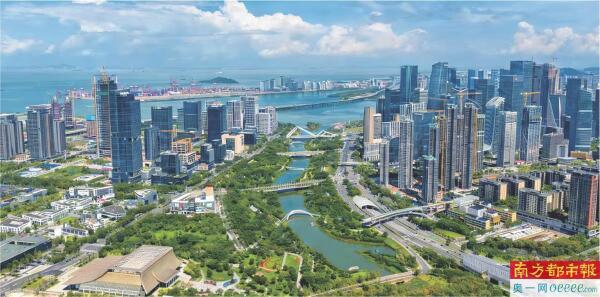
“深港汇”双向总部基地加快建设
Nan Fang Du Shi Bao· 2026-01-27 23:14
Core Viewpoint - The release of the "2026 Action Plan for the Construction of the Deep Hong Kong-Shenzhen Integration Development Leading Area" by Qianhai marks a significant step in promoting the integration of Shenzhen and Hong Kong through 21 initiatives and 56 specific tasks aimed at enhancing regulatory alignment, industrial collaboration, and public service integration [2][3]. Group 1: Regulatory Alignment - The "regulatory alignment" is prioritized in the Action Plan, serving as a key driver for collaboration across various sectors, including finance, law, logistics, data, standards, and talent [3][4]. - The plan includes deepening private equity connections and piloting innovative policies such as the Hong Kong new engineering contract model, while also accelerating project implementation like cross-border low-altitude logistics and international data center construction [3][4]. Group 2: Economic and Legal Integration - By the end of 2025, QFLP and QDIE management enterprises in Qianhai are expected to account for over 90% of Shenzhen's total, indicating a significant increase in capital flow from Hong Kong to the mainland [4]. - The Qianhai Court has the highest number of cases adjudicated under Hong Kong law in the country, providing reassurance to Hong Kong investors [4]. Group 3: Youth and Employment Opportunities - The Action Plan emphasizes support for Hong Kong youth in employment and entrepreneurship, creating a platform for them to thrive in Qianhai, which is not only a financial hub but also a center for high-tech industries [6][7]. - The "1510" model introduced by the Dream Factory aims to provide substantial support for startups, with a high occupancy rate of over 95% in the park, attracting 423 enterprises [6][7]. Group 4: Cultural and Lifestyle Integration - The Action Plan aims to create a lifestyle atmosphere that blends Hong Kong culture with international standards, addressing the evolving needs of residents [7]. - Initiatives such as expanding the "Hong Kong-Macao drug and medical device" access and ensuring educational opportunities for children of Hong Kong residents in Qianhai reflect a commitment to enhancing the quality of life [7]. Group 5: Government Support and Future Directions - The Hong Kong government recognizes the Action Plan's potential to enhance high-quality development and is actively researching its initiatives to support further collaboration and policy innovation [8]. - Qianhai will focus on building a dual-headquarters base, enhancing talent development, and regional cooperation as part of its strategic direction leading up to 2026 [8].
邯郸经开区: 专题培训赋能孵化载体
Xin Lang Cai Jing· 2026-01-21 01:01
Group 1 - The training session focused on the new "Management Measures for Technology-based Enterprise Incubators" issued by the Ministry of Industry and Information Technology, detailing the recognition standards, application processes, and key indicators for provincial and municipal incubators [1][2] - The training provided systematic guidance on annual Torch statistics work, including report filling, data auditing, and system operation, clarifying work norms and practical boundaries [1] - Participants expressed that the training was comprehensive and targeted, addressing urgent needs and providing clear guidance for future work [1] Group 2 - Incubators are described as the "cradle" for nurturing technology-based enterprises and the "engine" for regional innovation development [2] - The training is a concrete measure for the Handan Economic Development Zone to align with the needs of incubation carriers and optimize innovation services [2] - The Handan Economic Development Zone plans to continue enhancing policy guidance and service support to improve the quality and efficiency of various incubation carriers, thereby solidifying the foundation for regional innovation-driven development [2]
好评中国|真抓实干,持续巩固增强经济回升向好态势
Huan Qiu Wang· 2025-12-09 07:10
Group 1 - The core viewpoint emphasizes the importance of major projects in stabilizing the macroeconomic environment and achieving the goals set for the "14th Five-Year Plan" [1] - Guangdong has established nearly 2,100 technology enterprise incubators and innovation spaces to promote the transformation of scientific and technological achievements [1] - The successful grid connection of the world's largest "Hualong One" nuclear power base in Fujian is expected to generate 20 billion kilowatt-hours annually, showcasing significant progress in major engineering projects [1] Group 2 - The new development philosophy is crucial for addressing development challenges and enhancing competitive advantages, with a focus on innovation, coordination, green development, openness, and sharing [2] - Anhui is leading industrial innovation through technological advancements in cutting-edge fields such as quantum information and artificial intelligence, contributing to the formation of future industries [2] - The promotion of ecological corridors in Hubei through the transformation of chemical enterprises reflects a commitment to green development [2] Group 3 - The achievements during the "14th Five-Year Plan" period lay a solid foundation for the upcoming "15th Five-Year Plan," with various regions proactively planning for future development [3] - Jiangxi's finance department is collecting suggestions for 2026's livelihood projects, indicating a focus on targeted measures to enhance public welfare [3] - Zhejiang is innovating in the integration of basic public services, demonstrating a commitment to improving the quality of life for its citizens [3]
远景未来:以金融科技赋能实业的生态化挑战与前景
Cai Fu Zai Xian· 2025-12-06 07:47
Core Insights - The article emphasizes the complexity of business models in financial markets, suggesting that categorizing companies under simple labels may overlook their multifaceted nature [1] Strategic Overview - The development trajectory of the company shows an extension from financial services to real industries, with business areas expanding from cross-border mergers and global asset management to technology incubation and international trade, culminating in specific consumer brands [2] - The launch of the tea brand "Yuanming Future" in 2025, alongside an earlier wine brand, forms part of the company's "real industry matrix," indicating an effort to create a closed-loop system where financial services identify value and allocate resources, while real industries generate actual profits [2] Founder’s Perspective - The founder, Wang Guiyun, emphasizes social responsibility, talent development, and global cooperation, portraying entrepreneurs as key drivers of social progress rather than mere economic participants [4] - His commitment to supporting AI technology transformation through a public welfare fund and enhancing the global perspective of youth reflects a long-term focus on social value over short-term financial returns [4] Profitability Narrative - The company outlines a diversified revenue model, with potential income sources including trading commissions from the global futures market, operational profits from real brands, and fees from cross-border settlements and technology services [5] - However, the ambitious ecological layout presents significant management challenges and execution risks, particularly regarding the long cultivation cycles of real industries and the competitive landscape [5] Ecosystem Approach - The company aims to differentiate itself from simple "funding schemes" by building a complex ecosystem that integrates finance, technology, real industries, and public welfare, representing a transformation effort within the financial market [7] - The success of this model will depend on the genuine effectiveness of strategic implementation, absolute compliance in operations, and rigorous market scrutiny over time [7]
融资实战沉浸课堂再度开启,入局一场真实的资本“生存游戏”
Sou Hu Cai Jing· 2025-12-03 10:27
Group 1 - The event is a immersive financing simulation that allows participants to engage in real investment scenarios, moving away from traditional pitch presentations [1][2] - Participants will take on roles as entrepreneurs and investors, engaging in a live-action role-playing format to simulate the investment decision-making process [1] - The event will feature three real early-stage projects from the AI sector, providing a platform for entrepreneurs to present their business models and face direct questions from investors [1] Group 2 - The event is scheduled for December 11, 2025, from 13:30 to 16:30, at the AI Origin Community in Haidian District [4] - The agenda includes registration, role explanation, project presentations, a tea break, a simulated investment committee meeting, and an interactive jury session [5] - Plug and Play China is a well-established global technology innovation platform with over 20 years of experience in tech incubation and investment, having successfully nurtured companies like Google and invested in major firms such as PayPal and Dropbox [6][7]
共创源头创新的中国范式 2025天使共创大会在沪召开
Zheng Quan Shi Bao Wang· 2025-11-24 16:01
Group 1 - The 2025 Angel Co-Creation Conference was held in Shanghai, focusing on the theme of "Source Technology Incubation and Co-Building Innovation Ecosystem" [1] - The conference emphasized the importance of ecosystem co-construction for innovation, with Huangpu District aiming to integrate capital, technology, research, and industry [1] - The Shanghai Angel Association is concentrating on excellent scientific teams and pioneering projects to activate angel investors and support early-stage technology projects [1][2] Group 2 - Global technology and economic concentration trends are becoming more apparent, with a call for "X-type talents" who can drive source innovation [2] - Significant breakthroughs in the fields of lithium iron phosphate batteries and sodium-ion batteries were shared, highlighting the importance of chemical and electrochemical engineering in the new energy sector [2] - Strategic cooperation was announced between the Shanghai Angel Association and various investment and innovation groups to strengthen the co-construction of technology sources and ecosystems [2][3] Group 3 - Strategic collaborations were initiated among several research institutes and universities to promote the transformation of scientific achievements into new productive forces [3]
共赴进博会创新之约,解锁跨境合作黄金机遇
Sou Hu Cai Jing· 2025-10-24 11:24
Core Insights - The event on November 8 aims to facilitate cross-border cooperation and international market expansion for tech companies [1] - Plug and Play China collaborates with IntelliPro to create an efficient platform for global tech innovation [1] - The event will feature prominent speakers from various organizations, enhancing the dialogue on international collaboration [1] Group 1: Event Details - The event is scheduled for November 8, from 12:30 to 15:00, at the NH Innovation Incubation Zone, North Hall stage of the Import Expo [4] - Seven selected cross-border tech companies will present their innovative projects, aiming to establish investment and technology collaboration [2] Group 2: Company Background - Plug and Play is a globally recognized tech innovation ecosystem platform, with over 60 innovation centers worldwide and more than 20 years of experience in tech investment and incubation [5] - Since its establishment in China in 2016, Plug and Play China has set up innovation centers in multiple cities and has been actively involved in early-stage tech investment and innovation services [5] - The platform has supported 180 large enterprises and government clients, incubating over 1,000 startups annually and facilitating nearly 500 innovation technology applications [6]
陆家嘴金融沙龙第26期圆桌对话 共探“孵投融合”之道
Di Yi Cai Jing· 2025-09-10 13:41
Core Insights - The event focused on the integration of incubation and investment, discussing the core value of incubators and the practical experiences of "incubation-investment linkage" [1][8] Group 1: Incubation Strategies - Incubators aim to provide physical space, shared facilities, and specialized services to help startups transition from laboratory results to market applications [2] - Zhongke Chuangxing emphasizes early and deep incubation to support projects in the "middle water zone," which have some technical foundation but lack a complete team [2] - The goal is to offer comprehensive services from idea generation to IPO, creating a systematic hard-tech incubation system [2] Group 2: Challenges in Innovation - The commercialization of scientific results faces challenges, and incubators must help scientists identify the most viable projects for industrialization [4] - The need for a clear understanding of drug development processes is highlighted, emphasizing the importance of having knowledgeable principal investigators (PIs) [3] Group 3: Ecosystem Development - The development of a "cross-border co-creation" ecosystem is essential, where large enterprises empower startups and facilitate collaboration [5] - A demand-driven approach is proposed, where incubators connect large companies with startups based on real business needs [6] Group 4: Resource Needs by Development Stage - Different stages of startups have varying resource needs, with early-stage companies requiring support to transform ideas into valuable propositions [7] - The industry cluster effect in Shanghai Zhangjiang is noted for attracting talent and resources, enhancing investment efficiency [7] Group 5: Incubation-Investment Linkage - The "incubation-investment linkage" is crucial for enhancing the efficiency of cultivating technology enterprises, requiring incubators to identify quality projects and integrate resources effectively [8][9] - The dual identity of incubators as both incubators and investors presents challenges in balancing the goals of commercialization and investment [9] Group 6: Future Directions - The importance of engineering processes in innovation is emphasized, suggesting that modular construction and rapid iteration can enhance commercialization efforts [10] - The event aims to create a platform for ongoing dialogue and collaboration to support Shanghai's development as an international financial center [10]

1.5亿元!海淀发布新政支持高质量孵化器
Bei Jing Ri Bao Ke Hu Duan· 2025-08-29 12:16
Core Viewpoint - Haidian District is investing over 150 million yuan this year to support high-quality incubators, aiming to enhance their capabilities and foster a leading innovation and entrepreneurship ecosystem [1][2][3] Group 1: Investment and Support - Haidian District plans to invest more than 150 million yuan in 2023 to support high-quality incubators, with a maximum single support of 100 million yuan for individual incubators [1][3] - The funding will be divided into two categories: "high-quality leading incubators" and "high-quality nurturing incubators," with specific support mechanisms for each [3] Group 2: Incubator Classification and Funding Mechanism - "High-quality leading incubators" focus on attracting and nurturing high-level domestic and international incubators, with annual support of up to 20 million yuan for each, over a support period of 3 to 5 years [3] - "High-quality nurturing incubators" will receive post-support based on their previous operational performance, with a maximum of 2 million yuan for the top 20 rated institutions [3] Group 3: Focus Areas and Future Plans - The policy emphasizes support for sectors such as artificial intelligence, embodied intelligence, healthcare, optoelectronics, and quantum technology [3] - The application for the 2025 high-quality incubator special fund has already begun, with a deadline of September 24, 2023, and the first funding disbursement expected by the end of the year [3]