航空发动机与燃气轮机

Search documents
近期军工行业观点
2026-03-22 14:35
Summary of Military Industry Conference Call Industry Overview - The military industry is currently in a negative beta trading phase for 2026, primarily due to a reduction in expected defense budget growth from 7.2% to 6.5% and a lack of large-scale orders during the spring ordering session, reflecting a strong expectation but weak reality [1][2][3] - Historical patterns indicate that the transition period between five-year plans (2025-2026) has the potential for excess returns, with a new wave of orders expected around June 30, 2026, coinciding with the release of new models under the "14th Five-Year Plan" [1][2][3] Key Insights and Arguments - The "Two Machines" industry chain is experiencing the highest level of prosperity, with limited overseas production capacity and increased demand for gas turbines driven by AI data centers, leading to orders extending to 2030. Domestic companies involved in forging, casting, and blade subcontracting have strong performance certainty [1][2][3] - The commercial aerospace sector is set for significant catalysts in 2026, with SpaceX potentially going public in Q2-Q3, and over five domestic companies, including Blue Arrow and CAS Space, expected to IPO. The launch of reusable rockets like Zhuque-3 is anticipated [1][2][3][4] - Military trade is driven by escalating tensions in the Middle East, with increased demand for drones, long-range fire systems, and air defense systems from oil-producing countries. Recent orders from companies like LIGONG Navigation have confirmed the demand despite downward trends [1][2][4] Important but Overlooked Content - The recent adjustment in the military sector is attributed to a rebalancing of high valuations and fundamentals, suggesting a strategic investment window post-earnings season, particularly in companies with international subcontract orders and breakthroughs in commercial aerospace technology [1][2][5] - The military sector's price response to geopolitical tensions has been muted due to prevailing market expectations of declining industry prosperity. The sector typically performs better during data vacuum periods, such as May and June, rather than during earnings disclosure seasons [4][5] - Despite the overall industry facing adjustments, three specific areas remain promising: the aviation engine and gas turbine supply chain, commercial aerospace, and military trade exports, particularly in light of potential escalations in the Middle East [5]
国防军工行业全球化系列:全球两机产业链新观察,2026年迈入主业补库与产能重估的双奏
GF SECURITIES· 2026-03-17 13:42
Investment Rating - The report maintains a "Buy" rating for companies within the domestic two-machine industry chain, highlighting opportunities for capacity reassessment [4]. Core Insights - The global supply chain is entering a dual phase of replenishment and capacity reassessment, driven by strong demand in civil aviation, high defense needs, and AI data center power shortages [4]. - The civil aviation sector is transitioning from supply chain adjustments to comprehensive replenishment, with Boeing's aircraft deliveries expected to reach 600 units in 2025, a 72% year-on-year increase [4]. - The gas turbine market is anticipated to experience a super cycle driven by AI and power grid upgrades, with global orders expected to reach a record 92GW in 2026 [4]. - Supply-side bottlenecks are evident, with key material shortages leading to extended delivery times and increased pricing power for upstream suppliers [4]. - Investment suggestions focus on domestic companies related to the two-machine industry chain, emphasizing the potential for capacity reassessment [4]. Summary by Sections Observation One: Acceleration of Overseas Aircraft Engine Replenishment - Boeing's aircraft deliveries are projected to exceed expectations, with a total of 600 aircraft delivered in 2025, recovering to 74% of 2018 levels [14]. - Airbus is expected to deliver 870 aircraft in 2026, reflecting a nearly 10% year-on-year growth [16]. - The recovery in civil aviation engine supply chains is expected to restart replenishment, with Rolls-Royce and Safran being key players [27]. Observation Two: Acceleration of Gas Turbine Capacity - Global orders for gas turbines are expected to reach a historical high of 92GW in 2026, surpassing the previous peak in 2001 [65]. - The demand for both AI-driven and traditional sectors is robust, indicating a strong market outlook for gas turbines [65]. Supply-Side Analysis - Current supply-demand imbalances are significant, with ongoing material shortages affecting production timelines and pricing strategies [4]. - The report highlights the increasing pricing power of upstream suppliers due to material shortages and the prioritization of maintenance, repair, and overhaul (MRO) operations [4]. Investment Recommendations - The report suggests focusing on domestic companies involved in the two-machine industry chain, as they are likely to benefit from capacity reassessment opportunities [4].




“制造强国”实干系列周报-20251112
Shenwan Hongyuan Securities· 2025-11-12 07:15
Group 1: Robotics and AI Demand - Xiaopeng's IRON robot features a humanoid design with a flexible spine and bionic muscles, expected to start mass production in 2026[3] - AI computing power demand is surging, with NVIDIA's chip power design increasing from approximately 400W in 2020 to an expected 1400W by 2025, driving HVDC demand[3] - The excavator sales in October 2025 reached 18,096 units, a year-on-year increase of 7.77%, with domestic sales at 8,468 units (up 2.44%) and exports at 9,628 units (up 12.9%)[3] Group 2: Energy and Supply Chain Insights - The U.S. AI infrastructure expansion is creating a significant power gap, leading to increased demand for gas turbines, while domestic supply chains face delivery delays and capacity shortages[3] - HVDC systems are projected to enhance efficiency and reliability, with system efficiency rising from 90% to over 95% through architectural innovations[28] - The market is expected to see a rapid increase in HVDC penetration starting in 2026, coinciding with the mass production of NVIDIA's Blackwell Ultra architecture[38] Group 3: Market Risks and Trends - Risks include intensified market competition, fluctuations in raw material prices, and economic cycle volatility, which could impact manufacturing performance[95] - The manufacturing sector's inventory levels remain low, indicating potential growth opportunities[18] - The domestic excavator market is shifting towards smaller models, with small excavators accounting for 79.5% of sales, driven by equipment updates and inventory digestion[73]


2025涡轮技术大会暨民用航空发动机与燃气轮机展在苏州启幕
Zhong Guo Min Hang Wang· 2025-05-27 11:23
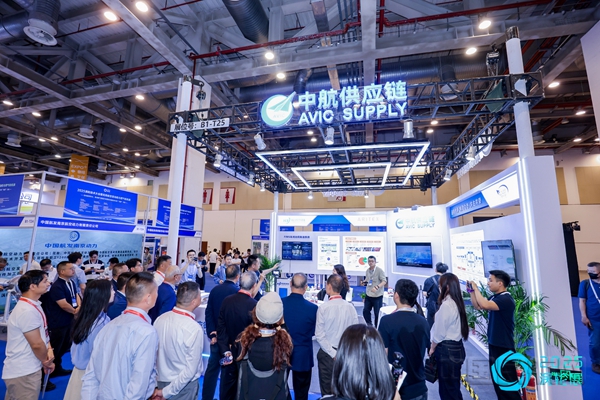
Core Insights - The "2025 Turbine Technology Conference and Civil Aviation Engine and Gas Turbine Exhibition" was held in Suzhou, showcasing over 300 leading exhibitors and attracting more than 8,000 professional visitors, focusing on cutting-edge technologies in the aviation engine and gas turbine sectors [1][3] - The event emphasized the theme of advancing low-cost manufacturing and achieving "dual carbon" goals in the gas turbine industry, aligning with national strategies for developing new productive forces [3][4] Industry Developments - The exhibition featured seven thematic areas, including gas turbines, advanced small aviation turbine engines, high-end components, and high-temperature alloy materials, highlighting the acceleration of domestic substitution processes [3] - Notable exhibitors included Sichuan Aerospace Tianzheng Power Equipment Co., showcasing 11 engine models, and China Aviation Engine Corporation, presenting low fuel consumption small power turbine engines, demonstrating their production and repair capabilities [3][4] Academic and Collaborative Efforts - The conference included a main forum and eight sub-forums with over 180 speakers discussing topics such as civil aviation engine technology and hydrogen energy technology, providing theoretical support and practical pathways for industry transformation [3][4] - The event aimed to foster communication and collaboration among experts, scholars, and enterprises, emphasizing the importance of deep cooperation between industry, academia, and research institutions for breakthroughs in the "two aircraft" initiative [4][5]