
陶瓷制造业

Search documents
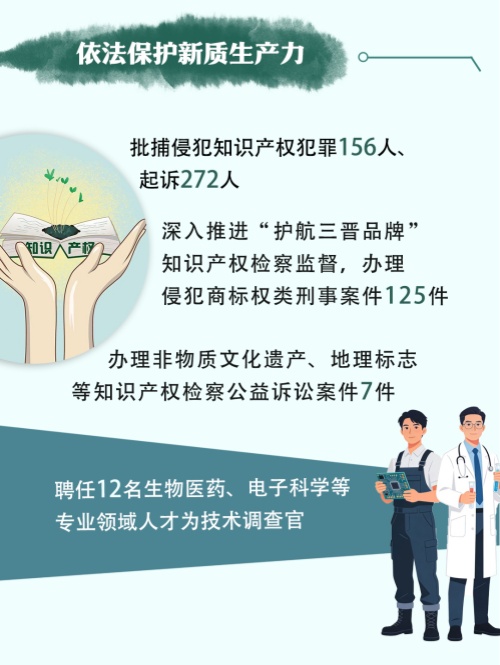
地方两会·检察视角|山西:检察监督擦亮三晋品牌
Xin Lang Cai Jing· 2026-02-22 02:32
Group 1 - The core viewpoint of the news highlights the collaborative efforts of criminal, civil, administrative, and public interest litigation prosecutors in protecting intellectual property rights, resulting in the arrest of 156 individuals and the prosecution of 272 individuals for related crimes [1] - The Shanxi Provincial Procuratorate's work report emphasizes the promotion of "Protecting the Three Jin Brands" intellectual property supervision, with a focus on enhancing the protection of geographical indications, time-honored brands, intangible cultural heritage, traditional Chinese medicine, and seed industry intellectual property [1] - A total of 125 criminal cases involving trademark infringement were handled, along with 7 public interest litigation cases related to intellectual property, including those concerning the "Qinzhou Book Fair" intangible cultural heritage and the "Youyu Lamb" geographical indication [1] Group 2 - The data reflects the commitment of the procuratorial authorities to support the development of new productive forces tailored to local conditions and to maintain fair competition in the market [2] - A representative from Shanxi Gaotao Ceramics expressed the hope that the procuratorial authorities would strengthen their intellectual property protection efforts, optimize the legal business environment, and expand the coverage of the technical investigator system to enhance the quality and efficiency of their work [2]

新中国制瓷业现代化的初步探索与历史经验
Xin Lang Cai Jing· 2026-02-10 20:03
Core Viewpoint - The "Guokong Porcelain" project represents a significant modernization effort in China's traditional ceramics industry, initiated shortly after the establishment of the People's Republic of China, emphasizing innovation in concepts, systems, and technology [1][10]. Group 1: Conceptual Transformation - The ceramics industry was prioritized by the Central Financial and Economic Commission in 1950, aiming to create special commemorative porcelain for domestic and international markets [2]. - Experts, including Xu Beihong and Lin Huiyin, advocated for a new approach to porcelain that emphasized practicality and aesthetic appeal, aligning with the needs of the general populace [3][4]. - The design principles established focused on functionality, national artistic style, and avoiding outdated traditional motifs, marking a shift towards a modernized perspective in ceramics production [4][5]. Group 2: Institutional Innovation - In August 1952, the Central Financial and Economic Commission allocated 2 billion yuan to restart the porcelain project, leading to the formation of a design committee composed of 26 experts [5][6]. - The committee, led by Zheng Zhenduo, was tasked with integrating traditional techniques with contemporary design, focusing production in Jingdezhen [6]. - The collaboration between central and local governments facilitated a streamlined approach to design and production, setting a precedent for future national projects [6][7]. Group 3: Technological Advancement - The project utilized traditional materials and methods while incorporating modern scientific techniques to enhance production processes [7][8]. - A focus on both technology and talent was evident, with efforts to blend artisanal skills with modern knowledge through training programs and research initiatives [8][9]. - Standardization was introduced early in the production phase, establishing uniformity in design and manufacturing processes, which marked a transition from traditional craftsmanship to a more scientific and regulated industrial model [9].
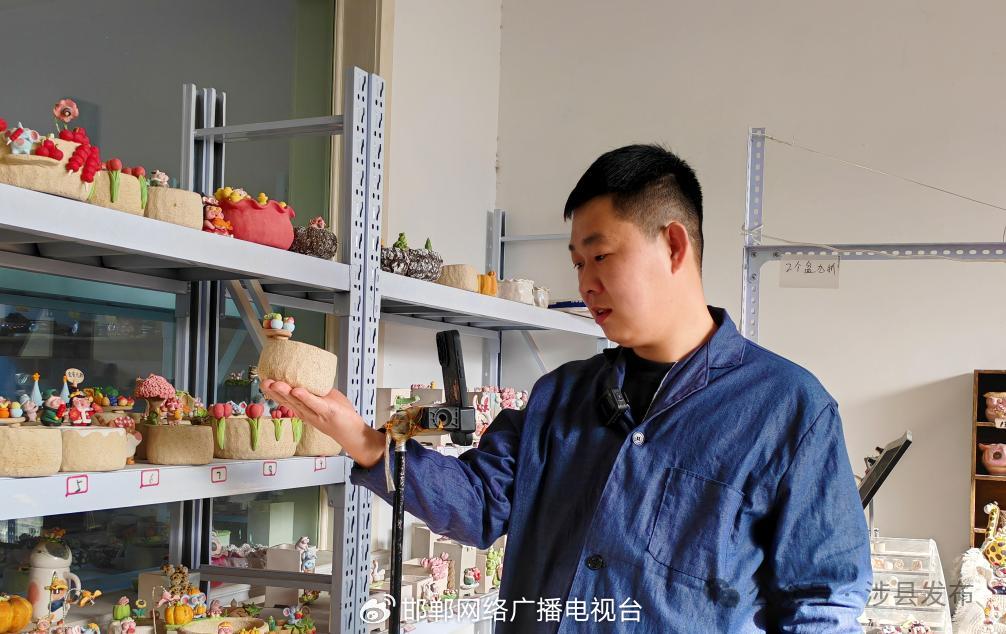
涉县李梦雄:一双手捏活老手艺
Xin Lang Cai Jing· 2026-02-01 08:58
Core Insights - The article highlights the innovative approach of Li Mengxiong, a ceramic artisan from Chiaxi Village, who successfully integrates traditional pottery techniques with modern e-commerce, allowing handmade ceramics to reach a wider audience and offering personalized services that infuse emotional stories into his creations [1][9]. Group 1: Business Model and Strategy - Li Mengxiong began his journey in ceramics by studying the craft in Jingdezhen and later opened an online store to sell his handmade products, gradually building a customer base and reputation [3]. - In 2020, he returned to his hometown and transformed his home into a professional pottery workshop, equipping it with a full set of pottery-making tools to officially start his online live-streaming sales of handmade ceramics [3][5]. Group 2: Product Offerings - The product range includes two main categories: small, exquisite flower pots that can accommodate various plants, and uniquely designed decorative pieces that enhance home aesthetics [5]. - Li Mengxiong emphasizes the uniqueness of his handmade products, which differ from industrial products due to their "imperfect uniqueness," making them appealing to consumers [7]. Group 3: Customer Engagement and Customization - The artisan actively engages with customers during live streams, showcasing the texture, glaze, and design of each piece, allowing viewers to appreciate the warmth and quality of handmade items [7]. - Customization plays a significant role in his business, as he creates personalized ceramic pieces based on customer specifications, enhancing the emotional connection and providing a sense of exclusivity [9]. Group 4: Market Impact - The integration of live-streaming e-commerce has opened up a vast sales market for Li Mengxiong, bringing traditional handmade ceramics into the lives of more people and revitalizing this ancient craft [9].
“世界陶瓷之都”德化生肖瓷热销海内外
Xin Lang Cai Jing· 2026-01-26 08:41
Core Viewpoint - The ceramic products shaped like horses are becoming popular in the New Year market, revitalizing the ancient ceramic art in the consumer frenzy of the Spring Festival [2] Industry Overview - In Dehua, known as the "World Capital of Ceramics," various ceramic companies are integrating technology and traditional craftsmanship to create zodiac-themed porcelain products that are not only popular in the domestic market but also exported to over 190 countries and regions [2] - The design of zodiac porcelain products incorporates elements like ingots, auspicious clouds, and copper coins, which resonate with contemporary aesthetics and consumer expectations [5][10] Market Demand - The "Super Horsepower" aromatherapy ornament has received thousands of orders within three months of its pre-sale, indicating a new consumer demand for zodiac porcelain that combines fun and meaning [10] - The acceptance of horse imagery and zodiac culture is notably high in overseas markets, including Europe, with countries like Russia and Poland showing a preference for horse-themed daily porcelain products [14] Economic Projections - The Dehua ceramic industry cluster is projected to reach a scale of 76 billion RMB by 2025, with an expected year-on-year growth of nearly 15% [20]

一生烧一釉 让“中国红”惊艳岁月
Xin Lang Cai Jing· 2026-01-21 20:32
Core Viewpoint - The article highlights the life and achievements of Deng Xiping, a prominent figure in the traditional color glaze porcelain industry in Jingdezhen, showcasing her innovations and dedication to preserving and promoting this ancient craft [1][2][3]. Group 1: Achievements and Innovations - Deng Xiping has created over 40 new color glazes and can produce more than 1,000 types of color glaze porcelain, reviving lost techniques from the Tang and Ming dynasties [4]. - In 1982, she pioneered the "kiln change glaze with hidden flowers" technique and developed new glazes like Phoenix clothing glaze and feather silk glaze, winning the first prize in national ceramic art design competition [3]. - Her work on lead-free Jun red glaze in 1976 addressed health risks for workers, earning her the Jiangxi Province Major Scientific Achievement Award [3]. Group 2: Career and Contributions - Deng Xiping transitioned from a chemistry graduate to a key figure in the porcelain industry after a significant breakthrough in 1973, where she developed a new formula for Jun red glaze that successfully reduced production failures [2]. - In 1984, she became the deputy factory director and chief engineer at Jianguo Porcelain Factory, establishing research and development departments to promote color glaze techniques for mass production [4]. - Despite challenges during the 1995 state-owned enterprise reform, she took personal financial risks to ensure the survival of her team and the continuation of color glaze craftsmanship [4]. Group 3: Legacy and Mentorship - At 84 years old, Deng Xiping continues to work in her studio, mentoring younger artisans and breaking traditional barriers in teaching by compiling her knowledge into educational materials [6]. - Her daughter has also joined the effort to preserve color glaze techniques, ensuring the continuation of this craft across generations [6]. - Deng Xiping emphasizes the importance of innovation in craftsmanship, stating that the allure of glaze lies in its unpredictability and the continuous pursuit of excellence [6].
五色土里藏好陶
Xin Lang Cai Jing· 2026-01-01 16:39
Core Viewpoint - The article highlights the rich heritage and innovative practices of ceramic craftsmanship in Zhegu Town, Shandong Province, focusing on the unique qualities of local clay and the evolution of traditional pottery techniques into modern artistic expressions [4][5][6]. Group 1: Traditional Craftsmanship - Zhegu Town is renowned for its high-quality five-color clay, which is unique in the province and rare nationwide, making it a vital resource for various ceramic products [6]. - The production of Lu Zhe inkstones involves over 30 intricate processes, resulting in unique textures and colors that resemble jade and produce a distinctive sound when struck [5][6]. - The craftsmanship has evolved from ancient techniques, with roots tracing back to the Longshan culture, which marked a significant advancement in pottery making [8]. Group 2: Product Diversity and Innovation - The Lu Zhe inkstone has developed a rich variety of forms and colors, with the ability to produce dozens of color variations and over 600 different designs [6][9]. - New product lines, such as inlaid pottery and crackle pottery, have emerged, showcasing a blend of traditional craftsmanship and modern aesthetics [10][11]. - The local artisans have adopted high-temperature firing techniques to enhance the durability and aesthetic appeal of their pottery, resulting in unique products that resonate with contemporary tastes [11]. Group 3: Community Engagement and Education - A pottery experience base has been established to engage youth and promote traditional craftsmanship, allowing students to participate in hands-on pottery making [12]. - The initiative aims to bridge the gap between traditional techniques and modern appreciation, fostering a deeper understanding of the cultural significance of pottery [12]. - The local pottery products are designed to integrate into daily life while reflecting the beauty of traditional craftsmanship, thus appealing to both practical and artistic sensibilities [12].
华瓷股份回复深交所问询函 境外收入可持续性及越南募投项目可行性获论证
Xin Lang Cai Jing· 2025-11-24 13:41
Core Viewpoint - Hunan Hualian Ceramics Co., Ltd. (referred to as "Huaci Co.") has responded to the Shenzhen Stock Exchange's inquiries regarding the sustainability of its overseas revenue, customer concentration, inventory management, and the feasibility of its investment project in Vietnam, confirming the viability of these aspects [1] Group 1: Overseas Revenue - The proportion of overseas sales revenue for Huaci Co. was 67.20%, 62.84%, 71.06%, and 65.27% during the reporting periods, with major clients including IKEA, Guizhou Moutai, and Wuliangye [2] - The top five overseas clients contributed 76.47% of the overseas revenue for the period from January to September 2025, with the largest client accounting for 65.27% [2] - The company maintains long-term cooperation agreements with major clients, with most partnerships exceeding 10 years, mitigating significant dependency risks [2] Group 2: Authenticity of Overseas Revenue - The report indicates a strong correlation between customs data and overseas sales revenue, with a discrepancy rate of less than 0.4% from 2022 to 2024 [3] - The VAT refund rates for the years 2022 to 2024 were 14.04%, 12.82%, and 12.20%, aligning closely with the standard refund rate of 13% [3] - The impact of exchange rate fluctuations on operating performance was minimal, with the highest exchange gain or loss accounting for only 0.57% of overseas revenue [3] Group 3: Inventory Management - As of September 2025, the book value of inventory was 182.49 million yuan, representing 13.37% of current assets, with 81.07% of inventory aged less than one year [4] - The inventory turnover ratio for Huaci Co. was consistently higher than that of comparable companies, reaching 4.72 times in 2024 [4] - The provision for inventory depreciation was in line with industry peers, with rates of 10.44%, 11.21%, 9.84%, and 9.59% from 2022 to September 2025, lower than the average of comparable companies [4] Group 4: Vietnam Investment Project - Huaci Co. plans to invest 1.438 billion yuan in establishing a daily-use ceramics production base in Vietnam, aiming for an annual production capacity of 165 million pieces [5] - The project is expected to generate annual sales revenue of 1.405 billion yuan and a net profit of 272 million yuan, with an internal rate of return of 14.25% [5] - The project has completed necessary approvals and has established cooperation intentions with local suppliers, with existing clients showing interest in purchasing approximately 60% of the new capacity [5]
明中期景德镇青花瓷考古持续深入
Ren Min Ri Bao· 2025-11-21 23:31
Core Insights - The archaeological work on the sunken shipwrecks in the northwest slope of the South China Sea has garnered significant attention, particularly the discovery of a Ming Dynasty merchant ship, which contained over 100,000 artifacts, predominantly blue and white porcelain from Jingdezhen, highlighting the prosperity of the Maritime Silk Road during the Ming Dynasty [1][2] Group 1: Archaeological Discoveries - The shipwrecks, particularly the No. 1 and No. 2 wrecks, provide crucial evidence for studying the maritime trade and cultural exchanges during the Ming Dynasty, especially the rise of Jingdezhen blue and white porcelain as a key medium for economic and cultural interaction [1][3] - In 2024, large-scale archaeological excavations at the Guanyin Pavilion kiln site in Jingdezhen were conducted to support the city's application for World Cultural Heritage status, revealing a rich stratigraphy of porcelain production from the Southern Song to the late Ming periods [1][2] Group 2: Development of Blue and White Porcelain - The mid-Ming period saw significant advancements in blue and white porcelain production techniques, with improvements in the quality of raw materials and the introduction of new painting methods, marking a rapid development phase for Jingdezhen's private porcelain industry [2][3] - The geographical distribution of kilns in Jingdezhen, particularly the "Thirteen Miles of Taoyang," began to take shape during this period, indicating a growing network of production and trade [2] Group 3: Global Trade and Cultural Impact - The export of Jingdezhen blue and white porcelain expanded significantly during the mid-Ming period, influenced by the rise of overseas trade and the early stages of globalization, with porcelain reaching various regions including Europe, East Asia, and Africa [2][3] - The widespread presence of Jingdezhen porcelain in both elite and common households abroad illustrates its transition from a luxury item to a staple in daily life, impacting local aesthetics and cultural practices [2][3] Group 4: Long-term Significance - The flourishing of blue and white porcelain exports not only bolstered the local porcelain industry but also laid the groundwork for Jingdezhen to become a global center for porcelain production in the 16th and 17th centuries, shaping the material culture of the early modern world [4]
醴陵饶玉陶瓷有限公司成立 注册资本50万人民币
Sou Hu Cai Jing· 2025-11-21 06:41
Group 1 - A new company, Liling Raoyu Ceramics Co., Ltd., has been established with a registered capital of 500,000 RMB [1] - The legal representative of the company is Wen Ganming [1] - The business scope includes manufacturing and sales of daily ceramic products, new ceramic materials, special ceramic products, refractory materials, optical glass, daily necessities, metal products, and arts and crafts [1]
千年陶艺焕发新生机
Ren Min Ri Bao· 2025-11-10 22:41
Core Insights - Sichuan's Zigong City, specifically Rong County, is promoting its regional brand "Rongzhou Pottery" by leveraging rich clay resources and traditional pottery-making techniques to transition the traditional pottery industry towards cultural empowerment and intelligent upgrades [1][2] Group 1: Industry Development - Rong County has a rich supply of clay, producing pottery that is non-porous, breathable, and durable. The local pottery-making technique has been recognized as a representative project of Sichuan's intangible cultural heritage [1] - The local government has established a development plan for the ceramic industry, focusing on three main categories: industrial ceramics, daily-use ceramics, and cultural creative ceramics [1] Group 2: Innovation and Collaboration - To accelerate industrial transformation, Rong County has built a creative park for pottery that integrates research and development, education, sales, and experience, attracting young creators and art teams [1] - Collaborations with prestigious universities such as Tsinghua University and Jingdezhen Ceramic University have been initiated to provide internship and employment platforms for students [1][2] Group 3: Technological Advancements - The use of industrial robots in Rong County's Double Dragon Ceramics workshop has significantly improved efficiency in processes like clay transfer and glazing [2] - The county is exploring paths for the ceramic industry that include large-scale production of civilian ceramics, industrialization of industrial ceramics, and the refinement of cultural creative ceramics through technological innovation [2] Group 4: Cultural Promotion - Brand activities have become important for showcasing Rong County externally, with events like the 2023 China Ceramic Tile and Tile Industry Development Forum and the first "Rongzhou Pottery: Walking the World" Biennale attracting numerous upstream and downstream enterprises for exchange and learning [2]