《哪吒2》周边

Search documents
要不IP要不IPO,泛娱乐公司只有这两条活路
创业邦· 2026-01-28 12:58
Core Viewpoint - The article discusses the challenges and opportunities in the entertainment and IP economy, particularly focusing on the upcoming IPOs of six companies in the Hong Kong market and the implications of their reliance on licensed IPs for revenue growth [6][7][10]. Group 1: Market Dynamics - Six entertainment companies have filed for IPOs in Hong Kong, including major players like 乐自天成 and TOP TOY, amidst a declining valuation trend in the new consumption sector [6][7]. - Concerns about the sustainability of consumer habits and the ability of companies to maintain high growth rates, particularly for brands like 泡泡玛特, are prevalent among investors [6][7]. - The article highlights a shift towards a model of "self-developed IP + licensing + sales" in the content and toy industries, indicating a trend towards integrated operations [7][34]. Group 2: IP Dependency - Licensed IP has become a critical revenue source for these companies, with some relying heavily on acquiring numerous IPs for rapid expansion, which may pose long-term risks [10][14]. - The revenue contribution ratio of licensed IP to self-developed IP is alarmingly high, often reaching 9:1, indicating a heavy reliance on external IPs [9][10]. - Companies like 桑尼森迪 face uncertainty as their key IPs have not yet established long-term popularity, raising questions about their future revenue stability [29][30]. Group 3: Financial Metrics - The gross profit margins of card companies like 卡游 and Suplay are significantly higher, at 67.3% and 69.5% respectively, compared to toy companies, which range from 30% to 40% [13][14]. - The article notes a concerning trend where many companies are increasing their licensing fees significantly, often deferring cash payments, which could impact cash flow and growth if sales do not meet expectations [17][18]. - The financial history of companies shows a dichotomy, with some like TOP TOY and 金添动漫 having simpler shareholder structures, while others like 乐自天成 have undergone multiple financing rounds [20][21]. Group 4: Regulatory and Market Pressures - The article points out that the pressure from existing investors and regulatory scrutiny is influencing the cautious approach of companies in their IPO filings, particularly in how they present their consumer demographics [22][25]. - Companies are increasingly avoiding sensitive topics related to their consumer base, opting for broader terms to distance themselves from potential regulatory backlash [25][26]. - The competitive landscape in the new consumption sector remains intense, with many companies seeking to capitalize on overseas expansion opportunities while navigating the complexities of the Hong Kong IPO process [18][19]. Group 5: Future of IP Economy - The future of the IP economy is seen as promising, but not all companies will thrive; the ability to develop and maintain valuable IP will be crucial [27][34]. - The article emphasizes the need for companies to have a strong vision for IP selection and development, as the market becomes increasingly competitive and reliant on high-quality IP [34][35]. - The integration of content creation and merchandise production is expected to deepen, leading to more innovative ways to engage consumers and monetize IP [34][35].

要不IP要不IPO,泛娱乐公司只有这两条活路
3 6 Ke· 2026-01-23 11:25
Core Viewpoint - The article discusses the challenges and dynamics of the entertainment and toy industry in Hong Kong, particularly focusing on the IPO prospects of six companies in the sector, highlighting concerns over their reliance on licensed IP and the sustainability of consumer habits [1][3][18]. Group 1: Industry Dynamics - Since 2025, six entertainment companies have filed for IPOs in Hong Kong, including major players like 52TOYS and TOP TOY [1]. - Despite stable performance, the valuation of new consumer stocks in Hong Kong continues to decline, reflecting investor concerns about the sustainability of the business model [1][3]. - The core focus has shifted to whether the leading concept, Pop Mart, can maintain high growth, which is a significant concern for new consumer sectors [1][3]. Group 2: IP and Revenue Contribution - Licensed IP has become a crucial contributor to the performance and growth of related companies, but rapid acquisition of IP before going public poses long-term risks [3][6]. - Companies face pressure from investors to list, but reliance on external licensed IP and negative social sentiment regarding irrational consumption complicates the IPO process for toy companies [3][6]. - The article suggests a shift towards a model of "developing, licensing, and selling" self-owned IP, indicating a trend in the content and toy industries [3][22]. Group 3: Financial Metrics and Performance - Among the six companies, the gross profit margins vary significantly, with card companies like 卡游 and Suplay showing margins of 67.3% and 69.5%, while toy companies range from 30% to 40% [9][10]. - The ratio of licensed IP revenue to licensing costs is a key indicator of a company's IP operational capability, with companies like TOP TOY and 金添动漫 demonstrating effective value from their licensed IP [9][10]. - Many companies have seen a surge in licensing costs prior to their IPOs, indicating a rush to build an "IP matrix" [12][14]. Group 4: Market Sentiment and Regulatory Concerns - The article highlights two major concerns in the toy industry: reliance on external licensed IP and societal pressures regarding consumer behavior, which could limit profitability [18][21]. - Regulatory pressures are seen as a more significant long-term concern compared to reliance on licensed IP, as companies like 卡游 have adjusted their narratives to avoid sensitive topics [18][21]. - The failure of 卡游's second IPO attempt has led other companies to adopt more cautious communication strategies regarding their consumer demographics [21]. Group 5: Future of IP Economy - The future of the IP economy is uncertain, with the article suggesting that while the industry remains vibrant, not all companies will thrive [22][29]. - The relationship between content creation and toy production is expected to become increasingly intertwined, with a focus on creating long-lasting and valuable IP [29]. - The article emphasizes the need for companies to develop strong IP selection capabilities and to consider licensing from the early stages of IP development [29].

2025年终观察丨小谷子如何拉动大消费?
Sou Hu Cai Jing· 2025-12-11 06:43
Core Insights - The surge in demand for merchandise related to animated films, particularly driven by popular IPs like "Zootopia 2" and "Nezha 2," is significantly boosting the cultural and creative consumption market in China [1][4][16]. Group 1: Market Trends - The "Guzi" (millet) economy is expanding, with the market size expected to exceed 240 billion yuan by 2025 and surpass 300 billion yuan by 2027 [9]. - The IP toy consumption market in China is projected to reach approximately 796 billion yuan by 2025, with a compound annual growth rate (CAGR) of about 13.8% from 2020 to 2024 [9]. - The popularity of animated films has led to a dramatic increase in related merchandise sales, with "Zootopia 2" causing a 600% increase in sales of related products on platforms like Taobao [4][6]. Group 2: Company Performance - Pop Mart's stock price reached a peak of 339.8 HKD per share in August 2023, with a market capitalization exceeding 420 billion HKD, although it has since declined to 190.4 HKD per share by December 2023 [3]. - Pop Mart reported a revenue increase of 204.4% year-on-year for the first half of 2025, with net profit rising by 396.5% [11]. - The LABUBU IP, under Pop Mart, achieved a revenue of 48.14 billion yuan, marking a 668% increase year-on-year [11]. Group 3: Consumer Behavior - Consumers are increasingly drawn to products that fulfill emotional needs, with IP collaborations becoming a key marketing strategy for brands [16][20]. - The trend of "emotional consumption" is gaining traction, with consumers favoring products that convey personal expression and emotional connection [16][20]. Group 4: International Expansion - Pop Mart has initiated an international expansion strategy, opening stores in key locations across the UK, Indonesia, and several European cities, with significant revenue growth in these regions [18][19]. - The company reported a staggering 1142.3% revenue increase in the Americas and 729.2% in Europe during the first half of 2025 [18]. Group 5: Industry Challenges - Companies face challenges in international markets, including cultural differences and intellectual property protection, necessitating targeted innovation and quality enhancement [20].

关通全球 物达八方
Jing Ji Ri Bao· 2025-08-26 01:41
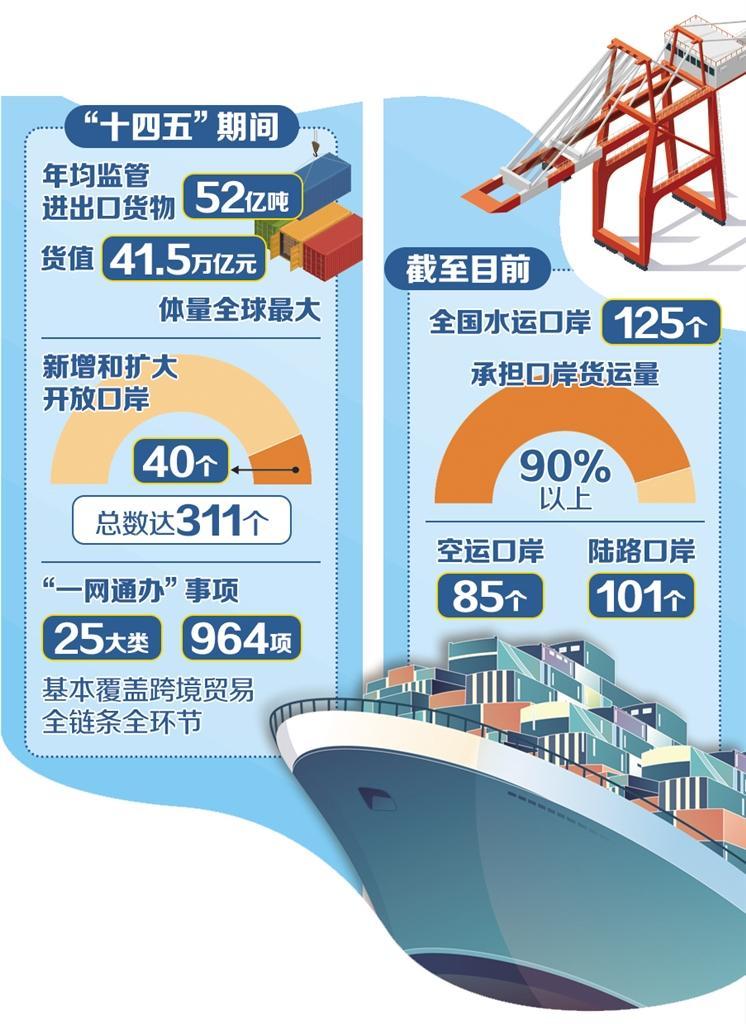
Core Insights - During the "14th Five-Year Plan" period, China's customs has achieved an average annual supervision of 5.2 billion tons of import and export goods, with a total value of 41.5 trillion yuan, making it the largest in the world [3][4] - The customs authority has added and expanded 40 open ports, bringing the total to 311, and has implemented 964 items across 25 categories for cross-border trade facilitation [3][4] Customs Development - The customs modernization has made significant progress, enhancing regulatory efficiency and service levels, which supports high-quality development and high-level opening up [4][5] - The "One Port Pass" regulatory model in the Guangdong-Hong Kong-Macao Greater Bay Area has reduced cargo transfer time from 5-7 days to 2-3 days [5] Trade Facilitation - Cross-border trade facilitation is essential for high-level opening up and optimizing the business environment, with 108 reform measures introduced during the "14th Five-Year Plan" [5][6] - The customs has implemented a 7×24 hour appointment system for customs clearance and integrated with 30 departments for a "single window" service [5][6] Port Capacity and Structure - As of now, China has 125 water transport ports, 85 air transport ports, and 101 land transport ports, with significant increases in cargo volumes expected [7][8] - Special customs supervision areas have been established, contributing to one-fifth of the total import and export value while covering less than 0.01% of the national territory [7][8] New Trade Dynamics - The customs has innovated regulatory models for cross-border e-commerce and bonded warehouses, leading to a 2.6 times increase in the export of "new three samples" by 2024 compared to 2020 [9][10] - The protection of intellectual property rights has become a focus, with nearly 20,000 new rights holders registered during the "14th Five-Year Plan" [10]
关通全球 物达八方 “十四五”期间海关年均监管进出口货物体量全球最大
Jing Ji Ri Bao· 2025-08-25 21:56
Core Insights - The article highlights the significant achievements of China's customs modernization and trade facilitation efforts during the "14th Five-Year Plan" period, showcasing the resilience and vitality of the country's foreign trade amidst global uncertainties [1][2][8]. Customs Development and Trade Facilitation - The annual supervision of import and export goods reached 5.2 billion tons, with a total value of 41.5 trillion yuan, making it the largest globally [1]. - The introduction of 40 new and expanded open ports has brought the total to 311, enhancing the country's trade infrastructure [1]. - The "One Network for All" initiative has streamlined 964 items across 25 categories, covering the entire cross-border trade chain [1][2]. Innovations in Customs Operations - In the Guangdong-Hong Kong-Macao Greater Bay Area, the "One Port Pass" regulatory model has reduced cargo transfer times from 5-7 days to 2-3 days [2]. - The establishment of a "green channel" for agricultural imports allows fresh fruits from neighboring countries to reach major markets like Guangzhou and Beijing within 7 to 30 hours [2]. - The customs authority has implemented 108 reform measures to create a more convenient, safe, and predictable trade environment across 25 cities in 17 provinces [2]. Smart Customs and Technological Integration - The integration of technology in customs operations is advancing, with a focus on big data, artificial intelligence, and automation to enhance regulatory efficiency and service levels [3][2]. - The customs modernization efforts are supported by deep integration of technological innovation with industry practices [3]. Port and Trade Capacity Expansion - The number of water transport ports has reached 125, handling over 90% of the national cargo volume, while air and land ports have also seen significant growth [4]. - By 2024, the import and export cargo volume at water ports is expected to exceed 4.3 billion tons, marking a 10% increase from the end of the "13th Five-Year Plan" [4]. - Special customs supervision areas have contributed significantly to foreign trade, accounting for one-fifth of total import and export value despite occupying less than 0.01% of the national territory [4][5]. New Trade Dynamics and Intellectual Property Protection - The emergence of new trade dynamics, such as cross-border e-commerce and overseas warehouses, has accelerated the growth of foreign trade [7]. - The export of innovative products has increased significantly, with "new three samples" exports growing 2.6 times since 2020 [7]. - Intellectual property protection has become a focal point, with nearly 20,000 new rights holders registered and close to 100,000 intellectual property records filed during the "14th Five-Year Plan" [7]. Future Directions - The customs authority plans to continue enhancing regulatory efficiency, safety, and convenience while combating smuggling and illegal activities to support China's modernization efforts [8].
高质量完成“十四五”规划|关通全球、物达八方——“十四五”海关交出守国门、促发展亮眼答卷
Xin Hua She· 2025-08-25 14:01
Core Insights - The article highlights the achievements of the Customs during the "14th Five-Year Plan" period in safeguarding national borders and promoting high-quality development [1] Group 1: National Border Security Achievements - The Customs has managed an average of 5.2 billion tons of import and export goods annually, with a total value of 41.5 trillion yuan, making it the largest globally [2] - A total of 5.15 million pieces of prohibited items related to politics, firearms, and explosives were seized, along with 180,000 cases of infectious diseases detected [2] - The Customs has collected taxes amounting to 9.7 trillion yuan and has effectively curbed smuggling activities, with 23,000 smuggling cases investigated [2] Group 2: Public Health and Safety Measures - The Customs has established a 24/7 epidemic monitoring network covering over 220 countries and regions, conducting quarantine for over 600 million incoming travelers [3] - A total of 12,000 batches of substandard goods and 68,000 defective vehicles were intercepted to ensure consumer safety [3] Group 3: High-Quality Development Progress - China remains the world's largest trading nation, with exports of "new three samples" increasing by 2.6 times compared to 2020 [4] - The Customs has added 271 types of agricultural products from 81 new countries/regions during the "14th Five-Year Plan" [4] - A total of 260,000 batches of suspected infringing goods were seized, amounting to nearly 400 million items, to protect intellectual property [4] Group 4: Enhanced Open Economy - The number of open ports has increased to 311, with 40 new ports added during the "14th Five-Year Plan" [6] - The establishment of 19 new special customs supervision areas has contributed significantly to the national import and export value, with a growth of over 30% compared to the end of the "13th Five-Year Plan" [6] - The Hainan Free Trade Port is set to officially launch its full closure by the end of the year, with preparations underway [6] Group 5: Cross-Border Trade Facilitation - The Customs has collaborated with over 20 national ministries to conduct annual cross-border trade facilitation initiatives, resulting in 108 reform measures [7] - According to a World Bank survey, China's customs and trade regulations received the highest ratings among 53 economies [7]
海关总署:183万件假LABUBU被拦截!
Jin Rong Shi Bao· 2025-08-25 09:53
Core Insights - The press conference highlighted the achievements of the customs authority in safeguarding national security and promoting high-quality development during the "14th Five-Year Plan" period [1] Group 1: Customs Oversight and Security - The customs authority has averaged 5.2 billion tons of import and export goods annually, with a total value of 41.5 trillion yuan, making it the largest globally [2] - A total of 5.15 million pieces of prohibited items related to politics, firearms, and explosives were seized, along with 180,000 cases of infectious diseases detected [2] - The customs authority has maintained a high-pressure stance against smuggling, with 23,000 smuggling cases investigated [3] Group 2: Intellectual Property Protection - The customs authority has conducted several special operations to combat intellectual property infringement, resulting in the seizure of 260,000 batches of suspected infringing goods, totaling nearly 400 million items [4] - New measures have been implemented to enhance service efficiency for rights holders, including online registration and rights confirmation [4] - The customs authority has strengthened cooperation with domestic departments and engaged in international joint law enforcement actions to improve enforcement effectiveness [4][5] Group 3: Technological Advancements and Trade Facilitation - The "Smart Customs" initiative has been implemented, covering 80% of air ports, allowing for seamless and rapid customs clearance for travelers [6] - A total of 40 new and expanded open ports have been established, bringing the total to 311, enhancing trade and cultural exchanges [7] Group 4: Economic Contributions and Trade Growth - Special customs supervision areas have contributed to one-fifth of the national import and export value despite occupying less than 0.00002 of the country's land area [8] - The export of "new three items" is projected to increase by 2.6 times by 2024 compared to 2020, reflecting the growth of new trade dynamics [9] - China has become one of the top three trading partners for 157 countries/regions, with significant growth in trade with emerging markets [10]
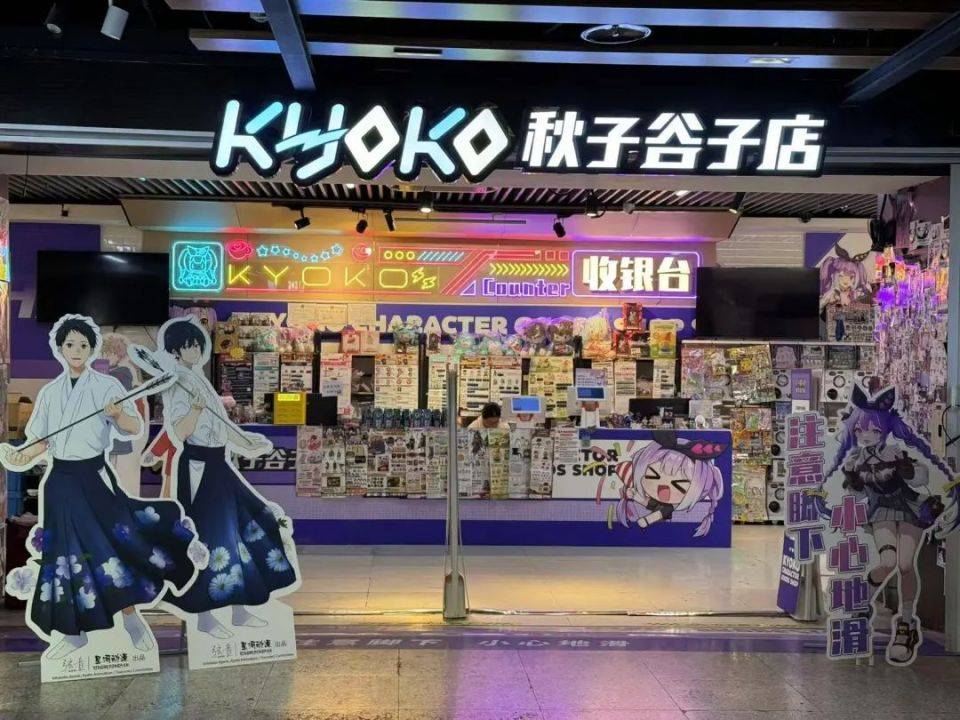
徽章单克超黄金!谷子经济凭啥让年轻人掏空钱包?
Sou Hu Cai Jing· 2025-05-30 02:42
Core Insights - The rise of the "Guzi Economy" is reshaping consumption patterns among young people in China's competitive subculture market, with an expected market size of nearly 600 billion yuan in 2024, of which 28% (approximately 168.9 billion yuan) will be attributed to the Guzi Economy, projected to exceed 300 billion yuan by 2029, growing at an annual rate of 40% [1][3][6] Group 1: Market Dynamics - The Guzi Economy is driven by the success of domestic IPs like "Genshin Impact" and "Nezha: Birth of the Demon Child," which integrate traditional Chinese cultural elements, fostering a deep emotional connection between consumers and virtual characters, leading them to pay premium prices for related merchandise [3][5] - The business model behind the Guzi Economy is characterized by low production costs and high markups, with items like anime badges costing only 2 to 5 yuan to produce but selling for tens or even thousands of yuan, as they serve as emotional carriers for fans [5][6] - The unique consumption ecosystem within the subculture encourages fans to purchase merchandise as a form of support for their favorite IPs, creating a psychological link where increased spending is equated with greater support [5][6] Group 2: Cultural and Economic Implications - The Guzi Economy reflects a deeper industrial logic, supported by Japan's successful "content-merchandise-tourism" model, exemplified by "Demon Slayer," which has generated over 1 trillion yen in merchandise sales [6][7] - The rise of domestic IPs has led to a resonance between the Guzi Economy and the cultural industry, with works like "Chang'an 30,000 Li" visually expressing traditional culture and expanding consumption scenarios into emerging formats like VR exhibitions and the metaverse [7][9] Group 3: Entrepreneurial Opportunities - Entrepreneurs have opportunities in this billion-yuan market, especially with policy support that encourages the transformation of traditional shopping centers into "subculture landmarks," offering up to 30% rent subsidies [9][10] - In lower-tier cities, where per capita annual spending on Guzi products is significantly lower than in first-tier cities (800 yuan vs. less than 200 yuan), entrepreneurs can tap into this potential by opening small stores near schools or utilizing online platforms for pre-sales [9][10] Group 4: Future Trends - The essence of the Guzi Economy lies in infusing emotional value into products, with future developments potentially including AR interactive figures, NFT digital merchandise, and virtual exhibitions, all aimed at fulfilling the human need for emotional connection [12]