《股票大作手回忆录》

Search documents
趋势交易有关的精华书单
猛兽派选股· 2026-01-17 05:23
Core Concepts - The article discusses various influential books that provide insights into investment strategies, trading systems, and psychological aspects of trading, emphasizing the importance of understanding complex theories and behavioral economics in the financial markets [1][2][3][4][5][6][7][8] Group 1: Fundamental Thinking - "Complex" by Michele Waldrop introduces complex theory in economics, highlighting the evolution of thought among academic elites and its implications for understanding stock markets through multi-dimensional thinking [1] - "Nudge" by Richard Thaler explores the intersection of economics and psychology, revealing human biases and impulsive behaviors that challenge traditional economic assumptions, offering valuable insights for investment and life [1] - "The Art of War" by Sun Tzu provides strategic principles applicable to stock trading, such as cautious engagement and psychological tactics, which can enhance trading decisions [1] Group 2: Trading Systems - "Market Wizards" by Stan Weinstein outlines a comprehensive trend trading system, emphasizing the importance of understanding market phases and relative strength, making it an excellent entry point for traders [2] - "Stock Market Wizards" by Mark Minervini offers a refined trading system with practical insights, building upon Weinstein's work and providing a deeper understanding of trend speculation [2] - "How to Make Money in Stocks" by William O'Neil presents the CANSLIM system, which encapsulates the essence of trend speculation and has proven effective for many of O'Neil's disciples [3] Group 3: Technical Tactics - "Technical Analysis of the Futures Markets" by John Murphy serves as a comprehensive guide to technical analysis, combining practical application with authoritative insights, making it a revered resource in the field [4] - "The Chen Theory" by Chen Zhongshuo integrates mathematical logic with market dynamics, offering a unique perspective on technical analysis that stands out among conventional literature [4] - "The Wyckoff Method" by Meng Hongtao simplifies the complex Wyckoff theory, focusing on the essence of price-volume analysis and its relevance to contemporary behavioral economics [5] Group 4: Psychological Aspects - "The Wall Street Ghost" emphasizes the importance of psychological preparedness and decisiveness in trading, highlighting the mental aspects that can influence trading success [7] - "Reminiscences of a Stock Operator" by Jesse Livermore provides insights into the psychological challenges faced by traders, focusing on mindset and behavior in the face of market volatility [7] Group 5: Trading History and Personalities - "Market Wizards" by Jack Schwager documents interviews with successful traders, offering valuable lessons and insights into their strategies and mindsets, beneficial for aspiring traders [8] - "The New Market Wizards" continues the exploration of trading success stories, providing inspiration and practical wisdom for future market participants [8]


十一长假充电指南:5类投资好书助你逆袭“财富认知”
雪球· 2025-10-03 07:58
Group 1 - The article emphasizes the importance of financial literacy and developing a proper money mindset as the first step towards wealth freedom, especially for beginners who feel they have "no money to manage" [4][5][6] - It introduces engaging and easy-to-understand books like "The Rich Dad Poor Dad" and "The Little Money Dog" to help readers build a new understanding of wealth and financial management [5][6] - The article highlights the significance of value investing, founded by Benjamin Graham, which focuses on finding stocks priced below their intrinsic value for long-term gains [8][9] Group 2 - "The Intelligent Investor" is presented as a foundational text in value investing, introducing the concept of "margin of safety" to protect against market volatility [9] - "Warren Buffett's Letters to Shareholders" provides insights into Buffett's investment philosophy, emphasizing the importance of long-term competitive advantages and intrinsic value over short-term price fluctuations [10] - Practical methods for applying value investing principles in stock selection and asset allocation are discussed, including industry analysis and financial metrics [11][12] Group 3 - The article discusses the basics of technical analysis, which helps investors make informed decisions based on historical price and volume data [15][16] - "Japanese Candlestick Charting Techniques" is recommended for understanding market trends and buy/sell signals through candlestick patterns [16] - "Market Trend Analysis" is highlighted as a comprehensive guide to identifying market trends and managing risk through various technical indicators [17][18] Group 4 - The importance of a systematic trading approach is emphasized, with "The Turtle Trading Rules" providing a framework for disciplined trading based on clear entry and exit rules [20] - "The Simplest Thing in Investing" offers localized strategies for the A-share market, focusing on finding undervalued stocks and understanding pricing power [21] Group 5 - The article stresses the psychological aspects of investing, highlighting the need for a rational mindset to navigate market volatility [22][23] - "Poor Charlie's Almanack" is recommended for its insights into multi-disciplinary thinking and investment philosophy [24] - "The Most Important Thing" by Howard Marks emphasizes understanding market cycles and risk management as key components of successful investing [25] Group 6 - The article addresses the impact of human psychology on investment decisions, suggesting strategies to overcome emotional biases [26][27] - "Reminiscences of a Stock Operator" illustrates the influence of fear and greed on trading behavior through the life of Jesse Livermore [27] - "Fooled by Randomness" warns against cognitive biases and emphasizes the importance of risk management in unpredictable markets [28] Group 7 - The article provides a reading strategy for efficiently absorbing investment knowledge during holidays, suggesting a mix of short and long reading sessions [30][31] - It encourages practical application of learned concepts by identifying actionable insights from each book read [34][35] - The importance of verifying investment theories against current market conditions is highlighted to avoid blind adherence to strategies [36]

《海龟交易法则》的作者破产,从赚取亿万到流落街头,投资到底靠什么才能走远?
雪球· 2025-09-21 13:01
Core Viewpoint - The article reflects on the downfall of Curtis Faith, the author of the "Turtle Trading Rules," highlighting the contrast between his past success as a trader and his current state of bankruptcy and homelessness, emphasizing the unpredictability of life and the importance of discipline in trading [3][4][18]. Group 1: Turtle Trading Rules - The Turtle Trading Rules, developed in the 1980s by Richard Dennis and William Eckhardt, is a well-known mechanical trading system that proved trading can be taught [5][6]. - The system is based on trend-following principles, where traders buy when prices break above certain levels and sell when they fall below others, focusing on capturing market trends [7][10]. - Key components of the system include entry signals based on price breakouts, risk management by limiting exposure to 1% of account funds per trade, and strict stop-loss rules to cut losses [7][10]. Group 2: Curtis Faith's Journey - Curtis Faith was one of the youngest Turtle Traders, achieving significant profits early in his career, reportedly earning over $10 million for his fund [15][17]. - After leaving the Turtle program, he attempted various ventures, including startups in IT and blockchain, but faced numerous failures, leading to financial ruin [19][25]. - His recent legal troubles and homelessness serve as a cautionary tale about the volatility of trading success and the risks of overextending in speculative ventures [13][28]. Group 3: Lessons Learned - The article emphasizes the importance of skepticism towards trading gurus, suggesting that even successful traders can face significant failures, as demonstrated by Faith's experience [30][32]. - It warns against excessive risk-taking and highlights the need for disciplined investment strategies, contrasting trend-following with value investing approaches [34][37]. - The narrative concludes with a reflection on the long-term nature of successful investing, advocating for diversified asset allocation as a means to withstand market fluctuations [50].

为啥你炒股赚不到大钱?因为你缺了这个最重要的东西
商业洞察· 2025-08-30 10:09
Core Viewpoint - The article emphasizes the importance of patience and long-term holding in value investing, highlighting that true wealth is generated by identifying and holding onto exceptional companies over time [3][5][6]. Group 1: Investment Philosophy - Frederick R. Kobrick advocates for a two-pronged approach to investing: selecting outstanding companies and maintaining patience in holding their stocks [3]. - The BASM framework (Business model, Assumptions, Strategy, Management) is introduced as a reliable method for identifying companies with growth potential [3][11]. - The article stresses that many investors fail to achieve significant wealth because they lack the patience to hold onto their investments long enough [5][6]. Group 2: Importance of Patience - Patience is highlighted as a critical factor in successful investing, with the assertion that many investors who correctly time the market do not ultimately profit due to their inability to hold [5][6]. - Historical examples, such as Circuit City, illustrate how patience can lead to substantial returns, with stock prices potentially increasing significantly over time [14][19]. - The article warns against the common mistake of selling stocks prematurely after short-term gains, which can result in missing out on much larger profits [8][9]. Group 3: Metrics for Evaluation - Investors are encouraged to focus on specific performance metrics, such as Return on Capital (ROC) and Return on Equity (ROE), to assess a company's growth potential [11][12]. - The importance of comparing companies within the same industry using common metrics is emphasized to identify true winners [12]. - The article suggests that understanding a company's operational capabilities and market position is crucial for making informed investment decisions [17][20]. Group 4: Case Studies - The article references Coca-Cola as an example of a company that can yield significant returns for patient investors, particularly during market downturns [19][20]. - The narrative of Circuit City demonstrates how a well-executed business strategy can lead to remarkable stock performance, even in challenging economic conditions [14][19]. - The article concludes that maintaining a long-term perspective and understanding the underlying business fundamentals can provide investors with opportunities to capitalize on market volatility [20][21].

人到中年一定要读的5本经典好书,培养投资理财思维,太太太醒脑了
Sou Hu Cai Jing· 2025-05-21 08:11
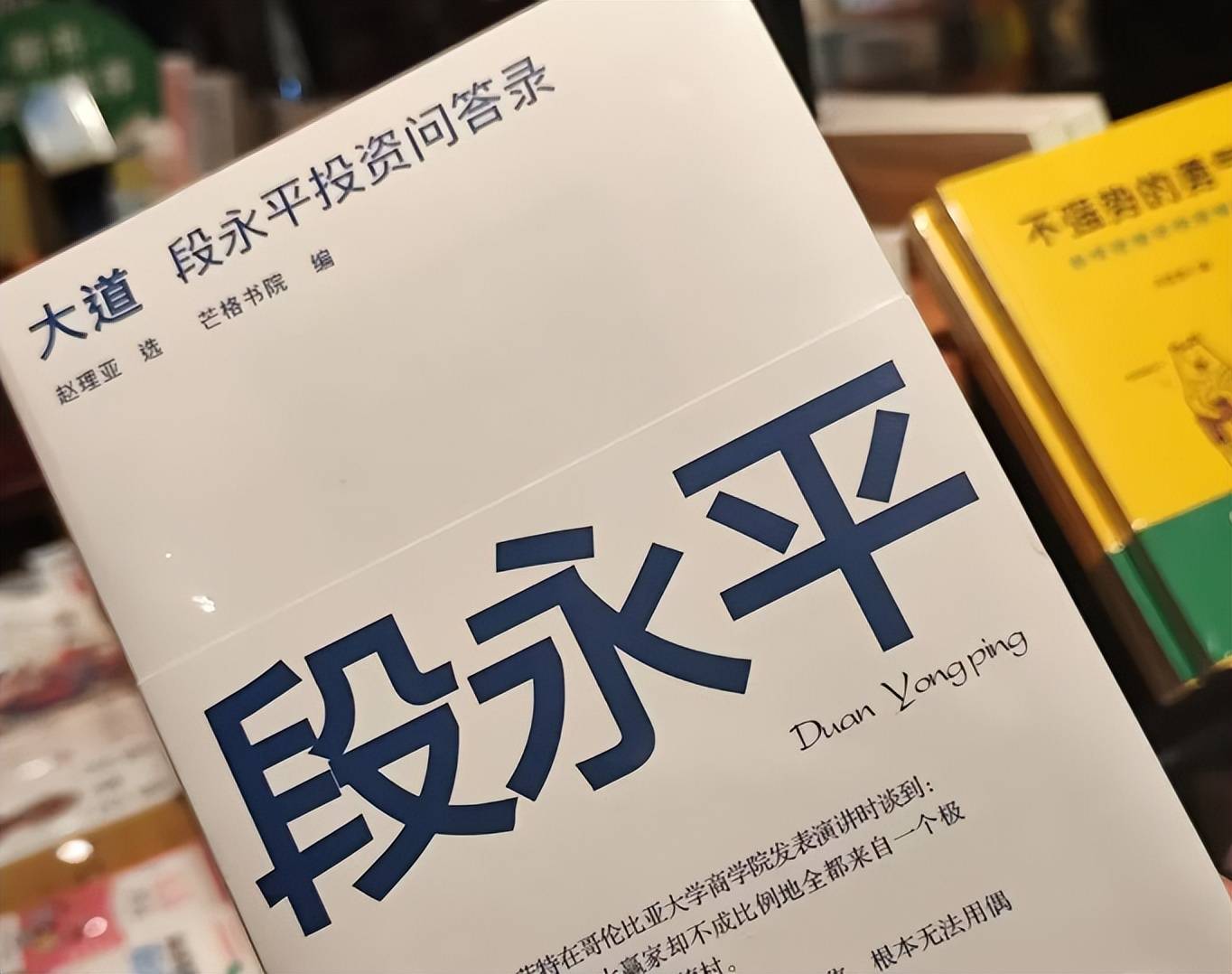
Core Insights - The articles emphasize the importance of investment as a means to achieve financial freedom and personal growth, highlighting the challenges and opportunities within the investment landscape [1][2][4]. Group 1: Investment Literature - Investment books serve as valuable guides, providing insights into market complexities and sharing practical experiences [2][3]. - They help cultivate a sound investment mindset, teaching readers to remain calm amidst market fluctuations and to identify opportunities in uncertainty [4][5]. Group 2: Recommended Books - "The Way: Investment Q&A with Duan Yongping" offers insights from Duan Yongping's experiences, covering investment wisdom and personal philosophies [6][7][8]. - "The Intelligent Investor" by Benjamin Graham is regarded as a foundational text in value investing, emphasizing rational decision-making and the concept of "margin of safety" [11][12][13]. - "Wealth Depends on K-Waves" by Zhou Jintao provides a macroeconomic perspective on wealth accumulation, linking individual fortunes to economic cycles [17][18][19]. - "The Investment Moat" by Heather Brilint teaches investors how to identify companies with sustainable competitive advantages, focusing on long-term value rather than short-term market trends [21][22][24]. - "Reminiscences of a Stock Operator" by Edwin Lefevre narrates the life of Jesse Livermore, illustrating the psychological aspects of trading and the importance of self-awareness in investment decisions [28][30][31].
【读书日福利】中奖名单来啦!
天天基金网· 2025-05-06 11:05
Core Viewpoint - The article highlights the importance of reading and self-investment in the context of financial growth, emphasizing that knowledge gained through books can lead to significant future wealth [1][6]. Group 1: Event Overview - The company hosted a special event for World Book Day from April 23 to May 5, offering exclusive investment insights alongside a reading initiative [1]. - Participants engaged actively, sharing their insights and book recommendations, which were evaluated based on likes and content quality [1]. Group 2: Book Recommendations - Five lucky participants were selected to receive a copy of "Blood and Wealth," with their recommended books including: - "Reminiscences of a Stock Operator" [2] - "Cycles: Capturing Opportunities in Extreme Volatility" [1] - "Poor Charlie's Almanack: Avoiding Pain" [2] - "The Way of Munger: The Importance of Value Investing" [5] Group 3: Future Engagement - The company plans to organize more engaging activities in the future, encouraging participants to follow their official account for updates [6].