康德拉季耶夫周期

Search documents
基金经理投资笔记 | 基于周期阶段的2026年资产优先级选择
Sou Hu Cai Jing· 2025-12-06 05:46
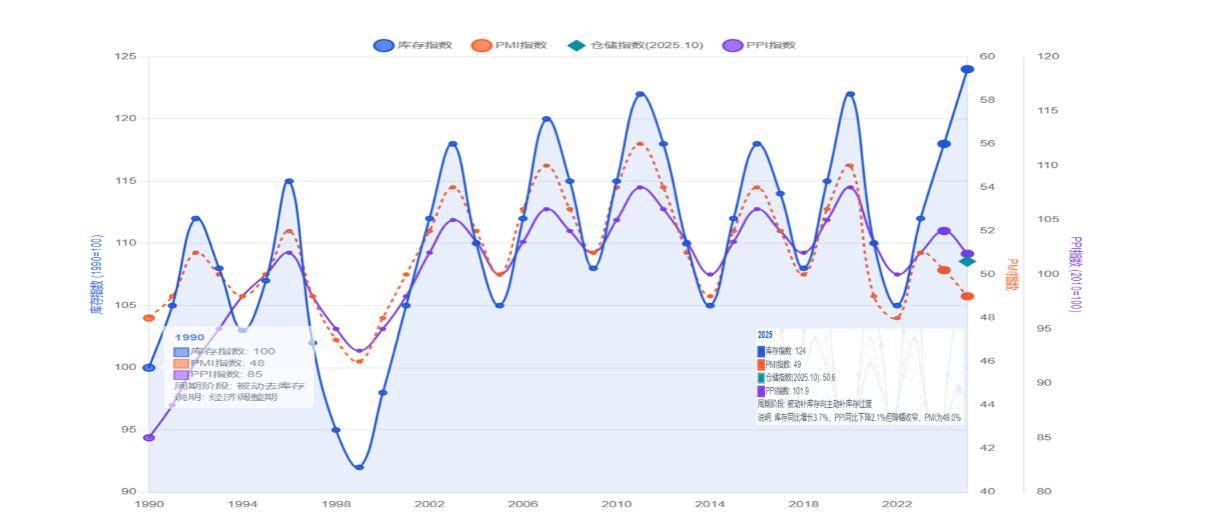
Core Viewpoint - The article discusses the transition in economic cycles and the implications for wealth management, emphasizing the importance of structural debt and fiscal policy over monetary policy in the context of liquidity changes expected in 2026 compared to 2025 [1] Economic Cycle Analysis Framework - Economic cycle analysis should not be confined to traditional macro asset allocation frameworks, as it emphasizes structural issues rather than aggregate concepts [2] - The economic cycle consists of regular expansions and contractions, categorized into long, medium, and short cycles, including the Kondratieff, Juglar, Kuznets, and Minsky cycles [2] Phases of the Real Cycle - The real cycle is divided into three main cycles: Kondratieff, Juglar, and inventory cycles [3] Kondratieff Cycle: Technological and Energy Revolutions - The Kondratieff cycle spans approximately 60 years, focusing on technological changes and resource dynamics, with current consensus highlighting AI and its supporting infrastructure as key drivers [4] - The cycle illustrates the interplay between technological efficiency and resource consumption, leading to a demand cycle [4] Juglar Cycle: Equipment Investment - The Juglar cycle, lasting 7-11 years, is driven by periodic changes in equipment investment and capital expenditure, with China currently in the early recovery phase of its sixth Juglar cycle [6][7] - Key characteristics of the current Juglar cycle include the transition from old to new driving forces, accelerated technological iteration, and significant industry differentiation [8][9] Inventory Cycle: Transition from Passive to Active Inventory Management - The inventory cycle consists of four stages, with the current phase indicating a shift from passive to active inventory management, influenced by internal market dynamics [10] - Recent data shows a decline in manufacturing PMI, indicating weak demand and a challenging environment for inventory management [10][11] Phases of the Financial Cycle - The financial cycle focuses on real estate and debt cycles, with China still undergoing a significant adjustment in its real estate market since 2020 [13][14] - The Minsky cycle describes a pattern of credit expansion leading to financial instability, with current conditions characterized by low interest rates and a gradual rise in macro leverage [17][18] Asset Prioritization Based on Cycle Phases - The asset allocation strategy for 2026 emphasizes the resonance between the Kondratieff and Juglar cycles, focusing on new productive forces while maintaining defensive positions in a low-interest environment [19] - Specific investment areas include AI computing, industrial robotics, and green energy, while avoiding high-risk assets related to the ongoing real estate adjustment [19]

回归经济周期的本源|《财经》书评
Sou Hu Cai Jing· 2025-11-15 09:54
Core Insights - The article discusses the cyclical nature of economic cycles, emphasizing that they are intrinsic to the capitalist economic system and not merely external disturbances [4][6] - Joseph Schumpeter's work on economic cycles, particularly his 1939 book "Business Cycles," is highlighted as a significant contribution to understanding the relationship between innovation and economic fluctuations [3][4][8] Group 1: Economic Cycles and Growth - Economic cycles are characterized by alternating periods of prosperity and recession, which are essential features of capitalist economic growth [4][6] - Schumpeter's perspective integrates economic cycles with economic growth, contrasting with mainstream theories that treat them as separate phenomena [4][7] Group 2: Schumpeter's Contributions - Schumpeter's early works laid the foundation for his later theories on economic cycles, with significant revisions and expansions made throughout his career [3][5] - His concept of "creative destruction" is central to understanding how entrepreneurial innovation drives economic cycles [4][8] Group 3: Reception and Impact of "Business Cycles" - "Business Cycles" faced challenges upon publication, including its extensive length and the timing coinciding with the rise of Keynesian economics [6][7] - Despite initial setbacks, Schumpeter's theories gained renewed interest in the late 20th century, particularly in response to economic crises [7][8] Group 4: Historical Context and Relevance - The recent translation of "Business Cycles" into Chinese is seen as timely, given the ongoing economic challenges and the potential for new technological innovations to influence future cycles [8][9] - The book contains extensive historical and statistical analyses that provide valuable insights into the nature of economic cycles [9]

创金合信基金魏凤春:AI的尽头是能源
Xin Lang Ji Jin· 2025-09-22 03:14
Core Viewpoint - The article discusses the recent fluctuations in risk premiums, the impact of the Federal Reserve's interest rate cuts, and the adjustments in the A-share market amidst external shocks and domestic economic data indicating weakening internal momentum [1] Market Review - The coal sector has shown significant performance, attributed to both the effects of anti-involution and changes in global resource pricing logic due to geopolitical tensions [2] - The A-share market has seen a divergence in sentiment, with expectations of a shift from stocks to bonds, driven by the accelerated reduction of the national balance sheet and restored risk appetite [1][2] Macroeconomic Data - Consumer retail sales in August grew by 3.4% year-on-year, indicating ongoing adjustments in the consumption market, while real estate sales remain low, contributing to weak domestic demand [5] - Foreign direct investment (FDI) in China decreased by 12.7% from January to August, although high-tech sectors continue to attract significant interest, with notable increases in investment in e-commerce and aerospace [6] - Fiscal revenue for the first eight months of 2025 grew by 0.3%, with central government revenue declining by 1.7%, highlighting the need for fiscal expansion to support economic recovery [7] AI+ Investment Trends - The transition from theme-based investment in AI to a dominant industry investment is anticipated, with ongoing adjustments in the technology sector [8] - The investment logic post-adjustment for technology stocks emphasizes prioritizing global supply chains and innovative business models [8] Technical Indicators - Various sentiment indicators such as RSI, MACD, and KDJ show mixed signals, indicating market volatility and uncertainty regarding the end of the current adjustment phase [9][10][11] - The overall conclusion suggests that while there are signs of recovery in the A-share market, a clear upward trend has not yet been established [12] Energy Sector Insights - The article posits that the future of technology is closely tied to energy resources, emphasizing the importance of sustainable energy development to support high-tech advancements [14][15] - The shift in investor focus towards energy, particularly coal, is seen as a response to changing geopolitical dynamics and the need for tangible assets in a shifting market landscape [15][16]
人到中年一定要读的5本经典好书,培养投资理财思维,太太太醒脑了
Sou Hu Cai Jing· 2025-05-21 08:11
Core Insights - The articles emphasize the importance of investment as a means to achieve financial freedom and personal growth, highlighting the challenges and opportunities within the investment landscape [1][2][4]. Group 1: Investment Literature - Investment books serve as valuable guides, providing insights into market complexities and sharing practical experiences [2][3]. - They help cultivate a sound investment mindset, teaching readers to remain calm amidst market fluctuations and to identify opportunities in uncertainty [4][5]. Group 2: Recommended Books - "The Way: Investment Q&A with Duan Yongping" offers insights from Duan Yongping's experiences, covering investment wisdom and personal philosophies [6][7][8]. - "The Intelligent Investor" by Benjamin Graham is regarded as a foundational text in value investing, emphasizing rational decision-making and the concept of "margin of safety" [11][12][13]. - "Wealth Depends on K-Waves" by Zhou Jintao provides a macroeconomic perspective on wealth accumulation, linking individual fortunes to economic cycles [17][18][19]. - "The Investment Moat" by Heather Brilint teaches investors how to identify companies with sustainable competitive advantages, focusing on long-term value rather than short-term market trends [21][22][24]. - "Reminiscences of a Stock Operator" by Edwin Lefevre narrates the life of Jesse Livermore, illustrating the psychological aspects of trading and the importance of self-awareness in investment decisions [28][30][31].