《逆行人生》

Search documents
文艺创作怎样跟上“时代进度条”(坚持“两创”·关注新时代文艺)
Ren Min Ri Bao· 2025-09-29 22:12
Core Viewpoint - The current creative landscape is influenced by the interplay of art and technology, art and media, and art and social emotions, suggesting that innovation and exploration are essential for breaking conventional patterns and discovering new realms [5] Group 1: Art and Technology - The sci-fi film "The Wandering Earth 3" is adapting its script in response to real technological advancements, reflecting the rapid progress of Chinese technology [1] - New technologies have lowered the barriers to artistic creation, allowing creators to focus more on creativity rather than manual labor, thus enhancing the quality of artistic expression [2] - In the animation film sector, the freedom of creation is vast, but the quality of the work heavily relies on the creator's thoughts, creativity, and emotions [2] Group 2: Media Integration - The integration of media has introduced new expressive methods, requiring creators to adopt cross-media thinking to achieve unique and effective results [3] - Historical novels are being creatively written using computational systems thinking, transforming traditional narrative structures into new forms of storytelling [3] - The gaming industry is exploring a new realism that focuses on discovering the underlying rules of the world through player experiences, which can also influence film narratives [3] Group 3: Social Emotions - Creators must continuously study changing social emotions to ensure their work resonates with contemporary audiences [4] - The film "Nanjing Photo Studio" effectively engages with historical trauma through innovative storytelling techniques, while "Reverse Life" struggles to connect with social issues due to a lack of depth in character understanding [4]
“最大公约数”,救不了中国电影
虎嗅APP· 2025-09-07 02:51
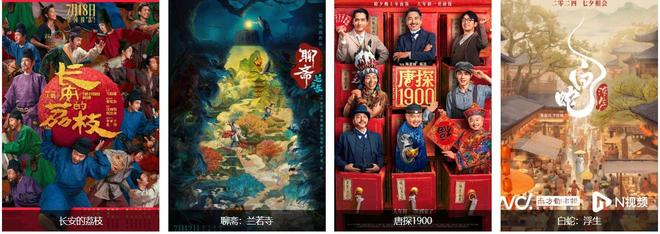
Core Viewpoint - The article discusses the current state of the Chinese film industry, highlighting the challenges it faces in retaining audiences and the impact of changing viewer demographics on box office performance [4][6][10]. Group 1: Box Office Performance - The summer box office in China reached nearly 120 billion, surpassing the same period last year, indicating a recovery despite earlier struggles [6]. - The top five films of the summer included "Nanjing Photo Studio," "Wandering Monster," "Chasing the Wind," "Lychee of Chang'an," and "Jurassic World: Rebirth," with the first three receiving ratings above 8 on Douban [6]. - "Nezha 2" achieved a remarkable box office of 15 billion, leading to mixed opinions on whether it expanded the market's potential or exhausted it [5][6]. Group 2: Audience Demographics - The total number of viewers during the summer season decreased by nearly 200 million compared to 2023, with an average cinema occupancy rate of only 6.9% [7][10]. - The average age of moviegoers increased from 27.7 years in 2021 to 32.5 years in 2023, suggesting that the same audience is simply aging [7][10]. Group 3: Industry Challenges - The article emphasizes that the Chinese cinema industry is losing its audience, with the relationship between viewers and films changing significantly over the years [7][10]. - The rapid growth of cinema infrastructure in lower-tier cities and the introduction of low-cost tickets previously attracted new audiences, but this growth has plateaued [9][10]. - The pandemic and subsequent cinema closures have disrupted the viewing habits of the new generation, leading to a decline in cinema attendance [10][11]. Group 4: Changing Consumption Patterns - The rise of alternative entertainment options, such as short videos and online games, has made it more challenging for cinemas to attract viewers [10][11]. - The cost of attending cinemas has increased, with ticket prices now averaging between 40 to 50 yuan or more, alongside the time commitment required for a film [13][12]. Group 5: Emotional Engagement and Content Strategy - The article suggests that films need to connect with social emotions to become relevant and generate discussions on social media, transforming them into "social currency" [14][15]. - Successful films like "The Disappeared Her" and "Nanjing Photo Studio" have effectively captured contemporary societal anxieties, leading to significant box office success [14][20]. - The focus on creating films that resonate with specific audience segments rather than attempting to appeal to the broadest possible audience is emphasized as a more sustainable strategy [20][18].


最近每部电影都在宣传「牛马必看」,但打工人根本不想照镜子
36氪· 2025-08-17 13:34
Core Viewpoint - The article discusses the emergence of a new genre termed "cow and horse movies," which resonate with the struggles of ordinary workers, reflecting their realities and emotions through various narratives and settings [6][10][37]. Group 1: Overview of "Cow and Horse Movies" - This summer, the dominant theme in cinemas has shifted to "cow and horse movies," which are characterized as realistic and satirical films that resonate with the experiences of ordinary workers [8][11]. - Notable films in this genre include "The Lychee of Chang'an," "The Little Monster of Langlang Mountain," and "The Stage," all of which focus on the lives and struggles of working-class individuals [6][12][49]. - The initial box office predictions for "The Lychee of Chang'an" were optimistic at 20 billion, but industry expectations have since been adjusted to 7-8 billion, indicating a struggle to meet financial expectations [12][40]. Group 2: Audience Reception and Emotional Impact - Audience reactions to these films are complex, with many expressing that the narratives reflect their own lives, leading to a mix of laughter and tears during viewings [9][21]. - The films have been well-received, with ratings on Douban showing "The Lychee of Chang'an" at 7.6, "The Little Monster of Langlang Mountain" at 8.6, and "The Stage" at 8.0, all exceeding the average ratings for domestic films [50][49]. - Viewers report that the films provide a cathartic experience, allowing them to release pent-up emotions related to their work lives [22][64]. Group 3: Industry Trends and Future Prospects - The trend of creating films that highlight the struggles of workers is gaining traction, with increasing investment in this genre and a growing number of productions focusing on the working-class narrative [26][39]. - The success of these films hinges on their ability to accurately capture and resonate with the emotions of the audience, as well as the quality of the final product [17][37]. - The article notes that while there is potential for success in this genre, there are also risks if the films fail to connect with the audience or if they become overly focused on depicting suffering without offering resolution [68][79].

王健林再卖资产,柯利明2.4亿元入主快钱,此前参股潮玩
Nan Fang Du Shi Bao· 2025-07-24 03:25
Group 1 - The core point of the article is that China Ruyi has acquired a 30% stake in Kuaiqian Financial Services for 240 million yuan, becoming the largest shareholder, which will help diversify its business into third-party payment and fintech sectors [1] - The acquisition is expected to leverage the target company's industry resources, technological capabilities, and policy advantages, providing long-term strategic synergies and potential growth opportunities for China Ruyi [1] - China Ruyi's main business segments include film and television content production, an online streaming platform called Pumpkin Movies, and a mobile gaming company named Jingxiu Games [2][4] Group 2 - In 2024, China Ruyi achieved a revenue of 3.671 billion yuan, a year-on-year increase of 1.21%, with adjusted net profit rising by 120% to 1.251 billion yuan [4] - The company has conducted two rounds of financing in 2025, raising a total of approximately 6.265 billion yuan for business growth and expansion, including content production and game development [4] - China Ruyi also announced plans to acquire a 30% stake in Beijing Yonghang Technology for 825 million yuan, which is known for its QQ Dance game series [4]
半月15家倒闭,真人电影减产,后哪吒时代电影业迎来阵痛期
36氪· 2025-03-04 12:44
Core Viewpoint - The release of "Nezha 2" is seen as a significant event in the Chinese film industry, potentially marking a shift towards animation films while highlighting the ongoing challenges faced by cinemas and the film market as a whole [2][3][4]. Group 1: Industry Trends - "Nezha 2" is expected to reach a box office of around 150 billion, which is considered a miracle in Chinese film history [2]. - The film industry is experiencing a "post-Nezha era," prompting discussions on whether the animation sector can escape its "dark age" and how the film industry will evolve [3]. - The cinema market is facing a potential decline, with predictions that the annual production of films may drop from 400 to 50 due to market saturation and changing audience behaviors [24][25]. Group 2: Cinema Closures - In a recent wave, at least 15 cinemas have announced closures, primarily due to expired rental contracts and operational adjustments [7][21]. - The closures reflect a broader trend of financial instability within the cinema sector, exacerbated by a lack of new film releases following "Nezha 2" [6][21]. - Many cinema operators express concerns about the future, with some considering alternative business models to sustain operations [21]. Group 3: Audience Behavior - The box office success of "Nezha 2" has not significantly changed audience viewing habits, with many viewers still attending cinemas infrequently [25][30]. - The film's success has led to a concentration of box office revenue during peak periods, raising concerns about the sustainability of smaller films [25][31]. - The industry is grappling with the challenge of attracting audiences who may only visit cinemas once or twice a year, impacting overall cinema viability [30][31]. Group 4: Animation vs. Live Action - There is a growing sentiment that animation films may be less susceptible to public backlash compared to live-action films, which often face scrutiny over cast controversies [23][24]. - The industry is witnessing a shift in investment towards animation projects, as companies seek to mitigate risks associated with live-action productions [4][24]. - The success of "Nezha 2" may lead to an increase in adaptations of traditional stories into animated formats, reflecting a potential new direction for the industry [31].