
《黑客帝国》

Search documents
奈飞黯然退场!派拉蒙1100亿美元拿下华纳兄弟
Ge Long Hui· 2026-02-28 04:05
Core Viewpoint - Paramount has successfully acquired Warner Bros. for approximately $110 billion, marking one of the largest mergers in Hollywood history, while Netflix has opted out of the bidding process [2][3][4]. Group 1: Acquisition Details - The acquisition price for Warner Bros. includes about $29 billion in debt, making it a significant financial transaction in the entertainment industry [3]. - Paramount's last-minute bid increase from $30 to $31 per share was pivotal in changing the outcome of the bidding war [4]. - Paramount's proposal included various protective clauses, such as a quarterly compensation of $0.25 per share if the deal is not completed by September 30, and a commitment to cover up to $2.8 billion in termination fees if Warner Bros. needs to pay Netflix [5]. Group 2: Market Reactions - Following the announcement of the merger, Paramount's stock surged over 20%, closing at $13.51, with further gains in after-hours trading [9]. - Netflix's stock rose over 13% to $96.24, as the company avoided taking on significant debt from the acquisition [10]. - Warner Bros.' stock experienced a decline of 2.19%, closing at $28.17, reflecting investor concerns over the upcoming antitrust review [10]. Group 3: Regulatory Challenges - The merger will face antitrust scrutiny from both U.S. and EU regulators, with the U.S. Department of Justice already initiating a review [6][7]. - California's Attorney General has indicated a strict examination of the merger, adding uncertainty to the transaction's approval process [8]. - Analysts suggest that while federal approval may be likely, state-level challenges, particularly from California, could complicate the merger [8].

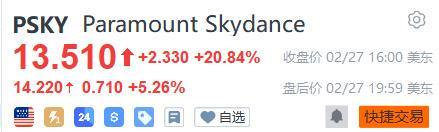
1110亿美元收购落定 派拉蒙拿下华纳 奈飞终止竞购
Jin Rong Jie· 2026-02-28 02:33
Group 1 - Warner Bros. Discovery has accepted Paramount's acquisition offer valued at $111 billion, marking the end of a competitive bidding war in Hollywood [1][2] - Paramount's offer of $31 per share is more favorable for shareholders compared to a previous agreement with Netflix, which led Netflix to withdraw from the bidding process [1][2] - The acquisition includes approximately $29 billion in debt and is one of the largest mergers in Hollywood in recent years, allowing Paramount to gain access to major IPs and media assets [2] Group 2 - The deal is subject to antitrust review by U.S. and international regulatory bodies [3]

华纳兄弟探索与派拉蒙天舞签1100亿美元收购协议
Xin Lang Cai Jing· 2026-02-27 23:36
Core Viewpoint - Warner Bros. Discovery has agreed to be acquired by Paramount Global for a deal valued at $110 billion, marking one of the largest mergers in Hollywood in recent years [1] Group 1: Deal Details - The acquisition includes approximately $29 billion in debt [1] - Paramount's offer of $31 per share totals $111 billion, surpassing Netflix's bid [1] - The merger will grant Paramount access to Warner Bros.' intellectual property resources, including franchises like "Fantastic Beasts" and "The Matrix" [1] Group 2: Regulatory Considerations - The merger is expected to face antitrust scrutiny from U.S. and international regulatory bodies [1]
《镖人》、袁和平与渐远的江湖
3 6 Ke· 2026-02-20 02:57
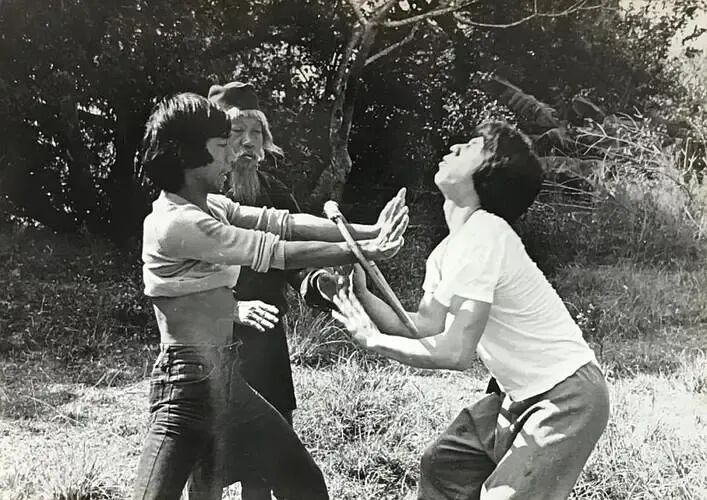
Core Perspective - The film "Biao Ren" attempts to transform a comic story rooted in traditional chivalric spirit and Western film's desolate aesthetics into a visual presentation on the big screen, questioning how traditional martial arts aesthetics and chivalric essence can find new expression in modern times [1][2] Group 1: Film Production and Cast - Directed by 81-year-old Yuen Woo-ping, "Biao Ren" features a star-studded cast including Jet Li, Wu Jing, and Donnie Yen, representing nearly all active generations of Chinese action actors [1] - The film's essence is a blend of traditional martial arts ethics and modern storytelling, aiming to explore the continuity of martial arts spirit in contemporary society [1][2] Group 2: Industry Context and Challenges - The film reflects the current state of the martial arts film industry, where traditional elements are increasingly challenged by modern interpretations and technological advancements [2][12] - The decline of the traditional martial arts ecosystem is attributed to various factors, including market shrinkage and the loss of talent, leading to a disconnection from the foundational "jianghu" culture [8][11] Group 3: Artistic Direction and Aesthetic - Yuen Woo-ping's approach emphasizes physical authenticity and real action, contrasting with the trend of digital effects in modern filmmaking [12][15] - The film seeks to revive the "hard bridge, hard horse" aesthetic, showcasing genuine physicality and emotional depth in martial arts [14][15] Group 4: Cultural Significance and Future Prospects - "Biao Ren" serves as a reflection on the essence of chivalry in contemporary narratives, questioning how traditional values can be reinterpreted in today's context [17][18] - The film's release highlights the ongoing evolution of martial arts cinema, suggesting that while the traditional industry may be fading, the spirit of martial arts and its cultural significance can still resonate through new narratives and mediums [20][21][23]
对谈|拟像统治的时代:从《黑客帝国》到迪士尼乐园
Xin Lang Cai Jing· 2025-12-15 00:26
Core Viewpoint - The discussion revolves around Jean Baudrillard's concepts of "simulacra" and "simulation," emphasizing their relevance in today's AI and social media-dominated world, as well as the implications for understanding reality and representation in contemporary society [1]. Group 1: Importance of Baudrillard's Work - Baudrillard's book "Simulacra and Simulation" is pivotal in his intellectual journey, marking a shift from earlier concepts of "symbolic political economy" to a focus on "simulacra" and "simulation" [4]. - The book is part of Baudrillard's "simulacra trilogy," which includes "Symbolic Exchange and Death" and "The Seduction," exploring the nature of reality and representation [4]. - The recent publication of the simplified Chinese version of "Simulacra and Simulation" has reignited interest in Baudrillard's theories, particularly in relation to cultural phenomena like "The Matrix" and Disneyland [1][4]. Group 2: Personal Engagement with Baudrillard's Ideas - Various scholars shared their personal journeys in engaging with Baudrillard's work, highlighting its influence on their academic pursuits and understanding of postmodernism [3][5][9]. - The impact of Baudrillard's theories on contemporary media studies is significant, as they challenge traditional notions of representation and reality [12][13]. Group 3: The Concept of "Simulacra" - The term "simulacra" has evolved from a negative connotation in Platonic philosophy to a critical concept in contemporary French thought, with implications for understanding media and reality [10][11]. - Baudrillard's "simulacra" is more of a sociological concept, critiquing the self-referential nature of images and symbols in modern society, particularly in the context of media technology [11]. Group 4: Media and Reality - Baudrillard's theory disrupts traditional media representations, suggesting that media no longer merely reflects reality but actively constructs it, leading to a "hyperreal" experience [12][13]. - The implications of this theory extend to contemporary issues such as algorithmic control and the nature of truth in media representations, particularly in the digital age [13][20]. Group 5: Cultural Representations of Simulacra - The discussion includes cultural examples like "The Matrix," which visually represents Baudrillard's theories of hyperreality and the nature of simulated experiences [16][17]. - Disneyland is presented as a quintessential example of simulacra, where the constructed environment obscures the reality of American life, serving as a metaphor for broader societal illusions [19][20].

827亿美元天价联姻,Netflix收购华纳,是流媒体统治好莱坞的开始吗?
3 6 Ke· 2025-12-09 03:45
Core Viewpoint - The entertainment industry is set for a historic transformation in 2025 as Netflix announces plans to acquire Warner Bros. for $82.7 billion, a move that has shocked Hollywood [1][3]. Group 1: Acquisition Details - Warner Bros., one of Hollywood's major studios, owns globally recognized IP assets such as "Harry Potter," "The Lord of the Rings," and "The Matrix" [3][5]. - The acquisition deal includes $27.75 per share in cash plus Netflix stock, valuing the total transaction at $82.7 billion, including debt [8][11]. - Warner Bros. will split off its cable networks like CNN and TNT into a separate company, while its content studios and HBO will be integrated into a new entity for Netflix [11][19]. Group 2: Market Context and Implications - Warner Bros. has a history of mergers and acquisitions, with past failures impacting its current valuation and strategy [13][17]. - The streaming industry is facing challenges, including declining traditional TV revenues and a saturated market, which has led to a need for significant content investment [19][20]. - The market has reacted positively to Warner Bros.'s split, with its stock price rising over 100% in the five months leading up to the acquisition announcement [24][26]. Group 3: Challenges and Risks - The acquisition poses significant financial pressure on Netflix, which has never spent more than $700 million on a single acquisition before this deal [28][34]. - There are uncertainties regarding regulatory approval and potential backlash from Hollywood unions, which are concerned about the implications of such a large merger [32][58]. - The integration of Warner Bros.'s traditional production model with Netflix's digital-first approach presents operational challenges, as Netflix will need to navigate a complex network of existing contracts and industry norms [42][46]. Group 4: Industry Impact - The acquisition could reshape the power dynamics in Hollywood, with Netflix potentially reducing the influence of traditional theaters and altering the distribution landscape [53][56]. - Concerns have been raised about the merger's implications for competition and consumer choice, with critics arguing it could lead to higher subscription prices and fewer options for viewers [69][71]. - The deal is seen as a pivotal moment in the evolution of the entertainment industry, marking a shift where a digital streaming leader acquires a legacy studio [75].

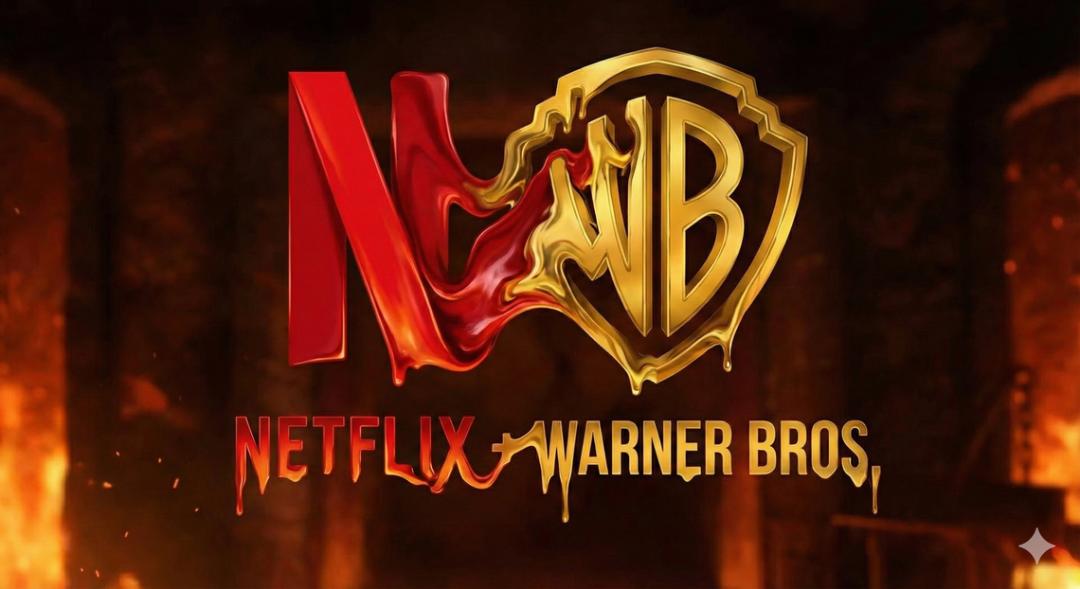
Netflix和华纳「联姻」,特朗普政府:我不同意
36氪· 2025-12-08 10:01
Core Viewpoint - The acquisition of Warner Bros. by Netflix is a significant move in the streaming industry, potentially creating a media giant that could control a substantial share of the market, but it faces regulatory scrutiny and political opposition [4][8][14]. Acquisition Details - Netflix announced an agreement to acquire Warner Bros. for $27.75 per share, valuing the equity at $72 billion and the enterprise value at approximately $82.7 billion, using a combination of cash and stock [5]. - Paramount, along with other competitors, also bid for Warner Bros., with Paramount offering a final cash bid of $30 per share, which was ultimately deemed less favorable by Warner Bros.' board [7][10]. Regulatory Challenges - The acquisition is under antitrust review by regulatory bodies, with concerns raised about the potential market dominance of the combined entity, which could control 30% to 40% of the U.S. streaming market [14][15]. - Political figures, including Senator Elizabeth Warren, have expressed strong opposition to the merger, citing fears of increased subscription costs and reduced consumer choice [15]. Industry Impact - The merger could create a formidable competitor to other major players like Disney and Amazon, significantly enhancing Netflix's content library and market position [16]. - Concerns have been raised about the implications for traditional studios and independent producers, as Netflix's control over popular IPs may lead to unfavorable licensing terms and shorter theatrical release windows [16]. Future Considerations - Questions remain regarding the operational integration of HBO with Netflix and the future of theatrical releases for Warner Bros. films, with Netflix indicating a desire to maintain the theatrical lifecycle of films while also advocating for shorter exclusive release periods [11][12]. - The acquisition is seen as a potential turning point for the entertainment industry, with analysts suggesting it could lead to significant shifts in content distribution and production dynamics [17].

马斯克爆出惊世言论:人类活在虚拟世界的概率「极高」
3 6 Ke· 2025-12-01 09:37
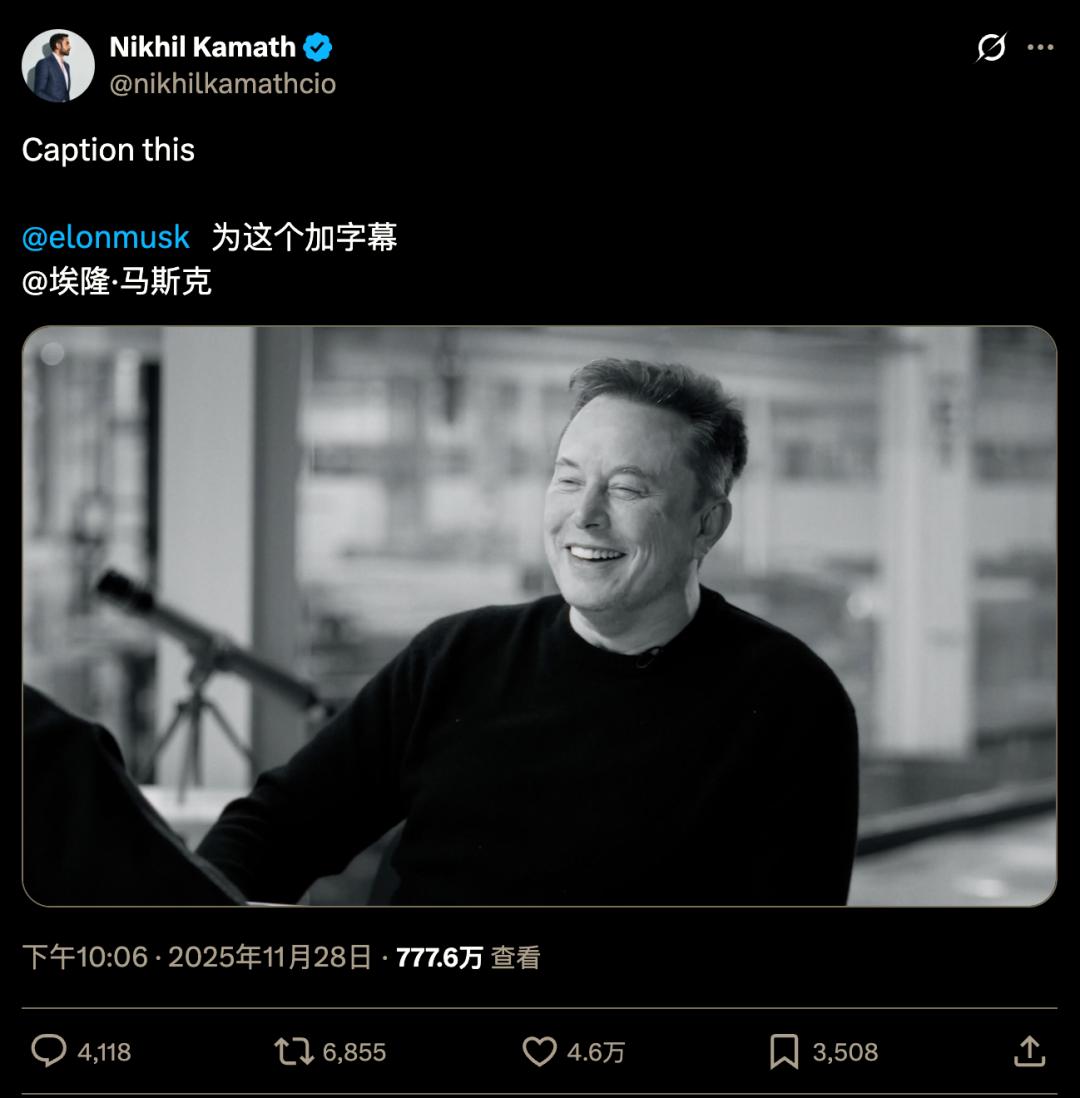
Core Viewpoint - The recent viral video of Elon Musk has sparked widespread skepticism about AI-generated content, highlighting concerns about human perception in an era where reality and simulation are increasingly indistinguishable [1][4][24]. Group 1: AI and Human Perception - The video features Musk and Nikhil Kamath, leading to a collective online reaction questioning its authenticity, with many suggesting it could be AI-generated [4][6]. - Musk's comments during the podcast reflect a playful acknowledgment of existential crises, suggesting that many people operate like NPCs (non-player characters) in a game, trapped in predetermined dialogues [7][9]. - The rise of AI in gaming, particularly with the upcoming release of "GTA VI," indicates a shift where NPCs are becoming more lifelike and capable of independent interactions, contrasting with human behavior that appears increasingly algorithmic [10][12][15]. Group 2: Philosophical Implications - Musk's "Pong hypothesis" posits that as technology advances, the line between reality and simulation blurs, leading to the conclusion that we might already be living in a simulated environment [20][21]. - The concept of the "Dead Internet Theory" suggests that the online world is saturated with AI-generated content, making genuine human interaction a rare commodity [24][26]. - Musk's provocations challenge individuals to break free from societal norms and explore deeper truths about existence, akin to the character Agent Smith from "The Matrix," who seeks to disrupt the system [9][29].
未来,真人实拍和线下电影院会消亡吗?
Hu Xiu· 2025-09-30 09:48
Core Viewpoint - The article discusses the evolution of science fiction filmmaking, highlighting the challenges faced by filmmakers in Hollywood, particularly in the context of original content creation and the impact of new technologies like AI and virtual production methods [4][10][19]. Group 1: Filmmaking Techniques and Innovations - Alex Proyas has pioneered virtual production techniques, moving from traditional green/blue screen methods to fully LED screen-based virtual filmmaking, significantly enhancing efficiency and decision-making accuracy [3][14][15]. - The integration of AI in filmmaking is seen as a way to reduce production costs and improve creative processes, allowing for a hybrid model where traditional methods and AI-generated elements coexist [18][23]. Group 2: Challenges in the Film Industry - The Hollywood film industry is currently in a "survival battle," with original science fiction films losing favor among investors due to their perceived low profitability [8][10]. - There is a noted shift in audience preference towards lower-budget genres like horror, which are easier to recoup costs, further complicating the landscape for science fiction filmmakers [11][12]. Group 3: Thematic Focus in Science Fiction - Science fiction narratives are increasingly relevant as they reflect contemporary issues such as climate change and social media, with filmmakers encouraged to create stories that resonate with current societal concerns [5][6]. - The essence of science fiction is to project current human issues into future scenarios, making it a vital genre for exploring philosophical and ethical questions [5][6]. Group 4: Future of Cinema - There is optimism about the future of cinema, with the belief that traditional filmmaking will not disappear but rather coexist with new technologies, enhancing the storytelling experience [19][20]. - The potential for AI-driven interactive storytelling is emerging, offering new dimensions to audience engagement while emphasizing that the core of impactful storytelling must remain human-driven [22][23].