
万岁山武侠城

Search documents
万岁山为何着急澄清?
3 6 Ke· 2026-01-07 03:07
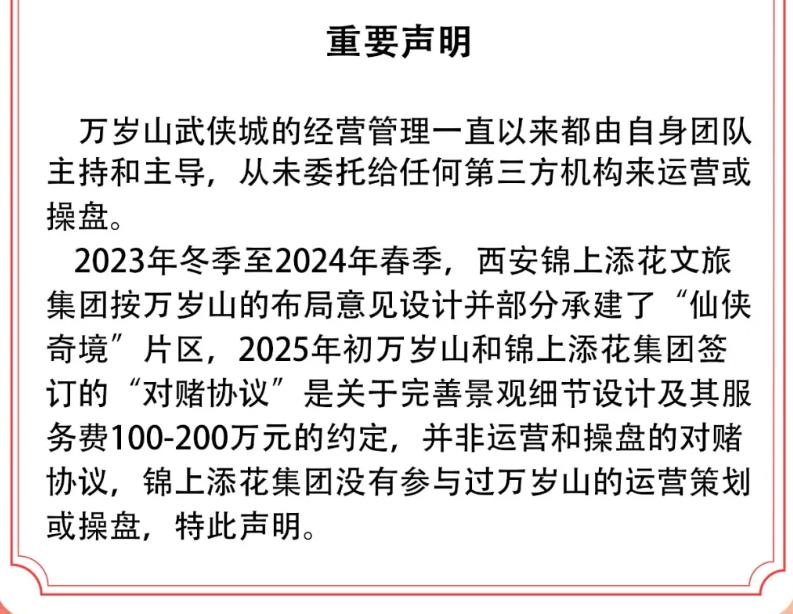
Core Viewpoint - The recent announcement from Wansui Mountain Wuxia City has sparked controversy regarding the operational role of Xi'an Jinshang Tianshu Cultural Tourism Group, with the park denying any third-party operational agreements and labeling the rumored profit-sharing agreement as a minor service fee arrangement [1][4]. Group 1: Company Relationships and Changes - The relationship between Wansui Mountain and Jinshang Tianshu has shifted significantly, with the park's transformation from a financially struggling entity to a prosperous one leading to tensions with its major stakeholders [4][7]. - The major shareholder, Kaifeng Cultural Tourism Co., Ltd., a state-owned enterprise, holds a 40% stake, while the second-largest shareholder, controlled by Li Xiaojie, holds 35% [5][6]. - The initial partnership was characterized by a significant decision-making gap between the state-owned enterprise and the private sector, with the latter pushing for operational investments that the former was initially reluctant to support [7][11]. Group 2: Operational Success and Controversy - Wansui Mountain reported a substantial increase in visitor numbers, achieving 24.52 million visitors and a revenue of 1.27 billion yuan in 2025, marking a 136.5% year-on-year growth [11][12]. - The controversy centers around a profit-sharing agreement tied to revenue targets, which has become a focal point of public and internal disputes regarding credit for the park's success [11][13]. - The operational model, which initially allowed for low startup costs and significant growth potential, has revealed vulnerabilities as the park's revenue surpassed 1 billion yuan, leading to heightened scrutiny of the roles of various stakeholders [21][24]. Group 3: Industry Implications and Lessons - The incident highlights the importance of clearly defined roles and boundaries in partnerships within the tourism industry, where the value of operators should not overshadow that of asset holders [24][28]. - The case of Wansui Mountain may serve as a cautionary tale for future ventures in the tourism sector, emphasizing that clarity in operational agreements is crucial for maintaining healthy business relationships [27][28]. - The ongoing discourse around the operational dynamics at Wansui Mountain reflects broader trends in the tourism industry, where the interplay between public and private interests can lead to complex challenges [20][26].

“万岁山对赌”背后:曲江文旅造IP,锦上添花唱大戏
2 1 Shi Ji Jing Ji Bao Dao· 2025-12-12 12:00
Core Insights - The article discusses the performance of the Wansui Mountain Martial Arts City, which has achieved 17 million visitors and 1.068 billion yuan in revenue by October 31, nearing its annual target of 1.2 to 1.25 billion yuan [1][2] - The operational model of the private company, Xi'an Jinshang Tianhua Cultural Tourism Group, contrasts with the state-owned Qujiang Cultural Tourism, focusing on a "light asset, fast replication, and performance-based agreement" approach [1][3] - The performance-based agreement, which ties the service provider's compensation to the annual revenue of the scenic area, has led to significant operational improvements and is seen as a new development model in the cultural tourism sector [3][4] Company Performance - The Wansui Mountain Martial Arts City is expected to exceed its revenue target by the end of the year, with strategies such as unlimited three-day entry and competitive pricing contributing to increased visitor numbers and revenue [2][3] - The agreement stipulates that if the scenic area achieves 1.1 billion yuan in revenue by 2025, it will pay design fees; otherwise, the Jinshang Tianhua Group will receive nothing [2][3] Industry Dynamics - The article highlights the ongoing legal disputes between Jinshang Tianhua and Qujiang Cultural Tourism regarding brand identity and competition, with Jinshang Tianhua accused of misleading associations with the more established "Datang Night City" [5][6][10] - The financial struggles of Qujiang Cultural Tourism are evident, with a reported loss of approximately 10.96 million yuan in the first three quarters of 2025, contrasting with Jinshang Tianhua's rapid expansion and project replication across multiple regions [10][12] - The differences in business models are emphasized, with state-owned enterprises like Qujiang focusing on public service and urban management, while private firms like Jinshang Tianhua leverage market-driven ticketing strategies for profitability [12][13]

80元玩3天,河南杀出一个「穷鬼乐园」
36氪· 2025-08-25 13:37
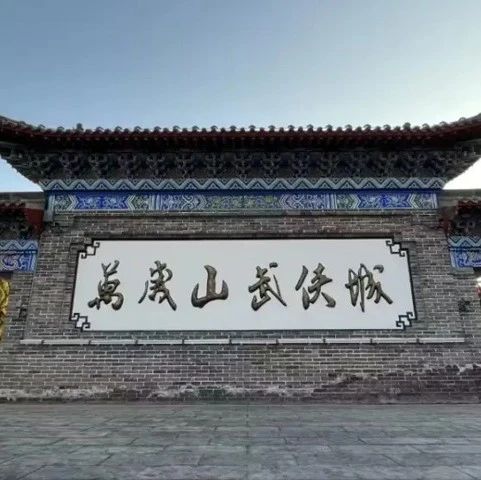
Core Viewpoint - The article discusses the success of Wansui Mountain Wuxia City, highlighting its unique business model that combines low ticket prices with immersive experiences, leading to significant growth in visitor numbers and revenue, positioning it as a potential "Chinese Disneyland" [5][8][27]. Group 1: Visitor Experience and Engagement - Wansui Mountain Wuxia City has seen daily visitor numbers ranging from 50,000 to over 100,000 during peak times, necessitating the implementation of crowd control measures [8][6]. - The park offers over 500 programs, including popular performances, at an affordable ticket price of 80 yuan, which has contributed to its rapid popularity and positive reception [8][10][13]. - The immersive experience includes high-density performances and interactive elements, allowing visitors to engage with NPCs and participate in activities, enhancing the overall enjoyment [17][20][23]. Group 2: Financial Performance - The park reported a revenue of 604 million yuan in the first half of the year, a 162% increase year-on-year, with visitor numbers exceeding 10.24 million, a 239.33% increase [8][27]. - The strategy of low ticket prices has led to increased secondary spending, with secondary consumption accounting for 40% of total revenue, aiming for 50% in the current year [30][28]. - In contrast, other similar theme parks have struggled financially, with examples like Qujiang Cultural Tourism reporting a significant decline in revenue and profits [25][27]. Group 3: Competitive Advantages - The park benefits from its location in Henan, a populous province with a rich cultural heritage that aligns well with the Wuxia theme, attracting a steady flow of visitors [27][28]. - The introduction of a "large-scale immersive script-killing" model allows for continuous updates to stories and interactions, keeping the experience fresh for repeat visitors [28][30]. - The operational model includes a performance-based agreement with the management team, incentivizing them to convert visitor traffic into revenue effectively [30]. Group 4: Challenges and Future Outlook - Despite its success, the park faces challenges related to overcrowding and long wait times, particularly during peak seasons, which could impact visitor satisfaction [38][36]. - Experts suggest that while Wansui Mountain is labeled as a "Chinese Disneyland," it still lacks the comprehensive features of a true theme park, such as closed management and high investment in technology [34][32]. - The potential for global expansion exists, but the park must develop sustainable and globally appealing IPs to compete with established brands like Disney and Universal [36][34].
总编有约·“两高四着力”大家谈丨加快构建现代文旅产业体系
He Nan Ri Bao· 2025-07-29 23:23
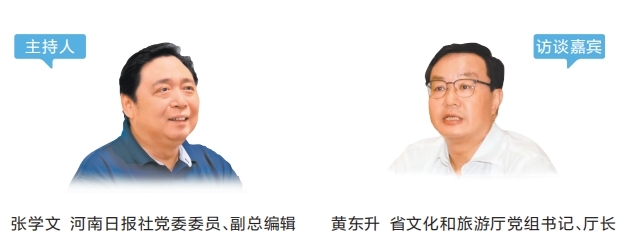
Core Insights - The article discusses the comprehensive deployment of the spirit of Xi Jinping's important speech during his inspection in Henan, focusing on promoting cultural prosperity and building a strong cultural tourism province [2] Group 1: Industry Development - The cultural tourism industry in Henan achieved a milestone last year, receiving over 1 billion visitors and generating over 1 trillion yuan in tourism revenue, but still faces challenges such as lagging urban tourism compared to cities like Changsha, Xi'an, and Chengdu [2] - To become a pillar industry, Henan's cultural tourism must focus on cultural transformation, industry capability, international communication, and operational entities [2] - The province aims to enhance its cultural tourism capabilities by creating a modern cultural tourism system and implementing projects like "cultural empowerment" and "street renewal" to revitalize historical cultural districts [2] Group 2: IP Development and Marketing - Henan has seen the emergence of popular cultural tourism IPs like Wansui Mountain Wuxia City, and to sustain this momentum, the province plans to create an IP matrix and strengthen its main brand "Walking Henan, Understanding China" [3] - The strategy includes integrating IP with technology to develop immersive experiences and promoting IP elements across the entire tourism value chain [3] - Innovative marketing strategies will be employed, utilizing new media to create buzz around IPs through events and collaborations with influencers [4] Group 3: Future Directions - The article emphasizes the need for regional collaboration to create a unified cultural tourism development community, leveraging the historical significance of the Yellow River ancient capital group [4] - It advocates for breaking industry boundaries to promote integration across culture, tourism, and technology, and expanding into various tourism sectors such as educational tourism and wellness tourism [4] - The focus will be on nurturing specialized enterprises in key areas like digital cultural tourism, cultural creativity, and tourism performance to drive structural adjustments and industry chain reshaping [4]
行走开封 品味幸福——开封文旅观察之三
He Nan Ri Bao· 2025-06-25 23:33
Group 1 - The core viewpoint emphasizes the integration of cultural tourism and local identity in Kaifeng, showcasing how the city's rich history and modern lifestyle coexist harmoniously [1][2][3] - The cultural tourism industry in Kaifeng has evolved from basic sightseeing to immersive experiences, reflecting a significant upgrade in offerings that cater to both tourists and residents [2][3] - The city's commitment to "all-region tourism" is evident in the systematic restoration of historical sites and the creation of ecological tourism routes, enhancing the cultural landscape [3][4] Group 2 - Continuous improvement in the business environment and government services has attracted numerous quality cultural tourism projects to Kaifeng, fostering innovation and development [4] - The integration of cultural tourism with value education is highlighted, as various attractions serve as platforms for imparting traditional values and fostering cultural confidence among visitors and locals [4] - The transformation of urban spaces, including historical districts and modern recreational areas, contributes to a vibrant community atmosphere, enhancing the quality of life for residents and the experience for tourists [3][4]