
上证科创板综合指数

Search documents
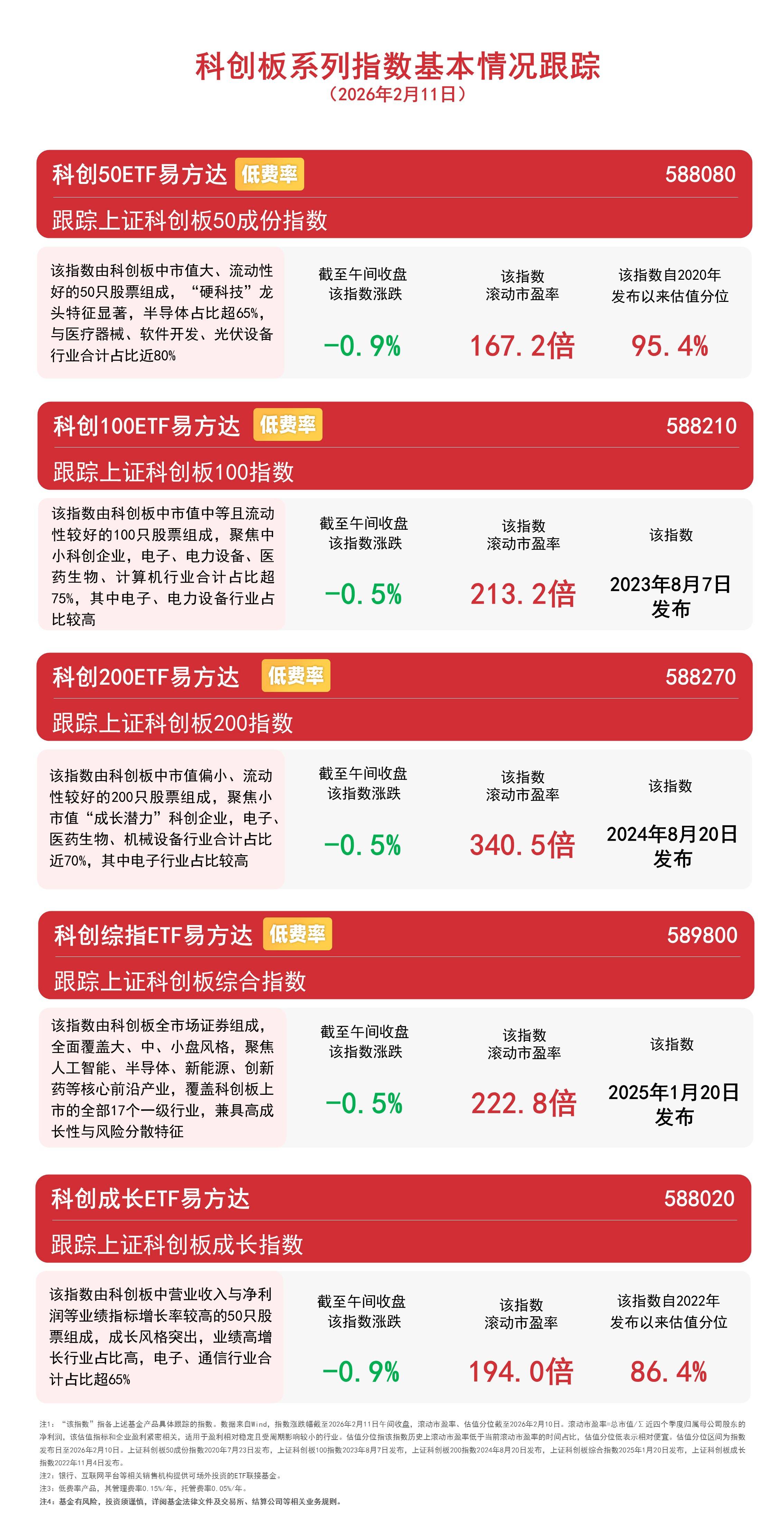
硬科技板块集体调整,持续关注科创200ETF易方达(588270)、科创50ETF易方达(588080)投资机会
Sou Hu Cai Jing· 2026-02-11 05:16
Group 1 - The core viewpoint of the news indicates a collective adjustment in hard technology sectors such as CPO, storage chips, and semiconductor equipment, with a decline in AI application concepts as of the morning session on February 11 [1] - The ChiNext 100 Index, ChiNext 200 Index, and ChiNext Composite Index all experienced a drop of 0.5%, while the ChiNext 50 Index and ChiNext Growth Index fell by 0.9% [1] Group 2 - The ChiNext 200 ETF is designed to track the ChiNext 200 Index, which consists of 200 stocks from the ChiNext board that are smaller in market capitalization and have good liquidity, focusing on small-cap "growth potential" technology enterprises [7] - The electronic and biomedical sectors, along with machinery equipment, account for nearly 70% of the ChiNext 200 Index, with the electronic sector having a significant share [7] - The ChiNext Composite Index ETF aims to track the comprehensive index of the ChiNext board, covering large, medium, and small-cap styles, with a focus on artificial intelligence, semiconductors, and new energy [7]

科创综指ETF鹏华(589680)涨超1.3%,一键布局科技自立自强主题
Xin Lang Cai Jing· 2026-01-27 06:59
Group 1 - The semiconductor and space photovoltaic sectors are leading the market, with multiple stocks hitting the daily limit up, including Dongxin Co., Shengke Communication, and Laplace, each rising by 20% as of January 27, 2026 [1] - The domestic computing power hardware is breaking through technical bottlenecks, which is expected to deepen domestic substitution. Notable domestic computing power chip manufacturers include Cambrian, Haiguang Information, and Moore Threads, with major internet companies like Alibaba and Baidu also advancing self-developed computing power chips [1] - In the packaging sector, domestic companies are making significant progress, such as Changdian Technology achieving important advancements in optoelectronic packaging technology [1] - In the storage sector, Changxin Technology plans to launch DDR5 products by November 2025, reaching international first-tier levels in peak rate and other mainstream technical parameters, while Yangtze Memory Technologies has made breakthroughs in 3D NAND technology with its self-developed Xtacking architecture [1] Group 2 - The Science and Technology Innovation Index ETF (Penghua) closely tracks the Shanghai Stock Exchange Science and Technology Innovation Board Composite Index, which reflects the overall performance of eligible listed companies, including dividend income [2] - The top ten weighted stocks in the Science and Technology Innovation Index as of December 31, 2025, include Cambrian, Haiguang Information, and SMIC, collectively accounting for 23.57% of the index [2]
科创综指发布满一周年 引导中长期资金配置作用凸显
Zheng Quan Ri Bao Wang· 2026-01-20 12:46
Group 1 - The Core Viewpoint: The Science and Technology Innovation Board Composite Index (Sci-Tech Composite Index) has been operating smoothly since its launch on January 20, 2025, and plays an increasingly significant role in representing the overall performance of the Sci-Tech Board and guiding medium to long-term capital allocation [1] - As of December 31, 2025, the Sci-Tech Composite Index includes over 570 samples, covering more than 90% of the market capitalization of the Sci-Tech Board, and employs a total market capitalization weighting method, ensuring good representativeness and investability [1] - The top three industry weights as of January 15, 2026, are Information Technology (55%), Industry (23.41%), and Healthcare (12.99%) [1] Group 2 - The product ecosystem related to the Sci-Tech Composite Index has become increasingly complete, with 78 index funds established by December 31, 2025, totaling nearly 27.5 billion yuan [2] - The introduction of the Sci-Tech Composite Index has enhanced the broad index system of the Sci-Tech Board, providing a more comprehensive observation dimension and investment targets, thereby better supporting the development of a modern industrial system and national high-level technological self-reliance [2] - The continued inflow of medium to long-term capital through products related to the Sci-Tech Composite Index is expected to further enhance the attractiveness and influence of the Sci-Tech Board as a hub for "hard technology" enterprises in China [2]
科创综指年涨逾46%,超260亿资金借道布局硬科技
Di Yi Cai Jing· 2026-01-04 09:49
Core Insights - The Sci-Tech Innovation Board (STAR Market) has become a central battleground for technological innovation in China, with the STAR Composite Index (Sci-Tech Composite Index) launched in early 2025, showcasing a significant annual increase of 46.3% and a cumulative rise of nearly 115% since the "9·24" market rally, outperforming major indices like the Shanghai Composite Index and CSI 300 [1][2]. Market Performance - The STAR Composite Index has demonstrated strong market performance, ranking among the top of major broad-based indices, with a 46.3% increase in 2025 and a cumulative increase of 114.97% since the "9·24" rally [2]. - The number of products linked to the STAR Composite Index has expanded from 12 to 58, with a total scale exceeding 26.6 billion yuan, reflecting increased investor interest and product diversity [2][3]. Product Performance - Most products linked to the STAR Composite Index have achieved positive returns, with over 60% of products yielding more than 20% cumulative returns. Notably, the Jiashi STAR Composite Enhanced Strategy ETF has a cumulative return of 43.19%, leading the pack [3][4]. Index Differentiation - The STAR Composite Index provides comprehensive coverage of both industry leaders and growth potential companies, filling a gap in the representation of the STAR Market's overall ecosystem, unlike the more focused Sci-Tech 50 and Sci-Tech 100 indices [4][5]. - The STAR Composite Index serves as a core allocation anchor for investors looking to gain exposure to the entire STAR Market, while the Sci-Tech 50 and Sci-Tech 100 indices cater to different investment strategies [5][6]. Institutional Interest - The STAR Composite Index is increasingly viewed as a long-term allocation option for institutional investors, such as insurance and pension funds, due to its strategic alignment, long-term return potential, and risk diversification capabilities [6][7]. - The average daily trading volume of leading STAR Composite Index ETFs has reached a significant scale, enhancing liquidity and reducing concerns for institutional investors [6][8]. Future Directions - The future of the STAR Composite Index may involve product innovation and the introduction of derivatives, which could activate the market and attract diverse investor preferences [7][8]. - Suggestions for future developments include creating cross-market ETFs, thematic ETFs based on technology sectors, and implementing systematic investment plans to lower barriers for ordinary investors [7][8].
华虹公司筹划收购华力微,科创综指ETF华夏(589000)近一月日均成交领先同类
Mei Ri Jing Ji Xin Wen· 2025-08-19 02:16
Group 1 - The Shanghai Stock Exchange Sci-Tech Innovation Board Composite Index decreased by 0.08% as of August 19, 2025, with mixed performance among constituent stocks [1] - Shenyuan Biological led the gains with an increase of 15.98%, while the biggest decline was seen in Shenzhou Technology, which fell by 5.81% [1] - The Huaxia Sci-Tech Innovation Index ETF (589000) dropped by 0.34%, with a latest price of 1.16 yuan, but saw a cumulative increase of 6.42% over the past week [1] Group 2 - Dongguan Securities noted that the current A-share market has relatively ample liquidity and high trading sentiment, indicating a healthy overall operation [2] - The market is experiencing structural differentiation, with previously popular sectors at relatively high levels, suggesting a faster rotation rhythm and the need to seize structural opportunities [2] - The Huaxia Sci-Tech Innovation Index ETF closely tracks the Shanghai Stock Exchange Sci-Tech Innovation Board Composite Index, reflecting the overall performance of eligible listed companies on the Sci-Tech Innovation Board, including dividend income [2]
长城上证科创板综合指数基金发行 一键布局中国版“纳斯达克指数”
Xi Niu Cai Jing· 2025-08-12 08:41
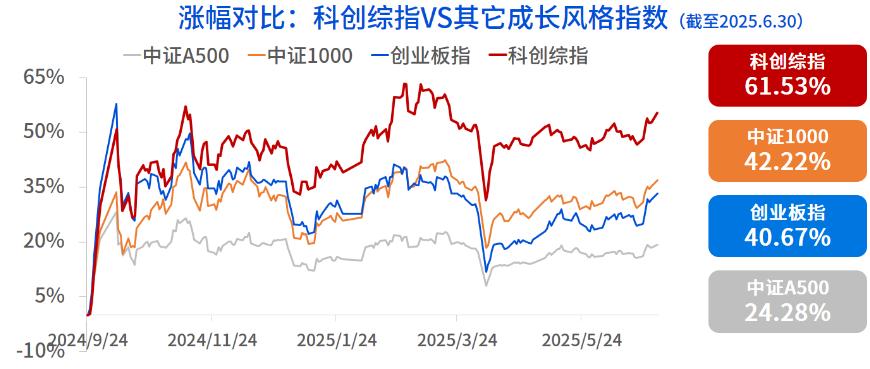
Group 1 - The core viewpoint of the news is that the A-share Sci-Tech Innovation Board is experiencing a significant upward trend, with the Shanghai Sci-Tech Innovation Board Composite Index rising for 13 consecutive days in July, indicating strong market confidence in "hard technology" as a new investment frontier [1][2] - The current digital economy in China is undergoing a transformation, moving from the "Internet Plus" phase to a new stage led by artificial intelligence, which is expected to benefit the Sci-Tech Innovation Board [1][7] - The Longcheng Fund has launched the Longcheng Shanghai Sci-Tech Innovation Board Composite Index Fund, which closely tracks the Sci-Tech Innovation Composite Index, providing a convenient investment channel for investors [1][8] Group 2 - As of the end of 2024, there are 581 companies listed on the Sci-Tech Innovation Board, with a total market capitalization exceeding 6.34 trillion yuan, reflecting the growing demand for indices that represent the overall performance of these companies [2][3] - The industry distribution of the Sci-Tech Innovation Composite Index shows a dominant position of the electronics sector, particularly semiconductors, which account for approximately 41.1%, followed by pharmaceuticals (18.1%) and computers (9.3%) [3] - The average annual growth rate of R&D expenditure for the index constituents over the past three years is 27%, with projected net profit growth rates of 67.6% and 37.8% for 2024-2026, indicating strong growth potential [3][9] Group 3 - The Sci-Tech Innovation Composite Index has demonstrated greater resilience and explosive growth during market recovery phases, outperforming major broad-based indices and reaching new highs in recent bullish trends [3][9] - The Sci-Tech Innovation Board has become a preferred listing venue for "hard technology" companies, with over 80% of its companies in emerging industries such as new generation information technology and biomedicine [7] - The Longcheng Fund emphasizes that the rise of domestic innovative technologies, such as DeepSeek, will lead to a long-term revaluation of Chinese assets, with the technology sector expected to be a key investment theme [7][9]
科创板正式开板6周年!科创综指ETF华夏(589000)近1周日均成交额排名可比基金首位!
Mei Ri Jing Ji Xin Wen· 2025-06-13 03:13
Group 1 - The Shanghai Stock Exchange's Sci-Tech Innovation Board (STAR Market) has officially celebrated its 6th anniversary, emphasizing its focus on "hard technology" with over 588 listed companies, predominantly in integrated circuits, biomedicine, and high-end manufacturing, which account for over 60% of the total [2] - The integrated circuit sector on the STAR Market has 119 companies, representing a significant portion of A-share listed companies in the same category, covering the entire supply chain from chip design to packaging and testing [2] - The biomedicine sector includes 113 listed companies focusing on treatments for cancer, hepatitis B, hepatitis C, and AIDS, establishing itself as a major listing venue globally outside the US and Hong Kong [2] Group 2 - The top ten weighted stocks in the STAR Market index account for 22.3% of the index, with notable companies including Haiguang Information, Cambricon, and SMIC [4] - The Huaxia STAR Market ETF closely tracks the STAR Market Composite Index, which reflects the overall performance of eligible STAR Market listed companies, including dividend income [3][4] Group 3 - Investment sentiment in the technology sector remains cautious due to trade uncertainties, but there is a consensus that trade policies will not revert to earlier unfavorable conditions [3] - Artificial intelligence is identified as a key technological change, with expectations for market focus to shift back to infrastructure development and application realization in the latter half of the year [3] - There is an ongoing emphasis on domestic substitution processes within the technology supply chain, particularly in semiconductor design, equipment, and manufacturing [3]
科创板指数体系持续完善 “科八条”激发硬科技资本活水
Zheng Quan Shi Bao Wang· 2025-06-06 11:43
Core Viewpoint - The implementation of the "Eight Measures" by the China Securities Regulatory Commission has accelerated the improvement of the STAR Market index system, leading to a significant capital ecosystem transformation that directs funds towards "hard technology" sectors such as semiconductors, AI, and biomedicine, becoming a key engine for cultivating new productive forces [1][4]. Index Development - The "Eight Measures" aim to continuously enrich the variety of STAR Market indices and improve index compilation methods, which are seen as essential tools for guiding long-term and index investments, thus fostering patient capital formation [2][3]. - The launch of the STAR Market Comprehensive Index marks a further enhancement of the index system, reflecting the overall performance of the STAR Market and injecting new vitality into capital market services for technological innovation [3]. Investment Products Innovation - Following the index releases, innovation in investment products related to the STAR Market has progressed, with over 16 ETF products launched by various fund companies, aimed at guiding funds to support the development of "hard technology" [4][5]. - The STAR Market has seen a significant increase in institutional investor participation, with over 77,000 active accounts and a market capitalization held by fund investors exceeding 1.2 trillion yuan, reflecting a 37% year-on-year growth [5][6]. Future Outlook - The Shanghai Stock Exchange has developed a three-year action plan to enhance the index system, focusing on enriching services for national strategies and the real economy, which is expected to create a virtuous cycle in the index investment market [6]. - The STAR Market is anticipated to become a "capital accelerator" for hard technology development, facilitating the rapid integration of technological breakthroughs and industrial upgrades [6].
半导体企业合作深化,科创综指ETF华夏(589000)涨近2%
Sou Hu Cai Jing· 2025-05-29 05:55
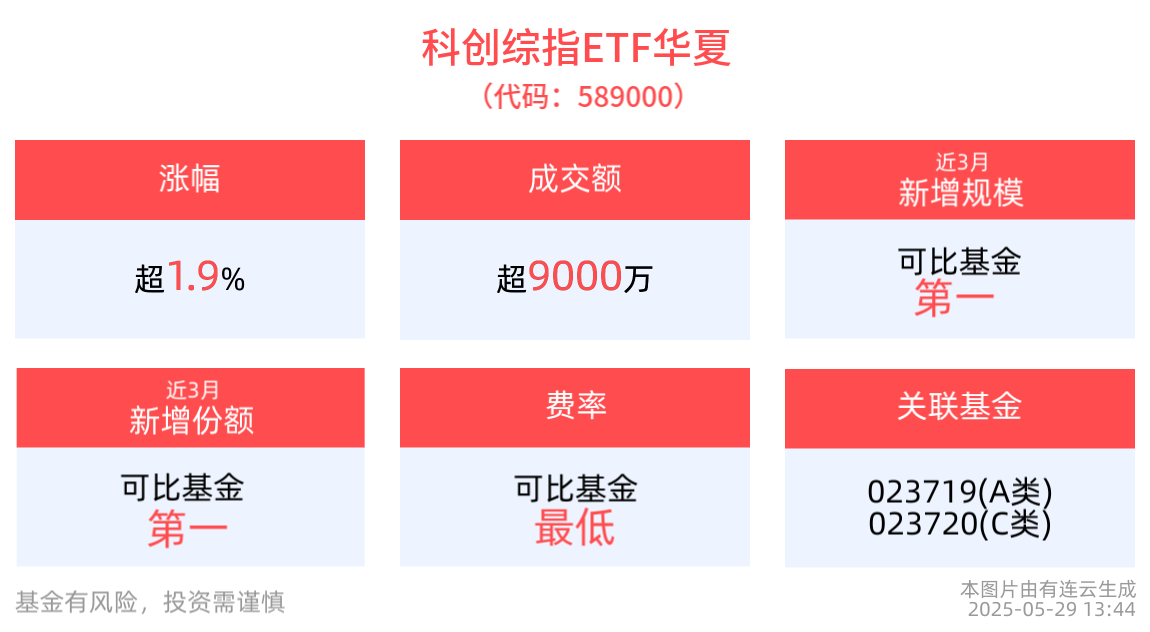
Group 1 - The Shanghai Stock Exchange Science and Technology Innovation Board Composite Index (000680) has seen a strong increase of 2.06%, with notable gains from component stocks such as GeLun Electronics (688206) up 20.01%, YiFang Bio (688382) up 20.00%, and JingJin Electric (688280) up 14.96% [3] - The Huaxia Science and Technology Innovation Index ETF (589000) rose by 1.97%, with a latest price of 0.93 yuan, and recorded a turnover rate of 3.41% during the trading session, with a transaction volume of 92.32 million yuan [3] - Over the past month, the average daily transaction volume of the Huaxia Science and Technology Innovation Index ETF reached 142 million yuan, ranking first among comparable funds [3] Group 2 - The recent China-Europe semiconductor upstream and downstream enterprise symposium emphasized the importance of leveraging complementary advantages and deepening trade cooperation while opposing unilateralism and bullying, aiming to maintain global semiconductor supply chain security and stability [3] - The Ministry of Commerce's emphasis on rare earth export control policies during the symposium may indicate a potential relaxation of export controls on rare earths for European chip companies [3] - Shanxi Securities noted that the tightening of chip export restrictions combined with the performance improvements of domestic chips will sustain high demand for AI computing power from downstream internet and intelligent computing centers [4] Group 3 - The focus is on first-tier manufacturers with significant performance improvements in new generation products on the chip side, and on the server side, the expected growth of H20 is anticipated to boost the performance of traditional server leaders [4] - The Huaxia Science and Technology Innovation Index ETF closely tracks the Shanghai Stock Exchange Science and Technology Innovation Board Composite Index, focusing on hard technology sectors, particularly in new generation information technology, high-end equipment, biomedicine, new energy, new materials, and energy conservation and environmental protection [4]


科创领域资金引力增强或促市场上行,科创综指ETF华夏(589000)盘中上涨,兰剑智能领涨
Xin Lang Cai Jing· 2025-05-23 03:36
Group 1 - The core viewpoint of the news is the introduction of policies aimed at enhancing the financial support for technological innovation in China, which is expected to address the financial challenges faced by major technological tasks and small and medium-sized tech enterprises [2] - The policies will simultaneously target both the supply and demand sides to promote a "dual approach" between technology and finance, ultimately establishing a long-term investment mechanism for financial support of technological innovation [2] - The capital market's response to these policies indicates that the construction of a technology finance mechanism aims to fundamentally resolve existing pain points in technology development, thereby increasing the attractiveness of sci-tech stocks to long-term capital [2] Group 2 - As of May 22, 2025, the Shanghai Stock Exchange Sci-Tech Innovation Board Composite Index (000680) has shown a slight increase of 0.24%, with notable gains from constituent stocks such as Lanjian Intelligent (688557) up 15.06% and Aikesaibo (688719) up 9.03% [1] - The Huaxia Sci-Tech Innovation Index ETF (589000) closely tracks the performance of the Sci-Tech Innovation Board Composite Index, reflecting the overall performance of eligible listed companies on the board, including dividend income [2][3] - The top ten weighted stocks in the Sci-Tech Innovation Board Composite Index account for 23.41% of the index, indicating a concentration of investment in these key companies [3]
