
乳液

Search documents
防水涨价函频发-消费建材在油价传导链上
2026-03-03 02:52
Summary of Conference Call Records Industry Overview - The waterproofing sector is experiencing significant price elasticity due to high leverage in recent years, rapid supply clearance during downturns, and a prolonged price war leading to low price bases. The correlation between asphalt prices and oil prices is strong, making price recovery in 2026 feasible [1][3][4]. Key Points Price Recovery and Market Dynamics - The construction materials industry has undergone a four to five-year price decline, with profits hitting rock bottom. Companies are eager for profit recovery, leading to a significant reduction in supply and a decrease in the number of players, which forms a basis for a collective price increase demand [1][3]. - Major waterproofing companies have issued price increase notices due to fluctuations in asphalt costs, which recently rebounded from a low of approximately 2,800-2,900 to around 3,300. Companies plan to raise prices by 5%-10% starting mid-month [1][5]. Company-Specific Insights - Rain虹's price increase primarily covers engineering rolls and asphalt-related products, accounting for about 40-60% of its revenue. The price hike is expected to not only cover recent cost increases but also provide additional profit margin [1][5]. - Other leading companies in the waterproofing sector are also expected to cover nearly all revenue with their price increases, reflecting a strong alignment in the industry [6]. Market Concentration and Supply Dynamics - The concentration in the waterproofing and coatings sectors has significantly increased, with the top three companies' market share nearly doubling from just over 20% in 2020 to close to 40% by the end of 2025. This reflects the exit of smaller producers and a clear reduction in effective supply, which supports profit recovery and price increases [7]. Cost Structure and Price Transmission - In waterproofing materials, asphalt costs account for approximately 30%-40% of total costs. A recent 15% increase in asphalt prices is expected to raise costs by about 3-4 percentage points, necessitating price increases to offset these costs [8][9]. - The coatings sector is driven by raw materials such as emulsions and titanium dioxide, with emulsions accounting for nearly 30% of costs. Recent energy cost increases and price hikes from overseas suppliers are influencing domestic price adjustments [8][9]. Future Outlook and Recommendations - The operational turning point for leading construction material companies was observed in Q3 and Q4 of 2025, with a trend of profit recovery and positive revenue growth expected to continue into 2026. Companies with strong alpha characteristics are recommended for investment, even in a weak beta environment [3][10]. - Key companies to watch include 三棵树, 兔宝宝, 汉高, 雨虹, 科顺, 中国联塑, and 北新建材, which are expected to benefit from ongoing price increases and market dynamics [10]. Additional Considerations - The demand side is showing signs of stabilization, with expectations that the sharpest declines in demand have passed. Structural opportunities exist in lower-tier markets and non-real estate sectors [4][9]. - The industry consensus is shifting towards avoiding chaotic price declines and instead aiming for a moderate return to reasonable price levels to ensure profitability and survival [4].
为什么皮肤科医生不显老?真正的养颜秘诀你也可以学会
Yang Shi Xin Wen· 2026-02-13 02:14
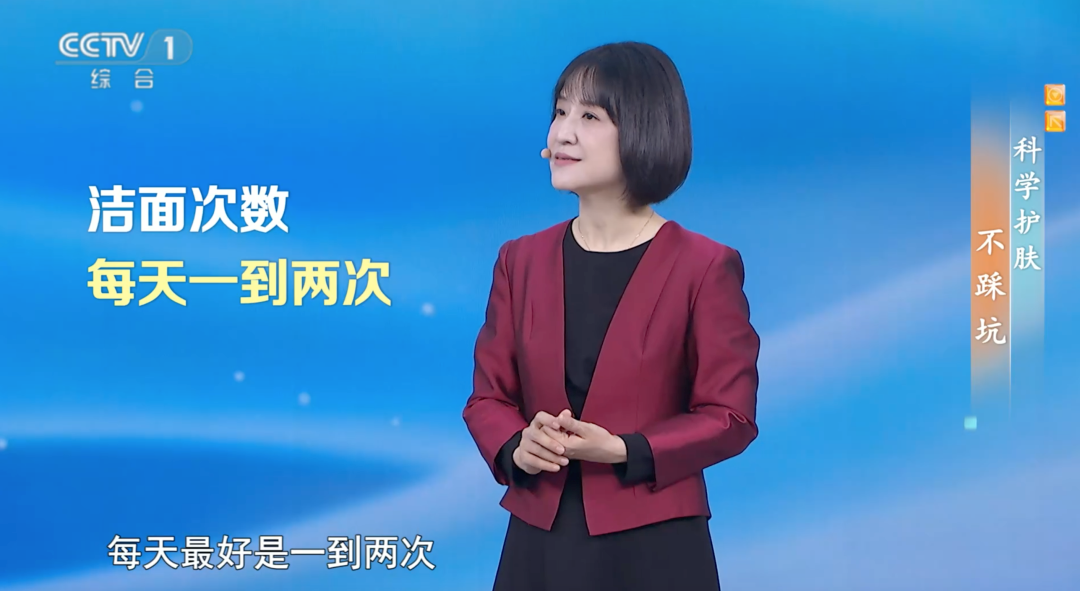
Core Insights - The article emphasizes that 90% of skin issues stem from a damaged skin barrier rather than mere dehydration, highlighting the importance of proper skincare routines [1][2]. Group 1: Skin Barrier Damage - The skin barrier, composed of a lipid layer, stratum corneum, and moisture, serves as the first line of defense against external stimuli. Factors such as temperature fluctuations, dry air, and UV exposure can weaken this barrier, leading to symptoms like dryness and redness [2]. - Improper skincare habits, such as using hot water, harsh cleansers, and frequent exfoliation, can exacerbate barrier damage [3][4]. - Scratching and the use of irritating skincare products can further harm the skin barrier [5]. Group 2: Symptoms Requiring Medical Attention - Signs of potential inflammation or skin disease include erythema (red patches), papules (small raised bumps), exudation (fluid discharge), and severe itching, which may disrupt sleep [6]. Group 3: Sensitive Skin Groups - Elderly individuals may experience thinner, drier skin with reduced barrier function, necessitating enhanced moisturizing [7]. - Infants require specialized moisturizing products due to their delicate skin [8]. - Adults may face skin issues due to genetic predispositions or poor habits, such as frequent scratching or inadequate post-cleansing moisturization [9]. - Individuals who over-care for their skin, such as through excessive cleansing or reliance on strong exfoliants, may inadvertently damage their skin barrier [10]. Group 4: Three-Step Skin Repair Method - The recommended skincare routine consists of cleansing, moisturizing, and sun protection. Gentle cleansing is advised to avoid over-intervention [12]. - Proper moisturizing involves distinguishing between hydration (adding moisture), water retention (preventing moisture loss), and overall moisturizing to maintain skin hydration [13]. - Different skin types should select appropriate products: creams for dry skin, lightweight formulations for oily skin, and a combination for mixed skin types [14][15][16]. Group 5: Expert Recommendations - Simplifying skincare routines to meet the basic functions of cleansing, moisturizing, and sun protection is encouraged, avoiding excessive layering of products [17]. - The order of application should follow a "thin to thick" principle, starting with toners and ending with sunscreen [19]. - Strict sun protection is crucial to prevent UV damage, which can silently harm the skin barrier [21]. Group 6: Sensitive Skin Care and Advanced Recommendations - For sensitive skin, it is vital to enhance moisturizing to repair the barrier and minimize external irritants, avoiding exfoliating products [23]. - In cases of mild discomfort, applying a thick layer of moisturizer can provide relief [24]. - Caution is advised with cosmetic procedures; treatments like hydrating injections should only be performed when the skin barrier is intact [25].

中金:消费建材价格有望温和修复 玻璃业盈利受压
Zhi Tong Cai Jing· 2026-02-05 07:28
Group 1: Consumer Building Materials Industry - The consumer building materials industry is expected to experience a mild price recovery, with potential marginal improvement in the gross margins of leading companies [1] - Recent price increases have been announced by leading companies in segments such as waterproofing, gypsum boards, and municipal channels, driven by supply optimization and rising prices of upstream raw materials like PVC and emulsions [1] - Companies to watch include Oriental Yuhong (002271), Sankeshu (603737), Beixin Building Materials (000786), China Liansu (02128), and Weixing New Materials (002372) [1] Group 2: Glass Industry - The glass industry is under profit pressure, with expectations for accelerated cold repair processes [2] - As of January 29, the average price of float glass was 1,145 RMB per ton, with negative gross margins for various production inputs, indicating ongoing profitability challenges [2] - Companies to focus on include Xinyi Glass (00868) and Qibin Group (601636) [2] Group 3: Cement Industry - The cement industry is experiencing weak profits during the off-season, with ongoing internal competition [2] - Current gross margins for cement are at historical lows, with limited room for further decline [2] - The industry is expected to see marginal improvements in capacity utilization due to the continuation of anti-involution policies, with companies to watch including Conch Cement (600585) and Shangfeng Cement (000672) [2]
研报掘金丨中金:消费建材行业价格有望温和修复,建议关注东方雨虹、三棵树等
Ge Long Hui A P P· 2026-02-05 06:08
Core Viewpoint - The report from CICC indicates that the consumption building materials industry is expected to experience a mild price recovery, with potential marginal improvement in the gross margins of leading companies [1] Industry Summary - Recent price increase notices have been issued by leading companies in various segments, including waterproofing, gypsum boards, and municipal pipelines [1] - The basis for these price increases is attributed to supply optimization and rising prices of upstream raw materials, primarily chemical products, since the beginning of the year [1] - Key raw materials such as PVC and emulsions have seen an upward shift in their price levels [1] Company Summary - CICC is optimistic about the profitability recovery of leading companies in the industry under the trend of price recovery [1] - Companies to watch include Dongfang Yuhong, Sankeshu, Beixin Building Materials, China Liansu, and Weixing New Materials [1]

敷尔佳:敷尔佳是一家专业皮肤护理产品企业
Zheng Quan Ri Bao Wang· 2026-02-04 13:17
Core Viewpoint - Fuhua Jia (301371) is a specialized skin care product company focused on the research, production, and sales of professional skin care products, which are divided into medical device products and functional skin care products [1] Group 1: Product Offerings - The company's product forms include masks, waters, serums, lotions, sprays, freeze-dried products, and single-use serums [1] Group 2: Sales Strategy - The company employs an omnichannel strategy for sales, integrating both online and offline channels [1] - Online channels include major e-commerce and social media platforms such as Tmall, Douyin, JD.com, and Pinduoduo [1] - Offline channels penetrate cosmetic specialty stores, large supermarkets, chain pharmacies, beauty institutions, and medical institutions, creating a comprehensive market reach network [1]
原材料涨价,化工市场回暖了?
Zhong Guo Hua Gong Bao· 2026-02-04 02:36
Core Viewpoint - The continuous rise in raw material prices due to rigid cost support and global capacity contraction has led companies to adjust product prices, indicating a persistent upward trend in pricing due to uncontrollable market factors [1] Group 1: Price Adjustments and Market Reactions - A new materials company has announced price adjustments for its waterproof products due to significant increases in product costs, with raw material prices no longer meeting operational needs [1] - Multiple manufacturers, including those producing emulsions and titanium dioxide, have issued price increase notices, with some adopting a "one order, one discussion" model to mitigate future price fluctuations and losses [1] - Industry experts believe the collective price increases are a result of intertwined factors such as supply-demand imbalance, cyclical turning points, policy adjustments, and global supply chain fluctuations [1] Group 2: Raw Material Price Dynamics - Styrene prices have surged, reaching approximately 8000 yuan/ton by the end of January, with a monthly increase exceeding 15%, while butyl acrylate prices remain high at 7050 yuan/ton [1] - The rising costs of upstream raw materials are directly compressing profit margins for midstream production companies, prompting leading companies in the emulsion industry to raise prices [1] Group 3: Supply and Demand Factors - Analysts note that the significant rise in styrene prices is partly due to domestic and international production outages, leading to tight supply, alongside a rebound in international crude oil prices [2] - The demand for chemical raw materials is surging due to explosive growth in emerging sectors like renewable energy and AI, with traditional sectors like real estate also recovering, driving an 8% to 10% increase in demand for titanium dioxide and resin [2] - Supply-side constraints are evident as chemical facilities in regions like Jiangsu and Shandong undergo maintenance, reducing effective supply and exacerbating cost pressures [2] Group 4: Industry Outlook - The chemical industry is expected to transition away from a "broad increase and decrease" pattern, moving towards a structure characterized by upward cycles, differentiation, and gradual price increases [3] - Companies are encouraged to focus on long-term strategies, including cost control, supply chain management, and product structure, to build core competitiveness and achieve stable operations and growth [3]
化妆品“唯成分论”乱象 检测屡陷“罗生门”
经济观察报· 2026-01-19 07:22
Core Viewpoint - The ongoing disputes regarding cosmetic ingredient content reflect a marketing battle driven by single-ingredient concept marketing [5] Group 1: Disputes and Detection Challenges - Recent controversies have arisen over the ingredient content in cosmetics, with brands like Han Shu and Ke Fu Mei facing scrutiny in 2025 due to differing detection results from various institutions [2] - The complexity of cosmetic formulations leads to varying detection results, influenced by the matrix of ingredients and the methods used for testing [6] - The lack of standardized testing methods contributes to discrepancies in results, with some institutions using inappropriate methods that amplify result deviations [6] Group 2: Consumer Trust and Understanding - Consumers are left confused by conflicting information, raising questions about the precision of ingredient content detection and the significance of small variations in ingredient amounts [3][11] - The rise of ingredient-conscious consumers has prompted brands to disclose more product information, making detection results a key factor in assessing product value [12][13] Group 3: Scientific and Regulatory Insights - The detection of active ingredients like peptides and proteins faces challenges due to their low concentrations and susceptibility to degradation during testing [7] - Current effective detection technologies, such as LC-MS/MS, provide high sensitivity and specificity, enabling accurate measurement of active ingredients [9] - The establishment of credible group standards requires a diverse range of stakeholders, including hospitals, research institutions, and regulatory bodies, to ensure transparency and inclusivity [16] Group 4: Recommendations for Industry Development - The industry should shift towards a foundation of skin science and evidence-based medicine, moving away from a focus solely on ingredient content [17] - Collaboration among regulatory bodies, research institutions, and companies is essential to integrate evidence-based logic into industry standards and practices [17]

网上爆火的“以油养肤”,真有用还是“智商税”?
Xin Lang Cai Jing· 2025-12-30 10:51
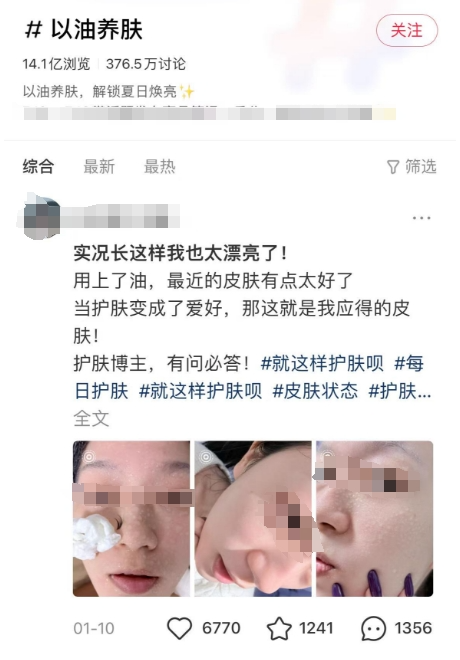
Core Viewpoint - The article discusses the concept of "oil-based skincare" and its effectiveness, emphasizing that while certain oils can be beneficial, they should not be relied upon solely for hydration and must be used in conjunction with other moisturizing ingredients [1][12]. Group 1: Understanding "Oil" in Skincare - The term "oil" in skincare refers to specific types of oils, primarily plant oils (like coconut oil and jojoba oil) and mineral oils (like dimethicone), which can help moisturize and protect the skin [3][5]. - Some oils, such as olive oil, may actually harm the skin barrier due to their fatty acid structure [3]. Group 2: Mechanism of "Oil-Based Skincare" - The skin naturally contains lipid substances that help maintain its barrier; using additional oils can help restore this lipid layer, preventing moisture loss and dryness [7]. - However, oils alone do not provide hydration as they do not contain water, and relying solely on them can lead to continued dryness, especially in arid conditions [9]. Group 3: Limitations of Using Oils - Excessive use of oils can exacerbate acne and other skin issues, as they may promote the growth of acne-causing bacteria [10]. - Some oils may not be easily absorbed by the skin, leading to a greasy feeling without providing adequate moisture [11]. - Oils primarily create a barrier to prevent moisture loss but do not offer additional benefits like hydration or repair [11]. Group 4: Selecting Moisturizing Products - Effective moisturizing products should focus on providing sufficient hydration and preventing moisture loss, rather than just containing oils [14]. - Key ingredients to look for in moisturizers include hyaluronic acid, glycerin, ceramides, and plant oils, which can enhance hydration and skin barrier function [18][20][21][22]. Group 5: Tailoring Moisturizers to Skin Type - Different skin types require specific formulations: dry skin benefits from rich, hydrating products; oily skin should opt for lighter formulations; and sensitive skin needs gentle, low-irritant products [14][15][16]. - Seasonal and climatic conditions should also influence product choice, with heavier creams preferred in dry seasons and lighter lotions in humid conditions [24]. Group 6: Importance of Brand and User Experience - Choosing reputable brands with clinical validation can provide assurance of product efficacy [26]. - Personal experience and feedback from similar skin types are crucial in determining the effectiveness of a moisturizer [27].
养乐多化妆品在天猫国际将闭店 竟然还有护肤品业务?
Xi Niu Cai Jing· 2025-12-16 01:24
Core Viewpoint - Yakult's overseas flagship store will officially cease operations on December 24, 2025, due to store operational adjustments [2] Group 1: Store Closure Details - The Yakult overseas flagship store is not focused on its well-known beverage products but rather on cosmetics, currently offering only three types: makeup remover, toner, and lotion [4] - The closure notice has also been issued on Yakult's cosmetics account on Xiaohongshu, indicating the end of its cross-border e-commerce store on the same date [4] Group 2: Product History and Market Entry - Yakult's cosmetics line, which specializes in probiotic skincare, was established in 1954, yet many consumers remain unaware of its skincare business despite nearly 70 years of operation [4] - In July 2020, Yakult cosmetics entered the Chinese market through the "Yakult overseas flagship store" on Tmall International, launching 14 brands and 43 SKUs, covering a full range of skincare products and toothpaste, with prices ranging from 178 yuan to 2380 yuan [4] Group 3: Brand Recognition and Social Media Presence - Despite Yakult's strong brand recognition in beverages, this advantage has not translated into awareness for its skincare products, as evidenced by the flagship store's follower count of 28,796 and the Xiaohongshu account's 16,000 followers [4]
林清轩递表港交所 联席保荐人为中信证券和华泰国际
Zheng Quan Shi Bao Wang· 2025-12-04 00:19
Company Overview - Lin Qingxuan has submitted an application to list on the main board of the Hong Kong Stock Exchange, with CITIC Securities and Huatai International as joint sponsors [1] - The company is a high-end domestic skincare brand in China, focusing on the anti-wrinkle and firming skincare market, characterized by its use of natural camellia flower ingredients and the innovative "oil-based skincare" concept [1] Product Performance - Lin Qingxuan launched its camellia facial essence oil in 2014, with cumulative sales exceeding 45 million bottles, maintaining the top position in the national facial essence oil product rankings for 11 consecutive years [1] - It is the only facial essence oil that has achieved over 100 million RMB in retail sales for 8 consecutive years [1] Product Range and Market Position - As of June 30, 2025, Lin Qingxuan will offer 230 SKUs, covering a full range of high-end skincare solutions including essence oils, creams, toners, emulsions, serums, masks, and sunscreens [1] - According to data from Zhi Zhi Consulting, Lin Qingxuan ranks first among all high-end domestic skincare brands in China by retail sales in 2024, with a market share of 1.4% [1] - The company is also the only domestic brand to enter the top 15 high-end skincare brands in China (including both domestic and international brands), ranking 13th [1] Market Growth Potential - The market size for high-end skincare products in China is expected to grow from 114.4 billion RMB in 2024 to 218.5 billion RMB by 2029, with significant growth potential in the high-end anti-wrinkle and firming products market and the facial essence oil market, projected to reach 155.5 billion RMB and 13.9 billion RMB respectively by 2029 [1] Sales Strategy - The company has established an OMO (Online-Merge-Offline) integrated sales network, combining online direct sales, online retailers, and offline stores, including direct stores, partner stores, retailers, corporate clients, and distributors [1]
