五粮液经典系列

Search documents
五粮液:明确产品结构主线,强化营销变革-20260204
Dongxing Securities· 2026-02-04 10:25
Investment Rating - The investment rating for Wuliangye (000858.SZ) is not explicitly stated in the provided documents, but the company is expected to maintain a solid market position with a focus on brand value and marketing innovation [2][3]. Core Insights - Wuliangye has positioned 2026 as the "Year of Marketing Innovation," focusing on enhancing brand value, marketing transformation, market strategies, and execution capabilities to improve market share [1]. - The company aims to expand its channel network, with plans to add 100 specialty stores and optimize existing ones, maintaining around 1,700 stores, while also enhancing e-commerce partnerships with major platforms [1]. - Wuliangye is developing a product structure centered around its core brand, with a focus on high-end products and new growth points, aiming to create billion-level products [2]. Financial Performance Forecast - For 2026, Wuliangye is projected to achieve a sales revenue of 78.84 billion yuan, representing a year-on-year growth of 1.48%, and a net profit of 27.07 billion yuan, with a growth of 1.91% [3]. - The earnings per share (EPS) for 2026 is estimated at 6.97 yuan, with a price-to-earnings (PE) ratio of 16.7 times [2][3]. - The company’s net profit margin is expected to be around 35.78% in 2026, with a return on equity (ROE) of 20.31% [3].

五粮液(000858):明确产品结构主线,强化营销变革
Dongxing Securities· 2026-02-04 09:25
Investment Rating - The investment rating for Wuliangye (000858.SZ) is not explicitly stated in the provided documents, but the company is expected to maintain a solid market position with a focus on brand value and marketing innovation [2][3]. Core Insights - Wuliangye has positioned 2026 as the "Year of Marketing Innovation," focusing on enhancing brand value, marketing transformation, market strategies, and execution capabilities to improve market share [1]. - The company aims to expand its channel network, with plans to add 100 specialty stores and optimize existing ones, maintaining around 1,700 stores in total [1]. - Wuliangye is developing a product structure centered around its core brand, with a focus on high-end products and new growth points, targeting significant revenue contributions from key products [2]. Financial Performance Summary - For 2026, Wuliangye is projected to achieve a sales revenue of approximately 78.84 billion yuan, reflecting a year-on-year growth of 1.48%, while the net profit attributable to shareholders is expected to reach about 27.07 billion yuan, with a growth of 1.91% [3]. - The earnings per share (EPS) for 2026 is estimated at 6.97 yuan, with a price-to-earnings (PE) ratio of 16.7 times [2][3]. - The company’s revenue growth rates are forecasted to be 12.58% for 2023, 7.09% for 2024, -12.88% for 2025, and 1.48% for 2026 [3]. Product Strategy Summary - Wuliangye is constructing a product system characterized by "one core, two engines, two drivers, and one new," with the eighth generation of Wuliangye as the core product [2]. - The company aims to establish several strategic products with significant revenue potential, including the classic series and ultra-high-end offerings [2].
同道相益,同心共济,五粮液于变局中开新局
Jin Rong Jie· 2025-12-20 04:52
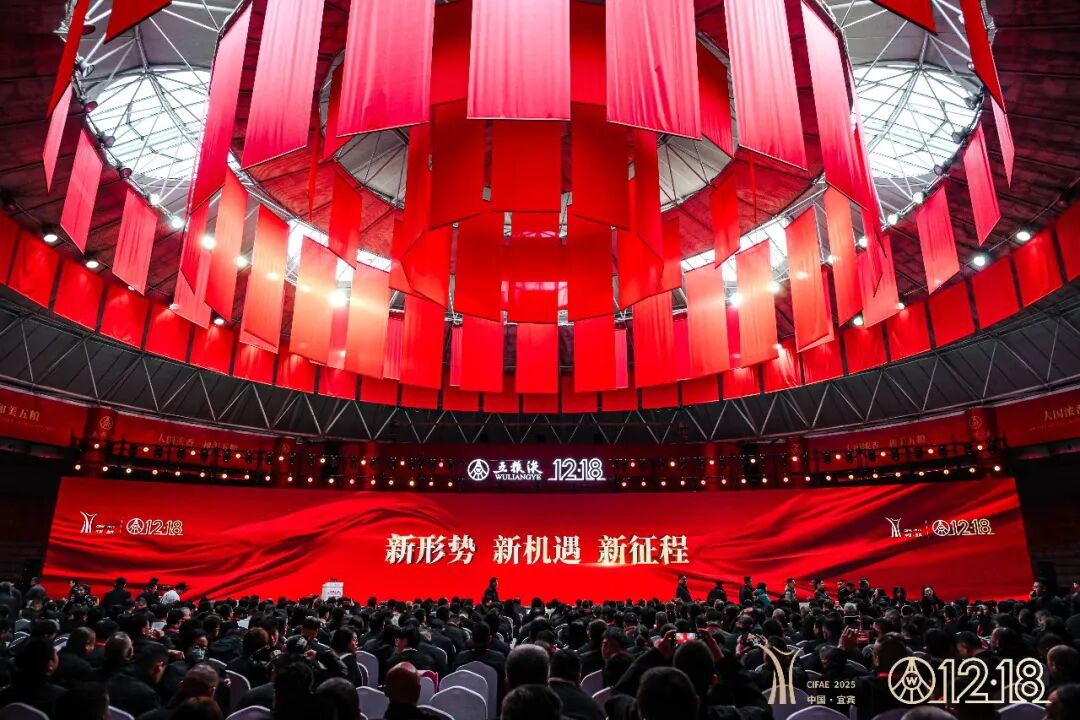
Core Insights - The 29th "12·18 Consensus Co-construction and Sharing Conference" of Wuliangye was held in Yibin, focusing on "New Situation, New Opportunities, New Journey" [1][3] - The conference is significant as it marks a critical transition point for the liquor industry, emphasizing Wuliangye's leadership in navigating changes and promoting sustainable high-quality development [3][4] Group 1: Industry Dynamics - The year 2025 is anticipated to be challenging for the liquor industry, characterized by inventory and pricing pressures, alongside tests of confidence and partnership resilience [4] - The change in the conference's name from "Co-discussion, Co-construction, and Sharing" to "Consensus Co-construction and Sharing" symbolizes a strategic shift towards long-term value recognition and emotional connections with partners [6][8] Group 2: Company Strategy - Wuliangye's chairman highlighted that the current industry adjustment is cyclical, structural, and a return to market rationality, asserting the company's capability to seize opportunities during this phase [10] - The evolution of the partnership model reflects a deeper understanding of the industry chain, transitioning from a transactional relationship to a collaborative development community [10] Group 3: Product Strategy - Wuliangye is adapting to a "Three Rationality Era" in consumer behavior, focusing on the real value of products, cultural recognition, and emotional resonance [11] - The product strategy includes a clear framework with a core brand supported by various product lines, aiming to establish a comprehensive and competitive product matrix [11][13] - The introduction of the new Wuliangye zodiac wine reflects the brand's commitment to cultural and emotional value, expanding the product's significance beyond mere consumption [15] Group 4: Channel Strategy - Wuliangye is implementing a dual approach of strict management and optimization in its channel strategy to create a healthier and more efficient channel ecosystem [16] - The company is restructuring its organizational framework to enhance regional market responsiveness and improve marketing resource allocation [18] - Plans include the addition of new retail formats and partnerships with leading companies to expand market reach and enhance consumer engagement [18][19]

五粮液:2026年计划新增专卖店100家
Zheng Quan Ri Bao Zhi Sheng· 2025-12-19 16:12
Core Insights - The Chinese liquor industry is undergoing a significant transformation characterized by rational consumption attitudes and structural changes in products, markets, and consumer behavior [2][3] Group 1: Company Strategy - Wuliangye has positioned 2026 as the "Year of Marketing Integrity and Innovation," focusing on enhancing brand value and implementing various strategic initiatives [1][4] - The company aims to balance strategic stability with proactive changes to navigate through industry cycles effectively [1][4] - Wuliangye is adopting a systematic approach to prepare for market recovery and brand elevation, emphasizing collaboration with distributors and optimizing channel structures [1][2] Group 2: Industry Challenges - The liquor industry is facing four major issues: overcapacity, high inventory levels, price inversions, and lack of consumption scenarios [2] - In the first three quarters of the year, the combined revenue of 20 A-share liquor companies was 317.78 billion yuan, a year-on-year decrease of 5.90%, with net profits down by 6.93% to 12.26 billion yuan [2] - Despite these challenges, there are signs of recovery, including the optimization of capacity and a gradual improvement in inventory management [2][3] Group 3: Future Opportunities - The industry is expected to benefit from economic resilience and structural transformations, with new consumer demographics and scenarios emerging [3] - By 2026, the liquor market is anticipated to see improvements, with demand policies becoming less impactful and consumption scenarios steadily recovering [3] - Wuliangye's strategic shift towards a consumer-driven approach reflects a commitment to long-term competitiveness amid industry adjustments [6]
五粮液亮相第35届广州国际名酒展 以和美实践助推中国美酒香飘世界
Xin Hua Cai Jing· 2025-11-03 08:22
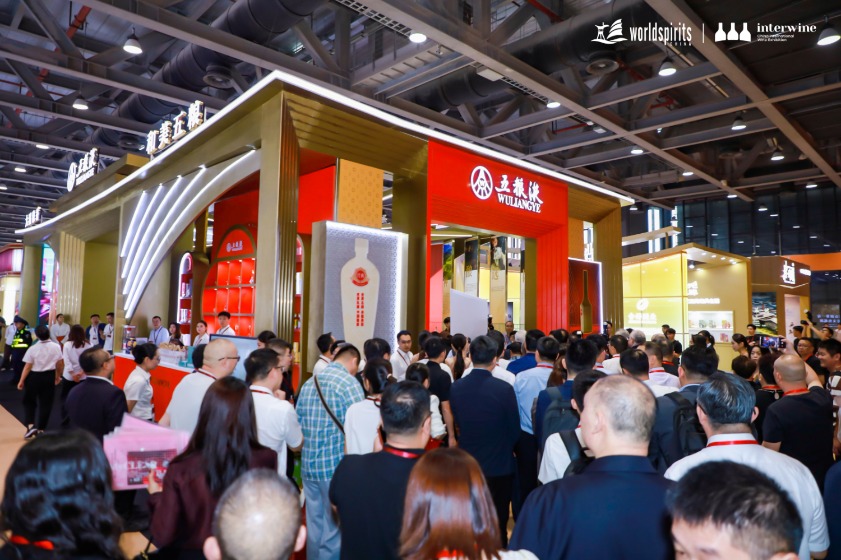
Core Viewpoint - The 35th China (Guangzhou) International Wine Exhibition showcases the efforts of Wuliangye, a leading Chinese liquor company, to integrate Chinese fine wines into the global industry chain and promote them worldwide [1][5]. Group 1: Event Overview - The exhibition took place from October 31 to November 2, 2025, at the Poly World Trade Center in Guangzhou, focusing on the theme "Chinese Fine Wines Fragrance Worldwide" [1]. - The event was co-hosted by several organizations, aiming to create a global platform for wine trade and innovation through various activities such as technical sharing sessions and wine tasting events [1]. Group 2: Wuliangye's Participation - Wuliangye showcased a diverse product matrix at its exhibition booth, highlighting its innovation and leadership in the Chinese liquor industry [3]. - The booth featured core products like the classic Wuliangye series and cultural wines, demonstrating a blend of rich cultural heritage and modern design aesthetics [3]. Group 3: Brand Development and Global Strategy - Wuliangye's Chief Engineer, Yang Yunxia, emphasized the importance of quality in brand building and global development, integrating the "quality as the foundation" philosophy into the company's strategy [5]. - The company aims to become the most popular Chinese liquor brand internationally by focusing on local culture integration and utilizing local media and methods for market penetration [5]. Group 4: Global Outreach and Cultural Exchange - Wuliangye has expanded its presence to dozens of countries and regions, employing innovative models that combine local dining experiences with cultural exchanges [6]. - The company has initiated the "He Mei Global Tour," a cross-national cultural exchange program that has reached 19 countries, enhancing cultural and economic cooperation [6]. Group 5: Future Directions - Wuliangye plans to deepen its global strategy, actively participating in international industry events and enhancing collaboration within the global value chain [7]. - The company aims to respond to consumer expectations for a better life while contributing to the prosperity of the global liquor industry through its "He Mei" philosophy [7].
四川白酒产业解析:根基深厚,创新驱动破局未来
Sou Hu Cai Jing· 2025-06-12 05:10
Core Insights - Sichuan is the core region of China's liquor industry, with a unique "concentrated aroma and sauce aroma" production layout, contributing over 45% of the national liquor manufacturing revenue and 18.7% of total profits in 2023 [1] - The "region + brand + culture" development model has established a rare ecological system in the liquor industry [1] Industry Foundation - Sichuan's liquor industry benefits from significant cluster effects, with key production areas like Yibin, Luzhou, and Deyang forming a differentiated competitive landscape [3] - Yibin's Wuliangye leads with sales revenue exceeding 80 billion yuan in 2023, while Luzhou Laojiao focuses on green brewing and smart production, producing over 100,000 tons of quality base liquor annually [3] - The brand hierarchy is clear, with top brands like Wuliangye and Luzhou Laojiao complementing smaller brands, and Wuliangye's classic series driving price increases through brand strength [3] Cultural Integration - Sichuan is leveraging "liquor and tourism integration" as a strategic approach, exemplified by Luzhou Laojiao's "1573 National Treasure Cellar Group" cultural tourism IP, attracting over 2 million visitors annually [4] Current Challenges - The industry faces three core contradictions: overcapacity versus quality upgrades, channel pressure from traditional distribution models, and generational shifts in consumer preferences [5] - Despite a slight decline in production in 2023, profits have increased, indicating a painful transition towards quality over quantity [5] - The penetration rate of instant retail in Sichuan is 10%, significantly higher than the national average of 3%, leading to a split in terminal sales channels [5] Path to Resolution - The industry must embrace digitalization, internationalization, and sustainability to overcome challenges [6] - Innovations in production, such as smart brewing and green transformation, are being adopted, with companies like Luzhou Laojiao utilizing IoT technology to enhance quality [6] - Marketing strategies are shifting towards comprehensive traffic operations, with platforms like Douyin achieving significant sales growth [6] Future Outlook - The Sichuan liquor industry is expected to evolve through three major trends: technology-driven industry collaboration, ESG value reshaping, and the continuous evolution of new consumer ecosystems [8] - The provincial government aims for the liquor industry's profits to exceed 120 billion yuan by 2027, integrating ESG scores into policy assessments [8] - The future competition will focus on the entire ecosystem's symbiosis rather than individual companies [10]

高分红A股七朵金花 VS 成长型港股七朵金花
雪球· 2025-06-02 03:59
Core Viewpoint - The article discusses the structural differentiation in the current stock market, highlighting the significant performance gap between A-shares and Hong Kong stocks, driven by foreign capital inflow, the weight advantage of technology stocks, and differing policy expectations [2][3]. A-share High Dividend Portfolio: Stable Foundation for Value Reassessment - Financial Performance and Dividend Capability: In a low-interest and volatile market, high-dividend companies are preferred for their stable cash flow and shareholder returns. The total dividend of central state-owned enterprises is expected to reach 1.17 trillion yuan in 2024, accounting for 50% of the total A-share dividends [4][5]. - Key Companies: China Shenhua is expected to have a dividend yield of over 5.9% in 2024, while Huaneng International plans a dividend payout ratio of at least 50% of distributable profits. Wuliangye and Muyuan Foods are also highlighted for their strong financial performance and dividend potential [4][5][6]. - Competitive Moat: The sustainability of the high-dividend portfolio relies on the companies' competitive advantages, including cost advantages in the energy sector and brand differentiation in consumer goods [6]. - Market Outlook: The core opportunities for the high-dividend portfolio in 2025 include the resonance of declining interest rates and stable growth policies, with specific catalysts in the energy and consumer sectors [7]. Hong Kong Growth Portfolio: Profit Elasticity and Industry Wave Resonance - Financial Performance and Growth Momentum: The Hong Kong portfolio focuses on internet, consumer, and innovative pharmaceutical sectors, benefiting from global liquidity easing and AI breakthroughs. Meituan's revenue is expected to reach 337.6 billion yuan in 2024, with a net profit increase of 158.4% [8][9]. - Competitive Moat: The growth portfolio's moat is derived from network effects, research and development accumulation, and global capabilities, with companies like Tencent and Meituan leveraging their ecosystems [10]. - Market Outlook: The core opportunities for the Hong Kong growth portfolio in 2025 are driven by global liquidity easing and clear industry policy catalysts, particularly in AI applications and innovative pharmaceuticals [11]. Comparison of Portfolios and Investor Preferences - Market Performance and Fund Flows: Investors are currently favoring the Hong Kong growth portfolio due to significant performance differences, with the Hang Seng Index rising 16.1% compared to the -2.41% decline of the CSI 300 [13][14]. - Investor Structure Preference: The high-dividend portfolio attracts conservative investors such as insurance funds, while the growth portfolio appeals to foreign capital and growth-oriented funds [15][16]. - Current Popularity Assessment: The Hong Kong growth portfolio is more favored due to its higher earnings growth rate and alignment with global technology trends, while the high-dividend portfolio remains attractive for risk-averse investors [16][17].