成长股

Search documents
低开高走,超4300只个股上涨!锂电板块大爆发,赣锋锂业等10余股涨停!电力股回调,辽宁能源跌停|A股收盘
Mei Ri Jing Ji Xin Wen· 2026-03-27 07:45
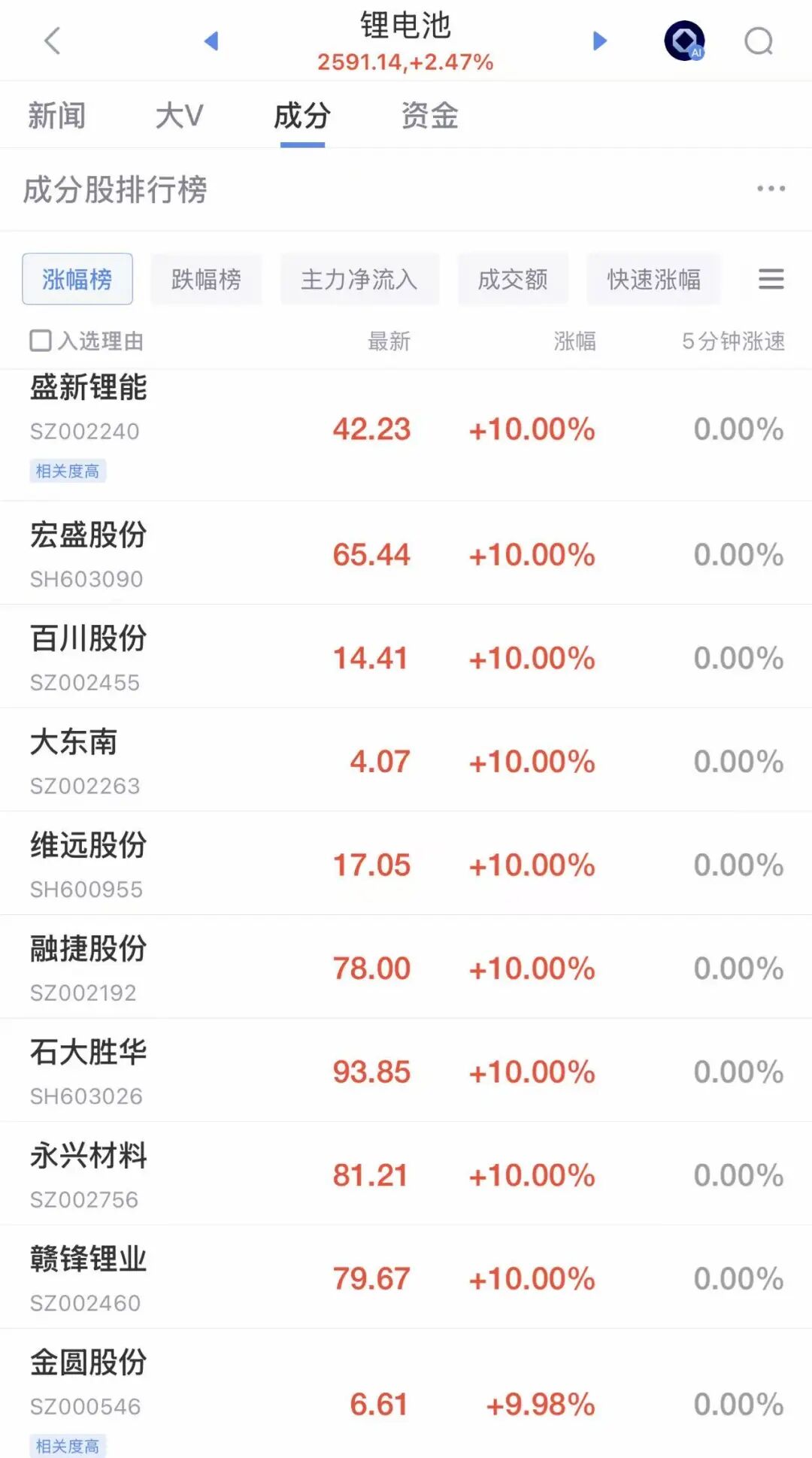
Market Performance - The market opened lower but rebounded, with the Shenzhen Component Index rising over 1% [1] - By the close, the Shanghai Composite Index increased by 0.63%, the Shenzhen Component Index by 1.13%, the ChiNext Index by 0.71%, and the STAR Market Index by 1.54% [1] - The trading volume in both markets was below 2 trillion yuan for two consecutive days, with today's volume at 1.85 trillion yuan, a decrease of 90.3 billion yuan from the previous trading day [1] - Over 4,300 stocks in the market experienced gains [1] Sector Performance - The lithium battery industry chain saw significant growth, with over ten constituent stocks hitting the daily limit, including Rongjie Co., which achieved four consecutive limit-ups, and Shida Shenghua with two consecutive limit-ups [1] - The pharmaceutical sector also performed well, with Keta Bio hitting the daily limit at a 20% increase, and Minophagen achieving five limit-ups in six days [1] - The chemical sector was active, with stocks like Suli Co., Lubnorth Chemical, and Jinzhengda reaching the daily limit [1] Market Sentiment and Economic Outlook - A report from Dongxing Securities indicated that as a major oil importer, China faces cost pressures from high oil prices, which could impact the manufacturing export environment [3] - Rising energy prices may alter the Federal Reserve's monetary policy pace, delaying expected interest rate cuts and strengthening the dollar, which could suppress global capital markets [3] - The easing of conflicts is expected to improve market risk appetite, with a potential new market bottom forming around the 3,900-point level [4] - The core logic for the A-share market remains focused on domestic economic recovery, monetary policy, and industrial upgrades, with growth stocks being a key focus area [4]



The Nasdaq Turns Negative For March 24th As Tech Sells Off Hard
Yahoo Finance· 2026-03-24 13:56
Market Overview - Nasdaq 100 futures declined by 0.98%, returning the index to negative territory after a previous rebound, influenced by fading optimism regarding Iran peace talks [2] - The VIX remains elevated near 27, indicating persistent investor fear [2] Oil Market Impact - West Texas Intermediate crude oil increased by 4.26%, while Brent crude surpassed $101, driven by ongoing conflict between Iran and the U.S.-Israeli alliance [3] - Rising oil prices are contributing to inflation expectations, which in turn are pushing Treasury yields higher, particularly affecting growth stocks [3] - The 10-year Treasury yield rose by 14 basis points to 4.39%, its highest level in months, creating headwinds for long-duration growth stocks [3] Technology Sector Developments - Amazon Web Services experienced disruptions in its Bahrain region due to drone activity, marking the second outage since the onset of the Iran conflict, prompting tech companies to reassess data center expansion plans in the Middle East [4] Index Performance - The Nasdaq 100 closed at $588, down 4% year-to-date and 2% over the past week [5] - The S&P 500 is down nearly 5% over the past month, while the Dow has seen a nearly 7% decline since late February [5][6] - The iShares Russell 2000 ETF showed relative resilience with less than a 1% decline over five days [6] Company-Specific News - JPMorgan reduced Fair Isaac's (FICO) price target from $1,825 to $1,325 due to concerns over pricing power erosion in mortgage credit scoring and potential regulatory pressures [6]
Descartes Systems (DSGX) is an Incredible Growth Stock: 3 Reasons Why
ZACKS· 2026-02-20 18:46
Core Viewpoint - Growth stocks are appealing due to their potential for above-average financial growth, but identifying strong candidates is challenging due to associated risks and volatility [1] Group 1: Growth Stock Identification - The Zacks Growth Style Score simplifies the process of identifying promising growth stocks by analyzing real growth prospects beyond traditional metrics [2] - Descartes Systems (DSGX) is currently highlighted as a recommended stock with a favorable Growth Score and a top Zacks Rank [2] Group 2: Earnings Growth - Earnings growth is crucial for investors, with double-digit growth being a strong indicator of future stock price gains [4] - Descartes Systems has a historical EPS growth rate of 21.5%, with projected EPS growth of 16.2% this year, surpassing the industry average of 13.5% [5] Group 3: Cash Flow Growth - Higher-than-average cash flow growth is vital for growth-oriented companies, enabling expansion without relying on external funding [6] - Descartes Systems currently exhibits a year-over-year cash flow growth of 20%, significantly higher than the industry average of 9.4% [6] - The company's annualized cash flow growth rate over the past 3-5 years is 17.2%, compared to the industry average of 11.4% [7] Group 4: Earnings Estimate Revisions - Positive trends in earnings estimate revisions correlate strongly with near-term stock price movements [8] - The current-year earnings estimates for Descartes Systems have increased by 9.4% over the past month, indicating a favorable outlook [8] Group 5: Overall Assessment - Descartes Systems holds a Zacks Rank of 2 and a Growth Score of B, reflecting its strong growth potential based on various metrics [9] - The combination of a solid Growth Score and Zacks Rank positions Descartes Systems well for potential outperformance, making it an attractive option for growth investors [10]


星巴克需要你在下午买一杯冰萃饮品
Xin Lang Cai Jing· 2026-02-20 15:25
Core Viewpoint - Starbucks is regaining morning customers but must capture the afternoon market to win back investor favor [2][12] Revenue Structure - Over half of the sales (approximately $12 billion annually) at U.S. company-operated stores occur before 11 AM [2][12] - After the morning caffeine peak, customer traffic significantly declines, leading to a low-traffic period [2][12] CEO's Strategy - CEO Brian Niccol aims to improve afternoon efficiency to match the peak morning hours from 7 AM to 9:30 AM, which could enhance store profitability and revive stagnant stock [2][12] Investor Sentiment - Investors are currently optimistic, with the stock rising 14% this year due to strong early performance signals [5][14] - Starbucks reported its strongest same-store sales growth in two years, indicating improved operational efficiency and transaction volume [5][14] - The company projects revenue growth of 5% or higher by fiscal year 2028 [5][14] Valuation Concerns - The stock's expected price-to-earnings ratio is around 37, significantly higher than competitors like McDonald's [5][14] - To justify this high valuation, Starbucks must not only recover morning traffic but also drive internal growth [5][14] Afternoon Market Opportunity - The afternoon period presents a significant opportunity, but it is challenging to develop [6][14] - Starbucks has been attempting to create a true consumption peak in the afternoon, investing in staff, faster equipment, and redesigned seating to enhance store appeal [6][14] Industry Comparisons - Successful turnarounds in the restaurant industry often come from expanding consumption into new time slots, as seen with McDonald's breakfast offerings [6][15] Brand Strategy - Starbucks is attempting to transform into a true all-day snack and beverage brand, which presents strategic contradictions [7][16] - The company is reviving its core brand identity and promoting a cozy café atmosphere while also offering a range of afternoon products [7][16] Consumer Trends - As the day progresses, consumers tend to shift towards sparkling drinks, iced teas, or cold brew energy drinks, indicating a need for Starbucks to adapt [7][16] - Starbucks must balance restoring its classic café vibe while promoting a full suite of afternoon offerings [8][16] Product Innovations - The company is implementing electronic menu boards to highlight afternoon products like matcha drinks and protein energy balls [8][17] - New beverage platforms are being introduced, allowing customers to customize sweetness and caffeine levels, which aligns with health trends [9][17] Afternoon Business Growth - Starbucks' afternoon business is already substantial, but filling the gap between morning lattes and afternoon energy boosts is essential for growth [9][18]


高盛:全球市场“巨变”:“实体”回归,“科技”分化
美股IPO· 2026-02-13 03:27
Core Viewpoint - Goldman Sachs indicates that the global bull market is not over, but the driving forces have shifted from crowded US tech stocks to emerging markets, commodities, and value stocks [1][3] Group 1: Market Dynamics - Funds are moving from over-congested US tech stocks to emerging markets (EM), commodities, and "old economy" value stocks [3] - The MSCI Emerging Markets Index has risen from 100 to nearly 120 relative to developed markets since the beginning of 2025, indicating a significant revaluation [7] - Despite geopolitical uncertainties, the stock market shows resilience, largely due to strong fundamentals and improved macro and micro drivers [9][8] Group 2: AI and Technology Sector - AI capital expenditure is projected to reach $659 billion, but concerns over return on investment (ROI) are rising, leading to significant differentiation among the "Magnificent Seven" tech stocks [4][14] - The software sector is experiencing a crisis as AI innovations threaten traditional SaaS models, resulting in a sharp decline in software valuations [5][16] - The correlation among the "Magnificent Seven" has sharply decreased, with varying returns; for instance, Google's return is around 66%, while others like Apple and Amazon lag behind [14][16] Group 3: Value Stocks and Old Economy - There is a revival of interest in value stocks, which were previously seen as "value traps," as some are successfully transforming into "value creators" by generating higher cash flows [18][19] - Capital expenditures in traditional sectors like utilities and telecommunications are increasing, driven by the need for infrastructure to support tech growth [17] - The performance of financial assets has reversed, with gold, emerging markets, and value stocks outperforming tech stocks, marking a significant shift in market dynamics [20] Group 4: Diversification and Future Outlook - The era of diversification is emerging, as the sources of growth are expanding beyond large tech stocks, with strong earnings growth across various sectors [22][23] - Analysts have raised earnings forecasts for 2026 unusually early, particularly for emerging markets, indicating a shift in investment opportunities [12][23] - Investors are encouraged to reassess long-standing allocation habits and diversify across regions, sectors, and styles to capitalize on the changing market landscape [23]


全球市场“巨变”:“实体”回归,“科技”分化
Hua Er Jie Jian Wen· 2026-02-12 12:57
Core Insights - The narrative of "US tech dominance" is being challenged as Goldman Sachs reveals a paradigm shift in its global strategy report, indicating that the era of "financial assets" outperforming "real assets" is reversing, with emerging markets making a strong comeback by 2025 [1][4][7] Group 1: Market Trends - The US market is projected to lag behind other major markets for the first time in 2025, with indices like the European STOXX 600, Japan's Topix, and MSCI Asia-Pacific (excluding Japan) showing better performance than the S&P 500 [4][7] - Emerging markets are experiencing a significant revaluation, with the MSCI Emerging Markets Index rising from 100 to nearly 120 relative to developed markets since the beginning of 2025, driven by both macro and micro factors [7] Group 2: Corporate Earnings and Performance - Despite geopolitical uncertainties, corporate earnings in the US remain strong, with a growth rate exceeding 12% in the current quarter, surpassing market consensus by 5 percentage points [8] - The median year-on-year growth for S&P 500 companies is 9%, with 59% of companies exceeding earnings expectations, indicating a broadening source of growth beyond large tech stocks [9] Group 3: Technology Sector Dynamics - AI capital expenditure is projected to reach $659 billion, a 60% increase from 2025, but concerns about return on investment are rising, leading to a divergence in performance among the "Magnificent Seven" tech companies [10] - The software sector is facing a crisis as AI innovations threaten traditional SaaS models, resulting in a significant drop in software valuations, with a recent 15% decline reflecting a fundamental reassessment of growth prospects [11] Group 4: Shift Towards Real Assets - There is a notable shift towards physical assets, with capital expenditures in utilities and capital-intensive industries surging, as the growth of tech giants increasingly relies on infrastructure investments [12] - The valuation premium of capital-light companies over capital-intensive firms is decreasing, indicating a renewed focus on tangible assets [12] Group 5: Value Stocks Revival - The reevaluation of growth rates in certain tech sectors, combined with persistent inflation and higher real interest rates, has led to renewed interest in value stocks, which are transitioning from being seen as "value traps" to "value creators" [13] - The performance of financial assets has reversed significantly since early 2025, with gold, emerging markets, and value stocks outperforming tech-heavy indices like the Nasdaq and S&P 500 [13] Group 6: Diversification Opportunities - The current market environment, characterized by strong corporate earnings and a shift in growth sources, presents new diversification opportunities for investors, necessitating a reassessment of long-standing allocation habits across regions, sectors, and styles [16]
美股轮动风暴背后,竟是2001年与2022年的崩盘魅影!
Jin Shi Shu Ju· 2026-02-04 12:48
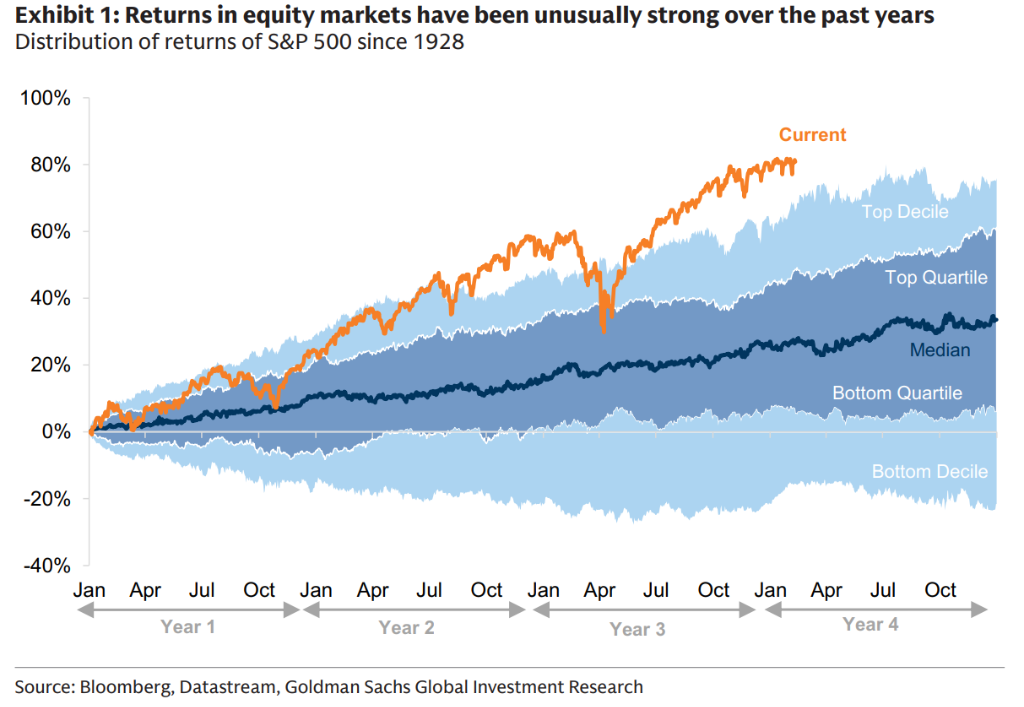
Core Viewpoint - The recent decline in U.S. tech stocks has led to a relative strength in value stocks, indicating a potential shift in market dynamics that may just be beginning [1][2]. Group 1: Market Trends - The Russell 1000 Value Index has risen by 8.6% since early November last year, outperforming its growth counterpart by 14 percentage points, which historically suggests further gains for value stocks [1]. - The recent outperformance of value stocks has raised concerns, as similar patterns preceded significant market downturns in 2022 and 2001 [1]. - A consensus is forming on Wall Street that the era dominated by large tech stocks may be nearing its end, as evidenced by a recent sell-off in tech stocks following declines in software manufacturers [1]. Group 2: Analyst Insights - Andrew Greenebaum from Jefferies believes the rotation towards value stocks is just beginning, with significant room for value stocks to outperform growth stocks over a longer time frame [2]. - Historical analysis indicates that periods of value stock outperformance often coincide with economic recovery phases or GDP growth acceleration [2]. - Doug Beath from Wells Fargo notes that since late October, investors have increasingly favored cyclical stocks, often at the expense of large-cap growth stocks [3]. Group 3: Valuation Dynamics - The current market environment has created a significant valuation gap between growth and value stocks, making value stocks particularly attractive [4]. - The past 15 years have seen growth stocks outperform value stocks by an average of 7% annually, but this trend may be reversing as high valuations and strong profit growth are already priced in for growth stocks [4]. - Greenebaum highlights that low market expectations for value stocks provide room for price increases, even with average performance [5]. Group 4: Future Projections - Despite the positive outlook for value stocks, there are concerns regarding profit growth, with projected earnings growth for value stocks at 6.4% compared to 27.1% for growth stocks by 2026 [5]. - Noah Weisberger from BCA Research suggests that as the bull market matures, overall stock market returns will likely be more closely tied to earnings growth rather than valuation increases [5][6]. - Weisberger also notes that while relative valuations may signal a rotation, the leading sectors may not change entirely, indicating a potential convergence between lagging and leading sectors [6].
特斯拉Q4财报解读:灾难性的一季
美股研究社· 2026-01-29 12:09
Core Viewpoint - Tesla's recent quarterly earnings report slightly exceeded market expectations, but the actual operational data is underwhelming, leading analysts to conclude that Tesla currently lacks investment value [2][3]. Financial Performance - Revenue and profit metrics slightly surpassed market consensus, but the overall performance is disappointing, with a year-over-year revenue decline in Q4 [3]. - Q4 revenue dropped 11% year-over-year, with a more significant 17% decline quarter-over-quarter, primarily due to weak automotive sales [3][6]. - Adjusted EBITDA margin fell from 16.9% to 16.7%, indicating a continuous decline in profit margins [7]. - Q4 earnings per share (EPS) dropped 60% year-over-year under GAAP, and adjusted EPS fell 17% [7]. Cash Flow and Capital Expenditure - Operating cash flow for Q4 was $3.8 billion, down over 20% year-over-year, while free cash flow decreased by 30% to $1.4 billion [8]. - The projected annual free cash flow is between $5 billion and $6 billion, resulting in a historical free cash flow P/E ratio of approximately 250 times [8][10]. - Despite a year-over-year decrease in capital expenditures, free cash flow still declined, raising concerns about the sustainability of growth plans [9]. Market Position and Valuation - Tesla's automotive revenue is declining while the energy business, which grew 25% year-over-year, is too small to offset the automotive downturn [6][10]. - Analysts believe Tesla is significantly overvalued, with a historical free cash flow P/E ratio of 250 times and a P/E ratio of about 400 times based on the last 12 months' earnings [10]. - The company's future growth is heavily reliant on the autonomous taxi and robotics sectors, where it lags behind competitors like Waymo [10][11]. Analyst Sentiment - Analysts maintain a bearish outlook on Tesla, citing the struggles in its core automotive business and the lack of progress in its future ventures as reasons for skepticism [12].


未知机构:交易台高盛中国市场总结上证指数001科创501-20260121
未知机构· 2026-01-21 02:20
Summary of Key Points from Conference Call Industry Overview - The report focuses on the Chinese stock market, specifically the performance of various indices including the Shanghai Composite Index, ChiNext Index, and others [1][2][4]. Core Insights and Arguments - The Shanghai Composite Index decreased by 0.01%, while the ChiNext Index fell by 1.58% [1][2]. - The Shanghai 50 Index dropped by 0.17%, and the CSI 300 Index declined by 0.33% [1][2]. - Total trading volume reached 2.80 trillion RMB, reflecting a 2.5% increase from the previous day [1][2]. - A-shares experienced a slight decline, primarily due to weakness in growth stocks [1][2]. Sector Performance - The memory sector showed relative resilience due to a sustained supply shortage cycle [2][3]. - The banking and insurance sectors outperformed the market as funds rotated from growth stocks to value stocks [4]. - Real estate stocks gained traction amid speculation of upcoming housing policies from the National Development and Reform Commission, with Poly Developments reporting better-than-expected preliminary annual net profits, boosting market sentiment [5]. - The building materials and home appliance sectors also rose, driven by the strength in the real estate sector [6]. Additional Important Insights - The first effective day for margin ratio adjustments was noted, with financing balances decreasing by 8.4 billion RMB, ending a previous trend of continuous growth [7]. - The proportion of financing transactions in the total trading volume of A-shares fell to 9.82%, marking the first time it has been below 10% since mid-December of the previous year [7]. - The report indicates a strategic positioning where the firm is a buyer in the chemicals, tourism, and storage sectors, while being a seller in consumer electronics, metals, and machinery sectors [8].
花旗发布2026年投资展望:美股成长股仍有增长空间,美联储政策利率或降至2.5%以下,大宗商品看好铝价中期表现
Sou Hu Cai Jing· 2026-01-19 01:55
Core Insights - Citigroup has released its "2026 Global Investment Outlook," providing predictions for key market indicators in 2026 [1] Market Performance - Growth stocks are expected to continue performing well, with an anticipated return of approximately 17%, while the S&P 600 small-cap value stocks, which have relatively low valuations and cyclical resilience, are projected to yield a return of 21% [3] Monetary Policy - The U.S. monetary policy still has room for easing, with the Federal Reserve potentially lowering the policy rate to below 2.5% by 2026; in contrast, the European Central Bank is expected to maintain its policy rate at around 2% at least until 2027 [3] Inflation Trends - The overall consumer price index in the U.S. may approach zero growth in 2026, while core personal consumption expenditure inflation is expected to gradually decline; however, medium to long-term inflation risk premiums may still rise, indicating ongoing uncertainty regarding future inflation [3] Commodity Prices - The outlook for aluminum prices is positive, with a target range of $3,500 to $4,000 per ton; the natural gas market is facing supply pressures, with European TTF natural gas prices projected to be around €22 per megawatt-hour by 2027 [3] Foreign Exchange Market - The U.S. dollar is likely to remain relatively strong in the first half of 2026, with the euro to dollar exchange rate potentially falling to 1.1; in a relatively stable global risk environment, currencies with high interest rate differentials are expected to perform notably well [3]