别克GL8

Search documents
MPV市场没有永恒的王者,只有时代的答卷
第一财经· 2026-03-30 04:38
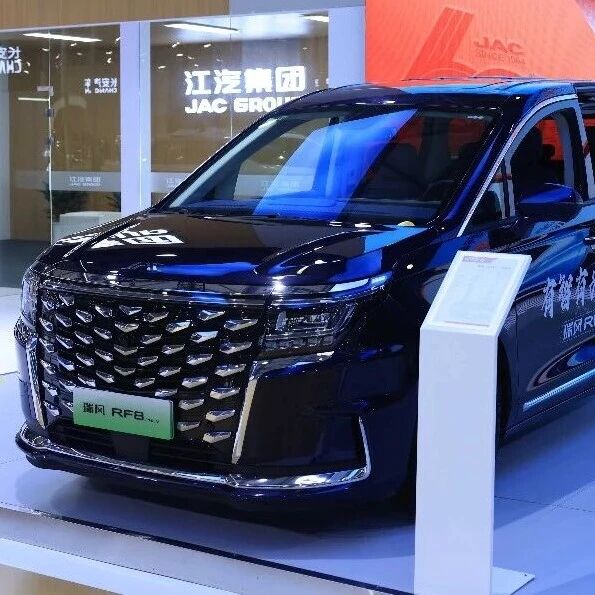
Core Viewpoint - The article discusses the competitive landscape of the MPV market in China, highlighting the challenges faced by traditional players like Jianghuai Ruifeng and the emergence of new contenders like Tengshi D9, emphasizing the shift in consumer preferences and market dynamics [3][5][9]. Group 1: Jianghuai Ruifeng's History and Challenges - Jianghuai Ruifeng, once a dominant player in the MPV market, celebrated its 25th anniversary and launched the RF8 series, aiming to regain market share [3][7]. - The MPV market was initially dominated by foreign brands until the early 2000s, when domestic brands began to emerge, with Jianghuai Ruifeng capturing 62% of the market share in its launch year [3][4]. - Post-2015, the MPV market saw increased competition and a shift in consumer demands towards more advanced and user-friendly features, leading to Jianghuai Ruifeng's decline [3][8]. Group 2: Tengshi D9's Rise and Current Position - Tengshi D9 capitalized on the transition to new energy vehicles, achieving nearly 120,000 sales in 2023, surpassing the Buick GL8 to become the top-selling MPV [5][6]. - Despite its initial success, Tengshi D9 has faced a significant decline in sales, with February 2026 figures showing a 57.32% year-on-year drop, indicating a loss of market position [6][8]. - The introduction of the second-generation Tengshi D9, featuring new battery technology, aims to revitalize its sales and compete effectively in the market [6][7]. Group 3: Market Dynamics and Competition - The MPV market is characterized by intense competition, with over 40 models vying for consumer attention, leading to fluctuating sales rankings among various brands [8][9]. - In early 2026, the sales distribution between fuel and new energy MPVs showed a shift, with new energy vehicles capturing a larger share of the top-selling models [8]. - The market is witnessing a clear trend where no single brand can maintain a dominant position, as consumer preferences evolve and competition intensifies [9].



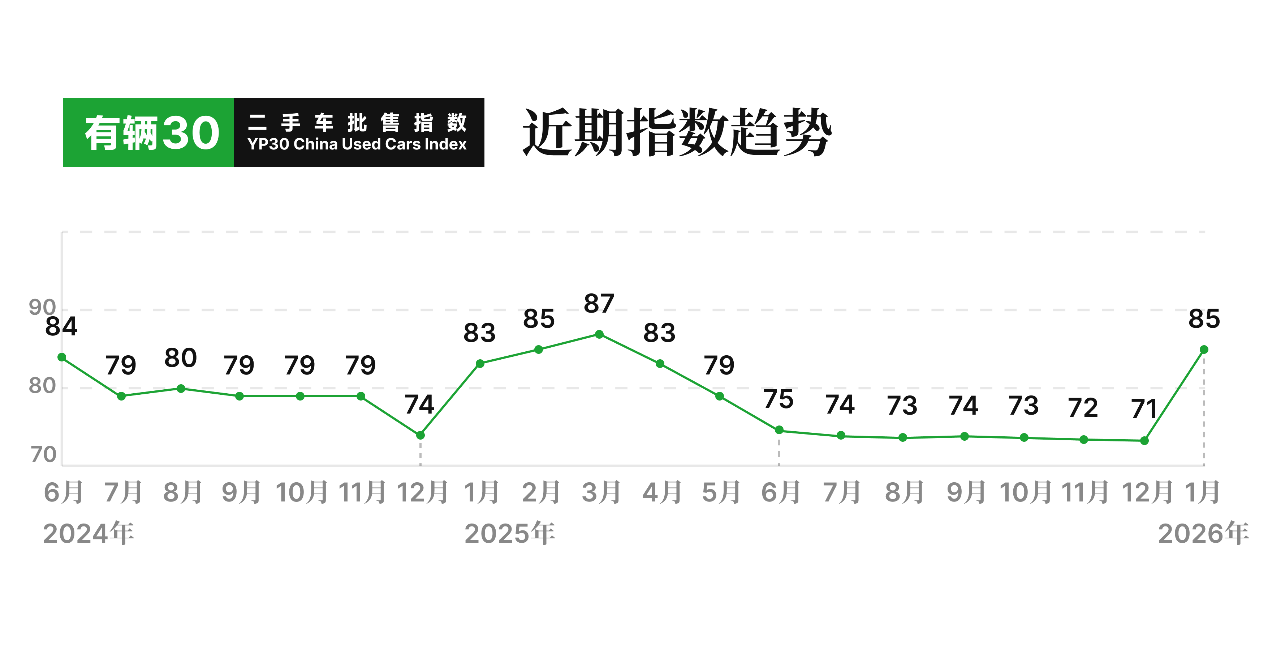
有辆30指数2026年首月大涨近20%,折射春节前二手车需求强劲
Zhong Guo Qi Che Bao Wang· 2026-02-06 05:51
Core Insights - The "Youliang 30 Used Car Wholesale Index" recorded a significant increase of 19.7% month-on-month in January 2026, reaching 85 points, driven by strong demand in the automotive consumption market before the Spring Festival, marking the largest monthly increase since its inception [1] - The index now includes a complete list of 30 benchmark models, enhancing its transparency and market reference value, providing a clearer and more credible quantitative framework for observing the dynamics of the Chinese used car market [1][2] Index Composition - The 30 benchmark models represent high liquidity and typical market indicators across various segments, covering brands from China, the US, Germany, and Japan, aimed at reflecting the overall trends in the Chinese used car market [2] - Notable models include Chinese brands like Great Wall Haval H6 and BYD Song, German brands like Volkswagen Golf and BMW 3 Series, Japanese brands like Honda CR-V and Toyota RAV4, and American brands like Tesla Model Y and Buick GL8 [2] Market Trends - The index data for January 2026 reveals a profound structural adjustment beneath the overall market prosperity, with mid-to-large vehicles experiencing a price increase of 27.1% year-on-year, significantly higher than the average market increase of 11.1% for compact cars [4] - Chinese brands led the market with a year-on-year price increase of 36.9%, reflecting advancements in technology, product strength, and market recognition, while German brands maintained a robust 34.6% increase [7] - In contrast, Korean and French brands faced declines of 9.0% and 13.8% respectively, indicating challenges in market share and brand influence [7] Vehicle Type Dynamics - The market has seen a notable shift in demand, with MPV prices soaring by 35.7%, becoming the fastest-growing category, while traditional SUV prices saw a modest increase of 3.2% and sedans increased by 18.6% [10] Circulation and Transactions - The liquidity of used car sources in China continues to rise, with total used car transactions in 2026 surpassing 20 million units, reaching 20.108 million, a year-on-year increase of 2.52%, and an increasing proportion of interprovincial transactions [13] - The "Youliang 30 Index" provides innovative analysis on interprovincial circulation, with Sichuan province entering the top 5 in interprovincial procurement in January 2026 [13] Index Value and Macro Significance - The "Youliang 30 Index" serves as a quantifiable and traceable "data dashboard" for industry governance and market fluctuation assessment, helping relevant departments gauge the true structure of the current consumption market and consumer confidence levels [22] - The index's monthly data series creates a dynamic price map, allowing for scientific measurement and analysis of the impact of policies like "trade-in" on the circulation segment [22] - The transparency and standardization of the "Youliang 30 Index" respond to national requirements for market data element commercialization and the establishment of a high-standard market system, facilitating the transition of the used car industry from a traditional "experience-driven" model to a "data-driven" modernized development phase [22]
2026年MPV市场乱战升级:新车扎堆入市,全维博弈白热化
Bei Jing Shang Bao· 2026-02-01 10:41
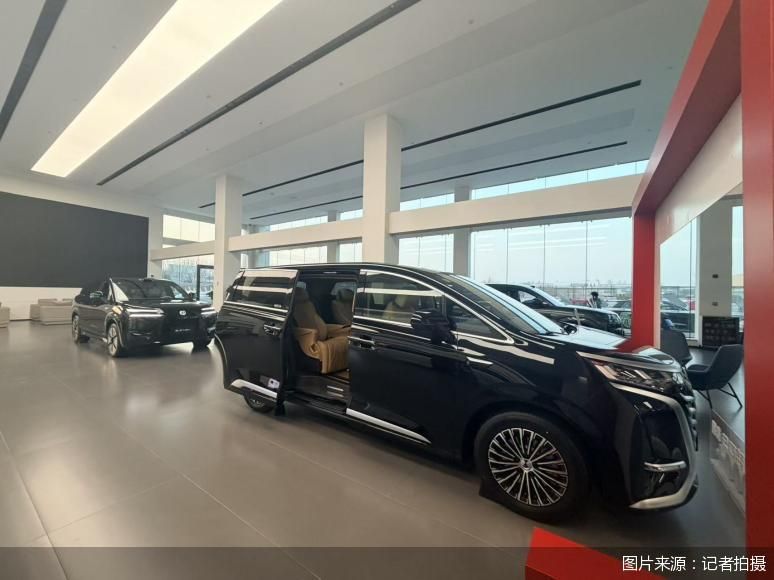
Core Viewpoint - The MPV market in China is undergoing significant transformation, with at least six new models set to launch by 2026, driven by evolving family vehicle demands and advancements in new energy technology [1] Group 1: Market Dynamics - The MPV segment has shifted from a niche market to a competitive battleground, influenced by the increasing demand for family-oriented vehicles and the rise of new energy technologies [1] - The emergence of large six-seat SUVs is diverting demand away from MPVs, necessitating a focus on enhancing space comfort and accelerating the transition to family-oriented designs [6][8] - The MPV market is experiencing a structural explosion in demand, with family usage surpassing business use, as evidenced by 58% of MPV sales being for family purposes in 2025 [6] Group 2: New Model Launches - Multiple new MPV models are set to enter the market, including the Leap Motor D99, which features an 80.3 kWh battery for extended range, and the Galaxy V900, which offers a spacious trunk [3] - High-end models are also being introduced, such as the Lantu flagship MPV with L3-level autonomous driving capabilities and the Huawei-powered Zhijie V9, which is expected to launch in spring 2026 [3] Group 3: Sales Performance - In December 2025, 70% of the top ten MPV sales were from new energy vehicles, with the Wey brand's Gaoshan leading at 10,558 units sold [4] - Traditional brands like Toyota and Buick continue to dominate, with the Toyota Granvia and Sienna ranking second and third in sales, while Honda's models are experiencing a decline [5] Group 4: Competitive Strategies - Companies are focusing on differentiated features to enhance their competitive edge, such as the Zhijie V9's rotating second-row seats and the D99's advanced driving assistance systems [7] - The trend towards multifunctional MPVs is emerging, with some models designed for camping and outdoor activities, showcasing the versatility of MPVs [7] Group 5: Future Outlook - The MPV market is expected to see increased concentration, with the top ten manufacturers accounting for 78.3% of total sales in 2025, indicating a trend towards market consolidation [8] - The competition in the MPV sector is anticipated to intensify, with a focus on smart technology and electric upgrades as key differentiators for companies aiming to capture market share [8]
跨国车企在华格局生变:谁在倒退,谁在增长?
3 6 Ke· 2026-01-26 12:49
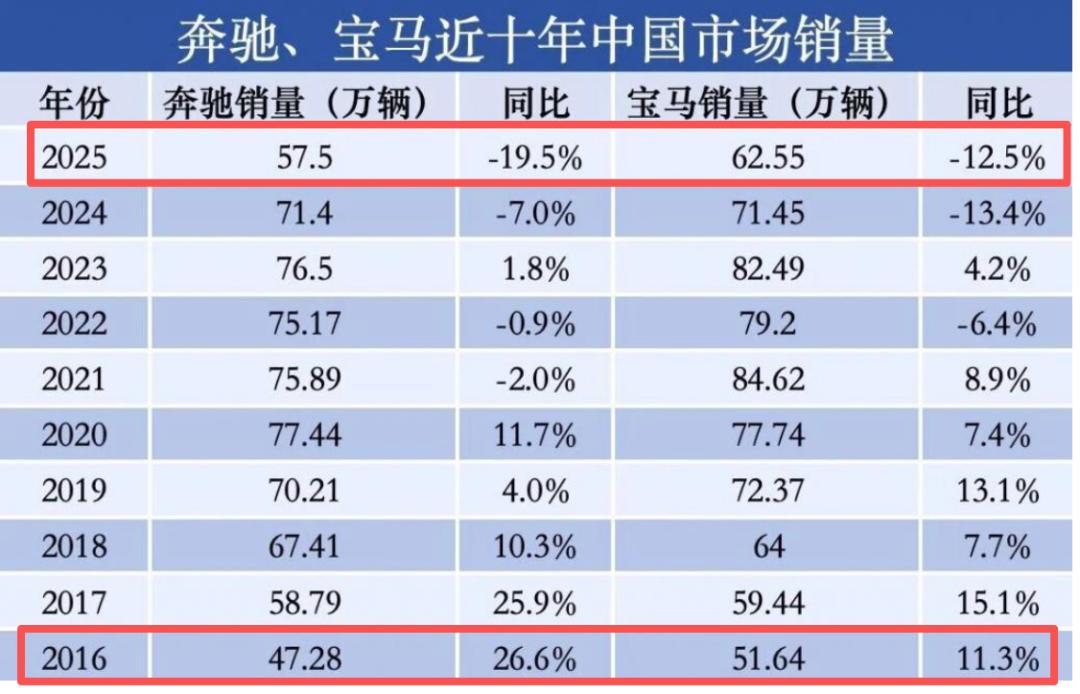
Core Insights - The automotive market in China is experiencing a significant shift, with domestic brands like Leap Motor, AITO, Xpeng, and Xiaomi seeing substantial sales growth, while multinational brands such as Mercedes-Benz, BMW, and Porsche are facing declining sales [1][3] Group 1: Sales Trends of Multinational Brands - Mercedes-Benz and BMW have provided preliminary demand forecasts for 2026, each predicting sales below 500,000 units, a level comparable to their sales in 2016 [1] - Mercedes-Benz's sales in China are projected to drop to 575,000 units in 2025, a decline of 19.5% year-on-year, while BMW's sales are expected to fall to 625,500 units, down 12.5% [2][19] - The decline in sales for these brands reflects a broader trend of losing market share to domestic competitors, with significant drops in brand influence and sales volume [3][19] Group 2: Performance of Other Multinational Brands - Toyota and General Motors are showing stable performance, with Toyota's sales in China exceeding 1.78 million units in 2025, marking a slight increase of 0.23% [3][5] - General Motors reported a notable recovery with sales of 535,000 units, a year-on-year increase of 22.99%, ending a seven-year decline [3][8] Group 3: Challenges Faced by Korean Brands - Korean brands like Hyundai and Kia are struggling, with their market share shrinking from 3.8% in 2020 to 0.9% in 2025 [11] - Hyundai's sales in 2025 are reported at 210,000 units, a 14.8% increase, but this is seen as insufficient given the historical context of their performance [13] - Kia's sales are approximately 254,000 units in 2025, a slight increase of 2.3%, but still far below their peak of 650,000 units in 2016 [14] Group 4: Decline of BBA and Other German Brands - The BBA (Benz, BMW, Audi) group is experiencing significant declines, with Mercedes-Benz's sales dropping from a peak of 774,000 units in 2020 to 575,000 units in 2025 [19][20] - BMW's sales are projected to decrease from 825,000 units in 2023 to 625,500 units in 2025, losing approximately 200,000 units in just two years [20] - Audi's sales are also declining, with projections of 617,500 units in 2025, down 5% from previous years [21] Group 5: Market Dynamics and Consumer Preferences - The shift in consumer preferences is evident, with a growing focus on technology and practical features over brand prestige, impacting the sales of traditional luxury brands [25] - The rapid rise of domestic brands in technology and electric vehicle offerings is reshaping the competitive landscape, making it difficult for multinational brands to maintain their market positions [26]


2025年度车型榜单出炉:新能源渗透率飙升 自主品牌登顶全细分市场
Qi Lu Wan Bao· 2026-01-20 05:08
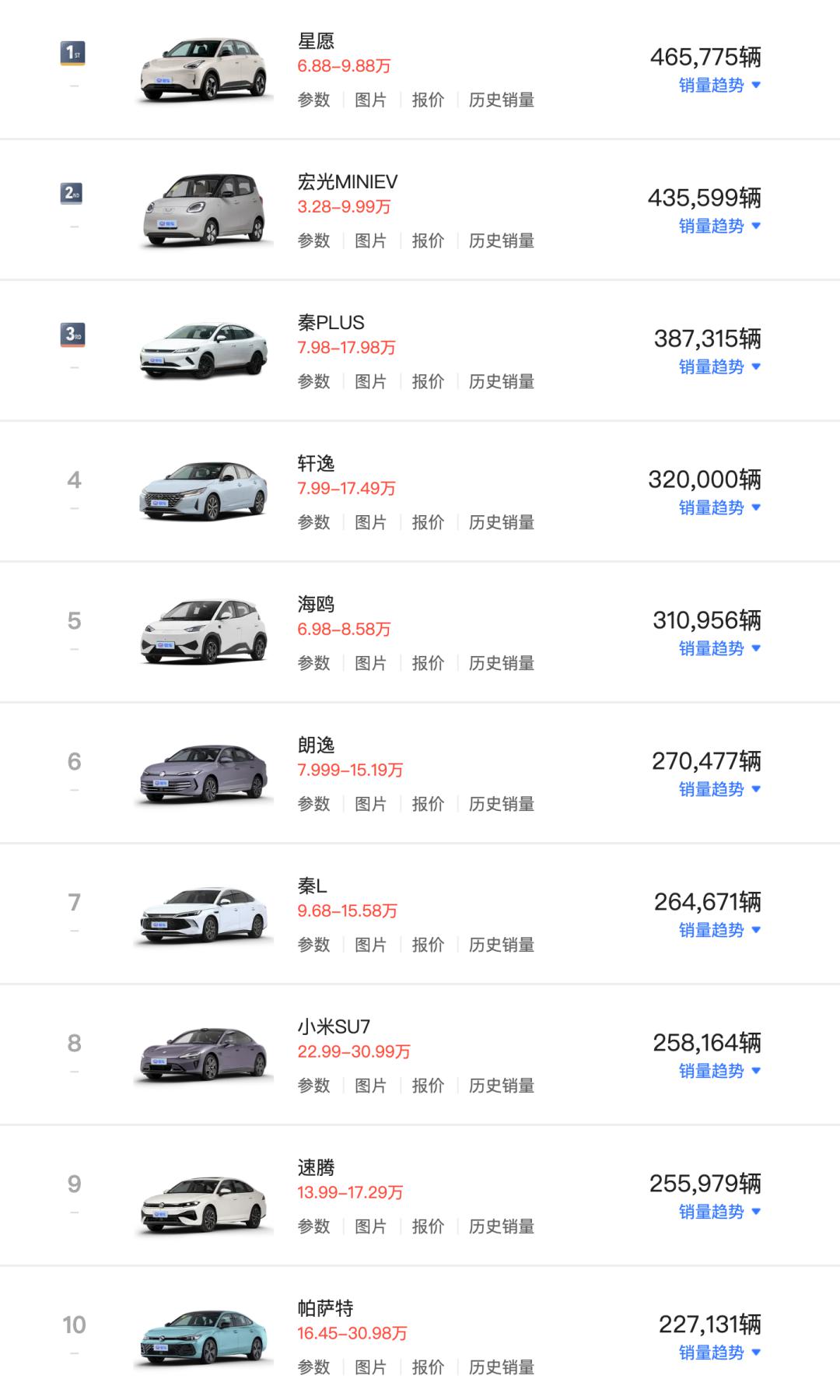
Core Insights - The 2025 Chinese automotive market is characterized by the continued penetration of new energy vehicles (NEVs), strong performance of domestic brands, and a reshaping of market dynamics across various segments [1][14]. Passenger Car Market - Domestic brand NEVs dominate the passenger car sales rankings, with Geely's Star Wish leading at 465,775 units sold, supported by its competitive pricing and features targeting young families [2][5]. - BYD's models, including the Qin PLUS and Dolphin, also performed well, with the Qin PLUS achieving significant sales due to its low fuel consumption and spacious design [2][5]. - The top ten passenger cars include six NEVs priced under 100,000 yuan, indicating a strong market presence for affordable electric vehicles [5]. SUV Market - The Tesla Model Y leads the SUV segment with 425,337 units sold, despite facing competitive pressure from domestic brands [6][10]. - Domestic brands like Geely and BYD have shown strong performance, with Geely's Xingyue L and Boyue L achieving notable sales growth [9][10]. - The SUV market remains diverse, with a mix of six fuel vehicles and four NEVs in the top ten, highlighting the growing influence of electric models [10]. MPV Market - The MPV segment is witnessing a shift towards NEVs, with the BYD D9 leading sales at 92,988 units, despite a slight decline [11][13]. - Toyota's Sienna and other models have also performed well, indicating a competitive landscape where both domestic and joint venture brands are adapting to market demands [11][13]. - The top ten MPVs include six NEVs, showcasing the increasing acceptance of electric and hybrid models in the market [13]. Overall Market Trends - The 2025 Chinese automotive market is undergoing significant structural adjustments, with domestic brands leveraging their technological advantages and competitive pricing to challenge the long-standing dominance of joint venture brands [14]. - The penetration rate of NEVs is on the rise across all segments, with electrification and intelligence becoming irreversible trends in the industry [14].
贾国龙继续死磕罗永浩,双方微博禁言,又“损耗”一天公众流量|首席资讯日报
首席商业评论· 2026-01-17 04:23
Group 1 - The online dispute between Jia Guolong and Luo Yonghao has attracted significant public attention, with Jia Guolong responding to Luo's accusations against Xibei on his personal Weibo account [2] - Both parties were subsequently silenced on Weibo, indicating a shift in how public disputes may be handled in the future, as suggested by Weibo's CEO [5] - Jia Guolong appears to be leveraging the controversy to attract traffic and support for Xibei, despite the potential risks of a prolonged conflict with Luo Yonghao [7] Group 2 - OpenAI has warned investors that Elon Musk is expected to make deliberately outrageous statements, as their ongoing legal battle is set to escalate in April [8] - SAIC General Motors has issued a statement regarding malicious rumors targeting the Buick GL8 and other MPV models, attributing them to organized online campaigns [9] - The cross-border e-commerce sector has emerged as a new growth engine, with trade values through the Hong Kong-Zhuhai-Macao Bridge surpassing 300 billion yuan for the first time, marking a 40.1% year-on-year increase [10] Group 3 - In Hainan, the import of coffee beans and products has surged by 5.6 times, reflecting the benefits of tax exemptions and the region's growing coffee industry [11] - The Shanxi power grid has completed 16 key projects aimed at enhancing winter power supply capacity, increasing it by approximately 3 million kilowatts [12] - The establishment of a working group for commercial community service robots marks a new phase in the standardization efforts within this sector in China [15] Group 4 - Gree Electric has clarified that it is not involved in the production of storage chips, focusing instead on third-generation semiconductor manufacturing [16] - The popular tea brand Yulian Tea House has faced criticism for requiring customers to order food with drinks for takeout, which has been defended as an operational policy [17] - Hualgreen Bio plans to sign a framework agreement for the acquisition of a 100% stake in Queshan Huayuan Biotechnology, with the purchase price estimated at approximately 239 million yuan [18]

通用汽车2025在华新能源车型销量创新高
Zhong Guo Qi Che Bao Wang· 2026-01-09 01:22
Group 1 - In 2025, General Motors (GM) sold nearly 1 million new energy vehicles (NEVs) in the Chinese market, accounting for over half of its total sales, marking a historic high in both sales and penetration rate of NEVs, reflecting the company's accelerated electrification process [2] - GM achieved year-on-year growth in both retail sales and market share in China, with total deliveries from the company and its joint ventures reaching nearly 1.9 million units, a 2.3% increase from 2024, driven by a 22.6% increase in NEV sales [2] - GM's Vice President and President of GM China, John Roth, attributed these positive results to the company's relentless pursuit of product excellence and disciplined measures in production and inventory management, expressing optimism for introducing more globally favored products in the coming year [2] Group 2 - Buick's high-end NEV sub-brand "Zhijing" launched its first models, the Zhijing L7 smart luxury sedan and Zhijing flagship MPV, which received positive market feedback after their release in Q4, built on the locally developed "Xiaoyao" super fusion architecture and equipped with the "Xiaoyao Intelligent Driving" system co-developed with Chinese tech company Momenta [3] - Buick has maintained its leading position in the high-end MPV market in China for over 20 years, with MPV sales exceeding 120,000 units last year, a 23% year-on-year increase, and plans to launch new models in 2025 to enhance its market presence [3] Group 3 - The Buick Envision and Buick LaCrosse reached significant production milestones in Q2, with the 1.8 millionth and 1.3 millionth vehicles rolling off the production line, respectively, with annual sales increasing by 76.4% and over 100% year-on-year [4] Group 4 - Cadillac continued to strengthen its influence in the luxury SUV market in 2025, with deliveries of the Lyriq and XT5 models increasing by 90% and 32.4% year-on-year, respectively [5] - The Cadillac F1 team announced that Chinese driver Zhou Guanyu will join as a reserve driver, supporting the team in its debut season in F1 in 2026, with participation in the F1 Shanghai race scheduled for March [5] Group 5 - The Wuling Hongguang MINIEV family, as GM's best-selling NEV in China, achieved annual sales of over 435,000 units, with approximately two-thirds of sales coming from the newly launched four-door version in Q1, and the newly launched Bingo S model contributing to the continued popularity of the Wuling Bingo series, with total sales surpassing 210,000 units in 2025 [6] - Baojun brand sales increased by 12.3%, with strong growth in the Yueye PLUS and Yunhai models, with Yueye PLUS sales exceeding 26,000 units and Yunhai deliveries rising by 60% year-on-year, surpassing 11,000 units [7]
问鼎MPV年度销冠,别克MPV定义全新价值坐标系
Xin Lang Cai Jing· 2026-01-01 14:38
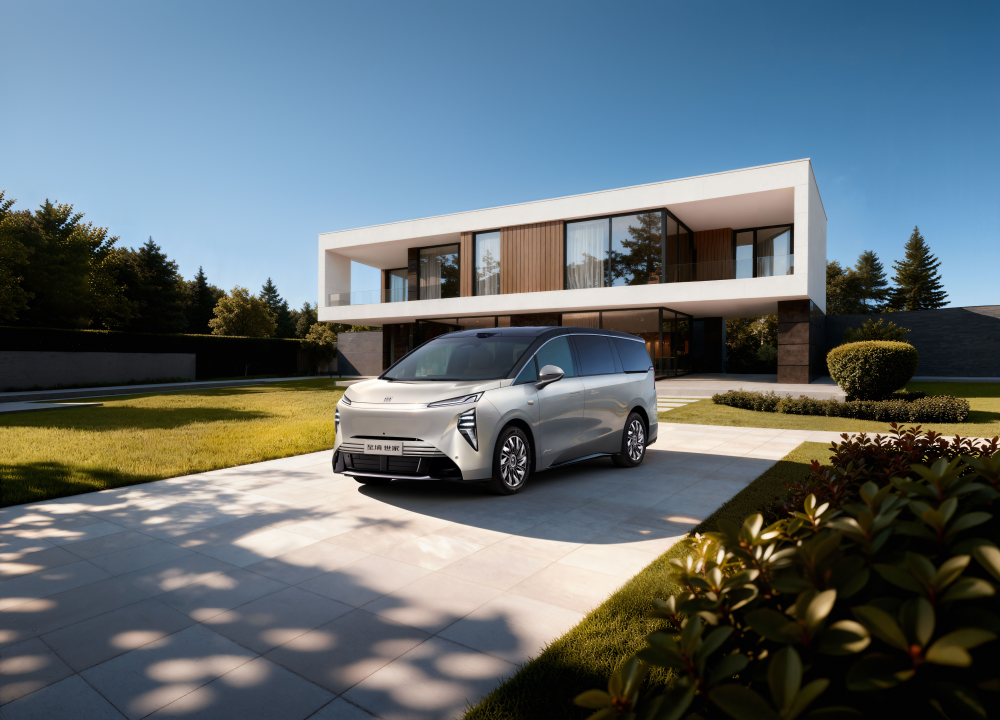
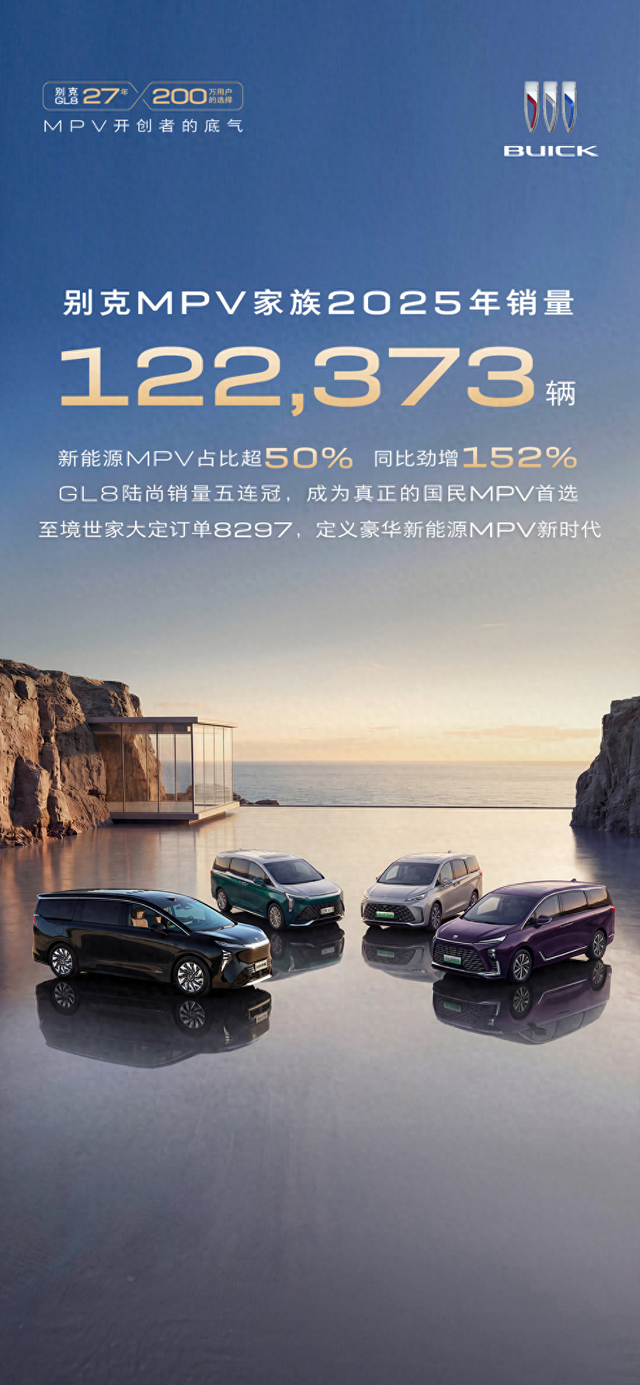
Core Insights - The current MPV market in China is highly competitive, with Buick GL8 leading the sales, followed by Toyota's offerings and new entrants in the electric MPV segment [1][4] - Buick's strategic focus on both fuel and electric MPVs has resulted in a significant increase in sales, with over 50% of its MPV sales being electric, marking a 152% year-on-year growth [1][4] Group 1: Market Performance - In 2025, Buick's MPV family achieved cumulative sales of 122,373 units, averaging over 10,000 units per month, securing the title of annual sales champion in the MPV market [1] - The GL8陆尚 model has become a standout in the 250,000 RMB electric MPV segment, achieving a delivery volume of over 23,000 units within just 58 days of its launch [5] - The GL8陆尊 model has successfully penetrated the competitive 300,000-400,000 RMB electric MPV market, showcasing luxury features that set it apart from competitors [5][6] Group 2: Product Strategy - Buick's MPV lineup is designed to cater to various consumer needs across different price points, ensuring that each model meets specific user demands while maintaining brand value [4][8] - The GL8至境世家 model has quickly gained popularity among high-net-worth individuals, receiving 8,297 orders within a month of its launch, with 98% of orders for the top-tier version [8] - Buick's commitment to user experience is evident in its focus on safety, quality, and long-term value, which has established a strong market presence and customer loyalty [9][10] Group 3: Competitive Landscape - The MPV market is evolving, with competition shifting from single technology or positioning to a comprehensive assessment of product experience, luxury, safety, and reliability [9][10] - Buick's MPV models have consistently demonstrated high resale value, with the fuel version GL8 leading in domestic MPV three-year resale rates and the electric version GL8 winning the one-year resale rate for plug-in hybrids [9] - The brand's long-term strategy and focus on quality have positioned it favorably against emerging competitors in the MPV market [11]
报告:MPV已不再是简单的“工具车”
Di Yi Cai Jing· 2025-12-25 13:44
Group 1 - The core viewpoint of the article is that the MPV market has transitioned from a "tool vehicle" era to a value-driven competition focused on technology, brand, service, and experience, with a significant increase in the market share of MPVs priced above 300,000 yuan [1][2] - In the first eleven months of this year, 20 MPV models achieved retail sales exceeding 100,000 units, with new energy MPVs accounting for a substantial portion of this market [1][2] - The report indicates that the market share of MPVs priced above 300,000 yuan has expanded from less than 30% in 2022 to 52% by October 2025, reflecting a shift towards higher-end models [1][2] Group 2 - The early development of the MPV market was primarily focused on commercial use, with low-end models dominating the market; however, this segment has rapidly declined since 2016, leading to an overall market downturn [2] - Recent changes in family structures and lifestyles have led to a resurgence in the MPV market, with domestic brands beginning to explore the mid-to-high-end MPV segment through the development of new energy vehicles [2] - The report highlights that the penetration rate of new energy MPVs is increasing rapidly, with plug-in hybrid models becoming a core growth engine due to their advantages of "no range anxiety" and "low operating costs" [2] Group 3 - According to the CCRT report, the importance of "vehicle brand" in consumer purchasing decisions has decreased, now ranking third after power type and budget, indicating a shift in consumer expectations towards product experience [3] - Traditional joint venture brands still hold significant positions in the market, with models like the Sienna, Grevia, and Buick GL8 remaining at the top of sales rankings [3] - There is a noticeable polarization in the performance of domestic brands in the new energy MPV sector, with some models experiencing low sales figures [3]
合资新困境:放弃以往驾乘体验标准,彻底学习新势力?
汽车商业评论· 2025-12-24 23:05
Core Viewpoint - The article emphasizes the importance of "completeness" in evaluating vehicles, highlighting that a well-rounded product should not have significant issues or shortcomings, which reflects its overall quality and user experience [4][7][24]. Group 1: Evaluation Criteria - The evaluation for the 2026 Xuanyuan Award is divided into four dimensions: dynamic and static experience, combined auxiliary driving and parking, intelligent cockpit experience, and scenario adaptation [4][7]. - The dynamic experience team focuses on dynamic evaluations, assessing 40 shortlisted models categorized by price and type, including sedans, SUVs, and off-road vehicles [7][9]. - The testing environment simulates real consumer driving conditions, with evaluations based on user perspectives, including acceleration limits and common driving scenarios [9][22]. Group 2: Trends and Observations - A notable trend for 2025 is the downscaling of configurations and technologies, with features like rear-wheel steering becoming available in lower-priced models [10][37]. - Vehicles priced under 200,000 yuan face challenges in balancing cost and performance, while those above this price point tend to have more discerning users, making any shortcomings more pronounced [9][28]. - The 2025 models show a shift towards more controlled performance, reducing the aggressive tuning seen in 2024 models, which were designed to appeal to younger consumers [9][31]. Group 3: Industry Challenges - Joint venture brands are experiencing confusion regarding their traditional dynamic tuning approaches, as consumer preferences shift towards lighter steering and different driving experiences [11][35]. - The article discusses the need for manufacturers to adapt to evolving consumer expectations, particularly as new customers may not have experienced high-quality vehicles [11][35]. - There is a recognition that while technology is being democratized, it does not automatically lead to improved user experience, as proper calibration and tuning remain critical [10][37]. Group 4: Off-Road Vehicle Evaluation - The article introduces a new evaluation system for off-road vehicles, focusing on their off-road capabilities and user safety, with a collaborative initiative to create a reliable off-road travel guide [50][51]. - Three off-road vehicles were selected for evaluation based on their capabilities, with the results indicating varying levels of performance across different terrains [53][58]. - The evaluation criteria include both off-road ability and user safety, with a grading system to classify vehicles based on their performance in challenging conditions [51][58].