
亚马逊平台服务

Search documents
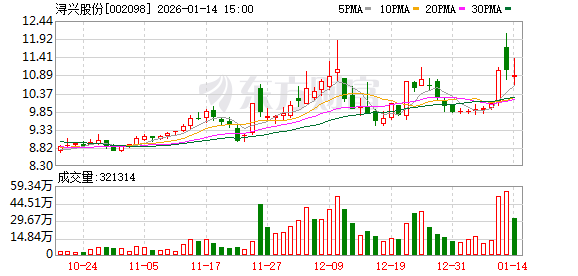
浔兴股份:价之链跨境电商是在亚马逊平台经营,也在谷歌等社交平台发放引流广告
Mei Ri Jing Ji Xin Wen· 2026-01-14 13:49
Group 1 - The company, Xunxing Co., Ltd. (002098.SZ), confirmed its cross-border e-commerce platform, "Price Chain," operates on Amazon and utilizes Google and other social media platforms for advertising [2]


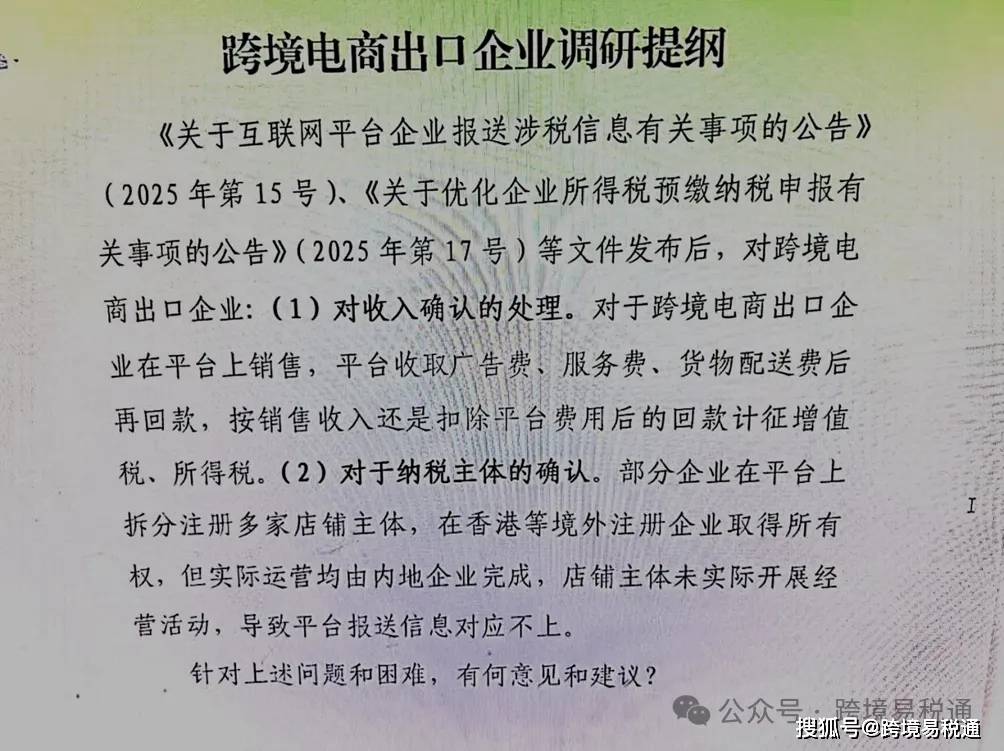
《跨境电商调研提纲》来了,不是“危”是“机”!你的回复将决定跨境电商未来的生存方式
Sou Hu Cai Jing· 2025-11-21 04:58
Core Insights - The article highlights a critical window for cross-border e-commerce companies to comply with tax regulations as the tax authority actively seeks to understand industry pain points and solutions [1][3]. Group 1: Revenue Recognition Issues - There is a discrepancy between the total sales reported by platforms and the actual income received by sellers, leading to confusion in revenue recognition [3][15]. - For example, a product sold for $100 may result in a net income of only $40 after deducting platform fees, while the platform reports the total sales of $100 [3][4]. - According to the 2025 No. 15 announcement, platforms report total sales, which does not reflect the actual income of cross-border sellers, causing potential tax inquiries due to significant income gaps [15][12]. Group 2: Taxpayer Identification Challenges - Many sellers operate multiple store fronts under different entities, complicating the identification of the actual taxpayer [12][16]. - The tax authority is unclear about the relationships between these entities and their actual operations, leading to compliance challenges [12][16]. - The article suggests that the tax authority should consider the operational realities of cross-border sellers and their compliance structures [28][30]. Group 3: Recommendations for Tax Authority - The industry suggests that the tax authority should clarify revenue recognition standards and allow for net income reporting [33][31]. - A transitional policy is recommended to help businesses adjust to historical data discrepancies [33]. - The article advocates for the tax authority to provide clear guidelines on tax treatment for cross-border e-commerce to avoid undue burdens on compliant businesses [30][34]. Group 4: Industry Response and Support - The article emphasizes the importance of industry participation in the tax authority's research process, encouraging businesses to engage actively [36][37]. - Companies are advised to prepare for the survey and present their operational realities and policy suggestions effectively [36][37]. - The article positions the consulting firm as a strategic partner for compliance transformation, offering tailored solutions for revenue recognition and taxpayer identification issues [36][37].


亚马逊自然流量下滑怎么办?
Sou Hu Cai Jing· 2025-10-30 03:05
Group 1 - The core issue of declining natural traffic on Amazon is often attributed to changes in listing weight, keyword matching, or competitive landscape rather than just platform algorithm changes [1] - Analyzing core data of listings is essential, including checking for keyword ranking drops, increased negative reviews, or decreased conversion rates, as these factors directly impact natural exposure [3] - It is important to analyze the ratio of advertising to natural traffic to avoid over-reliance on ads, which can lead to a dilution of natural ranking [3] Group 2 - If a decline in traffic is confirmed to be due to ranking changes, companies should revise their keyword strategies by utilizing backend search term reports and competitor analysis to identify high-conversion keywords for optimization [3] - Amazon's algorithm increasingly prioritizes "content experience," meaning that enhancements such as video displays, A+ page optimization, and updated Q&A sections can help listings regain traffic [3] - For sellers lacking systematic analysis capabilities, seeking support from professional operation teams is recommended, as they can leverage data tools and advertising optimization skills to help restore natural traffic quickly [5]


亚马逊内卷严重,新卖家还值得入驻吗?
Sou Hu Cai Jing· 2025-10-28 07:35
Group 1 - The core viewpoint of the article emphasizes that despite concerns about market saturation, there are still opportunities for new sellers on Amazon, particularly through innovative product offerings [1][10]. Group 2 - The white paper indicates that 81% of Chinese sellers plan to invest over 10% of their annual revenue into product innovation, moving away from mere replication to genuine research and development [3][6]. - 82% of sellers prefer to launch new products on Amazon first, highlighting its role as a primary platform for testing and promoting new items [3][6]. Group 3 - Amazon provides a platform for innovation, allowing sellers to test small batches of new products, reduce trial and error costs, and improve product visibility through promotional support [5][6]. - The platform treats small brands fairly, offering opportunities for unique and competitive products to gain visibility, provided that sellers maintain quality in packaging, reviews, and advertising [5][6]. Group 4 - Sellers can leverage backend data to refine product categories and keywords, focusing on high-exposure and high-conversion items for optimization and advertising [6][7]. - Continuous operations, including product selection, advertising, and customer service, are essential for success on Amazon, as the platform's rules and costs can be complex [7][9]. Group 5 - A recommended strategy for new sellers is to ensure product innovation and to actively manage advertising and keyword optimization rather than relying solely on the platform [10]. - The white paper suggests that innovation is now a necessity rather than an option, and entering the market with a unique product is still viable [10].

亚马逊卖家如何定价?
Sou Hu Cai Jing· 2025-10-23 16:25
Core Insights - Pricing strategy is crucial for Amazon sellers, as it significantly impacts sales volume and profitability. Setting prices too high can deter buyers, while setting them too low can lead to insufficient profits and potential accusations of unfair competition. Group 1: Factors Influencing Pricing - Understanding the cost structure is essential, including procurement costs, logistics, storage, packaging, platform commissions (typically 8%-15%), and promotional expenses [3] - Market conditions must be analyzed, as sellers need to be aware of the price range of similar products offered by competitors on the platform [4] - Seller positioning is important; sellers must decide whether to focus on volume sales or brand quality, which will influence their pricing strategy [5] Group 2: Competitive Analysis - Sellers should conduct competitor analysis by searching for keywords on Amazon to observe the price range of top products. Pricing should be set within a reasonable range, slightly below leading competitors or in line with the majority, while using promotions to attract customers [6] Group 3: Strategies for New Sellers - New sellers may consider setting initial prices slightly lower to attract early orders and feedback, for example, pricing at $17.9 or $18.5 when the market price is $19.9 [7] - Once a seller has gained sufficient reviews and rankings, they can gradually increase prices to align with market averages [8] - Combining lower prices with advertising can enhance sales volume, allowing for smoother price adjustments later [9]
争夺品牌商家,速卖通要跟亚马逊以小博大
Guan Cha Zhe Wang· 2025-09-24 15:48
Core Viewpoint - The launch of Ali Baba's cross-border e-commerce platform AliExpress's "Super Brand Going Global Plan" signifies a strategic shift from product export to brand export, aiming to compete directly with Amazon in the global market [1][3]. Group 1: Competitive Landscape - AliExpress is positioning itself to compete with Amazon not just on price but on brand and quality, indicating a shift in focus from low-cost goods to high-end brands [1][3]. - The competition is evolving from consumer-focused to brand and merchant-focused, with AliExpress aiming to attract major brands by offering lower costs and better service [3][5]. Group 2: Strategic Initiatives - AliExpress plans to offer lower commission rates, targeting 8-10% compared to Amazon's 15-25%, to retain more profits for merchants [5][6]. - The platform intends to provide a more integrated and supportive service model, including co-investment in marketing and a dedicated "Brand Growth Consultant" team to assist over 2000 brand merchants [5][6]. Group 3: Market Focus - The strategy emphasizes key markets such as Europe and Latin America, where AliExpress aims to help brands achieve better sales outcomes at lower costs [3][5]. - The initiative is designed to create a second growth curve for Chinese brands, with a long-term investment approach that prioritizes merchant profitability [6].


速卖通疯抢亚马逊品牌商家
Hua Er Jie Jian Wen· 2025-09-24 08:15
Core Insights - AliExpress is rapidly emerging as a significant player in the cross-border e-commerce market, challenging Amazon's dominance in brand exports [2][3] - The platform has upgraded its brand export strategy to the "Super Brand Export Plan," aiming to attract well-known brands, including those from Tmall and Amazon [2][3] - AliExpress emphasizes cost efficiency for merchants, claiming that sellers can achieve higher sales at half the cost compared to Amazon [2][3] Brand Export Strategy - The upgrade in brand export strategy marks a pivotal moment in AliExpress's development, focusing on a systematic approach to brand export [3] - AliExpress will launch a "Brand+" dedicated channel to enhance consumer trust through genuine product certification, free shipping, and price protection mechanisms [4] - The platform aims to improve the shopping experience for high-ticket items, recognizing the different decision-making processes for expensive versus inexpensive products [4] Merchant Support - AliExpress will introduce a "Brand Service Center" to provide real-time advertising performance data and channel conversion analysis for brands [5] - The platform currently serves over 2,000 brands, primarily focusing on excellent Chinese brands while also incorporating local brands in markets like Spain and Poland [5] Marketing Initiatives - AliExpress is leveraging its local marketing capabilities, exemplified by a partnership with Pop Mart to host a music festival in Spain, enhancing brand engagement with local consumers [6] AI and Efficiency Tools - The platform will offer a comprehensive suite of AI tools tailored for e-commerce brands to help reduce costs and improve efficiency [7] Growth Metrics - In the first half of this year, the number of new brands on AliExpress increased by 72%, with over 500 brands doubling their sales and more than 2,000 brands entering new overseas markets [8] - The brand-focused inventory is becoming a growth engine for AliExpress, with high-ticket items gradually surpassing lower-priced products in sales [8] Market Trends - The global cross-border e-commerce landscape is shifting from aggressive growth strategies to a focus on profitability and brand value [8] - AliExpress aims to empower brands and position itself as a viable alternative for brands considering international expansion, leveraging its experience in serving Chinese brands [8] Overseas Management Model - The "Overseas Management" model allows merchants to stock products in overseas warehouses while AliExpress handles marketing and user operations [9] - This model has been upgraded to cover 30 countries, enhancing product visibility and efficiency for local consumers [9] Future Outlook - The combination of brand export and overseas management is seen as a powerful strategy for 2025, as the market evolves towards higher profits and stronger brands [10]
2025电子商务大会开幕 “数智”成行业发展关键词
Zhong Guo Xin Wen Wang· 2025-09-10 14:21
Core Insights - The 2025 E-commerce Conference opened in Beijing, focusing on "Digital Intelligence Leading Quality Innovation" with participation from various government and e-commerce representatives [1][4] - Beijing's online retail sales reached 303.51 billion yuan from January to July 2025, accounting for 39.55% of total social retail sales, significantly higher than the national average of 14.64% [2] - The integration of artificial intelligence and big data is driving the digital service consumption growth, marking a new growth point for e-commerce [3][5] Group 1 - The conference highlighted the importance of e-commerce as a key driver for high-quality economic development and improving people's living standards [2][3] - The application of AI in e-commerce is seen as an inevitable trend, enhancing various operational aspects such as product selection and personalized marketing [5] - Cross-border e-commerce is rapidly developing, with companies like Amazon helping Chinese brands expand globally through optimized platform services and marketing tools [3][5] Group 2 - The conference will host specialized sessions on consumer e-commerce, cross-border e-commerce, and industrial e-commerce on September 11 [6] - The event has been held annually since 2011, serving as a professional platform for showcasing e-commerce innovations and trends [6]

亚马逊新规出炉,这类卖家要哭了
Sou Hu Cai Jing· 2025-05-08 14:06
Core Insights - The recent changes by Amazon have created a challenging environment for sellers, particularly with new regulations and increased transparency in sales data, which may impact competition and market dynamics [1] Group 1: Brand Name Visibility - Amazon has hidden brand names from product titles on both the US and European platforms, affecting sellers' visibility and competition dynamics [2] - For smaller sellers, this change may reduce direct competition with larger brands, while for most sellers, it could weaken brand recognition and customer loyalty [3] Group 2: Sales Data Transparency - Amazon has begun to publicly disclose sales data for products with monthly sales below 50, increasing transparency but potentially harming conversion rates for lower-selling items [4][5] - The disclosed data reflects sales over the past 720 hours, which may deter consumers from purchasing products with low sales figures [7] Group 3: Compliance Regulations - New regulations require certain product categories to undergo direct validation through Amazon-approved Testing, Inspection, and Certification (TIC) agencies, replacing the previous self-upload compliance report method [9][10] - This regulation currently applies mainly to the US market and will expand to other regions, affecting categories like electric transportation devices and dietary supplements [11] Group 4: EPR Compliance in Europe - Amazon has urged sellers in the EU to complete battery EPR registration before the August 2025 deadline to avoid product delisting risks [12] Group 5: Vine Program Changes - Significant adjustments to the Vine program have been made, preventing sellers from using tactics like splitting variations to accumulate reviews, thus requiring a reevaluation of ASIN strategies [13] Group 6: Logistics Cost Adjustments - Starting May 15, 2025, Amazon will reduce logistics fees for certain categories in Europe, which could help sellers lower their shipping costs [16] - The changes will apply to local and integrated services across multiple European countries, benefiting sellers with high return rates [16] Group 7: New Analytical Tools - Amazon has introduced a new feature in its brand analytics called "Buyer Journey," allowing sellers to analyze customer interactions and optimize their marketing strategies [17] Group 8: Expansion into Mexico - Amazon Mexico has integrated European product listings, allowing customers to purchase over 30 million items without creating new accounts, indicating a strategic move to tap into the growing Mexican market [18][20] - This integration is expected to help cross-border sellers reach the Latin American market without local inventory, leveraging European supply chains to avoid local price competition [20]
跨境电商平台在美已集体涨价
华尔街见闻· 2025-04-27 10:28
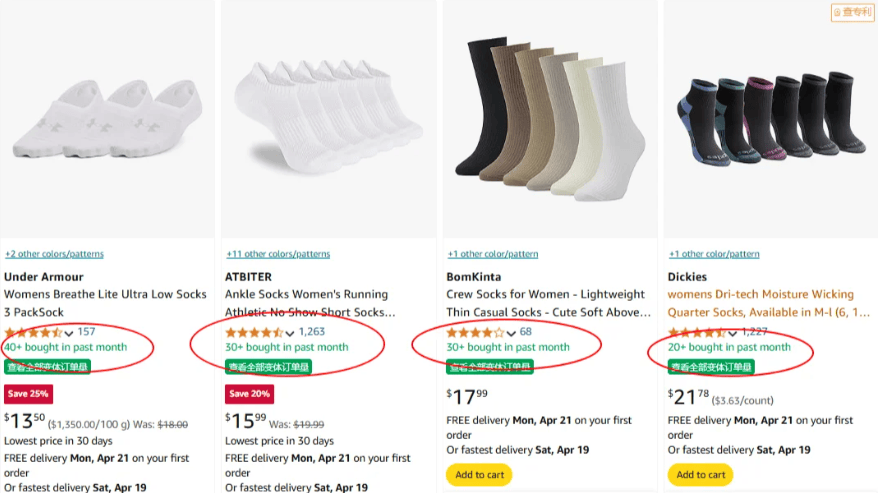
在特朗普政府掀起关税战下,美国普通民众的购物正迎来"涨价潮",连曾经实惠的网购也变得更昂贵了。 继美国亚马逊网站近千种商品涨价后,另外两家来自中国的跨境电商平台SHEIN、拼多多旗下TEMU也已上调了部分在美商品售价。 在4月16日,华尔街见闻就注意到,TEMU、SHEIN均向美国用户发出了涨价通知,称由于最近全球贸易规则和关税的变化,运营成本有所增加,公司将从4月 25日起进行价格调整。 如今4月25日期限一过,调价政策落地,不少美国网友在社交媒体上感叹, 一夜之间购物车里的东西都变贵了。 有人发现,在SHEIN平台上一套4月24日标价为4.39美元的泳装,25日已经涨价至8.39美元,提价幅度达到91%。而在TEMU上列出的两把露台椅,24日标价 为61.72美元,到25日标价已提升至70.17美元。 不过,据华尔街见闻了解,SHEIN、TEMU平台上商品价格上涨还不是普遍现象,或许价格上涨将是一个逐步推进的过程。 除了TEMU、SHEIN外,国际电商巨头亚马逊上的卖家,早就开始了涨价的动作。 根据SmartScout数据,自4月9日以来,美国亚马逊网站上近1000种商品的价格出现明显上涨,涵盖服装、家居 ...
