
京东云

Search documents
独家丨京东云变阵:PaaS业务一号位刘辰离职
雷峰网· 2026-03-31 13:54
Core Insights - JD Cloud is facing increasing revenue pressure in 2026, with a target of approximately 60% year-on-year growth, which has led to a lack of confidence internally [4]. Group 1: Leadership Changes - Liu Chen, head of JD Cloud's PaaS division, has recently left the company, resulting in the PaaS team being integrated into the IaaS division led by Gong Yicheng [2]. - Liu Chen was a key figure in JD Cloud, having held various leadership roles and contributed significantly to the development of core technologies [2]. Group 2: Market Position and Challenges - JD Cloud entered the cloud computing market later than competitors like Alibaba Cloud and Tencent Cloud, officially establishing itself in 2016, which has resulted in inherent disadvantages in market share and technological accumulation [2]. - Despite recent structural adjustments and the establishment of a new cloud division, JD Cloud's efforts to compete effectively in the AI cloud sector are still seen as insufficient [3][4]. Group 3: Future Outlook - The competitive landscape in AI cloud services is intensifying, and JD Cloud's ability to overcome its current challenges and achieve its ambitious revenue goals remains uncertain [5].



信达国际控股港股晨报-20260320
Xin Da Guo Ji Kong Gu· 2026-03-20 03:42
Market Overview - The Hang Seng Index is facing resistance at 26,500 points due to ongoing geopolitical uncertainties and potential fluctuations in international oil prices, with a short-term economic growth target adjustment in mainland China to 4.5% to 5% [2] - The index has formed a head-and-shoulders pattern since January, with recent support seen around 25,000 points, while a short-term rebound resistance is noted at the 50-day moving average of approximately 26,500 points [2] Sector Outlook - AI Stocks: The semiconductor industry is experiencing rapid growth due to intensive upgrades in AI large models [3] - Energy Stocks: The ongoing situation in the Middle East is driving up oil and coal prices [3] Company News - Alibaba (9988) reported a 67% decline in adjusted profit, missing expectations [3] - JD Group (9618) announced that core products will not increase in price, with several products set to decrease in price [3] - Xiaomi Group (1810) launched the new generation SU7, starting at 219,900 RMB [3] - AAC Technologies (2018) reported a 40% increase in profit last year, expecting revenue growth to be no less than last year [3] Economic Indicators - The US Federal Reserve announced no change in interest rates, maintaining a cautious stance on future adjustments, with a slight increase in economic growth forecast to 2.4% for this year [3] - The unemployment rate is projected to remain at 4.4%, while inflation expectations have been raised to 2.7% due to uncertainties in the Middle East [3] International Market Trends - The US stock market is experiencing declines, with expectations that the Federal Reserve may not reduce interest rates this year, leading to a drop of 0.3% to 0.4% in major indices [5] - European markets are also down, with declines ranging from 2.0% to 2.8% [5] Regulatory Developments - The Hong Kong Securities and Futures Commission has imposed limits on the number of active projects that sponsors can handle simultaneously, reducing the maximum to five [8] - The commission noted that the emerging ecosystem in Hong Kong's asset and wealth management market continues to thrive, with significant growth in digital assets and ETFs [8]
不涨价不是优势,是无力:京东云的尴尬处境
美股研究社· 2026-03-19 12:10
Core Viewpoint - The pricing strategies of major cloud service providers in China reveal the underlying power dynamics in the cloud computing industry, where the ability to raise prices indicates a strong market position, while those forced to lower prices are relegated to the lower end of the value chain [1][2]. Pricing Strategies - Alibaba Cloud and Baidu Smart Cloud have raised prices, reflecting their strong market positions and ability to transfer costs, while JD Cloud's decision to lower prices indicates a lack of pricing power and a passive market position [2][4][6]. - The choice not to raise prices by JD Cloud is seen as a defensive strategy rather than a proactive move to benefit customers, highlighting its vulnerability in the competitive landscape [6][7]. Market Dynamics - The cloud computing market is entering a phase where the head effect is intensifying, leading to a clearer division between leading cloud providers and those competing on price alone [2][9]. - The rise in costs for computing resources, driven by increased demand for AI capabilities, has created a seller's market where price increases are expected [6][8]. Competitive Positioning - JD Cloud's background in retail and logistics limits its expansion in the general public cloud market, making it a price follower rather than a price setter [6][10]. - In contrast, Alibaba Cloud and Baidu Smart Cloud have established themselves as leaders by integrating advanced AI capabilities into their offerings, allowing them to command higher prices [8][11]. Investment Implications - The capital market is increasingly rewarding companies with pricing power, as evidenced by the renewed interest in the cloud businesses of Alibaba and Baidu, which are now seen as growth engines rather than cost centers [9][10]. - Companies like JD Cloud, lacking pricing power, face challenges in translating revenue growth into valuation, especially during economic fluctuations [10][11]. Future Outlook - The cloud computing market is expected to undergo a reshuffling, with smaller firms unable to establish pricing power likely to be acquired or exit the market [10][11]. - The ultimate divide in the cloud computing industry will be between those who control computing resources and those who possess pricing power, with the latter being crucial for long-term sustainability and value creation [11][12].

这些大厂、上市公司都在抢着“养龙虾”
第一财经· 2026-03-09 06:16
Core Viewpoint - The article discusses the rapid adoption and integration of the OpenClaw platform by various cloud service providers and technology companies in China, highlighting its impact on the AI industry and investment opportunities in related companies [3]. Group 1: OpenClaw Adoption - Major cloud service providers in China, including Tencent Cloud, Alibaba Cloud, and others, have integrated OpenClaw, indicating a significant trend in the tech industry [3]. - The Step 3.5 Flash model from Jieyue Xingchen has achieved the highest global usage on OpenClaw, followed by other models like MiniMax M2.5 and Trinity Large Preview [3]. Group 2: AI Product Developments - The fintech service provider "Jinmen" has launched an AI product called "Jinbao," which includes a new task mode "Investment Research Lobster," designed to assist investment researchers by integrating various AI tools and data sources [3]. - Xiaomi has initiated a limited beta test for its AI interaction product, Xiaomi miclaw, based on the MiMo large model, which has been personally endorsed by Lei Jun [4]. Group 3: Corporate Responses and Market Impact - Meituan has partnered with Lenovo's IT service brand Baiying to offer OpenClaw remote deployment services [5]. - Wanxing Technology has launched nearly ten atomic capabilities on the OpenClaw market platform ClawHub, with plans to introduce over a hundred more [7]. - The stock of Yuke Technology surged, reaching a 20% limit up, as the company announced its deployment of OpenClaw-related services in multiple international locations [7]. Group 4: Additional Company Integrations - Companies like Shunwang Technology and Zhongke Chuangda have developed AI cloud computers and platforms that incorporate OpenClaw, enabling users to access various AI applications without complex setups [8]. - Other companies, such as Tuowei Information and Ruixin Microelectronics, have also adapted their products to integrate with OpenClaw, showcasing a broad industry trend towards AI application deployment [8][9].

全国政协委员曹鹏:推动我国AI产业实现从规模扩张到效能提升、从应用领先到体系引领的战略转型
证券时报· 2026-03-04 15:13
Core Viewpoint - The article highlights the suggestions made by Cao Peng, Chairman of the Technology Committee of JD Group and President of JD Cloud, during the 2026 National Two Sessions, focusing on the development of AI and its integration into various sectors, particularly healthcare and supply chains [1][3]. AI Industry Development - The rapid growth of the global AI industry has prompted discussions on how to better utilize AI to serve the real economy and industries [4]. - Cao Peng proposes five pathways to enhance AI industry efficiency and transition from scale expansion to efficiency improvement [4][5][6][7][8]: 1. Strengthen chip and software development, establish a national computing power scheduling network, and introduce "computing power vouchers" and "model service subsidies" for accessible smart computing [4]. 2. Establish an efficiency-first evaluation and incentive system, implement "AI + industry" integration demonstration projects, and develop integrated terminals like embodied robots [5]. 3. Promote AI integration throughout the software development process and create a self-controlled foundational toolchain [6]. 4. Deeply integrate AI with elderly care and government services to provide convenient services for senior citizens and disabled individuals [7]. 5. Leverage leading enterprises to empower digital transformation across the supply chain, creating a data-driven and intelligent decision-making "super supply chain" [8]. AI in Healthcare - Cao Peng emphasizes the role of AI in deepening healthcare supply-side reforms and enhancing the "Healthy China 2030" strategy [9]. - Six areas are suggested to promote AI in healthcare [10][11][12]: 1. Strengthen AI applications for specific diseases and encourage national pilot projects for AI-assisted diagnosis [10]. 2. Promote an AI-driven closed-loop model for medical services, integrating various healthcare processes [11]. 3. Accelerate the digital transformation of hospitals and encourage collaboration with AI and pharmaceutical supply chain companies [12]. 4. Implement AI initiatives to enhance grassroots medical services [12]. 5. Empower doctors with AI tools to improve clinical decision-making and research capabilities [12]. 6. Establish a national healthcare data sharing platform to support AI model training and optimization [12]. Supply Chain Enhancement - Cao Peng advocates for leveraging the "super supply chain" to stimulate domestic demand and support local employment [14]. - Recommendations include [14][15]: 1. Utilize brand and supply chain strengths to drive industrial upgrades and meet diverse consumer needs [14]. 2. Encourage increased R&D investment to optimize product supply through technological upgrades [14]. 3. Strengthen anti-monopoly regulations to protect brands and foster innovation [14]. 4. Establish social security systems for grassroots employees in the industry [14]. 5. Promote standardization and digitalization in procurement processes to enhance efficiency and compliance [15]. Rural Consumption and Employment - Cao Peng suggests deepening the implementation of the old-for-new policy in rural areas to enhance consumer benefits [17]. - Key actions include [17]: 1. Increase awareness and promotion of national subsidies in rural areas [17]. 2. Establish a dedicated fund for rural market support [17]. 3. Relax qualification requirements for businesses to participate in subsidy programs [17]. 4. Coordinate efforts to activate rural consumer markets [17]. Support for New Employment Groups - The article also discusses the need for comprehensive service保障 models for new employment groups like delivery riders [18]. - Cao Peng highlights the importance of ensuring legal rights and improving service quality for these workers [18].

“隐身”的腾讯云,不想当第一
Xin Lang Cai Jing· 2026-02-02 08:44
Core Viewpoint - The competition among cloud service providers in China, particularly in the AI cloud sector, is intensifying, with companies like Alibaba Cloud, Volcano Engine, and Tencent Cloud adopting different strategies to capture market share and achieve profitability [1][6][26]. Group 1: Advertising and Market Position - Since 2025, the number of AI cloud-related advertisements in major airports has significantly increased, with major players like Alibaba Cloud and Volcano Engine dominating the advertising space [1]. - In Shenzhen's Bao'an Airport, Alibaba Cloud claims to lead the AI cloud market share, while Volcano Engine asserts a 46.4% share of the public cloud large model market [2][5]. - Tencent Cloud's absence from the advertising scene is notable, especially as AI is seen as a critical growth area for cloud computing [5]. Group 2: Profitability vs. Scale - Tencent Cloud achieved overall profitability in its cloud business by 2025, a rare feat in an industry plagued by a "profit black hole" due to prolonged price wars [6][8]. - The industry has seen a trend where higher revenues often correlate with greater losses, with Alibaba Cloud's latest report showing a profit margin of less than 9% [8]. - Tencent Cloud has shifted its focus from absolute revenue to sustainable income structures, leading to a reduction in low-profit business segments [10]. Group 3: Business Strategies - Tencent Cloud's strategy emphasizes high-quality growth and a focus on high-value clients, resulting in a decrease in market share but a healthier revenue model [10][12]. - Volcano Engine's approach involves aggressive pricing for Token sales to attract AI customers, but this model has been criticized for lacking customer retention [14][15]. - Tencent Cloud's business structure is differentiated, with a focus on 40% IaaS, 40% PaaS, and 20% SaaS, highlighting its commitment to AI SaaS products [17]. Group 4: Market Growth and Competition - The AI cloud market in China reached 22.3 billion yuan in the first half of 2025, with Alibaba Cloud holding a 35.8% market share, followed by Volcano Engine at 14.8% [28]. - Tencent Cloud's revenue from partnerships has shown double-digit growth, with AI and SaaS product orders doubling [24]. - The competition is not just about market share but also about long-term sustainability and the ability to adapt to industry changes [26]. Group 5: Ecosystem and Partnerships - Tencent Cloud emphasizes a partnership-first approach, valuing long-term relationships with partners over short-term gains [24]. - The company has collaborated with over 11,000 partners, maintaining a focus on mutual respect and shared benefits [24]. - The competitive landscape has seen some cloud providers exploit partnerships, leading to a breakdown in trust and collaboration [21][22].


润建股份:与京东科技签订战略合作框架协议
Zheng Quan Shi Bao Wang· 2026-01-08 09:04
Core Viewpoint - Runjian Co., Ltd. has signed a strategic cooperation framework agreement with JD Technology to promote the commercialization of AI technology across various sectors, including smart agriculture and digital tourism [1] Group 1: AI Applications - The collaboration will integrate resource advantages to drive the commercial application of AI technology in fields such as smart agriculture, intelligent parks, digital cultural tourism, and smart retail [1] Group 2: Cloud Computing - Both companies will deploy dedicated high-performance computing nodes at the Wuxiang Cloud Valley Intelligent Computing Center, with Runjian Co. committing to increase computing power investments for multiple phases of construction [1] - The partnership aims to strengthen "Runjian Cloud" and leverage JD's extensive market channels for business expansion [1] Group 3: AIDC Collaboration - The two companies will explore the establishment of a computing power service system that includes clusters, maintenance, and scheduling platforms [1]
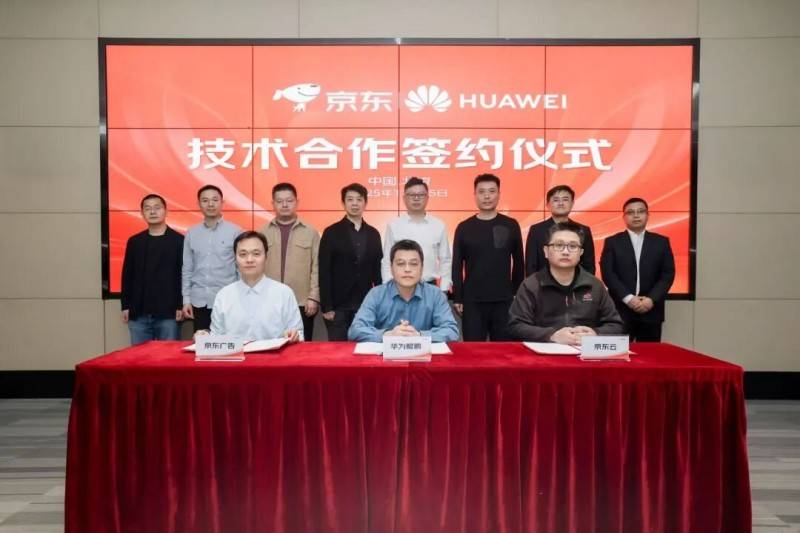
京东广告、京东云与华为鲲鹏达成深度技术合作 共谱广告模型性能优化新篇章
Sou Hu Cai Jing· 2026-01-06 10:27
Core Insights - JD Advertising, JD Cloud, and Huawei Kunpeng have established a deep technical collaboration focusing on smart advertising, large models, and cloud computing [1][3] - The partnership aims to address the technical bottlenecks in advertising technology under high concurrency scenarios, marking a significant upgrade in the e-commerce marketing technology ecosystem [1][3] Group 1: Technical Collaboration - The collaboration will leverage the core technological advantages of each party to tackle common industry challenges related to real-time retrieval and intelligent reasoning in advertising [3] - A joint innovation project will be established to focus on "low-latency inference" core technology, optimizing from hardware to software and application layers [3] - The partnership will enhance container affinity scheduling and service quality assurance capabilities, ensuring advertising services remain stable during peak traffic events [3] Group 2: Empowering Merchants - The technological outcomes of this collaboration will directly enhance JD's advertising products and services, providing tangible value to brand merchants [4] - The advertising system's response speed will significantly improve, allowing merchants to reach potential customers faster and enhance exposure efficiency [4] - Enhanced model computing power and optimization capabilities will drive more precise advertising recommendation algorithms, improving click-through and conversion rates for merchants [4] - The overall stability and elasticity of the JD advertising system will reach new heights, supporting large-scale marketing activities during peak periods [4]
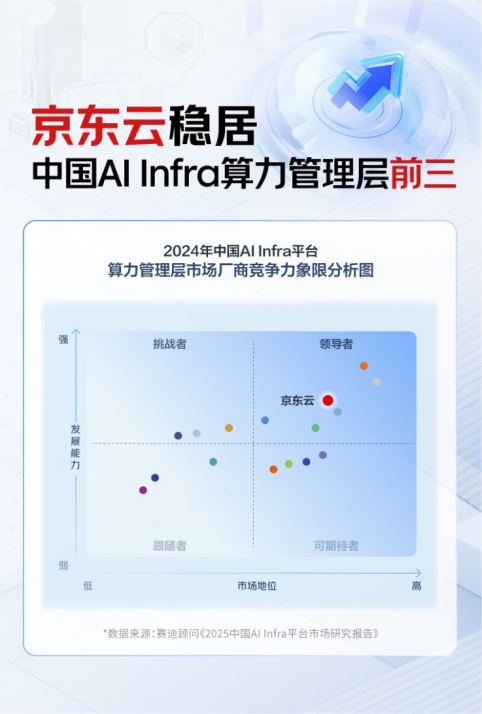
AI Infra平台市场报告:京东云稳居前三
Jin Rong Jie Zi Xun· 2025-12-18 08:50
Core Insights - JD Cloud ranks among the top three in product capability in the "2024 China AI Infra Platform Computing Power Management Layer Market Vendor Competitiveness Quadrant Analysis" due to its technological innovations in heterogeneous computing power scheduling and GPU pooling management [1][3] Market Overview - The AI Infra platform has established a three-layer capability system: computing power management layer, model management layer, and application management layer, with the computing power management layer dominating the market, expected to reach a market share of 64.6% in 2024 [3] JD Cloud's Strategy - JD Cloud focuses on "heterogeneous computing power + extreme inference" to build a new generation of AI infrastructure, leveraging JD Group's diverse business scenarios [3] - The core platform, JoyScale, optimizes hardware and software collaboration to support high-performance heterogeneous computing with domestic chips like Huawei Ascend, Cambricon, and Haiguang [3] JoyScale AI Computing Power Platform - JoyScale AI computing power platform has four core advantages: - **Extreme Computing Performance**: Features an industry-leading kernel pooling engine, enhancing overall inference performance by 50% [5] - **Efficient Heterogeneous Computing Scheduling**: Supports over ten domestic computing power cards and improves resource utilization by 70% [5] - **Deep Domestic AI Ecosystem Collaboration**: Collaborates with various domestic chip manufacturers to enhance AI computing efficiency [5] - **Support for Over 20 AI Training and Inference Frameworks**: Compatible with frameworks like PyTorch, TensorFlow, and others [5] Product Matrix - JD Cloud has developed a one-stop large model product matrix, supporting state-owned enterprises in rapidly deploying large models and AI applications, thereby reshaping AI productivity [6]
Cloudflare与京东云宣布合作,加速全球开发者的AI推理部署与扩展
Di Yi Cai Jing· 2025-12-17 14:24
Core Viewpoint - Cloudflare and JD Cloud have announced an expansion of their partnership to accelerate the deployment and scaling of artificial intelligence inference for global developers [1] Group 1 - The collaboration aims to enhance the capabilities of developers in deploying AI inference solutions [1] - This partnership signifies a strategic move to leverage Cloudflare's infrastructure alongside JD Cloud's resources [1]
