AI毛绒玩具

Search documents
这个年“智”感十足——当传统新春邂逅前沿科技
Xin Hua She· 2026-02-16 03:59
Group 1 - The core theme of the news is the integration of innovative technology into traditional celebrations, exemplified by the showcasing of AI and robotics during the Spring Festival in Chengdu [1][2]. - Chengdu launched an innovation technology product display event during the Spring Festival, featuring over 100 "Chengdu-made" tech products, with more than 20 related to artificial intelligence and robotics [2]. - The collaboration between technology and traditional festivities creates immersive consumer experiences, providing local tech companies with valuable feedback for product iteration and market validation [2]. Group 2 - The "Robot World" pop-up store in Chunxi Road attracted many visitors, showcasing humanoid robots that engage with the public, highlighting the growing interest in tech-related consumer goods [4]. - Educational companion robots and AI plush toys with emotional interaction features have become popular among consumers, particularly parents looking for innovative products for their children [4]. - The combination of policy support and technological advancements is enhancing the "tech-enabled festive atmosphere," driving innovation products from laboratories to everyday life [4].


科创新品成为“新特产” 中国智造激发消费市场强劲动能
Yang Shi Wang· 2026-01-26 00:07
Core Viewpoint - The article highlights the emergence of innovative tech products in Hangzhou, China, which are becoming new local specialties and driving strong consumer market dynamics through local manufacturing and technological advancements [2][8]. Group 1: Technological Innovations - Hangzhou is actively promoting new tech products, foreign trade goods, and national style products, leading to the creation of new consumer markets [2]. - The "Six Little Dragons" of Hangzhou, including humanoid robots and AI models, represent significant technological advancements in the region [2]. - The Wen San Future Technology Experience Center features eight interactive zones showcasing various tech innovations, becoming a landmark for new consumer experiences [2]. Group 2: Consumer Products - The "Wen San Tech Specialty" store offers a range of products from AI plush toys to high-end AI robots, showcasing the diversity of local innovations [3]. - An AI plush toy serves as an interactive companion, reflecting Hangzhou's innovative spirit [3]. - A lightweight drone, described as a "flying camera," utilizes advanced AI algorithms and has quickly gained popularity in outdoor activities [4][5]. Group 3: Market Trends - AI glasses produced in Hangzhou have become the most popular item among over 100 tech specialties, selling nearly 20,000 units in the first three weeks of January 2026 [6]. - The glasses integrate multiple mainstream AI models, offering features like payment, navigation, and translation, appealing to a wide demographic [7]. - The introduction of a 15% national subsidy for these tech products under the "old for new" program has further stimulated consumer interest [7]. Group 4: Cultural Shift - The transformation of Hangzhou's specialties from traditional items like Longjing tea to tech innovations signifies a broader trend in consumer supply and demand [8].
AI毛绒玩具、飞行相机……科创新品成为“新特产” 中国智造激发消费市场强劲动能
Yang Shi Wang· 2026-01-21 04:52
Core Viewpoint - The article highlights the transformation of Hangzhou's consumption landscape, emphasizing the emergence of new tech products and local innovations that stimulate consumer demand and redefine local specialties [1][5]. Group 1: New Consumption Trends - Hangzhou is actively promoting new consumption categories represented by tech products, foreign trade goods, and national style products, referred to as the "new three products" [1]. - The transformation of Wen San Road from a "digital street" to a digital lifestyle district showcases the evolution of consumer experiences in the area [1][5]. Group 2: Technological Innovations - The "Six Little Dragons" of Hangzhou, including humanoid robots and AI models, are central to the city's tech innovation narrative, with the Wen San Future Technology Experience Center serving as a key attraction [3]. - The center features eight interactive zones, including robot exhibits and AI experiences, making it a landmark for tech enthusiasts [3]. Group 3: Local Specialties and Products - Local tech products, developed and manufactured in Hangzhou, are now considered unique "Hangzhou specialties" that can be purchased as gifts [5]. - A dedicated store for "Wen San Tech Specialties" offers a range of products from AI plush toys to high-end AI robots, showcasing the diversity of local innovations [8]. Group 4: Popular Products and Consumer Engagement - The AI glasses produced in Hangzhou have gained significant popularity, selling nearly 20,000 units in the first three weeks of January 2026, appealing to a wide demographic [12]. - These glasses integrate multiple mainstream AI models, providing functionalities like payment, navigation, and translation, thus enhancing daily convenience for users [14]. Group 5: Government Support and Consumer Incentives - The tech products have been included in Hangzhou's "old-for-new" product catalog, allowing consumers to benefit from a 15% national subsidy, further incentivizing purchases [16]. - The shift from traditional local specialties to tech innovations reflects a broader trend in consumer supply and demand dynamics in Hangzhou [16].
AI玩具崛起,投融界解码“情感科技”创业新范式
Sou Hu Cai Jing· 2026-01-20 07:34
Core Insights - The article highlights the rising trend of AI toys, which are becoming emotional companions for users, reflecting a growing demand for low-burden companionship in modern fragmented lifestyles [1][4]. Group 1: Emotional Connection and Technological Integration - AI toys have evolved from being merely observed to being perceived, with capabilities such as emotional recognition and interactive memory, allowing them to "understand" users better [1][2]. - The transition from functional response to emotional resonance is driven by the democratization of AI technology, enabling toys to provide continuous emotional support and integrate seamlessly into daily life [2][4]. Group 2: Market Growth and Ecosystem Development - The AI toy market in China is projected to grow from approximately 24.6 billion yuan in 2024 to 29 billion yuan in 2025, with the global market expected to reach 58 billion USD by 2030 [4]. - The ecosystem of AI toys includes agile startups, tech giants leveraging their advantages, and traditional toy companies exploring AI transformation, indicating a diverse competitive landscape [4][5]. Group 3: Challenges and Future Directions - Key challenges for AI toys include achieving natural and long-term emotional companionship, balancing personification with privacy concerns, and creating sustainable product differentiation [4][5]. - The future of AI toys is anticipated to focus on deeper emotional connections, moving from novelty to becoming integral companions in daily life, with a shift in consumer spending from functionality to emotional resonance [5][6].

“死了么”App估值上亿,照见“孤独经济”万亿新蓝海
Sou Hu Cai Jing· 2026-01-14 14:50
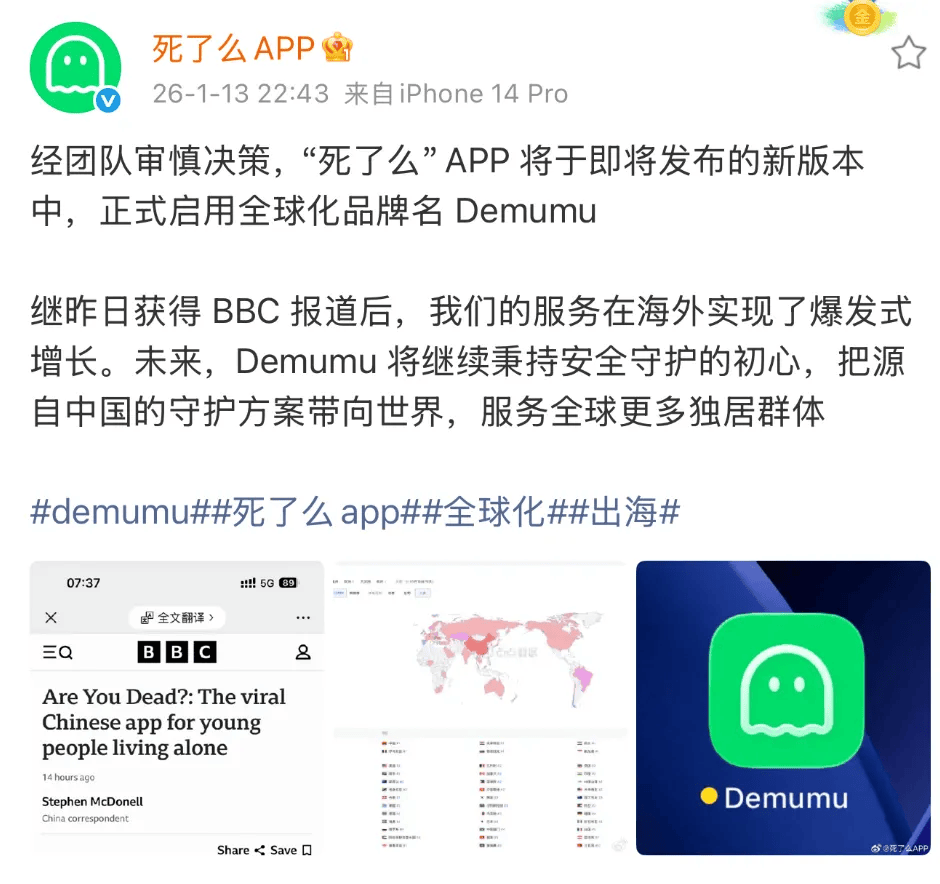
Group 1: App and Company Overview - The "Are You Dead?" app has gained significant popularity, with a rapid increase in downloads by 100 times since its launch, which had an initial investment of just over 1,000 yuan and was developed in less than a month [1] - The app's daily new user count has surged by 500-800 times compared to its initial phase, leading to a company valuation increase to approximately 100 million yuan from 10 million yuan within two days [1] - The app's founder plans to sell 10% of the company's equity for a financing amount in the tens of millions, despite the name "Are You Dead?" being criticized for its negative connotation, prompting a rebranding to "Demumu" for the upcoming version [1] Group 2: Societal Trends and Market Potential - The emergence of the "Are You Dead?" app reflects a growing trend in the "loneliness economy," which is a response to the increasing number of individuals living alone, particularly among urban youth [2][3] - By 2030, it is projected that the number of people living alone in China could reach 150-200 million, with the solo living rate exceeding 30%, driven by factors such as urban migration and changing marriage views [3] - The "loneliness economy" is expected to grow rapidly, with a focus on products that provide emotional value and cater to the needs of individuals living alone, indicating a significant market opportunity [3][5] Group 3: Emotional and Material Needs - The loneliness economy encompasses both emotional and material needs, with young individuals seeking emotional release and social interaction while feeling fatigued by interpersonal relationships [5][7] - The market for companionship services is expanding, with offerings ranging from online companionship to in-person activities, reflecting a growing demand for emotional fulfillment [7] - The rise of AI products and pets as alternatives for companionship is notable, with AI companionship market revenues projected to soar from $30 million to between $70 billion and $150 billion by 2030 [12][16] Group 4: Industry Developments and Consumer Behavior - Major companies are entering the AI companionship and pet markets, with significant investments and product launches aimed at meeting the emotional needs of consumers [15][16] - The pet industry is also experiencing rapid growth, with a projected market size of 312.6 billion yuan by 2025, driven by younger generations who view pets as family members [16][19] - The food and beverage industry is adapting to the needs of solo diners, with businesses like Haidilao innovating their offerings to cater to individual consumption patterns [20][22]
AI玩具赛道能否跑出下一个LABUBU?
Zheng Quan Ri Bao· 2026-01-13 16:49
Core Insights - The AI toy market is experiencing unprecedented growth, with sales in the first half of 2025 increasing by 600% quarter-on-quarter and over 200% year-on-year, driven by consumer demand and significant investment activity [1][2] - The industry is characterized by a diverse range of players, including tech startups, traditional toy manufacturers, and internet giants, all vying for a share of the AI toy market [2][4] - The pursuit of "realistic emotional interaction" has become a consensus among AI toy manufacturers, with competition shifting towards enhancing user experience [4][7] Market Dynamics - As of June 2025, there are 1,766 active companies in the AI toy sector, indicating a robust entry of various enterprises into this market [2] - The average return rate for AI toys is reported to be between 30% and 40%, significantly higher than the 15% for traditional toys, highlighting challenges in consumer acceptance [7] - AI toys generally have a higher profit margin compared to traditional toys, with prices ranging from 200 to 700 yuan, and some products priced significantly higher due to advanced features [5][6] Technological Integration - Companies are integrating advanced AI technologies into toys, enabling features such as memory retention and interactive dialogue, which enhance the emotional connection with users [2][3] - The development of multi-modal large models is a focus for traditional hardware companies, aiming to create more engaging AI toy experiences [3][4] - The industry is leveraging China's robust manufacturing capabilities, with domestic chips expected to account for 82% of AI toy components by 2025, providing a cost advantage [6] Commercial Strategies - AI toys are adopting a business model that combines one-time hardware sales with ongoing software subscription fees, extending product lifecycles [6] - Companies are exploring B2B solutions, offering comprehensive AI toy packages to small and medium enterprises, thereby creating additional revenue streams [6] - The industry is encouraged to maintain originality and avoid imitation, as suggested by industry leaders, to foster innovation and long-term growth [7] Regulatory Environment - The Ministry of Industry and Information Technology is working on revising national standards for toy safety, particularly concerning privacy and data security for AI toys that interact frequently with children [8] - The government aims to guide toy companies in applying AI technology to create new consumer demands, indicating a supportive regulatory framework for the industry [8]
智能玩具升级“智慧伙伴”
Jing Ji Ri Bao· 2026-01-11 21:54
Core Insights - AI toys are becoming popular as companions, with products like Huawei's "Smart Hanhan" selling out quickly and AI plush toys from JD.com entering the market, indicating a growing trend in AI companionship in toys [1][2] - The AI toy market in China is projected to grow from approximately 24.6 billion yuan in 2024 to 29 billion yuan in 2025, highlighting significant market potential [1] - AI toys are evolving from traditional playthings to "smart companions" that integrate education, emotional support, and creativity, reflecting a shift in consumer expectations [2][3] Industry Developments - The integration of AI technologies, such as language and visual models, allows toys to understand and respond to users, enhancing their functionality beyond mere entertainment [2] - AI toys cater to diverse age groups, fulfilling various consumer needs from educational support for children to stress relief for young adults and memory assistance for the elderly [3] - The Ministry of Industry and Information Technology (MIIT) is promoting the development of AI toys through policy support, encouraging innovation and collaboration between toy manufacturers and AI technology firms [4] Market Trends - The demand for AI toys is increasing, with significant interest in their applications for education, health monitoring, social interaction, and therapeutic support [3] - AI toys are designed to provide emotional companionship, with features like real-time feedback and personalized interactions, which are particularly appealing to younger users [2] - The MIIT is focusing on ensuring data security and privacy in AI toys, addressing consumer concerns and promoting safe industry practices [4]
【明日主题前瞻】AI玩具从细分赛道跃升为主流消费新宠,未来市场规模或达千亿量级
Xin Lang Cai Jing· 2026-01-11 12:03
Group 1: AI Toys Market - The AI toy market is projected to exceed 100 billion yuan in 2023 and is expected to reach a scale of over 1 trillion yuan by 2030, with a compound annual growth rate (CAGR) exceeding 50% [2] - AI toys integrate artificial intelligence technologies such as dialogue models and emotional computing, evolving from simple interactions to deep companionship and emotional connections [2] - Companies like Tom Cat and Shifeng Culture are launching innovative AI toys that cater to various user demographics, including children, the elderly, and young adults [2] Group 2: Nuclear Fusion Research - Global nuclear fusion research has entered an engineering phase, indicating significant advancements in fusion energy technology [3] - The upcoming 2026 Nuclear Fusion Energy Technology and Industry Conference aims to promote collaboration and innovation within the nuclear fusion industry [3] - Companies involved in the nuclear fusion sector, such as Lianchuang Optoelectronics and Guokai Electronics, are focusing on key components and technologies necessary for fusion devices, which are expected to generate substantial orders [4][5] Group 3: AI in Healthcare - OpenAI has launched ChatGPT Health, targeting the rapidly growing AI healthcare market, which is projected to reach approximately 505.59 billion USD by 2033, with a CAGR of 38.8% [6] - Companies like Meinian Health and Weining Health are actively developing AI technologies for early disease screening and healthcare solutions, leveraging partnerships with tech giants [7] Group 4: Aerospace Industry in Guangzhou - Guangzhou aims to establish itself as a global hub for advanced manufacturing and commercial aerospace by 2035, focusing on satellite internet and reusable rocket technology [8] - Companies like Feiwo Technology are engaging in 3D printing for commercial aerospace engines, while investment firms are creating complete investment ecosystems in the aerospace sector [8] Group 5: Gaming Industry Trends - The gaming industry is experiencing a surge in new game launches and updates, which are expected to drive revenue growth [9] - AI is being integrated into gaming, enhancing production efficiency and creating new opportunities for innovation [9] Group 6: AI Programming - AI programming is becoming a core application of AI, with major tech companies increasingly relying on AI to generate new code [11] - Companies like Fabben Information and Keda Guokuan are developing AI tools to assist in programming, improving efficiency and code quality [12]
刘强东,AI新动作
3 6 Ke· 2026-01-09 02:14
Core Insights - JD.com has established the "Chameleon Business Unit" to focus on the development and commercialization of core AI products, including the JoyAI App and JoyInside brand [1] - The JoyAI model family includes sizes ranging from 3 billion to 750 billion parameters, designed to meet various performance needs across different scenarios [1] - The company has achieved a 30% improvement in inference efficiency and a 70% reduction in training costs for the JoyAI model, enhancing its adaptability in industrial applications [2] AI Product Development - The JoyInside brand has integrated with over 40 leading robotics and AI toy brands, significantly enhancing interaction capabilities in various hardware devices [2] - JD's digital human services have been adopted by over 45,000 brands, with digital human live streaming costs being only one-tenth of traditional live streaming, resulting in a 30% increase in conversion rates [2] - During the 2025 "Double 11" shopping festival, the number of merchants using digital human live streaming increased nearly sixfold, contributing hundreds of billions in total merchandise volume [2] Strategic Initiatives - The establishment of the Chameleon Business Unit aims to consolidate AI business lines and create a commercial closed loop leveraging JD's e-commerce capabilities [3] - JD's competitive advantage lies in its robust supply chain capabilities and bargaining power in the consumer electronics and 3C appliance sectors, providing a solid foundation for AI implementation [3] - However, JD faces challenges in the AI sector, including insufficient long-term investment in large models compared to competitors like Alibaba and ByteDance, and a lack of international market presence [3]

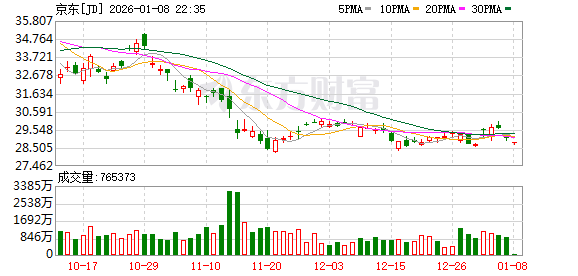
自研AI玩具卖断货 变色龙“业务部浮出水面 京东AI商业化”奇兵突袭“?
Mei Ri Jing Ji Xin Wen· 2026-01-08 14:35
Core Insights - JD's self-developed AI plush toys sold out upon launch, with multiple restocks planned, indicating strong market demand for AI products [1][3] - The newly established "Chameleon Business Unit" will focus on commercializing key AI products, including JoyAI App, JoyInside, and digital humans [2] - The AI toy market is experiencing significant growth, with third-party brands also seeing high sales, averaging around 300 yuan per unit [1] Group 1: AI Product Development - JD has upgraded its AI model brand to JoyAI, with the JoyAI App designed to leverage multi-modal large model technology and a complete supply chain ecosystem [4] - JoyInside, JD's intelligent brand, has partnered with over 40 leading robot and AI toy brands to integrate systems into their products [4] - JD's self-branded products, including AI plush toys, clocks, and lamps, are part of its strategy to capture a wide audience, with a second batch of AI toys set to launch in mid-January [4] Group 2: Market Trends and Projections - The global AI edge market is expected to grow significantly from 321.9 billion yuan to 1.22 trillion yuan between 2025 and 2029, with a compound annual growth rate of 40% [5] - The competition in AI hardware is intensifying, with products like the "Doubao phone" generating considerable interest in the market [5] - JD's investment in intelligent robotics, with over 10 billion yuan allocated to support 100 brands achieving over 1 billion yuan in sales, highlights the company's commitment to this sector [6] Group 3: Strategic Focus and Future Outlook - The focus of AI competition is shifting from technology development to practical applications, emphasizing value creation and sustainable returns [6] - The next phase of competition among major internet companies will center on securing market share for new super app entry points and AI product purchasing channels [6] - The emergence of various AI edge products and large model technology indicates a significant shift in the industry landscape, with the first successful AI product being crucial for market positioning [6]