
体重管理产品

Search documents
“运动营养”跟不上,西王食品亏损翻倍
Shen Zhen Shang Bao· 2026-01-31 07:32
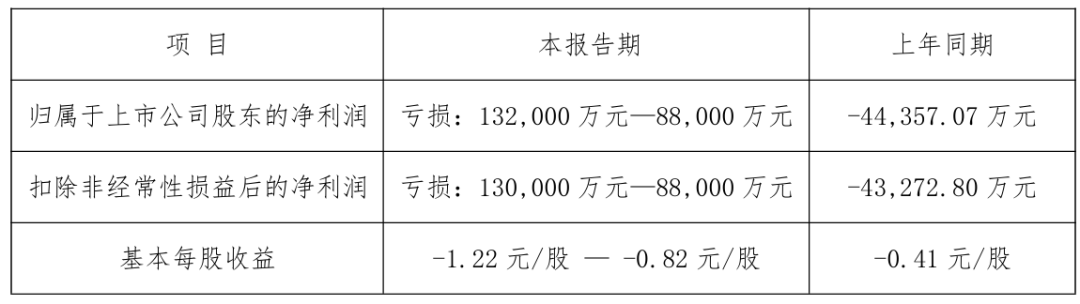
Core Viewpoint - Xiwang Food is expected to report a significant increase in losses for the fiscal year 2025, with projected net losses ranging from 880 million to 1.32 billion yuan, compared to a loss of 444 million yuan in the previous year, indicating a year-on-year doubling of losses [1][2]. Financial Performance - The company anticipates a net profit attributable to shareholders of a loss between 880 million and 1.32 billion yuan for 2025, compared to a loss of 443.57 million yuan in the same period last year [2]. - The expected net profit after deducting non-recurring gains and losses is projected to be a loss between 880 million and 1.3 billion yuan, compared to a loss of 432.73 million yuan in the previous year [2]. - Basic earnings per share are expected to be between -1.22 yuan and -0.82 yuan, compared to -0.41 yuan per share last year [2]. - The company has reported consecutive losses over the past three years, with cumulative losses amounting to approximately 1.08 billion yuan from 2022 to 2024 [2]. Operational Challenges - The increase in losses is attributed to rising prices of raw materials, particularly whey protein, and intensified competition in the sports nutrition sector [2]. - The company plans to recognize an impairment loss on intangible assets estimated between 950 million and 1.5 billion yuan, subject to final audit [2]. Strategic Outlook - Despite the challenges, the management aims to implement significant corrective measures in 2026 to improve future performance [4]. - The company plans to optimize product costs by diversifying its product portfolio, shifting towards high-margin products, and reducing reliance on whey protein [4]. - Xiwang Food intends to expand into new product categories, including new proteins, creatine, peptides, and collagen, to build a strong innovative product line [4]. Market and Cost Management - The company will increase investment in digital channels, focusing on high-margin categories through platforms like Amazon, while optimizing product offerings at Walmart [5]. - A strict cost control policy will be adopted, including dynamic budget monitoring, expenditure reduction, and optimization of organizational structure to enhance operational efficiency [5]. - As of January 30, the company's stock price decreased by 1.25% to 3.17 yuan per share, with a total market capitalization of approximately 3.422 billion yuan, indicating stagnant stock performance over the past year [5].


趋势研判!2026年中国营养功能食品合同生产行业壁垒、政策、市场规模、细分格局、竞争格局及发展趋势:市场将持续扩容,健康零食占比最大[图]
Chan Ye Xin Xi Wang· 2026-01-21 01:27
Core Insights - The nutritional functional food industry is experiencing significant growth driven by national policies, increased health awareness, and rising living standards. The market is projected to reach 288 billion yuan by 2025 and 328 billion yuan by 2026 [1][5]. Industry Overview - Nutritional functional foods are defined as foods that contain ingredients beneficial to human health, excluding health foods that require special approval. This category includes special dietary foods and regular packaged foods [2][3]. - The industry is characterized by a diverse range of products and applications, with health snacks being the largest segment, followed by gut health, beauty nutrition, weight management, and sports nutrition [1][5]. Market Size and Growth - The market size for nutritional functional foods in China is expected to grow from 144 billion yuan in 2019 to 288 billion yuan in 2025, with a further increase to 328 billion yuan by 2026 [5][6]. - Specific market segments for 2025 include health snacks at 103 billion yuan (35.76%), gut health at 65 billion yuan (22.57%), beauty nutrition at 39 billion yuan (13.54%), weight management at 36 billion yuan (12.50%), and sports nutrition at 22 billion yuan (7.64%) [1][5]. Industry Structure - The industry operates on a contract manufacturing model, where one party (the client) outsources production to another party (the contractor). This model allows for specialization in production while the client focuses on marketing and brand management [3][4]. - The supply chain includes upstream raw materials such as vitamins, proteins, and minerals, while the midstream involves research, production, and marketing [6]. Competitive Landscape - The competitive landscape is fragmented, with a few leading companies dominating the market. The top five companies accounted for 17.3% of the market share in 2023, up from 13.9% in 2022 [8]. - Major players in the industry include Hengmei Health, Xianle Health, Dajiang Biotechnology, and others, each with unique advantages [7][8]. Regulatory Environment - Recent government policies, such as the "National Food and Nutrition Development Outline (2025-2030)," aim to promote the nutritional functional food industry by emphasizing innovation and quality in food production [7]. Future Trends - The demand for health-oriented products is expected to grow due to rising income levels and an aging population, creating a favorable environment for the nutritional functional food industry [8].


在乌镇 “杭州六小龙” 聊了三件事
Zhong Guo Xin Wen Wang· 2025-11-08 14:08
Core Insights - The 2025 World Internet Conference in Wuzhen highlighted the "Hangzhou Six Little Dragons," showcasing their innovative breakthroughs and ongoing relevance in the AI industry [1][2] - The event featured a dialogue among the six companies, discussing their entrepreneurial challenges, successes, and future industry priorities, providing a unique perspective on the evolution of China's AI sector [1][2] Group 1: Company Experiences - Strong Brain Technology shared humorous anecdotes about their early struggles, including a story about scaring a local resident during late-night experiments [2] - Cloud Deep Technology recounted the challenges faced during the initial product demonstrations, where their robotic dog required steel wires for support due to technical limitations [2] - The experiences of these companies reflect the broader narrative of the nascent development of China's AI industry over the past decade [3] Group 2: Industry Growth and Opportunities - The success of the "Little Dragons" is attributed to the support of Chinese users and the rapid development of the internet and mobile internet over the past decade, which has created a wealth of data and user engagement [4][5] - The AI industry in China is projected to exceed 700 billion yuan by 2024, maintaining a growth rate of over 20% annually [6] Group 3: Future Prospects and Challenges - Companies expressed optimism about the future of AI, with expectations for significant advancements in robotics and other applications in the coming years [7] - Key challenges identified include the need for robots to move autonomously and the technical hurdles in creating bionic hands, as well as the ethical implications of AI development [8] - The dialogue emphasized the importance of ensuring AI serves to help rather than harm society, highlighting the need for responsible innovation [8]
强脑科技创始人韩璧丞:把脑机接口技术变成真实产品
2 1 Shi Ji Jing Ji Bao Dao· 2025-11-07 12:05
Core Viewpoint - The company is focused on developing non-invasive brain-computer interface technology aimed at creating real-world products to assist individuals with disabilities, particularly those without limbs, enabling them to lead normal lives [1] Group 1: Technology Development - The company is pursuing a technology roadmap that emphasizes addressing urgent needs first, referred to as "from pain to large" [1] - The CEO highlighted the potential of non-invasive brain-computer interfaces to create products that allow individuals to control prosthetic limbs through thought [1] Group 2: Product Expansion - The company plans to expand its product offerings, with a second-generation sleep product expected to launch next year aimed at helping individuals with sleep issues [1] - A weight management product is also in development, scheduled for release in the following year, continuing the focus on solving everyday problems through brain-computer interface technology [1]
万联证券:三大因素驱动保健品行业成长 年轻消费相关市场前景可期
Zhi Tong Cai Jing· 2025-10-21 02:03
Core Insights - The health supplement industry in China is expected to maintain a growth trend in the medium to long term, driven by regulatory improvements and effective demand, supply, and channel dynamics [1][2] Group 1: Industry Growth Drivers - Three main factors are driving the growth of the health supplement industry: 1. Channel shift from offline to online, enabling more precise marketing and stimulating consumer demand [1] 2. Increased health awareness due to experiences with COVID-19 and an aging population [1] 3. Diversification of health supplement categories and consumption scenarios attracting younger consumers [1] Group 2: Market Segmentation - Dietary supplements are the primary consumption area, projected to account for 55.98% of the market size in 2024, with a decreasing market concentration (CR5 at 27.6%) [2] - The traditional nourishment market has stagnated due to the "Qianjian incident," facing challenges in both volume and price [2] - The sports nutrition market, while small, is growing rapidly with a CAGR of 8.64% from 2010 to 2024, indicating significant growth potential as fitness concepts become more popular [2] - The children's health segment is also growing, with a CAGR of 8.37% from 2010 to 2024, despite a declining birth rate [2] - The weight management market has shown volatility, with a negative growth in 2022, but still holds potential for future growth due to rising health awareness [2]