
保税航油

Search documents
释放政策红利 拓展国际航线
Xin Lang Cai Jing· 2026-02-16 22:32
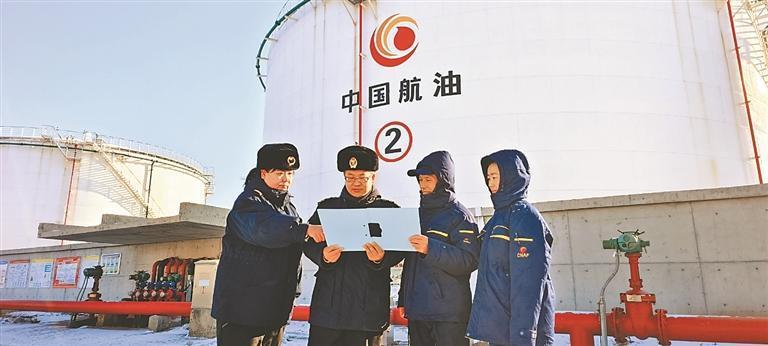
Core Insights - The bonded aviation fuel business at Harbin Taiping International Airport has been operating smoothly for one year, significantly reducing operational costs for airlines and facilitating the launch of new international routes, thus enhancing Harbin's international aviation network and economic openness [2] Group 1: Business Performance - As of now, the bonded aviation fuel business has supported 2,619 international passenger and cargo flights, providing 25,800 tons of bonded fuel and saving airlines over 7.56 million yuan in fuel costs [2] - The customs authority has implemented a bookkeeping regulatory model, allowing bonded and non-bonded fuel to be stored together, which has improved tank utilization [2] - The airport has optimized its route layout, increasing flight frequencies to traditional routes such as Russia, Japan, and South Korea, and successfully launched new international cargo and passenger routes [2] Group 2: Future Developments - The customs at Harbin Taiping International Airport plans to continue optimizing the operation and service guarantee of the bonded aviation fuel business, leveraging cost advantages to enhance the international aviation network and promote the development of the airport economy [3]

2025年昆明空港保税航油供给达10万吨
Xin Lang Cai Jing· 2026-01-15 13:17
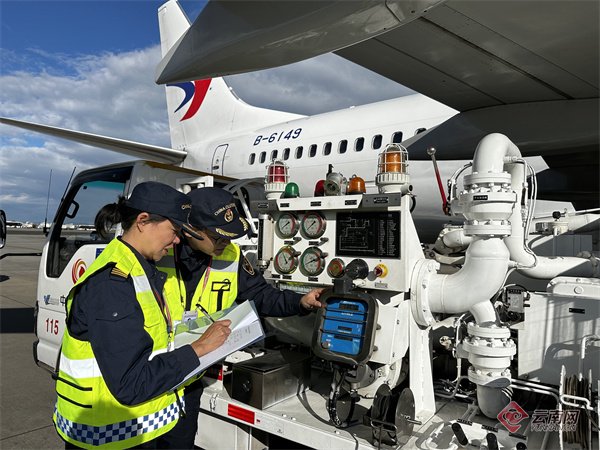
Core Viewpoint - The development of bonded aviation fuel supply at Kunming Changshui International Airport is significantly enhancing the operational efficiency and cost-effectiveness for airlines operating international routes, driven by increasing demand and supportive regulatory policies [2][3]. Group 1: Bonded Aviation Fuel Supply - Bonded aviation fuel is a tax-exempt fuel supply policy for airlines operating international routes in China, effectively reducing fuel costs for international flights [3]. - In 2025, the customs authority at Kunming Changshui Airport reported a total of 100,000 tons of bonded aviation fuel supplied to international flights, marking a year-on-year increase of 33.1% [3]. - A total of 31 domestic and international airlines have completed the bonded aviation fuel supply registration at Kunming Changshui Airport [3]. Group 2: Regulatory Support and Efficiency - The development of bonded aviation fuel services is supported by effective service guarantee policies, including the new bonded fuel supply regulatory model launched by the General Administration of Customs at the beginning of 2025 [3]. - The customs authority at Kunming Changshui Airport has implemented a "bonded aviation fuel" bookkeeping system, allowing for flexible and efficient allocation of fuel resources, thereby improving the efficiency and safety of fuel supply [3]. - The "Smart Aviation Fuel" system integrates customs supervision into the entire process of storage and refueling, enabling real-time monitoring of fuel flow and offering customized services such as "appointment customs clearance" and "centralized declaration" to shorten clearance times [4].
杭州为1.6万架次国际航班高效“加油”
Hang Zhou Ri Bao· 2026-01-15 03:21
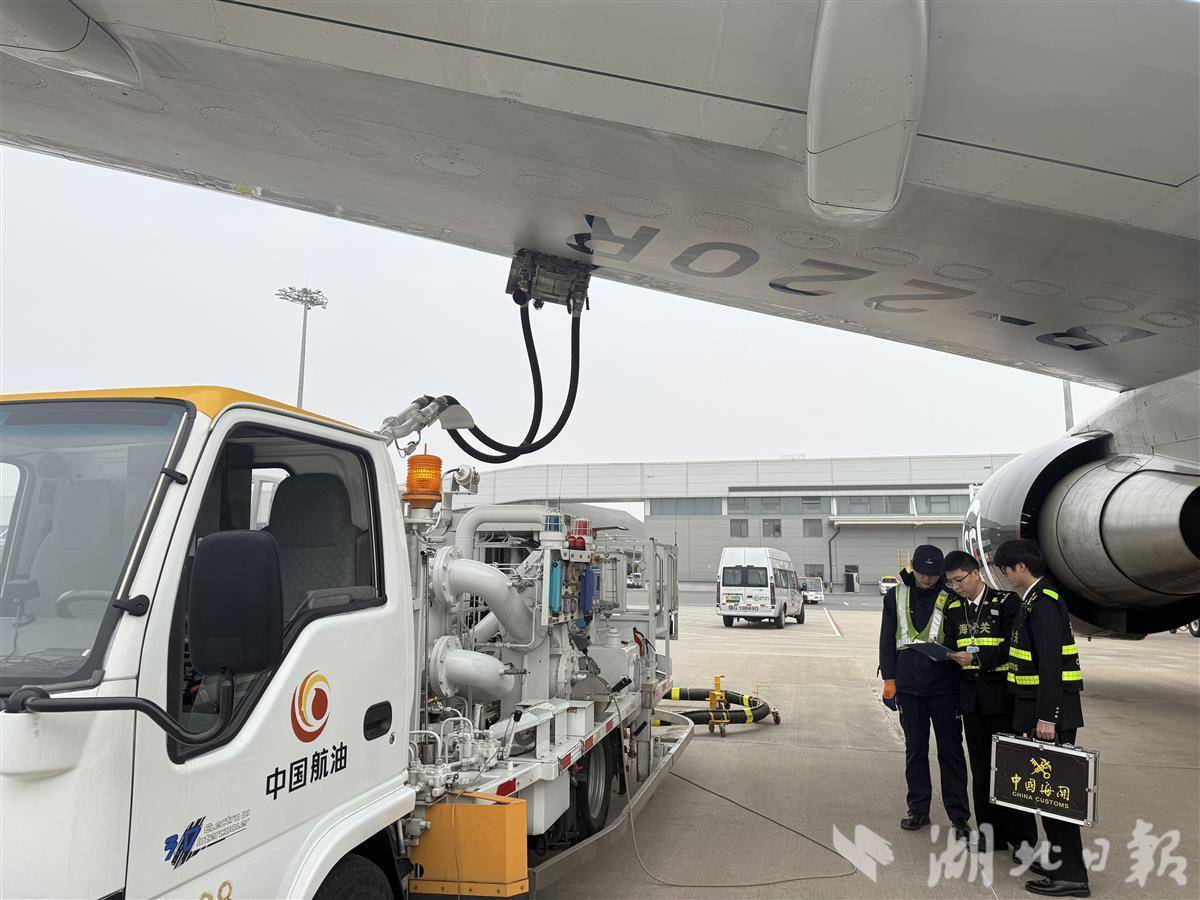
Core Viewpoint - The article discusses a significant reform in the aviation fuel supply model at Hangzhou Xiaoshan International Airport, which has improved operational efficiency and reduced costs for companies involved in international flight operations [1] Group 1: Reform Overview - In January 2025, a new bonded supervision model for aviation fuel supply was implemented at Hangzhou Airport, leading to a total of 16,300 international flights receiving bonded fuel, amounting to 321,100 tons, representing year-on-year increases of 6.42% and 5.24% respectively [1] - The reform has been recognized as one of the best institutional innovations in the province and city-level free trade zones for 2025 [1] Group 2: Operational Impact - The reform addressed a critical operational pain point by allowing bonded aviation fuel and non-bonded fuel for domestic flights to be stored together, eliminating the need for separate bonded warehouses [1] - The utilization rate of existing fuel tanks has increased by approximately 30% due to the new policy, which has reduced the need for companies to invest in independent storage facilities [1] Group 3: Process Simplification - The establishment of a dedicated electronic ledger for bonded aviation fuel has simplified the process, allowing for "total quantity control and dynamic verification," which has reduced the declaration and on-site operation workload by about 50% [1] - This simplification enables companies to allocate resources more flexibly and efficiently, ensuring reliable fuel supply for flights [1]
全年杭州空港口岸加注保税航油32万吨
Mei Ri Shang Bao· 2026-01-15 00:44
Core Insights - The article discusses the transformation of the aviation fuel supply model at Hangzhou Xiaoshan International Airport, which has been recognized as a best practice in institutional innovation by local authorities [1] Group 1: Regulatory Changes - The new bonded fuel supply model, implemented in January 2025, has significantly improved the efficiency of international flight operations at Hangzhou Airport [1] - The customs authority has overseen a total of 16,300 international flights refueling with bonded aviation fuel, amounting to 321,100 tons, marking a year-on-year increase of 6.42% and 5.24% respectively [1] Group 2: Operational Efficiency - The previous requirement for separate storage of bonded and non-bonded aviation fuel has been eliminated, allowing for compliant mixed storage, which has increased tank utilization by approximately 30% [2] - The simplification of processes, including the establishment of a dedicated electronic ledger for bonded aviation fuel, has reduced the operational workload by nearly 50% [2] Group 3: Smart Regulation - The customs authority has shifted its focus from monitoring physical tanks to tracking the complete data flow of aviation fuel, enhancing real-time monitoring and traceability [3] - The implementation of an information management system for bonded fuel supply has enabled a seamless and efficient refueling process for international flights, achieving a "no-feel customs clearance" experience for enterprises [3] Group 4: Regional Development - The stable fuel supply resulting from the regulatory reform has supported the expansion of Hangzhou's air route network, which now includes three new international passenger routes, three all-cargo routes, and 47 various international transit routes [4] - The customs authority aims to further deepen institutional innovation and digital empowerment to create an optimal service environment, attracting more international flights and enhancing Zhejiang's position as a high-level open international aviation hub [4]
保税航油即加即走 湖北国际航线节约成本1亿多元
Sou Hu Cai Jing· 2025-12-31 16:13
Core Insights - The implementation of a new regulatory model for bonded aviation fuel at Wuhan Customs has significantly increased the efficiency and volume of fuel supply for international flights, with a reported growth of 368% in volume and 378% in value year-on-year [1][3] Group 1: Regulatory Changes and Impact - The bonded aviation fuel policy allows airlines operating international routes to receive tax-exempt fuel, which is crucial for reducing operational costs and enhancing market competitiveness [3] - The new "smart supervision" model introduced in November 2024 allows bonded and non-bonded fuel to coexist in the same storage, improving tank utilization by over 20% [3][4] Group 2: Operational Efficiency and Cost Savings - The new model has led to a 75% improvement in customs clearance time compared to traditional methods, saving approximately 119 million yuan in tax and operational costs for the airports involved [1][4] - Airlines can save about 13% on fuel costs by using bonded aviation fuel, with an estimated savings of 400 yuan per ton [4] Group 3: Market Expansion and Airline Participation - Since the implementation of the new policy, six international airlines have established operations at Ezhou Huahu International Airport, opening 50 international cargo routes covering 42 destinations [4] - Atlas Air has expanded its international routes to include Ezhou to Chicago, Hanoi, and Nagoya, executing over 600 international cargo flights since 2025, resulting in fuel cost savings exceeding 4 million yuan [4]
武汉海关新模式监管保税航油突破30万吨,湖北国际航线节约成本上亿元
Sou Hu Cai Jing· 2025-12-31 08:57
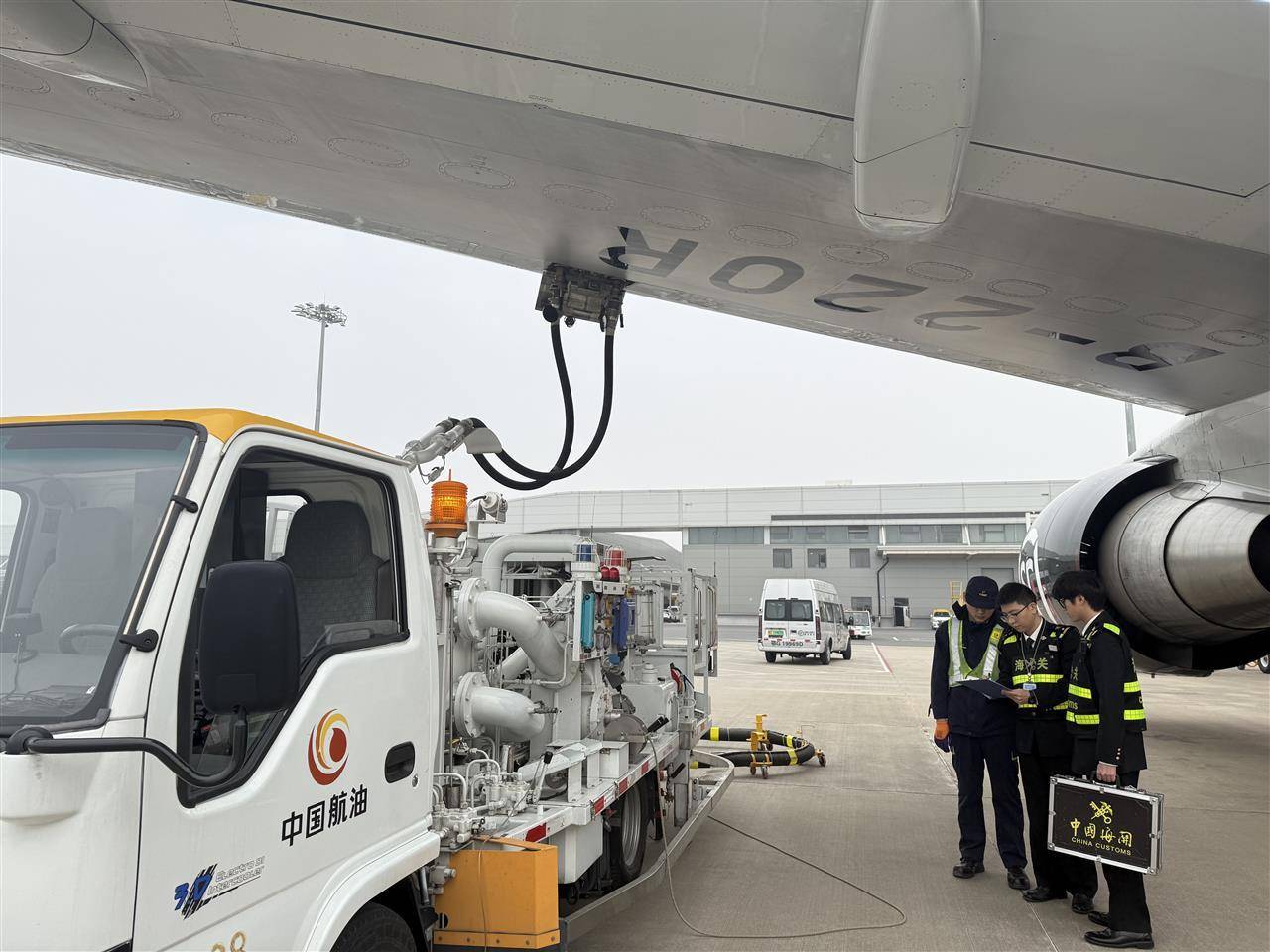
Core Viewpoint - The implementation of a new regulatory model for bonded aviation fuel at Wuhan Customs has significantly increased efficiency and reduced costs for international airlines operating from Ezhou Huahu International Airport, leading to a substantial rise in international cargo flights and volumes [3][4][5]. Group 1: Regulatory Changes and Impact - The new model allows for "immediate refueling" of bonded aviation fuel, with over 30.52 million tons and a value of 1.813 billion yuan processed from January to November 2025, marking increases of 368% and 378% year-on-year respectively [3]. - The policy exempts domestic airlines from import duties and taxes on bonded aviation fuel, enhancing cost efficiency and market competitiveness for airports and airlines [3][4]. - The innovative "accounting" management approach allows bonded and non-bonded fuels to coexist in the same storage, improving tank utilization by over 20% [3][4]. Group 2: Operational Efficiency and Airline Participation - The smart aviation fuel management system at Ezhou Huahu International Airport enables real-time monitoring and intelligent alerts, streamlining the refueling process and customs supervision [4]. - The new policy has attracted six international airlines, leading to the opening of 50 international cargo routes covering 42 destinations across Europe, America, Asia, Africa, and Belt and Road countries [4]. - Airlines have reported significant cost savings, with Atlas Air's operations in China saving over 4 million yuan in fuel costs and expanding their international routes to 11 [4][5]. Group 3: Cost Savings and Competitive Advantage - Fuel costs account for approximately one-third of total air transport costs, and the use of bonded aviation fuel can reduce fuel expenses by about 13%, saving companies 400 yuan per ton [5]. - The smart regulatory approach has enhanced the convenience of refueling with bonded aviation fuel, ensuring a stable supply for international passenger and cargo flights, thereby boosting the competitiveness of Hubei's international routes [5].
启动全岛封关运作,吸引全球优质资源,世界今日聚焦中国海南
Huan Qiu Shi Bao· 2025-12-17 22:38
Core Viewpoint - The official launch of the Hainan Free Trade Port on December 18, 2025, marks a significant milestone in China's reform and opening-up strategy, aiming to create a special customs supervision area with liberalized policies to attract global resources and investment [1][3][5]. Group 1: Policy Changes - Hainan will implement a zero-tariff policy, increasing the number of zero-tariff goods from 1,900 to 6,600, raising the proportion of zero-tariff goods from 21% to 74% [3][8]. - The policy framework will feature "one line" for liberalized access from outside China, "two lines" for controlled access from the mainland, and free circulation of resources within the island [4][6]. Group 2: Economic Impact - Hainan is expected to become a hub for global trade, investment, and talent, with a focus on attracting international capital and businesses [6][7]. - Over the past five years, Hainan has seen the establishment of 8,098 foreign-invested enterprises, with an annual growth rate of 43.7%, and attracted foreign investment totaling 102.5 billion RMB, growing at an annual rate of 14.6% [6][8]. Group 3: Strategic Importance - The launch of the Hainan Free Trade Port is viewed as a core project for China's high-level opening-up strategy, serving as a crucial foundation for the new development pattern [5][9]. - The port's establishment is seen as a response to global economic uncertainties, providing a stable platform for international business activities [1][9]. Group 4: Competitive Advantages - Hainan's geographical location, favorable business environment, and supportive policies position it as a competitive alternative to established free trade ports like Hong Kong and Singapore [7][8]. - The port offers significant tax incentives, including a 15% corporate income tax rate and a maximum personal income tax rate of 15% for high-end talent, creating an attractive environment for global investors [8].
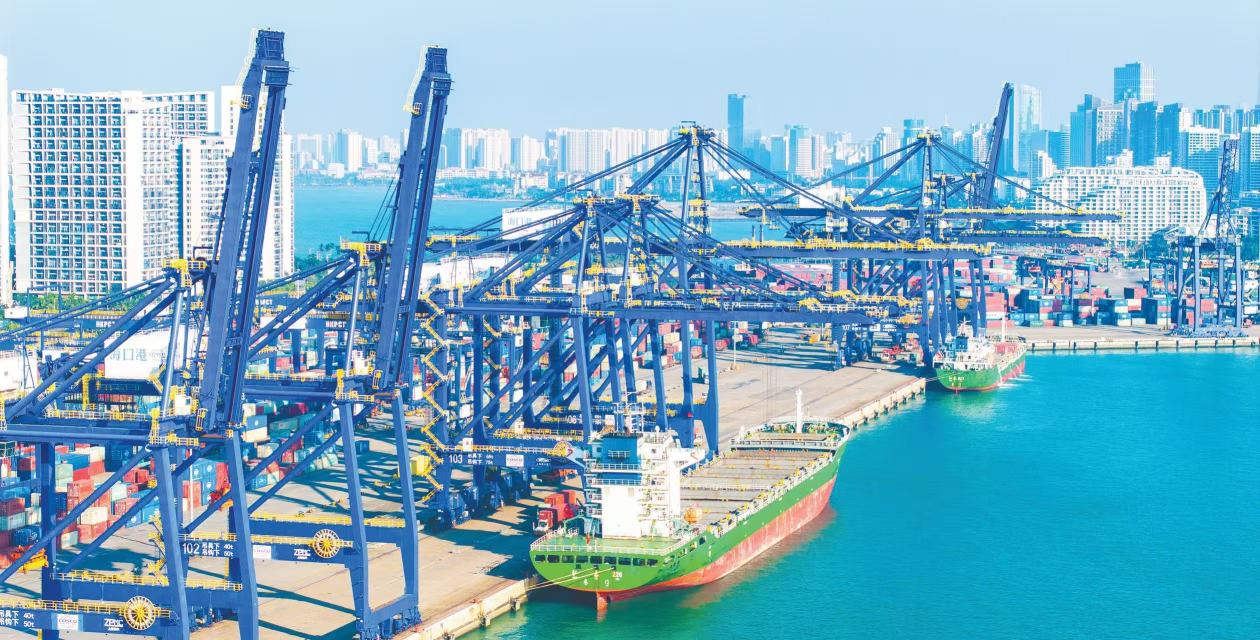
着力打造亚欧黄金通道
Jing Ji Ri Bao· 2025-10-19 22:08
Group 1 - The first batch of over 273 tons of copper concentrate has begun blending operations under customs supervision at the Alashankou Comprehensive Bonded Zone, marking the official launch of the country's first bonded blending business for copper concentrate at a land port [1] - The bonded blending business allows companies to import various mineral products without paying taxes initially, adjust the composition of these products according to market demand, and then sell the final product to domestic enterprises or export it [1] - The implementation of the bonded blending business is expected to reduce customs clearance time and transportation costs while meeting the personalized needs of downstream smelting enterprises [1] Group 2 - Since 2021, Xinjiang has introduced several policies to stabilize and enhance foreign trade, including promoting new business models and expanding cross-border e-commerce, which provide institutional support for high-quality foreign trade development [2] - The Urumqi Tianshan Airport has seen breakthroughs in bonded fuel and maintenance services, with customs facilitating approximately 600 million yuan worth of aircraft maintenance services in the first eight months of this year [2] - The "Bonded+" business model has expanded the port's external channels, with 32 international passenger routes and 28 cargo routes now operating, resulting in a 369.5% year-on-year increase in cargo volume at Urumqi Tianshan Airport [2] Group 3 - Since the establishment of the China (Xinjiang) Free Trade Pilot Zone, 76.3% of the reform pilot tasks outlined in the overall plan have been implemented, showing significant progress [3] - In the first eight months of this year, the total import and export value of the Xinjiang Free Trade Pilot Zone reached 145.798 billion yuan, a year-on-year increase of 57.74%, accounting for 41% of the region's total foreign trade [3] - The Xinjiang government aims to continue developing the region as a key hub for the Silk Road Economic Belt and has introduced 35 provincial-level institutional innovations for replication across the region [3]
乌鲁木齐持续扩大高水平对外开放 创新激发活力 开放助推发展(砥砺奋进七十载 天山南北谱华章)
Ren Min Ri Bao· 2025-09-18 21:50
Core Insights - The development of the Urumqi International Land Port and the new T4 terminal at Urumqi Tianshan International Airport demonstrates China's commitment to enhancing connectivity along the Silk Road, facilitating rapid transportation of goods to Europe and Central Asia [1][2]. Group 1: Transportation and Logistics - The Urumqi International Land Port has seen over 9,700 China-Europe (Central Asia) freight trains depart, with goods reaching Kazakhstan in 2 days, Russia in 8 days, and the Netherlands in 16 days [1]. - The "Yuexin Express," a rail-air intermodal service, has successfully transported 1.68 million tons of goods, showcasing the efficiency of combining rail and air transport [2]. - The introduction of bonded aviation fuel has reduced fuel costs for international flights by approximately 13%, enhancing the operational efficiency of airlines [2][3]. Group 2: Economic Growth and Trade - From January to July, the Urumqi Free Trade Zone established 4,337 new enterprises, marking a year-on-year increase of 20.9%, while foreign trade import and export volume reached 35.15 billion yuan, up 31.8% [4]. - The Urumqi International Airport has become the fastest-growing airport for international air cargo, with a 446% increase in international cargo throughput this year [1]. Group 3: Innovation and Infrastructure - The Urumqi region has implemented innovative logistics solutions, such as the "smart railway port + local rapid customs clearance" model, reducing import clearance time from 2-3 days to 16 hours [3]. - The establishment of a bonded maintenance service for aircraft has streamlined operations, allowing for quicker turnaround times and cost savings for airlines [3].
福州机场保税航油实施半年:新开6条国际航线 国际业务显著增长
Zhong Guo Min Hang Wang· 2025-06-19 02:15
Group 1 - The implementation of the bonded aviation fuel policy at Fuzhou Changle International Airport has significantly reduced operational costs for airlines, saving them approximately 10%-12% on fuel expenses [2] - In the first half of the year, Fuzhou Airport opened six new international routes and has seen a daily average of nearly 16 aircraft refueled with bonded fuel, leading to a monthly fuel volume of 5,000 tons [1][2] - The airport's international flight operations increased by 24.9% year-on-year, with a total of 4,730 international flights and an 18.3% increase in inbound and outbound passenger throughput [1] Group 2 - The bonded fuel policy is expected to save airlines around 10 million yuan in fuel costs for the entire year, enhancing the competitiveness of Fuzhou's civil aviation market [1][2] - Future plans for Fuzhou Airport include the opening of new international routes and increasing flight frequencies to various destinations, aiming for a passenger throughput of over 1.8 million by 2025, representing a growth of over 33% [2]