
保税维修服务

Search documents
从新加坡视角看海南自贸港
Sou Hu Cai Jing· 2026-01-26 10:53
Core Viewpoint - The establishment of the Hainan Free Trade Port marks a significant step in China's strategy for high-level opening-up, transitioning from a "heated start" phase to a "formal operation" phase, with a focus on creating a special customs area that emphasizes trade and investment freedom while managing risks effectively [2][3]. Group 1: Comparison with Singapore - Hainan aims to benchmark itself against Singapore, the world's most renowned free trade port, with aspirations to become a world-class free trade port itself [3]. - Despite the differences in geographical and economic contexts, Hainan can learn from Singapore's successful experiences in open innovation and institutional design [4][5]. - Hainan's unique advantages lie in China's vast market, which can be leveraged to create a competitive edge distinct from Singapore's [5][6]. Group 2: Legal and Regulatory Framework - Singapore's legal system, based on common law, provides high transparency and predictability, attracting multinational companies to establish their Asian headquarters there [6]. - Hainan's legal foundation is based on the Hainan Free Trade Port Law, which aims to align with international standards but lacks independent judicial sovereignty [6][7]. - Hainan must focus on creating clear rules and enhancing efficiency in arbitration and intellectual property protection to attract international businesses [6][7]. Group 3: Financial Opening and Economic Strategy - Singapore enjoys complete capital account convertibility, while Hainan is piloting a split account system and promoting offshore finance [7][8]. - Hainan's financial strategy should prioritize "controlled openness" that integrates with national financial security, rather than pursuing complete freedom [7][8]. - The focus should be on creating a low-friction trade and shipping financial infrastructure to attract businesses for functional settlements [7][8]. Group 4: Port and Shipping Services - Hainan lacks the historical and geographical advantages of Singapore, necessitating a shift from merely enhancing port throughput to developing a shipping service platform [8][9]. - The strategy should include high-value service chains related to shipping registration, maritime services, and offshore trade, rather than just cargo handling [8][9]. Group 5: Taxation and Administrative Efficiency - Hainan's tax system must be simple, stable, and predictable, as it cannot easily adjust tax rates without central approval [9][10]. - The focus should be on reducing compliance costs and ensuring transparency in tax administration to attract long-term capital [9][10]. - Hainan needs to improve its administrative efficiency and business environment to compete effectively in the free trade port landscape [10][11]. Group 6: Strategic Development Pathways - Hainan's development strategy post-closure should focus on higher-end, systematic approaches rather than merely competing on cost [11][12]. - Key areas for development include value-added processing, bonded maintenance, shipping services, and digital trade [11][12][13]. - The emphasis should be on creating a regulatory environment that facilitates cross-border data flow and compliance, as well as enhancing service-oriented business models [13][14]. Group 7: Risk Management and Governance - Effective risk governance is crucial for Hainan's openness, as the freedom of a free port is contingent upon high-level governance [15]. - Hainan must prioritize risk management as a component of its institutional competitiveness to ensure that the benefits of its policies are not undermined by potential risks [15].

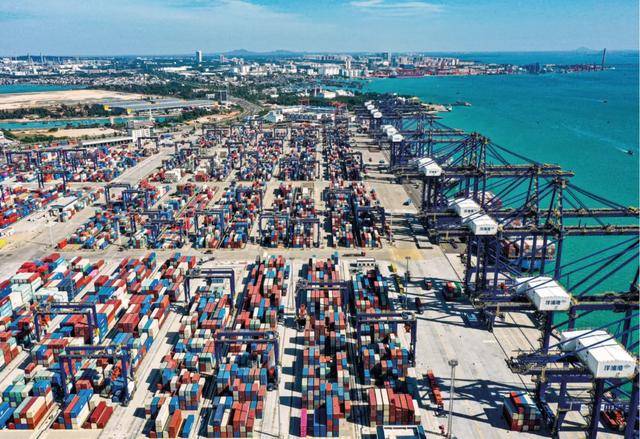
2025年上海外贸进出口值创历史新高
Sou Hu Cai Jing· 2026-01-16 11:33
Group 1 - The core viewpoint of the articles highlights that Shanghai's foreign trade achieved a record high in 2025, with total import and export value reaching 4.51 trillion yuan, a year-on-year increase of 5.6% [1] - Exports amounted to 2.02 trillion yuan, showing a significant growth of 10.8%, while imports reached 2.49 trillion yuan, increasing by 1.8% [1] - Shanghai's foreign trade growth outpaced the national average by 1.8 percentage points, with export growth leading the national rate by 4.7 percentage points [1] Group 2 - In 2025, Shanghai's exports of high-end manufacturing products, particularly the "new three items" (electric passenger vehicles, solar cells, and lithium batteries), reached 156.67 billion yuan [2] - The export scale of electric vehicles surpassed 100 billion yuan, with hybrid vehicle exports increasing by nearly 150% [2] - The export of advanced industries showed significant growth, with high-end machine tool exports increasing by nearly 30%, industrial robot exports growing over 40%, and surgical robot exports surging by 370% [2]
大连等九城市服务业扩大开放综合试点任务发布 因地制宜开展差异化探索
Ren Min Ri Bao· 2026-01-12 01:10
Core Viewpoint - The Ministry of Commerce has issued a comprehensive pilot task document for expanding the service industry in nine cities, encouraging them to leverage their unique advantages and focus on key service sectors such as telecommunications, healthcare, trade, and finance [1][2] Group 1: Pilot Tasks and City Focus - Dalian is supported to enhance its role as an international shipping center in Northeast Asia and improve logistics transportation channels [1] - Ningbo is encouraged to promote the healthy development of new business models in bonded maintenance, leveraging its advanced manufacturing and cross-border trade advantages [1] - Xiamen is to facilitate cultural trade and cooperation with BRICS countries, utilizing key parks and platforms [1] - Qingdao is focusing on modern marine city development, emphasizing marine technology innovation and trialing cruise routes without destinations [1] - Shenzhen aims to optimize free trade account functions and trial electronic bills of lading in shipping and trade [1] - Hefei is set to deepen reforms in the technology service sector, capitalizing on its technological innovation and industrial development strengths [1] - Fuzhou is advancing cross-strait economic and social cooperation, enhancing exchanges in various fields [1] - Xi'an is conducting trials for the property rights of railway waybills and strengthening technology innovation and industrial applications [1] - Suzhou is exploring the import of biomedical research materials and developing efficient and secure cross-border data flow mechanisms [1]
聚力强化核心功能提升开放能级 加快打造更高水平国际航空枢纽
Xin Hua Ri Bao· 2025-12-23 23:36
Group 1 - The core message emphasizes the importance of enhancing the airport's role as a transportation hub and international gateway, focusing on improving passenger and cargo transport efficiency while supporting national strategies and regional economic development [1][2]. - The third phase of the Lukou Airport project is highlighted as a significant initiative to elevate the airport's openness and functionality, with plans to optimize the layout based on passenger needs and industry development [2]. - The airport aims to develop a smart airport by improving operational management and service levels, while also expanding the air cargo sector through collaboration with leading logistics companies and enhancing high-end logistics services [3]. Group 2 - The airport's duty to enhance domestic key routes and improve passenger experience through better route planning and resource allocation is underscored [3]. - The development of the airport's duty-free shops is aimed at showcasing Jiangsu's industrial strength and cultural appeal, with a focus on diversifying product offerings [3]. - The establishment of a one-stop processing center for cross-border e-commerce and international express mail is intended to accelerate cargo development and improve logistics efficiency [3].
上海浦东:已总体达到CPTPP和DEPA正文条款的开放水平
Di Yi Cai Jing· 2025-11-06 08:01
Core Viewpoint - Pudong is advancing its institutional openness by refining rules in various sectors, aiming to align with international standards and enhance its role as a global economic hub [1][2]. Group 1: Institutional Openness - Pudong has achieved a level of openness comparable to CPTPP and DEPA, focusing on expanding rules and standards in service, digital, and goods trade [1]. - The region has eliminated restrictive measures in the manufacturing sector and initiated pilot programs in value-added telecommunications and cell and gene therapy services, establishing 9 and 40 enterprises respectively [2]. - Pudong is aligning with OECD service trade restrictions and World Bank business environment assessments to improve its service and trade openness [1][2]. Group 2: Trade and Financial Services - Pudong is enhancing cross-border financial services by expanding free trade account functionalities and facilitating cross-border payments [2]. - The region has implemented the first customs special supervision area for bonded remanufacturing in China, allowing for 97 types of bonded repair services [2]. - A negative list for data export has been introduced, enabling compliant companies to bypass prior approval processes for data cross-border flow [2]. Group 3: Infrastructure and Connectivity - Pudong is positioned as a key gateway for international trade, with the Pudong International Airport projected to handle 3.78 million tons of cargo and mail in 2024, ranking second globally [3]. - The Shanghai Port continues to lead globally in container throughput, reaching 51.51 million TEUs [3]. Group 4: Business Cooperation and Support - The upcoming Oriental Hub International Business Cooperation Zone will facilitate business activities with a 30-day visa-free stay for international visitors [4]. - The "Overseas Enterprise Gathering Area" offers comprehensive support for companies venturing abroad, with over 80 professional service institutions and 270 global sites established [5]. Group 5: Technological Advancements - Pudong is focusing on high-tech industries, with significant increases in fiscal science and technology investment, rising from 4.2% in 2021 to 9.2% in 2023 [5]. - The integrated circuit industry has reached a scale of $41 billion, accounting for one-fifth of China's total, with a 7.4% increase in electronic component exports [6]. - The biopharmaceutical sector has over 4,000 companies, with significant contributions to global drug approvals and transactions [6].
着力打造亚欧黄金通道
Jing Ji Ri Bao· 2025-10-19 22:08
Group 1 - The first batch of over 273 tons of copper concentrate has begun blending operations under customs supervision at the Alashankou Comprehensive Bonded Zone, marking the official launch of the country's first bonded blending business for copper concentrate at a land port [1] - The bonded blending business allows companies to import various mineral products without paying taxes initially, adjust the composition of these products according to market demand, and then sell the final product to domestic enterprises or export it [1] - The implementation of the bonded blending business is expected to reduce customs clearance time and transportation costs while meeting the personalized needs of downstream smelting enterprises [1] Group 2 - Since 2021, Xinjiang has introduced several policies to stabilize and enhance foreign trade, including promoting new business models and expanding cross-border e-commerce, which provide institutional support for high-quality foreign trade development [2] - The Urumqi Tianshan Airport has seen breakthroughs in bonded fuel and maintenance services, with customs facilitating approximately 600 million yuan worth of aircraft maintenance services in the first eight months of this year [2] - The "Bonded+" business model has expanded the port's external channels, with 32 international passenger routes and 28 cargo routes now operating, resulting in a 369.5% year-on-year increase in cargo volume at Urumqi Tianshan Airport [2] Group 3 - Since the establishment of the China (Xinjiang) Free Trade Pilot Zone, 76.3% of the reform pilot tasks outlined in the overall plan have been implemented, showing significant progress [3] - In the first eight months of this year, the total import and export value of the Xinjiang Free Trade Pilot Zone reached 145.798 billion yuan, a year-on-year increase of 57.74%, accounting for 41% of the region's total foreign trade [3] - The Xinjiang government aims to continue developing the region as a key hub for the Silk Road Economic Belt and has introduced 35 provincial-level institutional innovations for replication across the region [3]
全国首部自贸试验区立法完成修订,上海明确下一步开放新举措
Di Yi Cai Jing· 2025-09-26 09:51
Core Points - The revised "Regulations on the China (Shanghai) Pilot Free Trade Zone" will officially take effect on September 29, 2025, marking the 12th anniversary of the Shanghai Free Trade Zone [1] - The revision aims to provide a solid legal guarantee for the development of a higher-level Shanghai Free Trade Zone, reflecting the need for comprehensive updates due to significant changes in the zone's coverage, management system, and external environment over the past decade [2][3] Summary by Sections Legislative Background - The original regulations, implemented in August 2014, played a crucial role in promoting innovative reforms and served as a model for other free trade zones across the country [2] - The legislative update is seen as a systematic integration of over a decade's worth of reform and innovation measures [2] Key Features of the Revised Regulations - The regulations solidify mature institutional experiences such as foreign investment negative list management, overseas investment filing management, customs facilitation, and the construction of an international trade "single window" [3] - New institutional arrangements are made for emerging trade formats, cross-border trade digitization, and pilot projects for mandatory product certification exemptions [3] Financial and Economic Development - The regulations support the development of technology finance, green finance, and digital finance, tailored to the characteristics of the Shanghai Free Trade Zone [3] - They outline the development direction for key industries such as biomedicine and artificial intelligence [3] Data and Digital Economy - A data security compliance mechanism combining negative lists and operational guidelines will be established to facilitate cross-border data flow [3] - The regulations aim to enhance the digital economy's advantages by promoting data product intellectual property registration and building an international data economic industrial park [6] Business Environment Optimization - The regulations clarify institutional measures in government procurement, intellectual property protection, and ecological environmental protection to improve the business environment [3] - They align with the latest World Bank assessment indicators for the business environment [3] Future Directions - The Shanghai Free Trade Zone will deepen investment openness and trade facilitation, including the implementation of a national and pilot version of the cross-border service trade negative list [4][5] - There will be a focus on developing new trade formats and promoting trade transformation and upgrading [5] - The zone aims to enhance the gathering and radiating capabilities of strategic elements, particularly in the financial sector [5][6] Innovation and Industry Development - The regulations encourage foreign investment in R&D centers and support multinational companies in establishing regional headquarters with R&D functions [7] - They emphasize the importance of integrating innovation across the entire industry chain, particularly in key sectors like integrated circuits and high-end manufacturing [7]
全国第六、东部第四、浙江第一 杭州综合保税区综合绩效评估创新绩
Mei Ri Shang Bao· 2025-09-02 22:16
Core Insights - Hangzhou Comprehensive Bonded Zone achieved the sixth position nationally, fourth in the eastern region, and first in Zhejiang province in the 2024 national comprehensive bonded zone performance evaluation [1] Group 1: Development and Achievements - The Comprehensive Bonded Zone is recognized as China's highest-level open area with the most favorable policies and comprehensive functions, serving as a frontline platform for high-level opening-up [1] - Hangzhou Comprehensive Bonded Zone is the only one in the city, benefiting from the combined advantages of free trade pilot zone, bonded zone, and cross-border e-commerce pilot zone, forming an industry system led by cross-border e-commerce, smart manufacturing, and "bonded+" economy [1] - The zone has attracted over 800 enterprises, contributing 20% of Qiantang's import and export share, becoming a significant engine for industrial upgrading [1] Group 2: Innovations and Reforms - The zone prioritizes institutional innovation to achieve stable progress and quality improvement, introducing "electronic fences" to replace physical checkpoints, allowing for virtual transfer of goods within the zone, significantly reducing costs by over 14 million yuan and cutting time from approximately 4 hours [1] - The zone has pioneered a dual cross-border e-commerce retail import and export return model, breaking the traditional single customs area return model, making it the only zone in the country to implement this [2] - Hangzhou Comprehensive Bonded Zone has established 50 institutional innovation achievements at the municipal level and above, including national and provincial-level innovation cases [2]